- Blog
An ESD box with lid and slots can make SMT storage more controlled—but only when the lid, divider interface, stack orientation, and label face are specified together. A cover or a slotted wall alone does not establish safe stacking or clear traceability.
This guide is for SMT warehouse teams and buyers selecting Boîtes ESD for covered, stackable component storage. For a general explanation of covers, see the ESD box with lid overview. For component-cell design, use the related divider RFQ checklist.
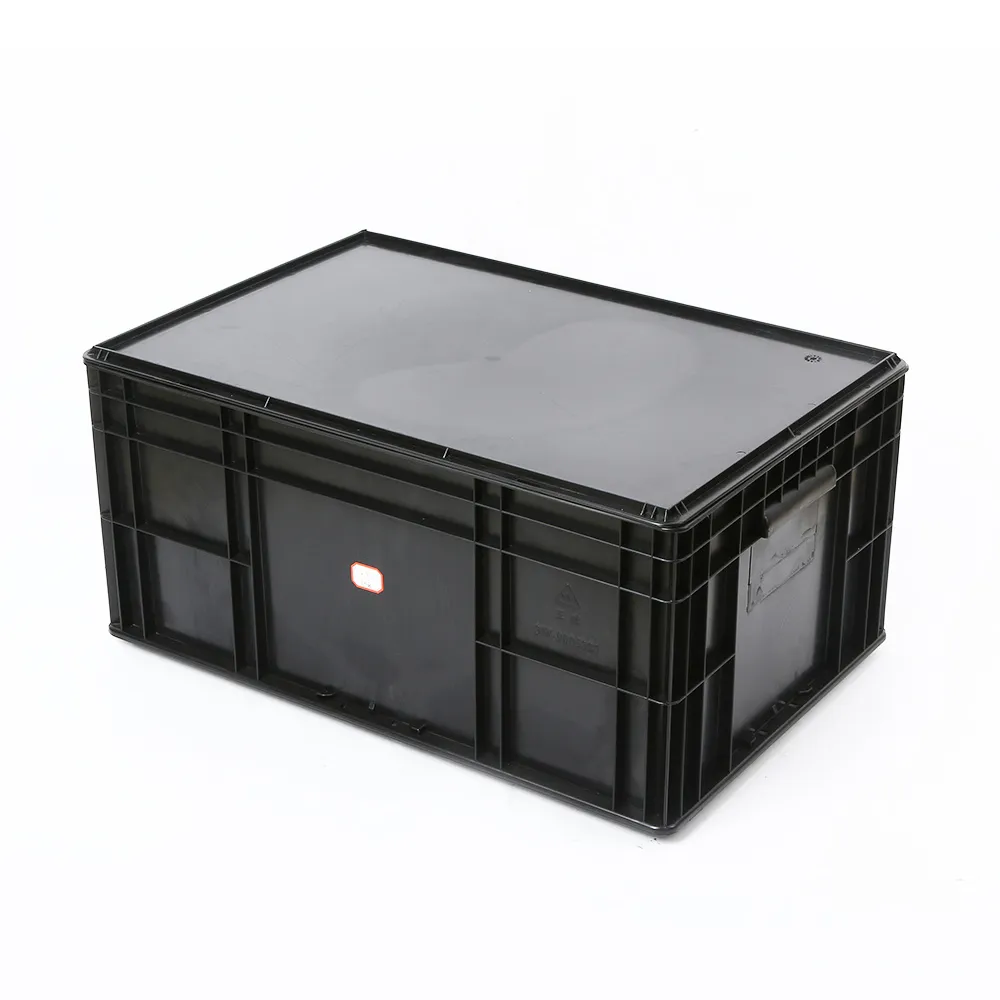
Part 1. What SMT storage job needs a lid-and-slot box?
A cover is useful when components need protection from incidental contact, dust, or movement between storage and a work cell. Slots can matter when they are a confirmed interface for dividers or another named accessory, but their presence should not be interpreted without the model information.
| Storage condition | Design priority | Buyer decision |
|---|---|---|
| Line-side replenishment with frequent picks | Fast identification and stable stacking | Choose the visible label face before selecting the stack direction |
| WIP held between shifts | Cover fit and lot separation | State whether each box holds one lot, one status, or multiple controlled cells |
| Cart movement between stations | Loaded-stack stability | Test turns, stops, and transfers with representative contents |
| Parts requiring separated cells | Divider compatibility | Confirm the exact slot and partition arrangement |
Covered storage does not mean a sealed environmental package. If moisture, cleanliness class, or unusual handling protection is critical, define those requirements separately in the RFQ.
Part 2. How should lid, slots, and dividers be confirmed?
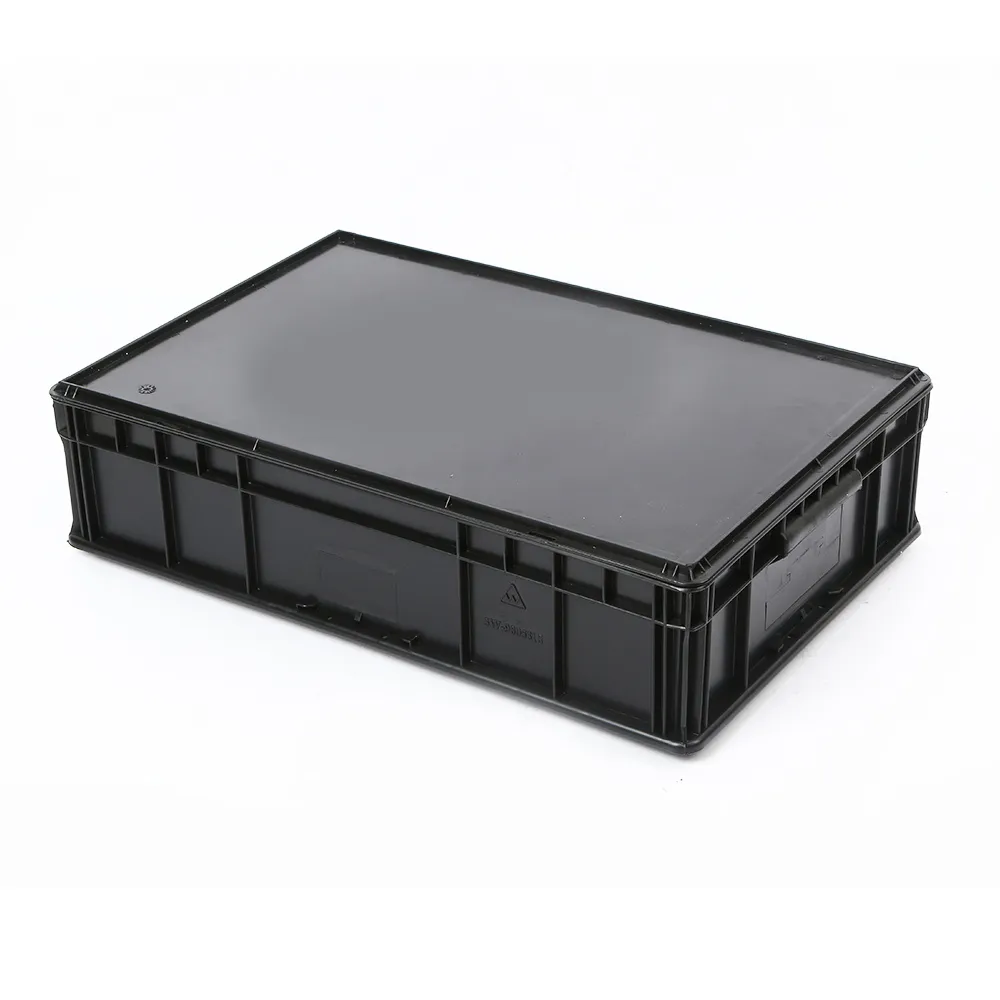
Treat the lid, box body, and any divider as a compatibility set. The buyer should ask the supplier to name the box model, cover, divider, and engagement point on one drawing or quotation line.
| Interface | What to ask | Why it matters |
|---|---|---|
| Lid engagement | How the lid sits, locates, or is retained | A lid that fits at rest may behave differently in transport |
| Slot purpose | Whether the shown slots accept a specified partition | Avoids assuming every slot is a divider channel |
| Divider fit | Divider part reference, height, and insertion direction | Connects the layout to the correct box body |
| Stack interface | Which surface contacts the next box | Establishes one repeatable stack orientation |
| Access side | Where operators open, scan, and pick | Prevents a practical stack from blocking access |
Sanwei’s ESD Box product family lists covers, anti-static partitions, and labels as options and notes slots on selected models. Confirm these items for the selected model rather than applying a feature from one image or model to another.
Part 3. How should teams set stack orientation and test it?
An orientation drawing should show the box front, label face, lid opening side, and the direction a stack is approached on a rack or cart. It gives operators one consistent way to place, scan, and retrieve boxes.
Test a representative loaded stack before authorizing a rollout:
- Load each box to the intended maximum fill condition.
- Assemble the maximum planned stack in the normal storage orientation.
- Move it through the expected cart, rack, and hand-transfer steps.
- Inspect lid position, divider movement, label readability, and access to the pick side.
- Record the approved orientation with photos or a controlled work instruction.
Sanwei’s 600 × 400 mm ESD Box page lists 30 kg support load for the models shown there. That published table is not a universal stack-height or dynamic-transport rating; request the allowable stack condition for the chosen box, cover, contents, and movement method.
Part 4. Where should labels sit on a stacked box?
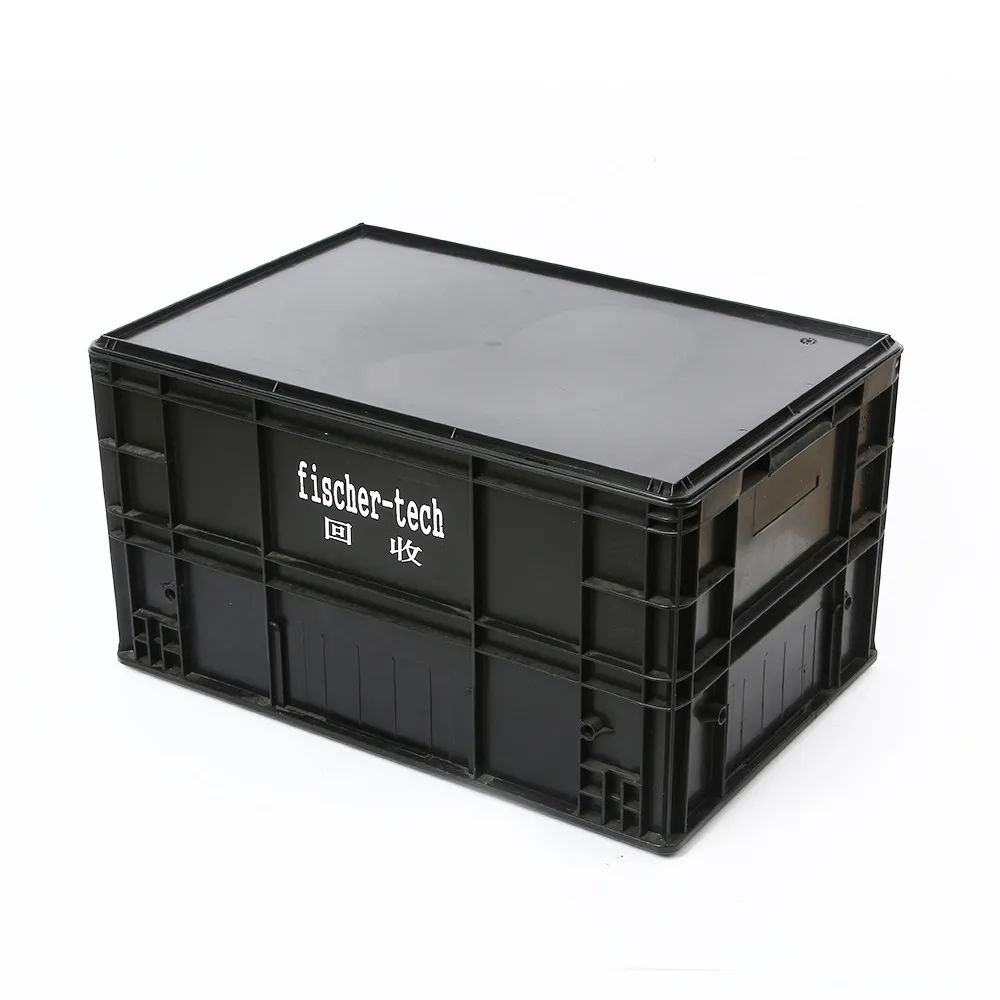
The best label face is the face that remains visible at the point of use. A top-only label may work for a single box on a bench but disappear in a rack or a cart stack.
| Label field | Recommended decision |
|---|---|
| Part number and revision | Put on the operator-visible face |
| Lot or date code | Keep adjacent to the primary part identifier |
| Cell or divider map | Use when multiple controlled compartments are inside |
| Status | Make it visible without lifting the box |
| Barcode or RFID zone | Confirm scan orientation and clear space around the code |
Sanwei lists barcode label areas and RFID slots among customization options on its ESD Box & ESD Tray solution page. A quote should state the requested data carrier and location; a generic “label area” is not enough for a scanner workflow.
Part 5. Which ESD and model evidence matters?
Electrical performance must be matched to the buyer’s ESD-control program and the actual supplied configuration. A box body, lid, and divider may need separate attention when they are distinct components.
| Evidence request | What it confirms | Boundary |
|---|---|---|
| Exact model and accessory list | Which box, lid, and divider were quoted | Do not rely on a family image alone |
| Material identification | The quoted conductive, dissipative, or anti-static material selection | Confirm application fit with the buyer’s program |
| Electrical test record | Measured evidence under a stated method and condition | Specify the required test locations |
| Sample or lot traceability | Connection between the record and supplied parts | Retain with receiving inspection |
Sanwei’s solution page publishes material options and a customizable resistance range. CEI 61340-5-1 et ANSI/ESD S20.20 are ESD-program references, not a substitute for model-specific acceptance evidence.
Part 6. What belongs in the RFQ and sample trial?
Use one controlled RFQ attachment for the physical box, lid, accessory interfaces, and operating method. This makes it easier to compare offers and identify when a proposed configuration changes.
| RFQ field | Buyer input |
|---|---|
| Footprint and depth | Maximum outer dimensions, usable internal dimensions, and rack/cart limits |
| Contents | Component envelope, pack height, lot rule, and maximum fill condition |
| Lid requirement | Cover type, opening or removal method, and required retention |
| Slot and divider requirement | Box model, slot location, divider part, cell drawing, and engagement method |
| Stacking method | Maximum planned stack, orientation, surface, and transport route |
| Label method | Visible face, required fields, barcode/RFID needs, and scan direction |
| ESD evidence | Buyer-defined electrical target, method, test locations, and traceability |
| Sample acceptance | Loaded-stack trial, access check, label scan, lid/divider inspection, and evidence review |
For a documented 600 × 400 mm option, review the 600 × 400 mm ESD Box. The page lists several depths and accessory options, so select the model only after the stacking method and contents are defined.
Fit Boundary
| Buyer situation | Reasonable path | Avoid |
|---|---|---|
| Stable line-side storage with known component packs | Lid-and-slot configuration plus an orientation drawing | Stacking boxes in whichever direction is convenient |
| Multiple controlled components in one box | Confirmed divider interface and cell labels | Assuming any wall slot will secure a divider |
| Cart transport or frequent handoffs | Loaded-stack trial with normal stops and turns | Using an empty-box stack test |
| Heavy or high stacks | Supplier-confirmed configuration and handling review | Treating a published support-load figure as a universal stack limit |
Send the storage drawing, proposed stack, label fields, and representative components through Contact Sanwei for model and accessory confirmation.
FAQ
What is an ESD box with lid and slots used for?
It provides covered component storage where a confirmed box interface can support dividers or other specified accessories, alongside a defined stacking and labeling method.
Are all slots intended for dividers?
No. Sanwei notes slots on selected models, so confirm the selected model’s slot purpose and the matching divider part before ordering.
Can covered ESD boxes be stacked?
They can be stacked when the selected configuration and operating method support it. Define the orientation and validate the loaded stack rather than assuming a lid establishes a limit.
Where should labels be placed on stacked boxes?
Place the main label on the face operators can see and scan in the approved stack orientation, with lot and status information adjacent to it.
Does a lid replace a divider?
No. A lid covers the box; a divider separates contents. Use both only when the component segregation and handling method require them.
What ESD evidence should be requested?
Request the exact model and accessory list, material identification, applicable electrical test record and method, test locations, and sample or lot traceability.
Can the published 30 kg support load be used as a stack limit?
No. It is a model-family page value, not a universal stack-height or dynamic-handling limit. Confirm the permitted condition for the selected configuration.
What should be tested on a sample stack?
Test the maximum intended fill and stack through normal storage and movement, then check lid position, divider retention, label visibility, scan access, and the required ESD evidence.
Références
Dernière publication
-
-
 Stencil Wiper Selection Guide for SMT Printing31 Août,2026
 -
Laisser un commentaire