- Blog
An ESD box with dividers works best when every compartment has a defined component, clearance, label, and handling orientation. A generic grid is not enough for a quote that must prevent mixed lots, contact damage, and unverified ESD performance.
This checklist helps SMT material planners and electronics buyers specify Boîtes ESD for component segregation. Start with the ESD safe divider box overview if the team needs the category basics, then use this guide to prepare a layout a supplier can quote.

Part 1. What segregation job must the box perform?
The first decision is not the number of cells; it is the failure the layout must prevent. A cell may keep different resistor values apart, stop connector pins from contacting adjacent parts, or preserve one inspection lot during a line-side move.
| Storage situation | Divider objective | Specification consequence |
|---|---|---|
| Similar-looking SMT reels, trays, or bags | Prevent part-number mix-up | One part number and label field per cell |
| Loose components with sensitive leads | Limit cross-contact | Define clearance, divider height, and permitted fill level |
| Inspection hold or sampled lots | Preserve status and traceability | Separate status cells and a fixed label convention |
| Transport between stations | Keep parts in their cells while moved | Test retention in the real travel orientation |
Dividers do not replace protective inserts when a component needs immobilization or point-of-contact protection. For covered transport and longer storage, review the covered ESD box selection guide alongside the divider layout.
Part 2. How should components become cell geometry?
Measure the item that occupies the most space, including pins, protective bags, labels, or reel flanges. A nominal component size alone can create cells that are too tight after packaging variation or too loose during transport.
| Champ d'appel d'offres | Quoi enregistrer | Pourquoi c'est important |
|---|---|---|
| Component envelope | Maximum L × W × H, including protrusions | Establishes the usable cell volume |
| Permitted clearance | Side and top clearance in the handling orientation | Prevents binding without allowing excessive migration |
| Compartment pitch | Cell width and length, center-to-center if relevant | Makes the layout repeatable between quotations |
| Divider height | Height relative to the loaded component | Limits crossover during a move |
| Fill rule | Maximum pieces or package height per cell | Prevents the divider from being defeated by overfill |
Avoid copying a grid from a foam insert without checking the outer box’s usable internal dimensions. Sanwei lists custom compartments and dividers on its ESD Box & ESD Tray solution page; attach the drawing and ask the quotation to state the final internal cell dimensions.
Part 3. How can divider retention be verified?
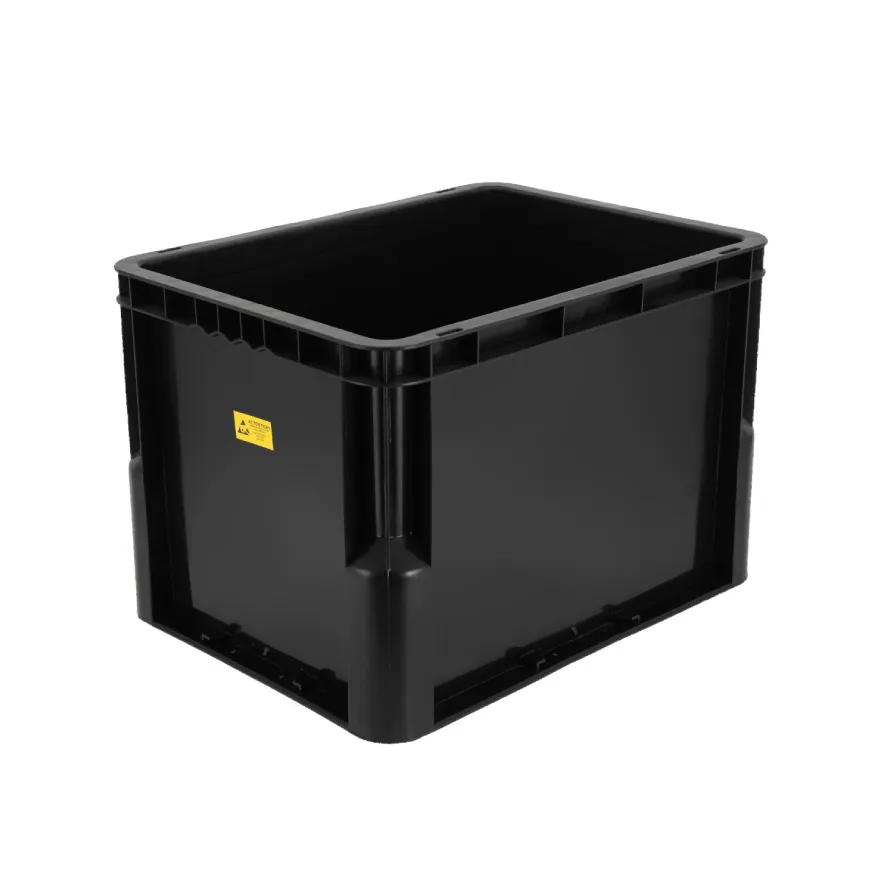
A divider is useful only if it stays seated during normal loading, carrying, and unloading. Check the divider’s engagement with the box wall or slots rather than assuming a removable part will remain in place.
Run a sample check with representative loaded cells:
- Insert and remove the divider repeatedly using the expected operator method.
- Carry the loaded box through the actual route, including the normal turns and transfers.
- Inspect for divider lift, cell crossover, snagged leads, and parts that bridge the divider top.
- Record whether the box is moved level, tilted, stacked, or placed on a cart.
Sanwei’s ESD Box product page lists anti-static partitions as an optional accessory and identifies slots on selected box models. Confirm the selected model, divider type, and retention method on the quotation instead of treating the option as universal.
Part 4. Which material and ESD evidence should be requested?
An ESD label on a box is not a substitute for evidence tied to the intended material and test method. The buyer’s ESD program should define the acceptable electrical range, test locations, conditioning, and acceptance criteria.
| Demande de pièces justificatives | Objectif | Ajuster la limite |
|---|---|---|
| Identification des matériaux | Confirms the quoted box and divider material | Do not infer formulation from color |
| Surface-resistance or resistivity test record | Supports the buyer’s ESD-control requirement | Confirm method and conditions with the buyer’s program |
| Emplacements de test | Includes box body and divider where applicable | A body-only result may not describe a separate divider |
| Lot or sample traceability | Connects the evidence to supplied parts | Keep the record with receiving inspection |
Sanwei publishes material options and a customizable resistance range on its solution page. CEI 61340-5-1 et ANSI/ESD S20.20 provide program-level context; neither source validates an individual finished box without the relevant product evidence.
Part 5. How should labels preserve lot segregation?
Labels turn a physical cell into a controlled location. The RFQ should state whether the label identifies a part number, lot, inspection status, workstation, or a combination of those fields.
| Label decision | Practical rule |
|---|---|
| Label location | Keep it visible when boxes are stacked or on a cart |
| Cell identification | Use a stable row-and-column or compartment code |
| Lot rule | Do not combine lots in a cell unless the process explicitly permits it |
| Revision control | Put the layout revision on the drawing and sample record |
| Cleaning compatibility | Confirm label adhesion and readability after the intended cleaning method |
Sanwei lists logo marking, RFID slots, and barcode label areas as customization options on the solution page. Treat those features as design inputs to confirm, not as a claim that a particular standard box already has them.
Part 6. Which RFQ fields and sample checks are essential?
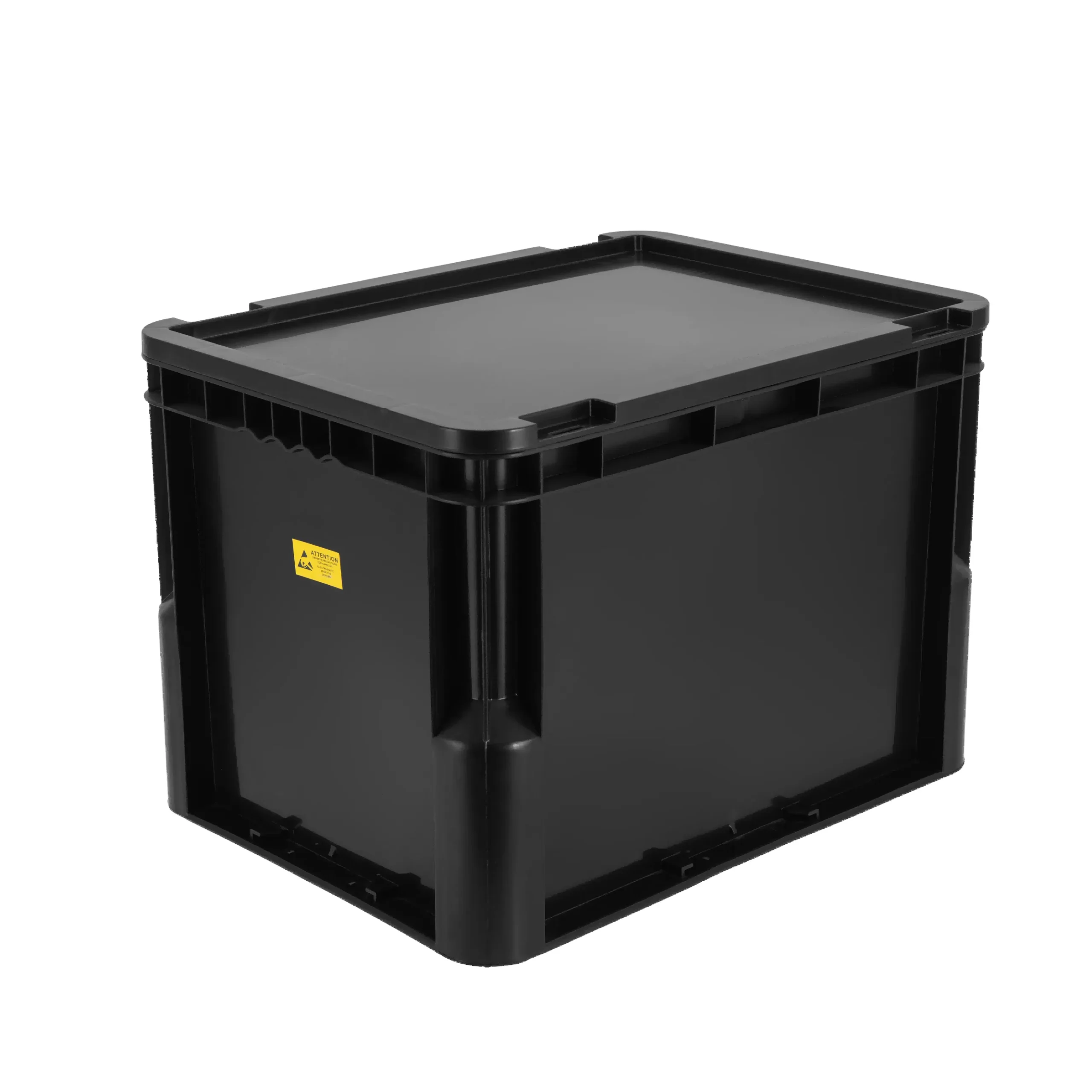
Ask suppliers to quote from a single controlled layout. A verbal description such as “dividers for ICs” leaves too much room for different cell dimensions and retention designs.
| Champ d'appel d'offres | Entrée de l'acheteur |
|---|---|
| Box reference | Preferred outer footprint, maximum height, and compatible cart or shelf |
| Cell drawing | Internal cell L × W × H, count, divider direction, and allowable tolerance |
| Component data | Envelope, fragility, maximum quantity, and packaging condition |
| Divider requirement | Fixed or removable, height, material, engagement method, and replacement need |
| Exigence ESD | Buyer-defined electrical target, test method, and test locations |
| Traçabilité | Label data, cell code, lot rule, and layout revision |
| Acceptation d'échantillon | Loaded handling trial, divider-retention check, visual inspection, and electrical evidence |
For a model review, link the RFQ to the Famille de produits de boîtes ESD Sanwei. The published product page lists partitions, labels, covers, and selected slotted models as options within the family; the quotation should identify the chosen model and accessories.
Ajuster la limite
| Situation de l'acheteur | Voie raisonnable | Éviter |
|---|---|---|
| Similar small components that must stay separate | Divider layout plus a cell label rule | Mixed part numbers in an unlabeled open cell |
| Fragile pins or optical surfaces | Evaluate conductive foam or a dedicated insert | Assuming a divider prevents all contact |
| Transport across multiple stations | Test divider retention with a loaded sample | Qualifying the layout only while empty |
| High-value traceable lots | Fixed cell map plus lot and status labels | Relying on color alone for identification |
Send the drawing, sample parts, and handling description through Contacter Sanwei to confirm whether a standard box, divider option, or custom layout is appropriate.
FAQ
What is an ESD box with dividers used for?
It separates defined components, lots, or statuses into individual cells while the box participates in the site’s ESD-control process.
Are removable dividers suitable for component storage?
They can be, provided their retention is tested with the loaded box in the actual handling orientation. Confirm how the divider engages the selected box model.
How should I size each compartment?
Use the maximum component envelope, including packaging and protrusions, then state the required clearance, divider height, and maximum fill level.
Can Sanwei customize dividers for an ESD box?
Sanwei lists custom compartments and dividers on its solution page. Provide a cell drawing and confirm the final configuration on the quotation.
Should each compartment have a label?
When part number, lot, inspection status, or location can be confused, give each cell or controlled group a visible, stable identifier.
What ESD data should be requested for the box and divider?
Request the material identification, applicable electrical test record, method, test locations, and traceability to the supplied sample or lot.
Do dividers replace conductive foam?
No. Dividers organize and separate; foam or a dedicated insert may still be needed when components require immobilization or contact protection.
What should be checked on a pre-production sample?
Check cell dimensions, divider fit and retention, loaded handling, label visibility, visual damage risk, and the ESD evidence required by your program.
Laisser un commentaire