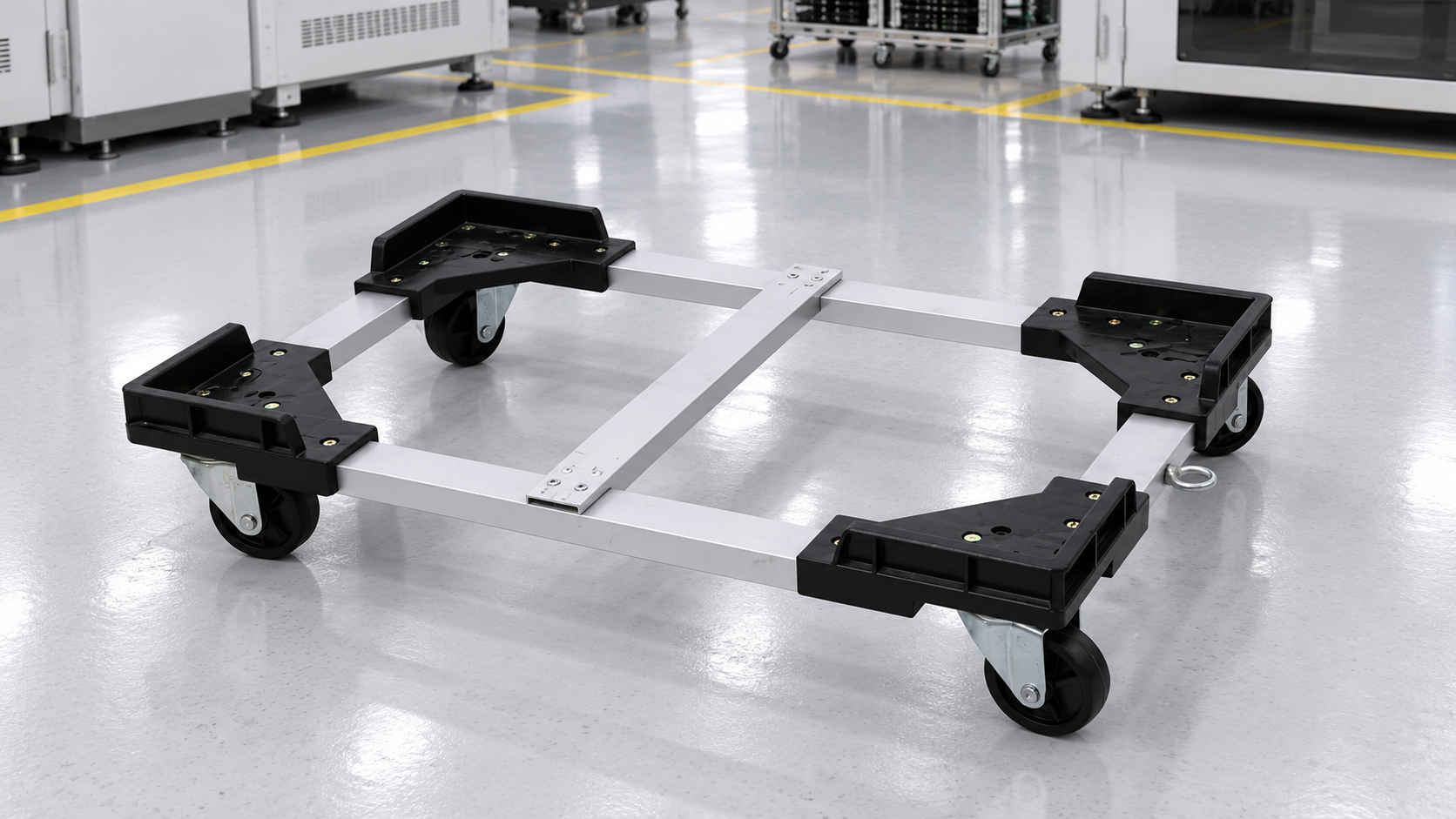
Select ESD trolley casters for actual SMT floors and cleanroom requirements: electrical checks, load, fit, cleaning and replacement acceptance.
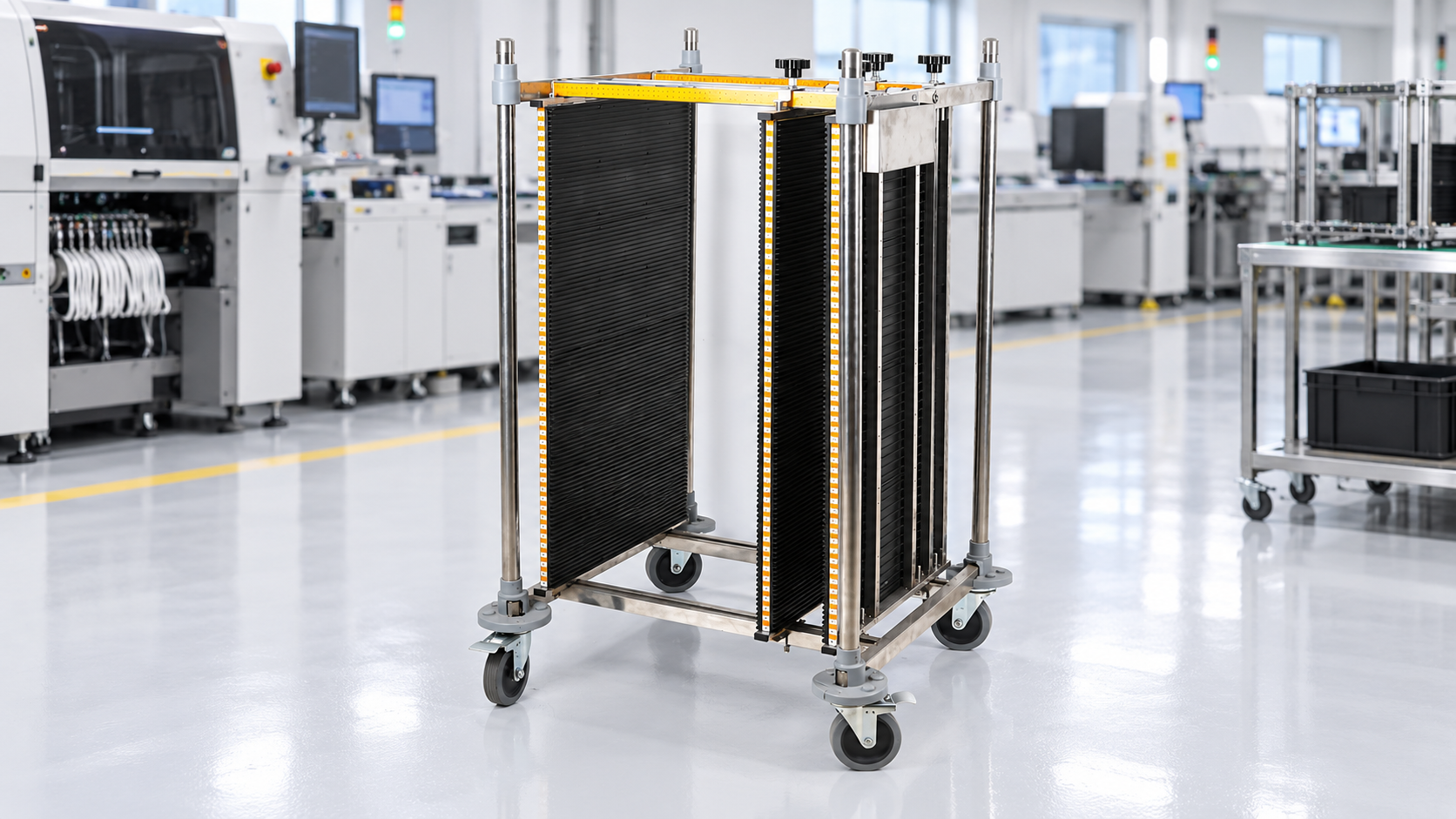
Specify trolley payload, shelf loads, caster conditions and representative route trials without confusing component ratings with assembly capacity.
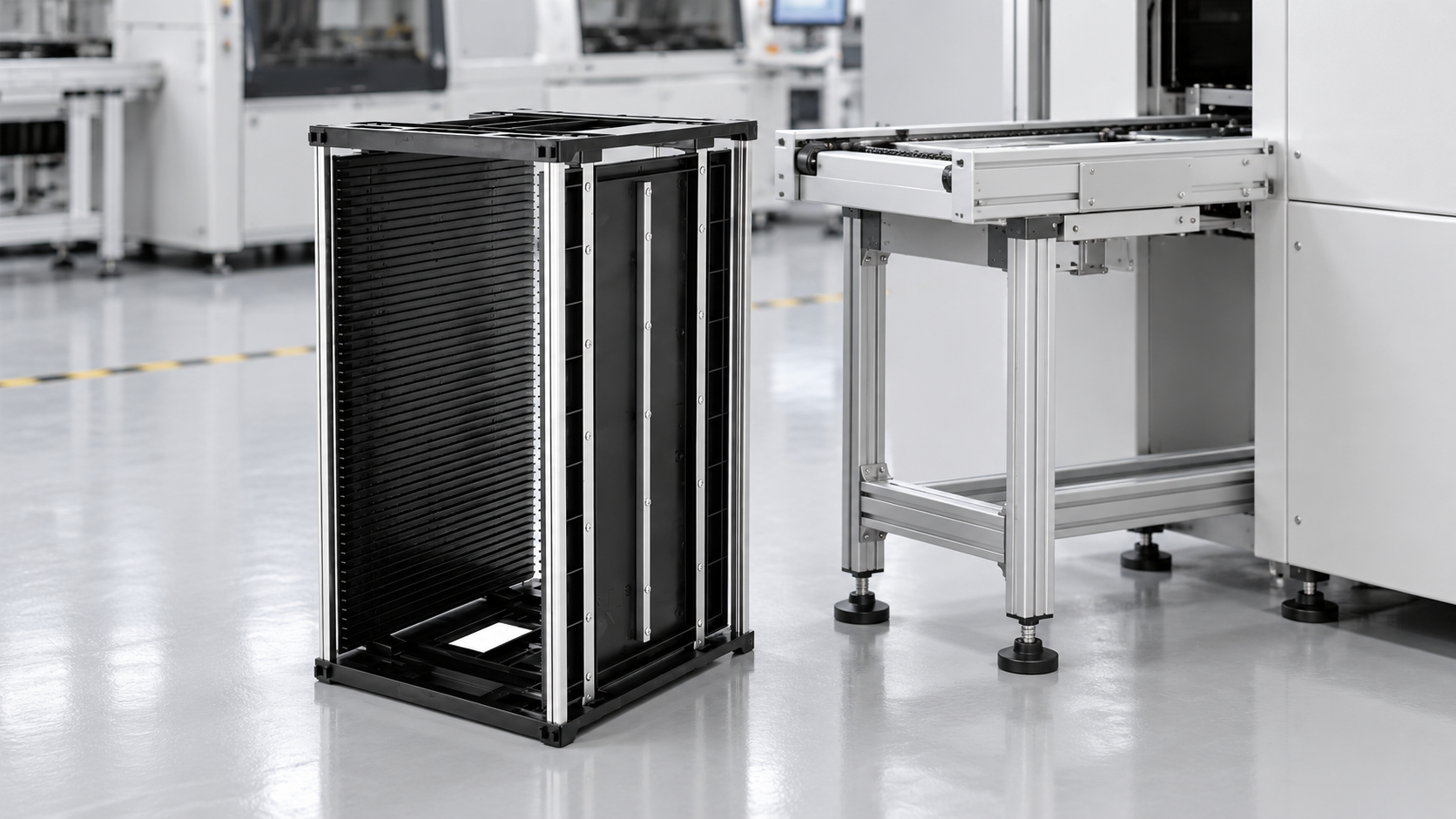
Check magazine bases, slot pitch, board transfer and loader setup before approving a PCB magazine rack for an existing SMT line.

Inspect used PCB magazine racks for identity, frame and groove condition, board fit, ESD performance and traceability before reuse.
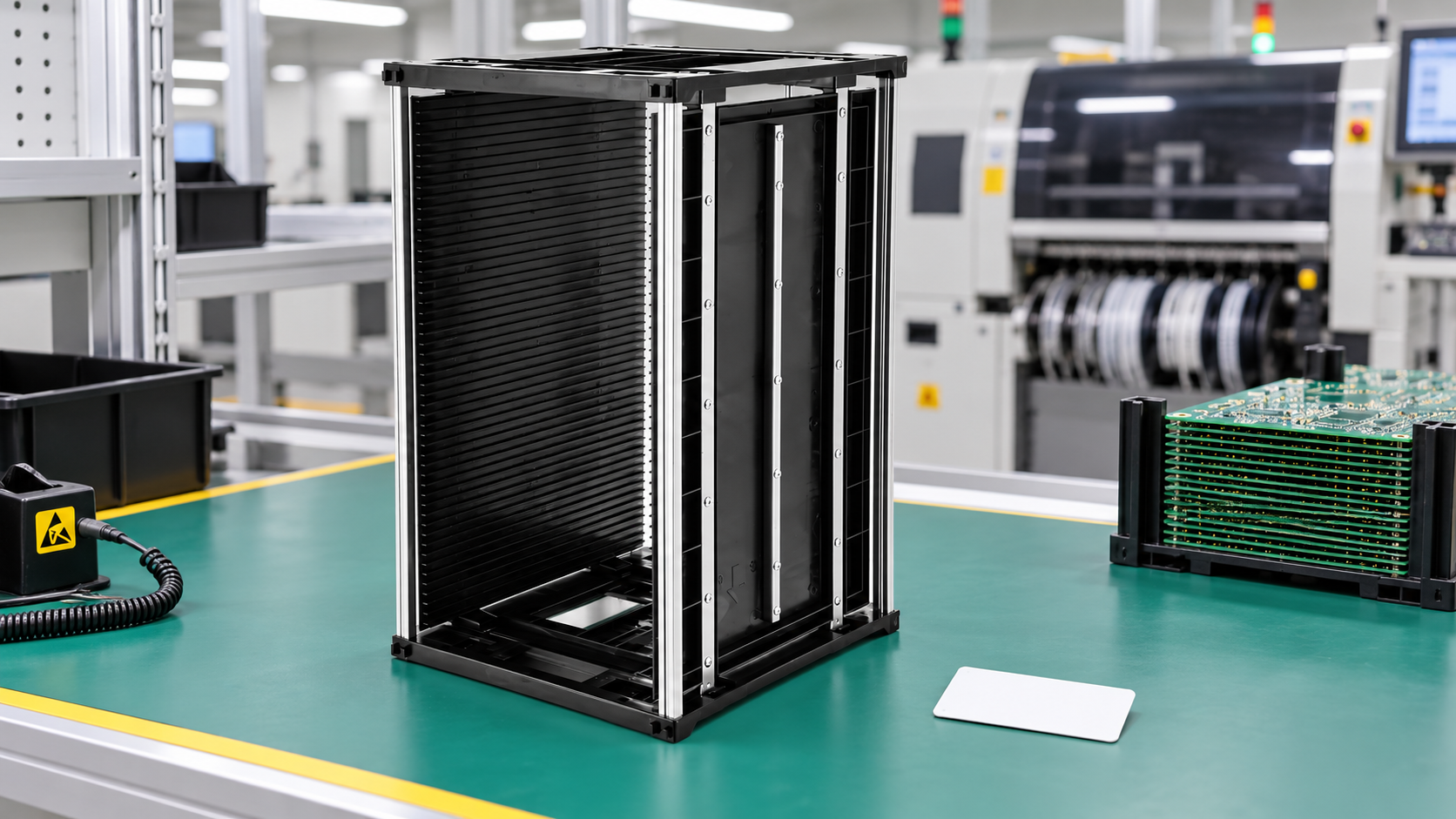
Separate permanent rack ID from temporary PCB lot travelers, then verify labels and handoff events at every SMT transfer.
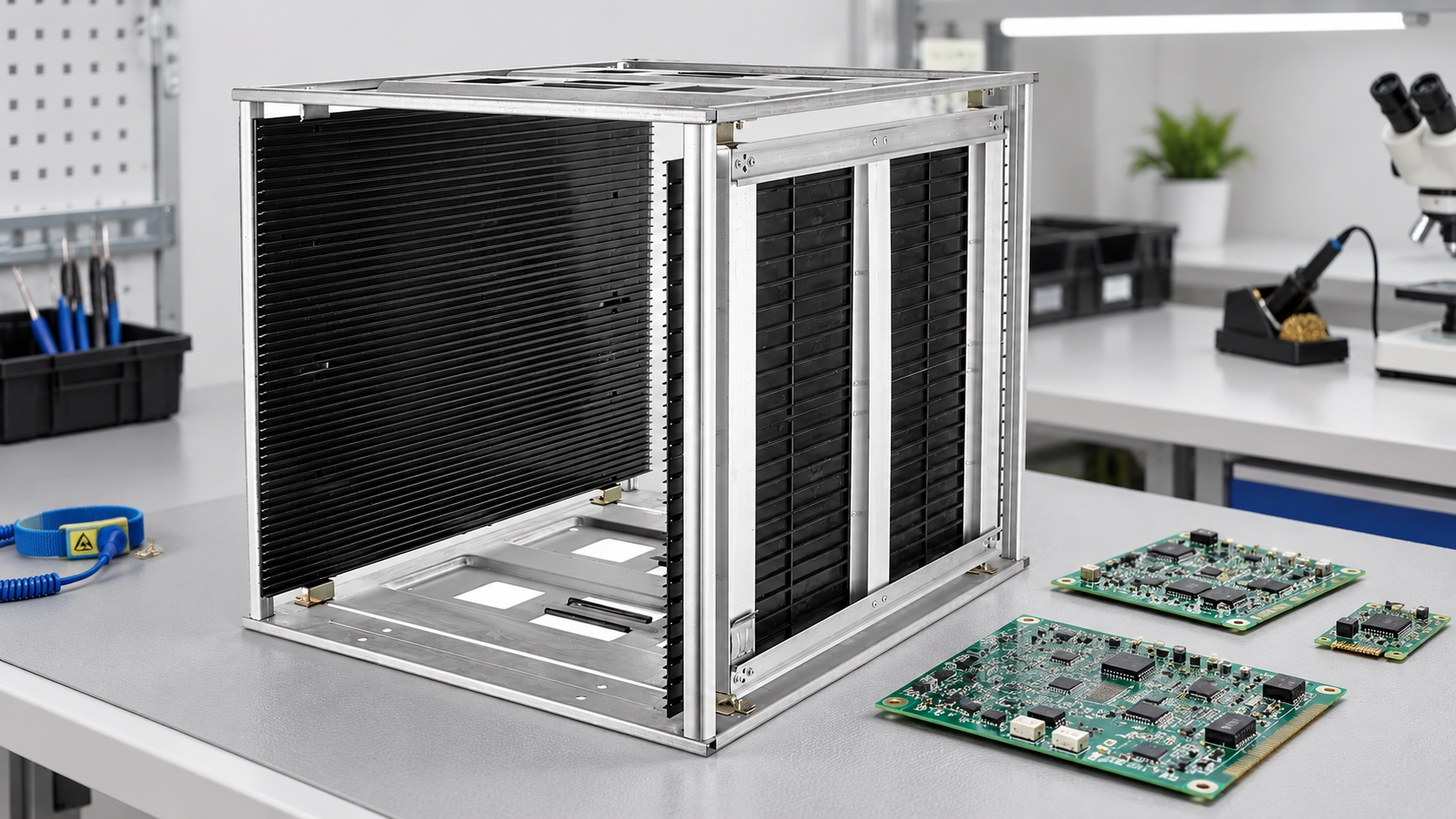
Specify ESD magazine rack load capacity using actual PCB mass, load pattern, frame deformation, route trials and post-test ESD checks.
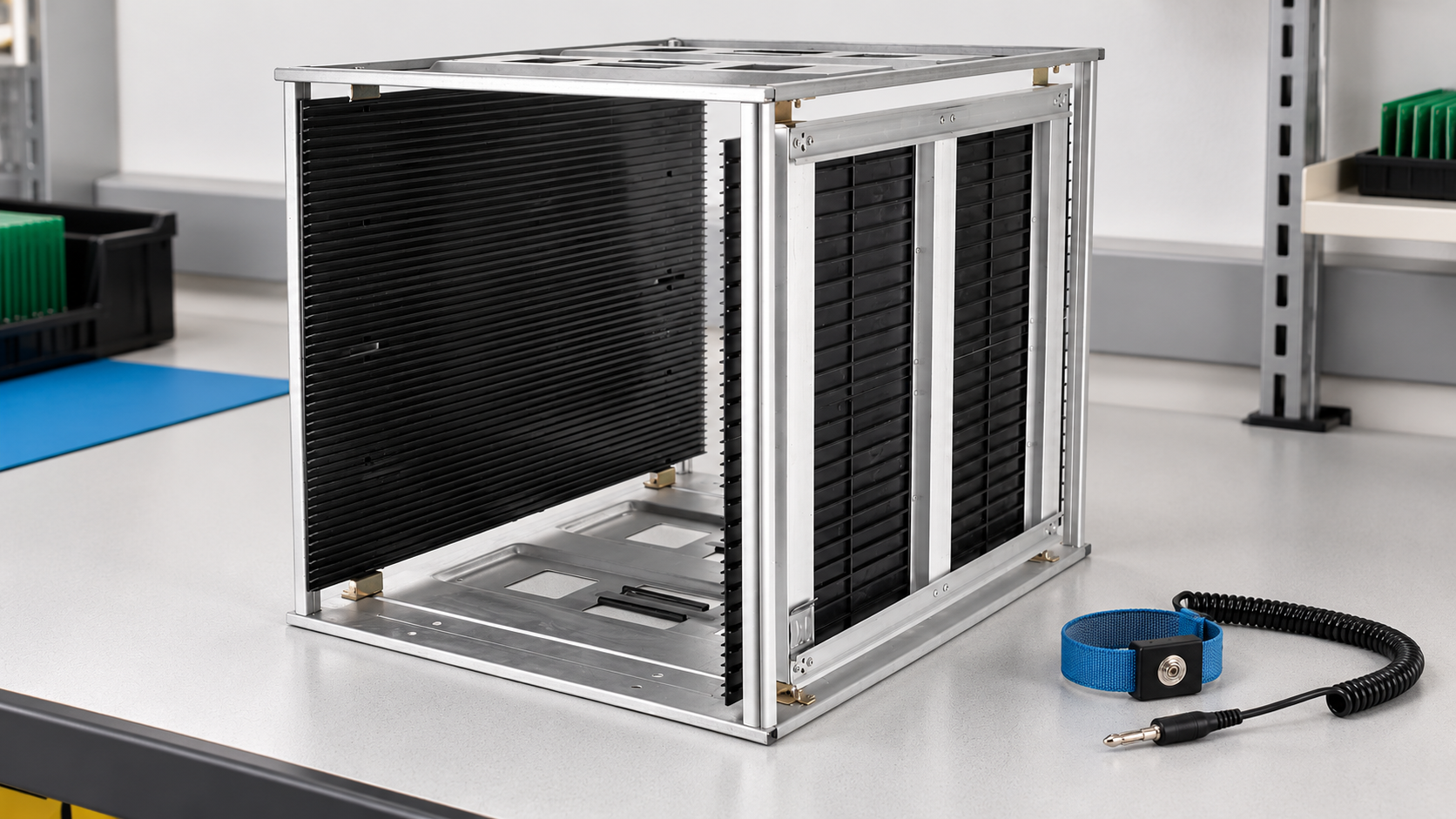
Verify ESD magazine rack grounding as an assembled EPA system: contact surfaces, frame path, portable use and approved measurement.

Qualify magazine rack heat resistance by actual exposure, loaded fit, material evidence and ESD performance after thermal cycling.
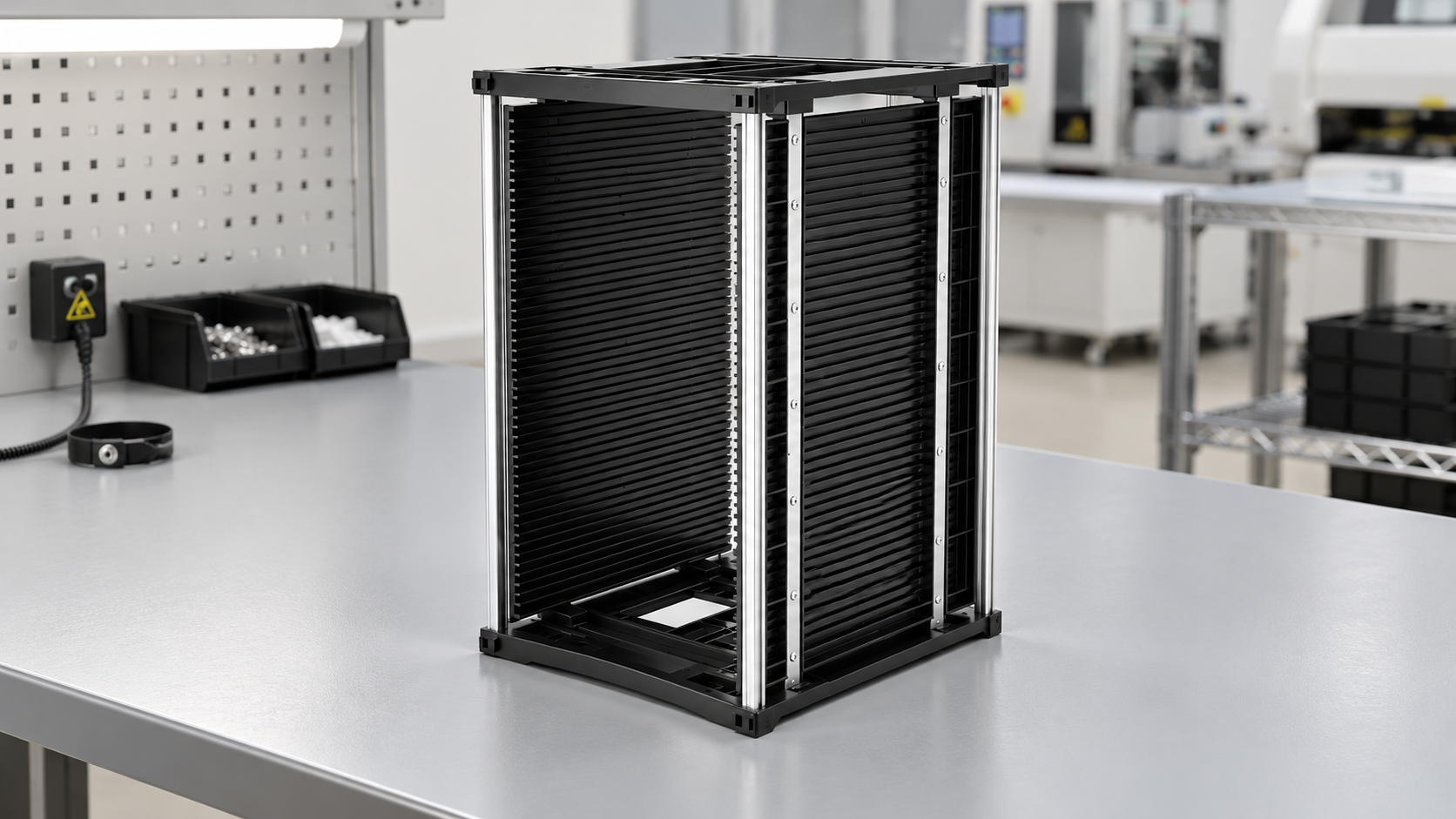
Select ESD magazine rack slot width from finished PCB edge thickness, groove geometry and a real loading trial—not nominal board thickness alone.
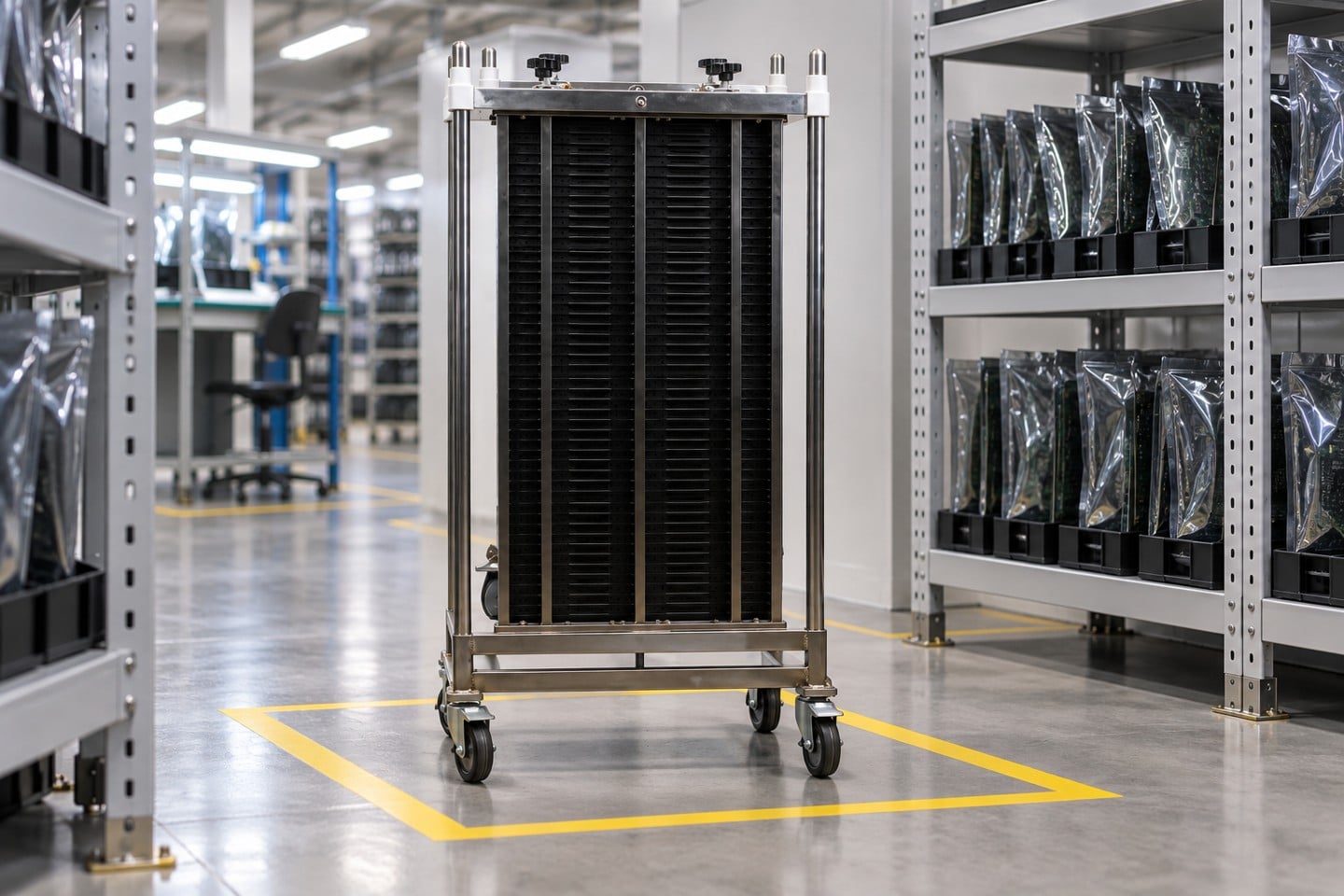
Evaluate ESD trolley brakes and stability for the approved load, caster function, parking arrangement, floor route and independent electrical checks.
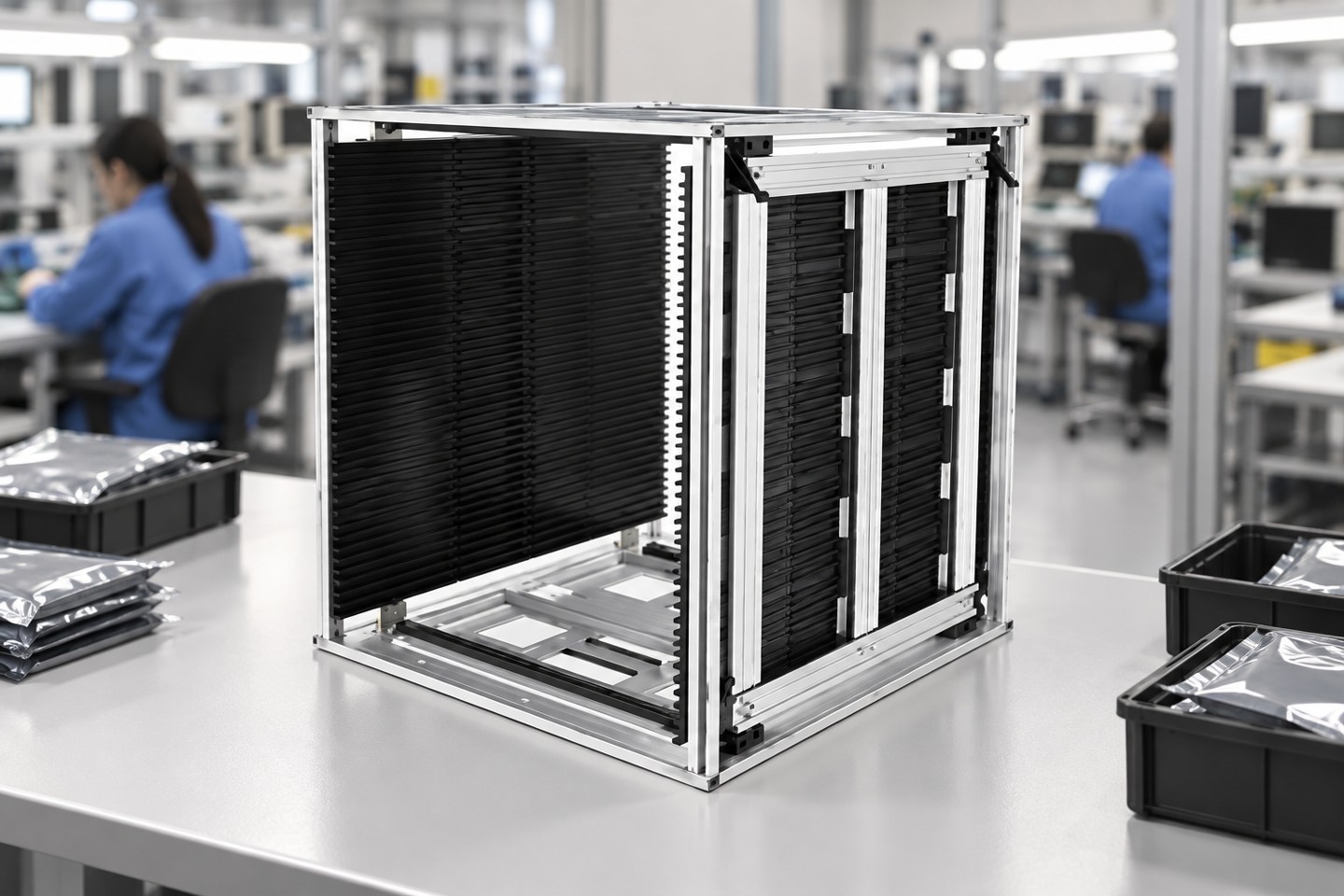
Control PCB magazine transfer from SMT to downstream assembly with approved board support, interfaces, process identity and route-specific handling.
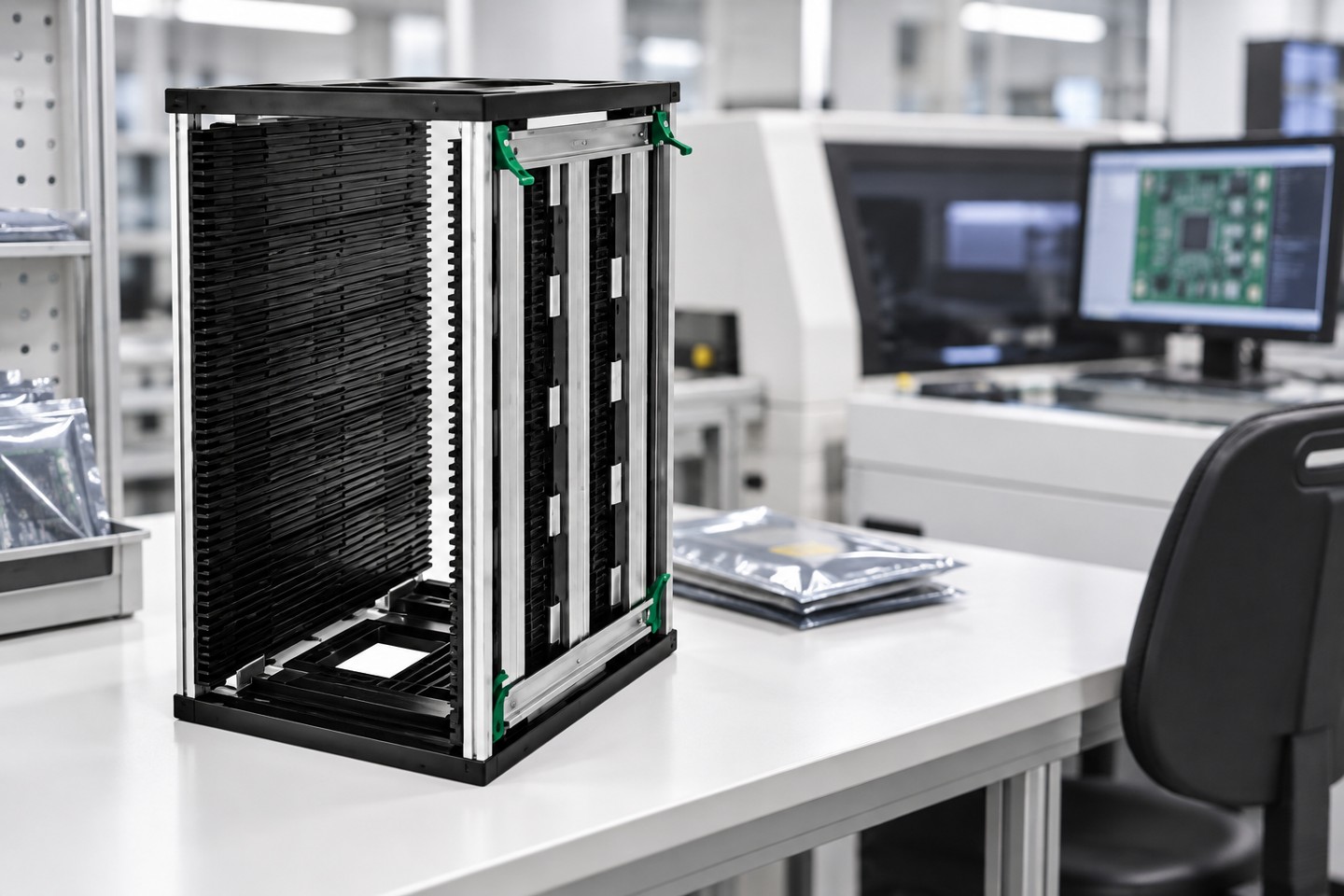
Configure ESD magazine racks for AOI and test stations by verifying populated-board clearance, carrier interfaces, status records and handling controls.