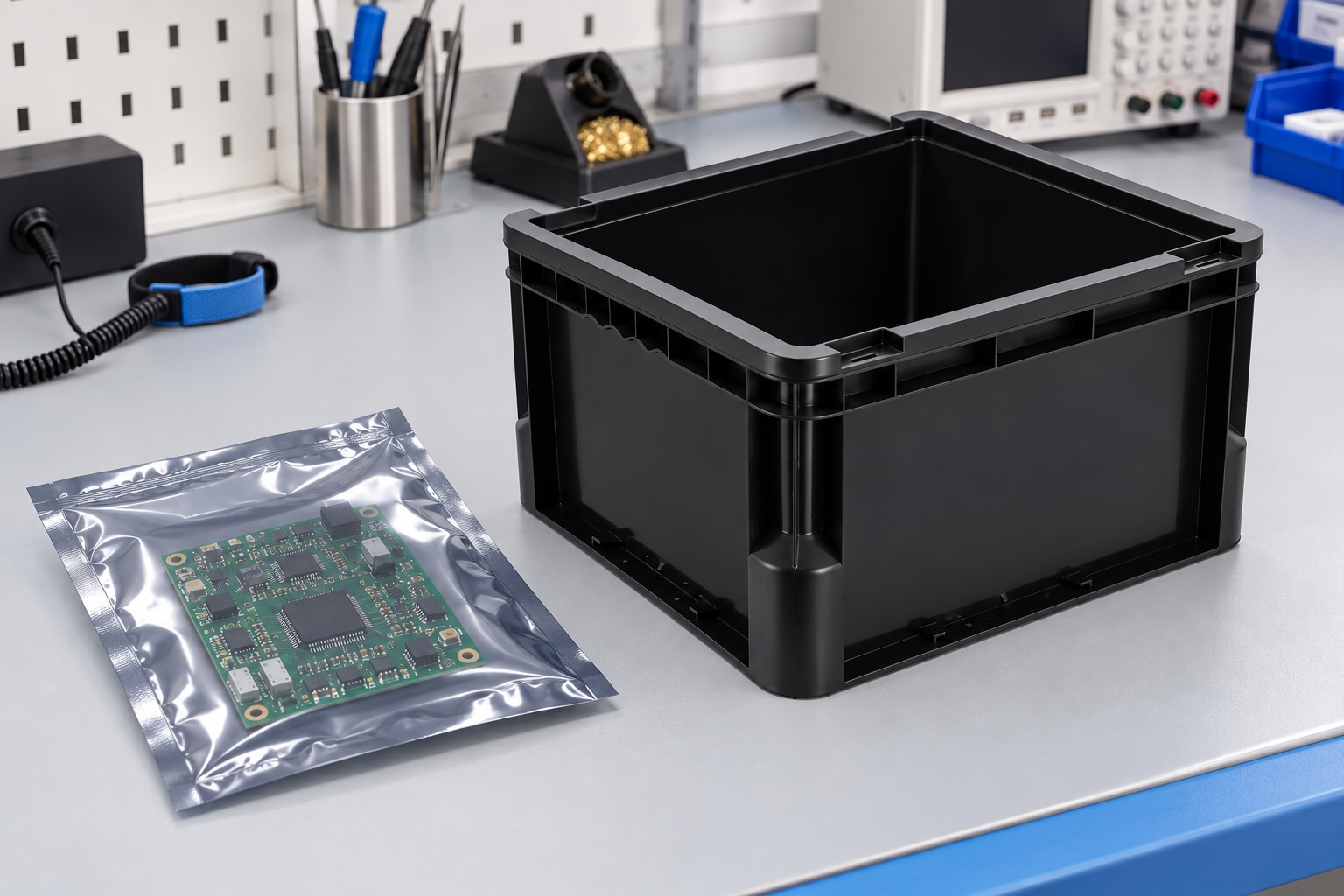
Specify ESD bins for PCB assemblies using board envelope, protected packaging, support points, movement and incoming inspection.

Qualify ESD bin cleaning through material compatibility, contamination checks, drying, geometry, electrical verification and release records.
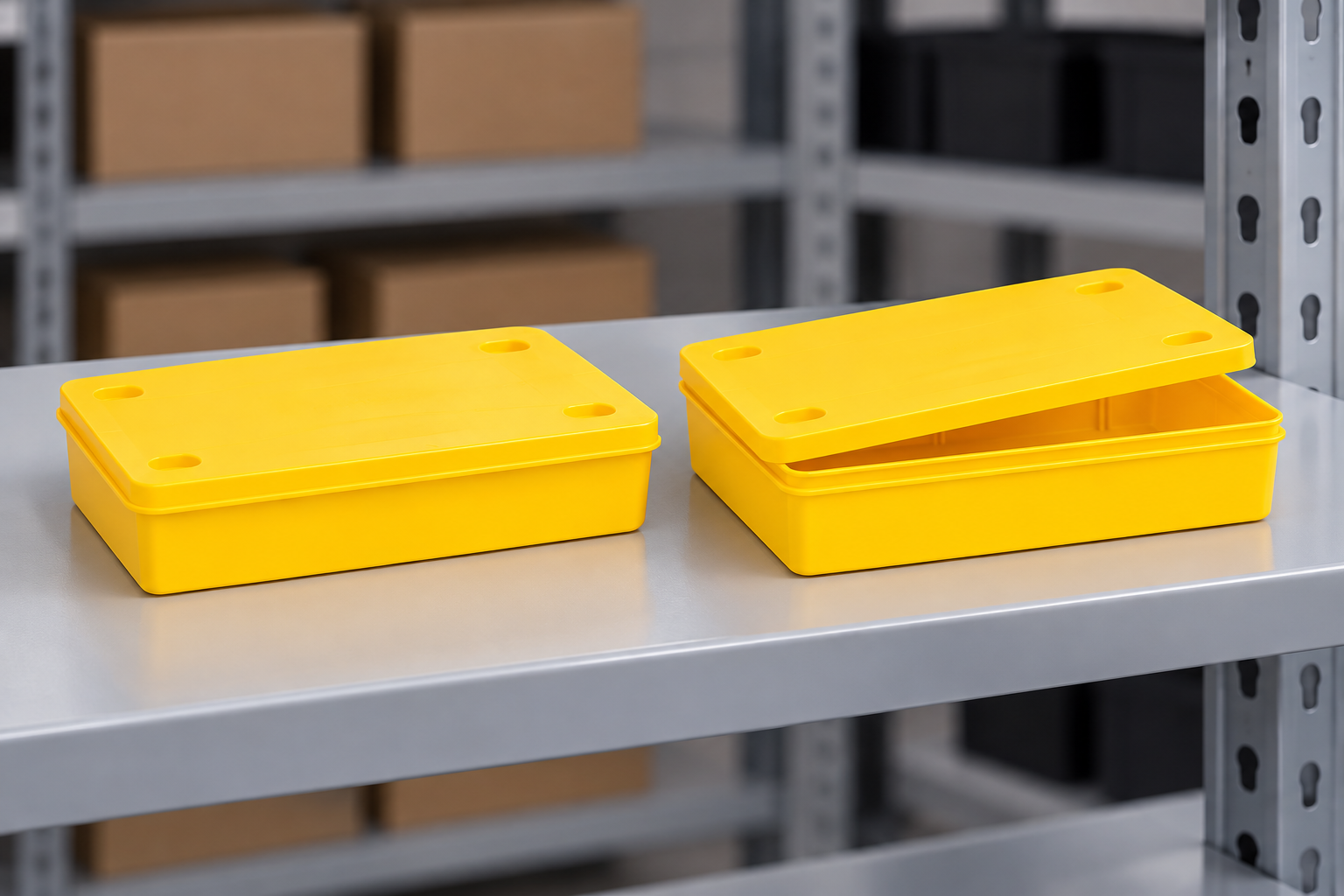
Evaluate lidded ESD bins for dust control, part clearance, loaded stacking, cleaning, labels and transport without assuming moisture or shielding performance.
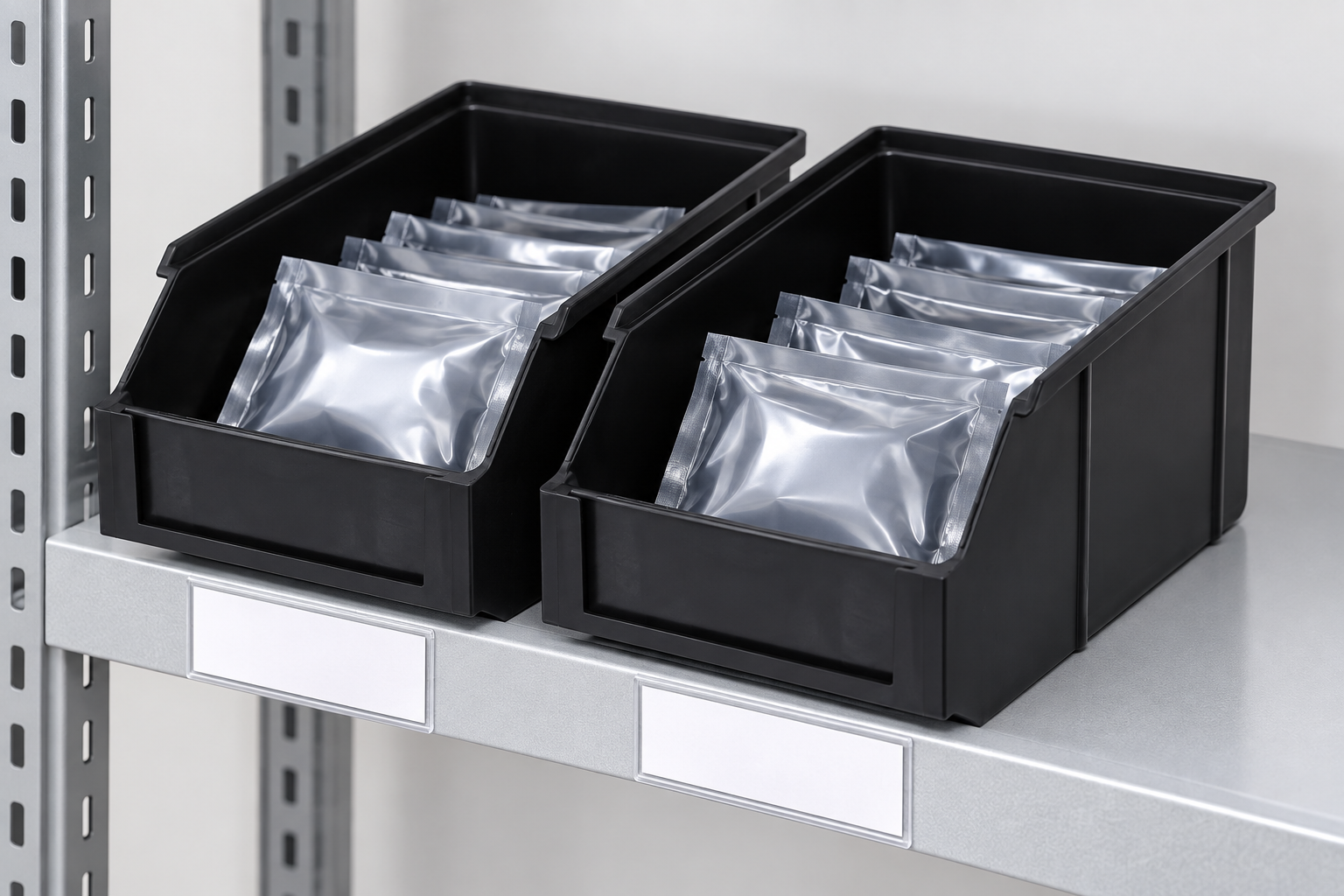
Specify ESD picking bins around front access, sealed component packages, labels, shelf reach and replenishment controls.
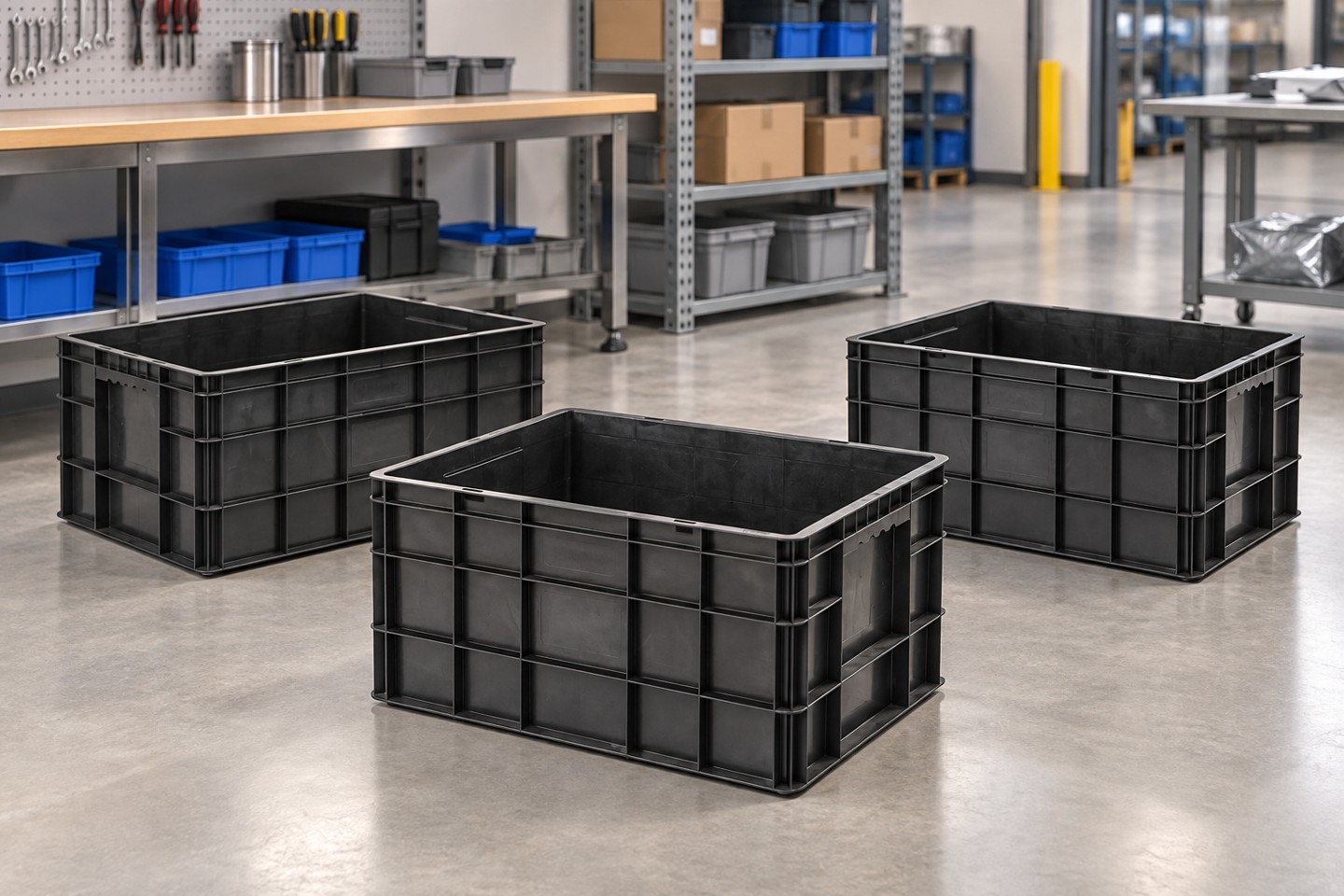
Compare ESD container bulk quotations on the same specification, tooling, accessories, qualification evidence, freight and actual lifecycle costs.
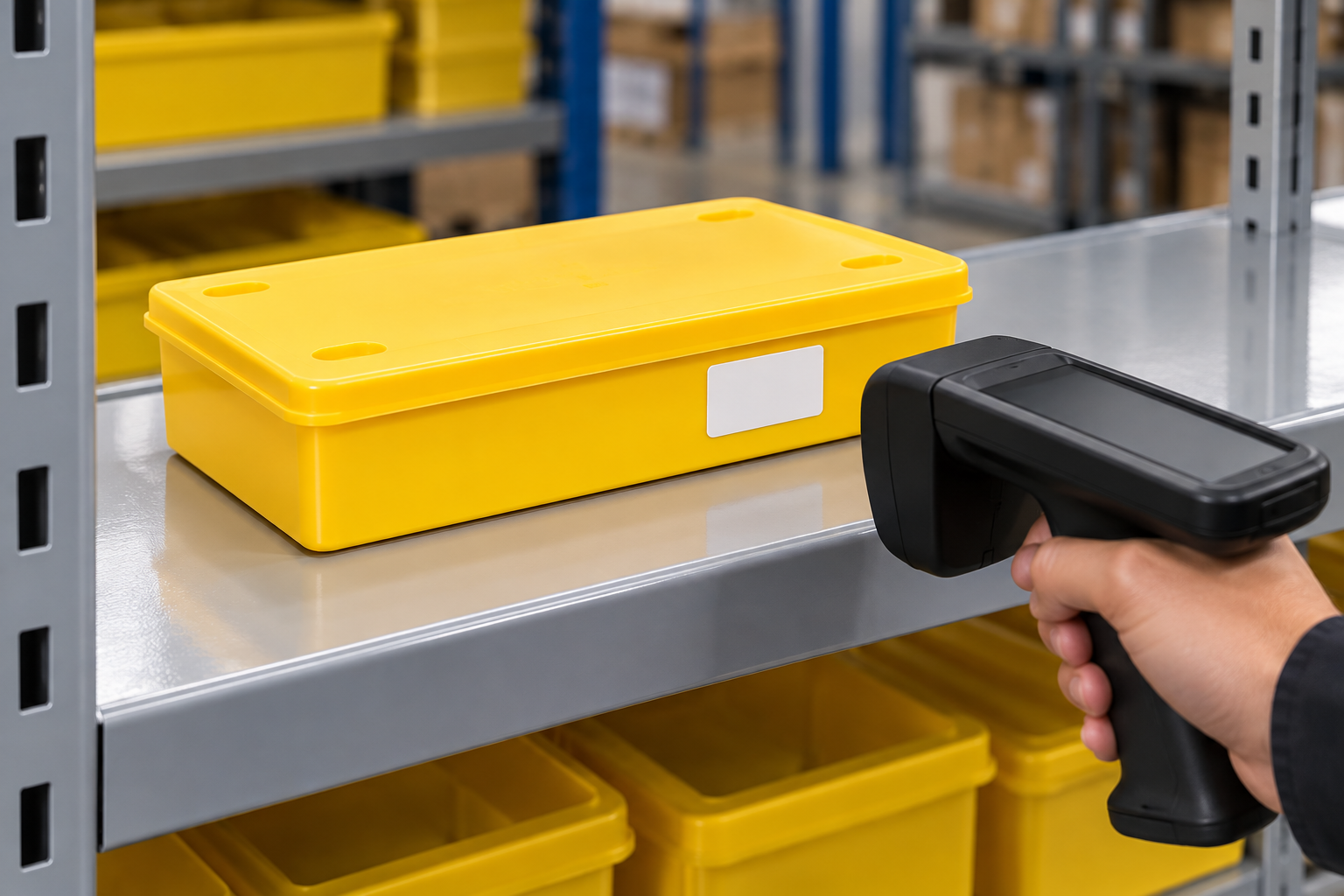
Place and test RFID labels on ESD bins with controlled asset identity, material-aware reads, shelf density trials and exception rules.
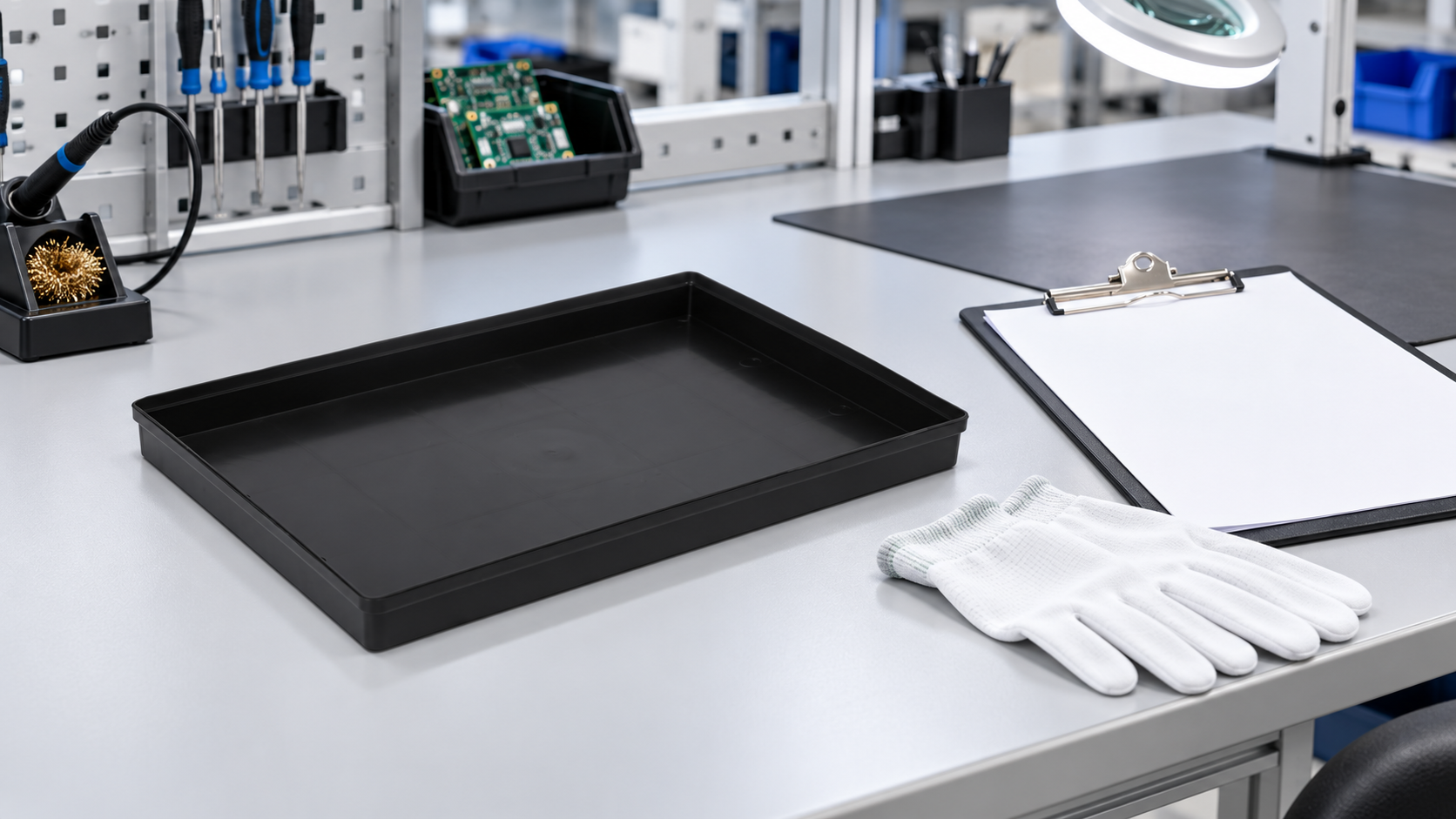
A practical guide to reusable ESD tray cleaning, inspection, asset control and lifecycle cost.
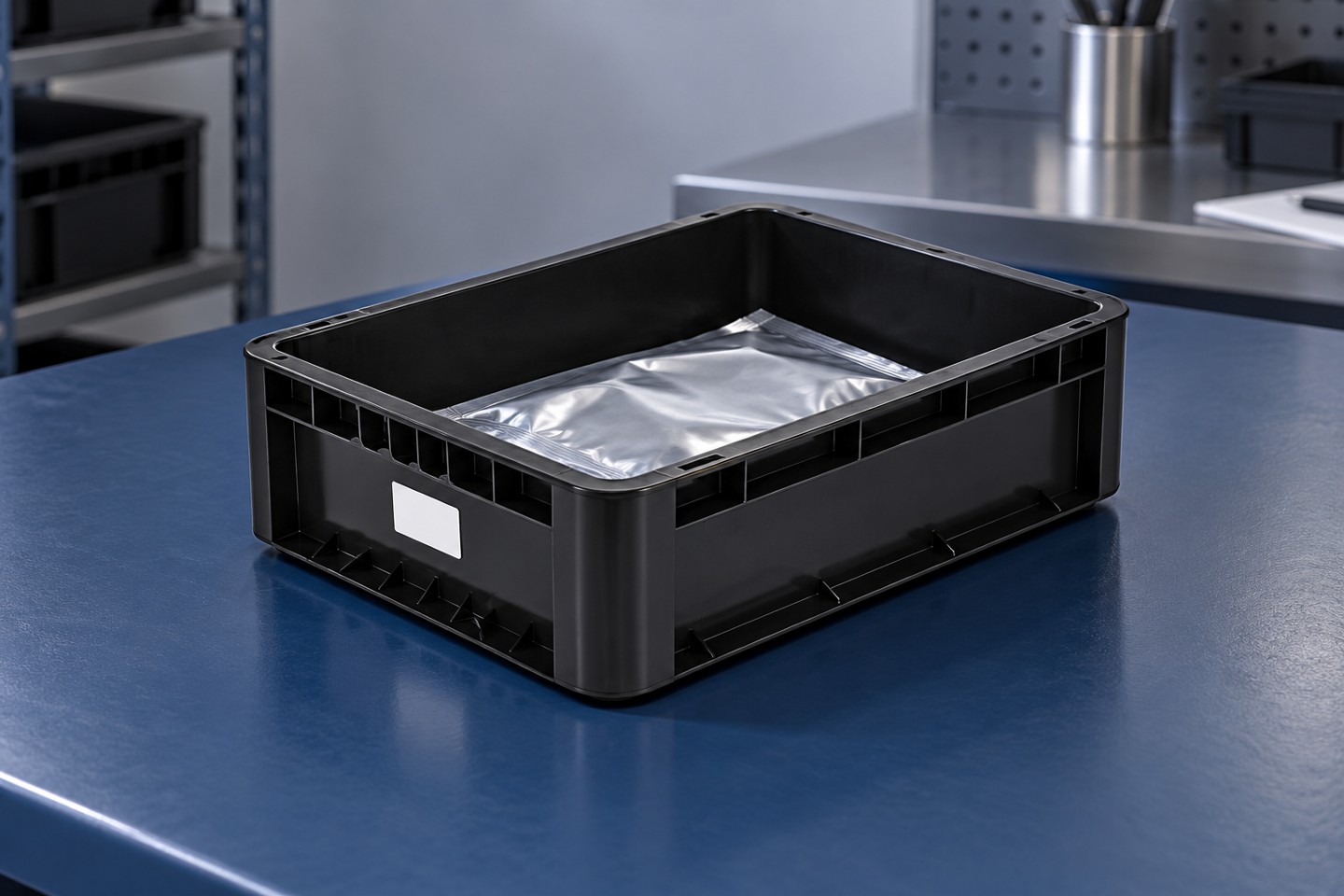
Plan ESD box barcode labels with separate asset and load identities, clear placement, cleaning compatibility and verified scan handoffs.
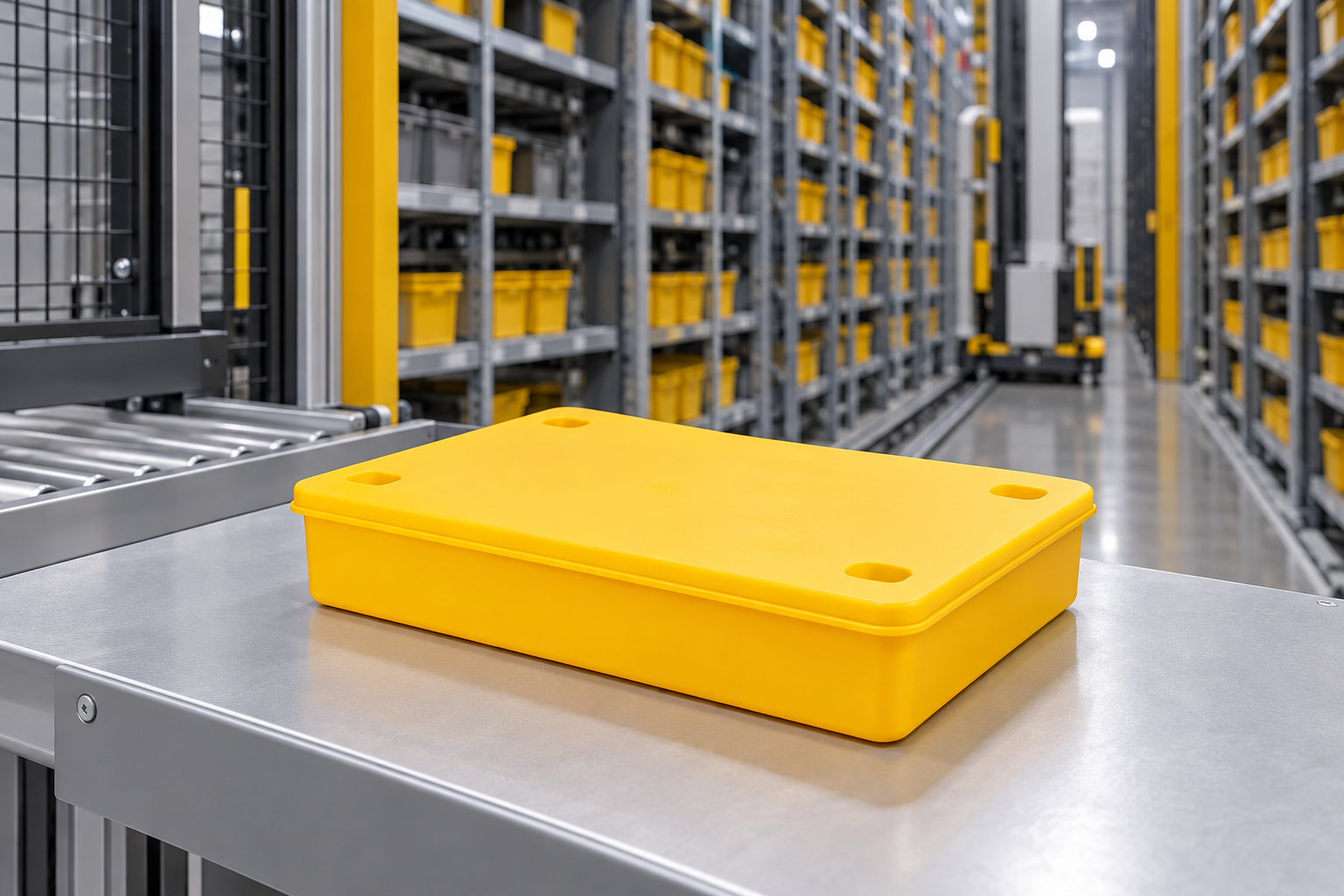
Evaluate ESD bins for automated warehouses with system-specific geometry, loaded handling, identification and ESD qualification.
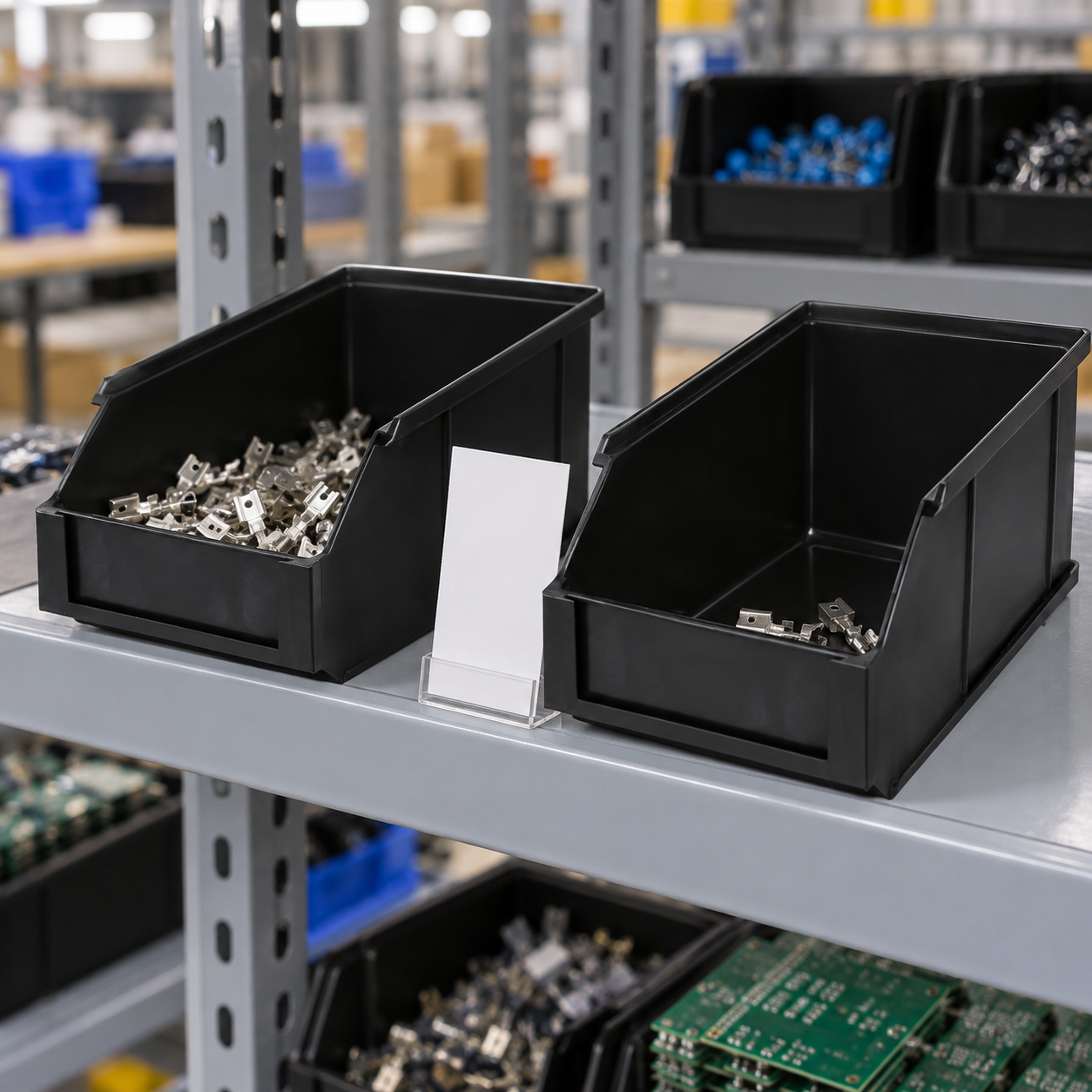
Apply FIFO or FEFO to electronic components while preserving lot identity, packaging condition, parent-child splits and quality status.
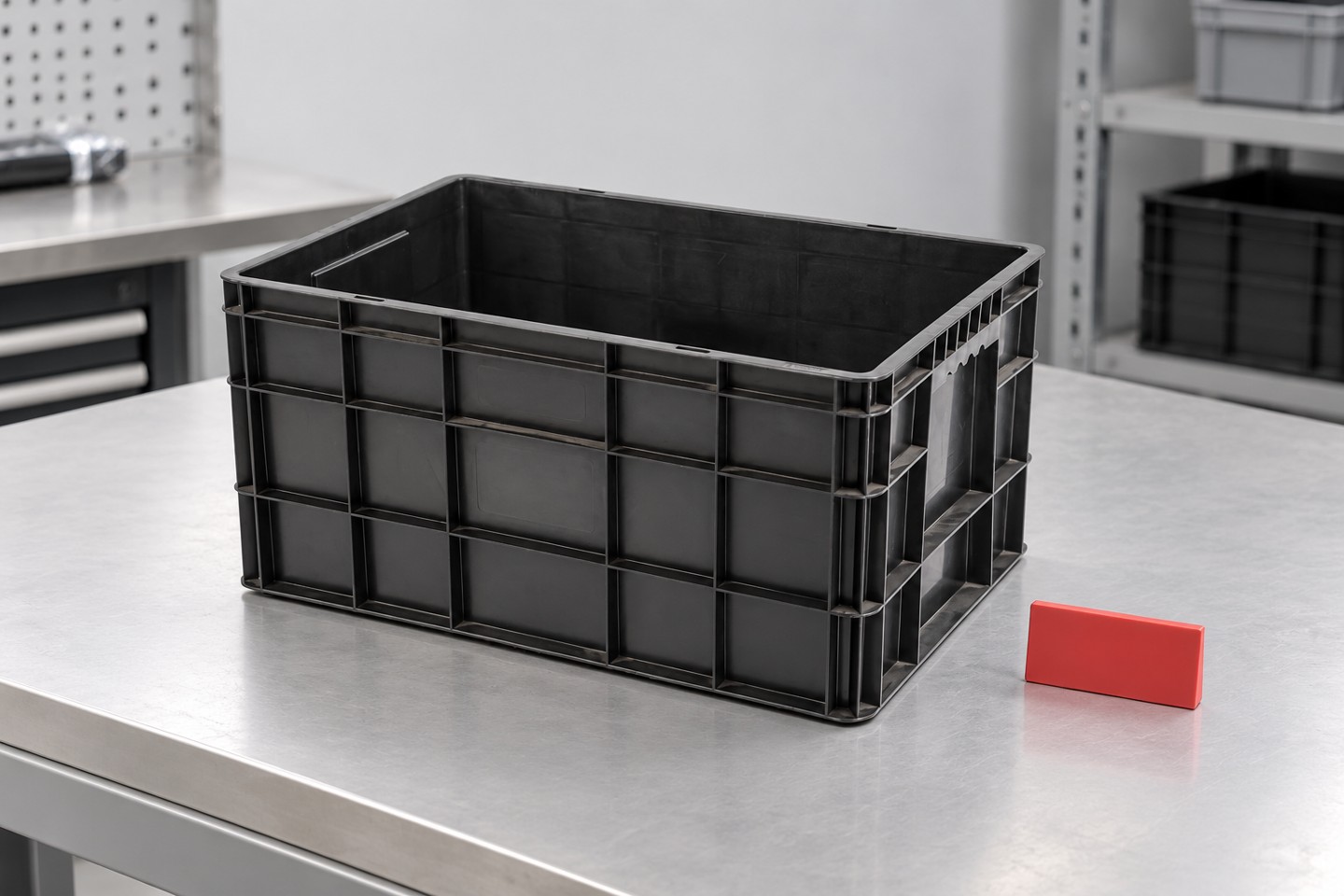
Decide whether a damaged ESD box needs approved repair or replacement by reviewing load-bearing features, electrical properties and release evidence.
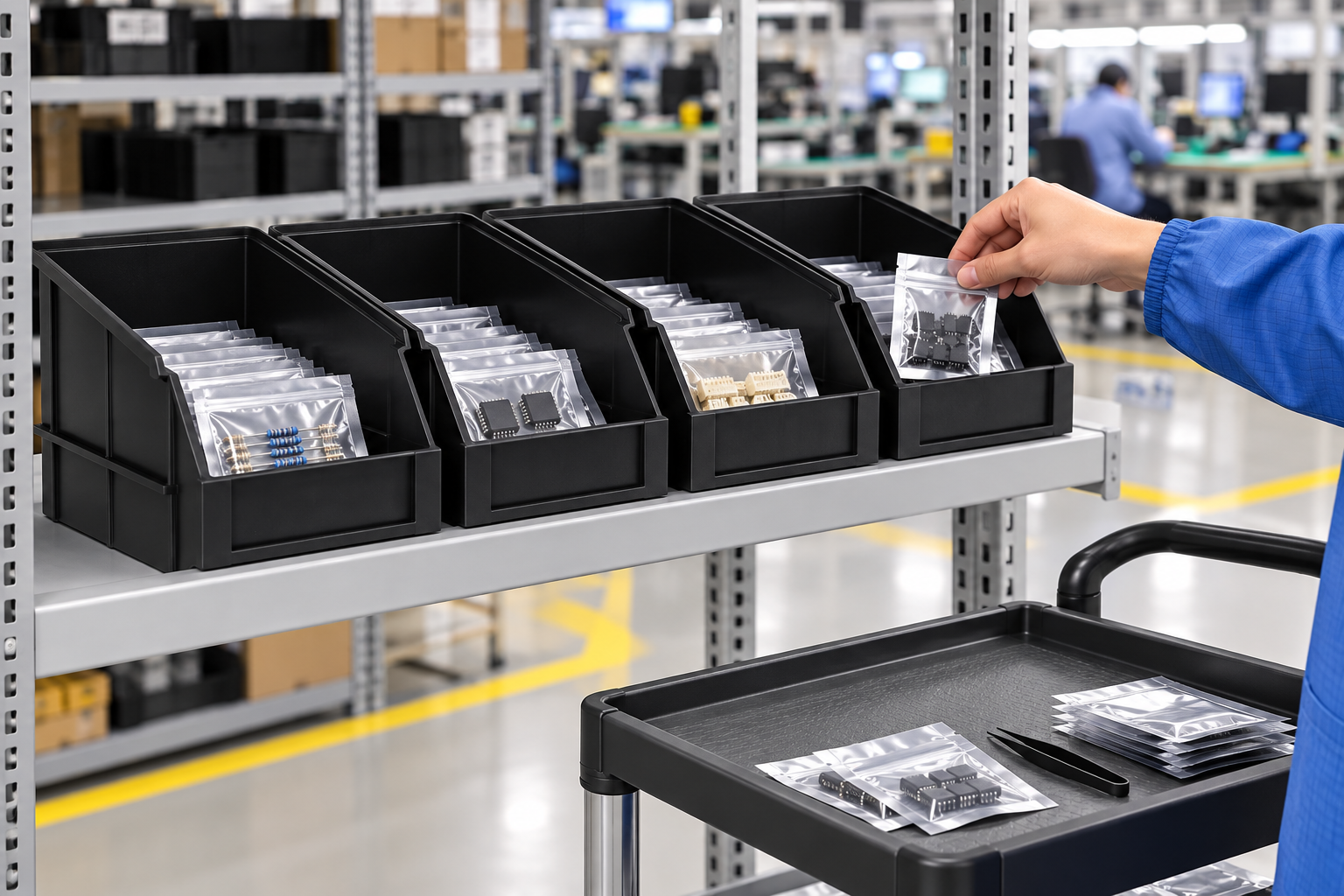
Design fast line replenishment with protected component bins, stable pick faces, refill signals, lot verification and return control.