- Turbo
- Blog
ESD finger cot storage should keep unopened stock identifiable, protected and within the conditions specified for the exact supplied item. Retain the original closure, item and lot information, check the applicable shelf-life statement, and isolate packs with uncertain exposure or damaged packaging. Do not assign a universal temperature or expiry period from the words “ESD finger cot.” Materials, processing and supplier instructions differ. A useful stockroom system connects each unopened pack to its approved specification and records the reason for any hold before the material reaches an electronics workstation.
Define what the unopened-stock review covers
This review begins after receiving acceptance and ends when an authorized user opens the pack. It addresses location, package condition, identity, expiry control and movement between stores. It does not establish electrical performance by appearance, qualify an alternative material or approve the fit on an operator’s finger. Those decisions need their own evidence. Keeping the boundary clear makes the warehouse check practical without asking a storekeeper to repeat laboratory or process qualification.
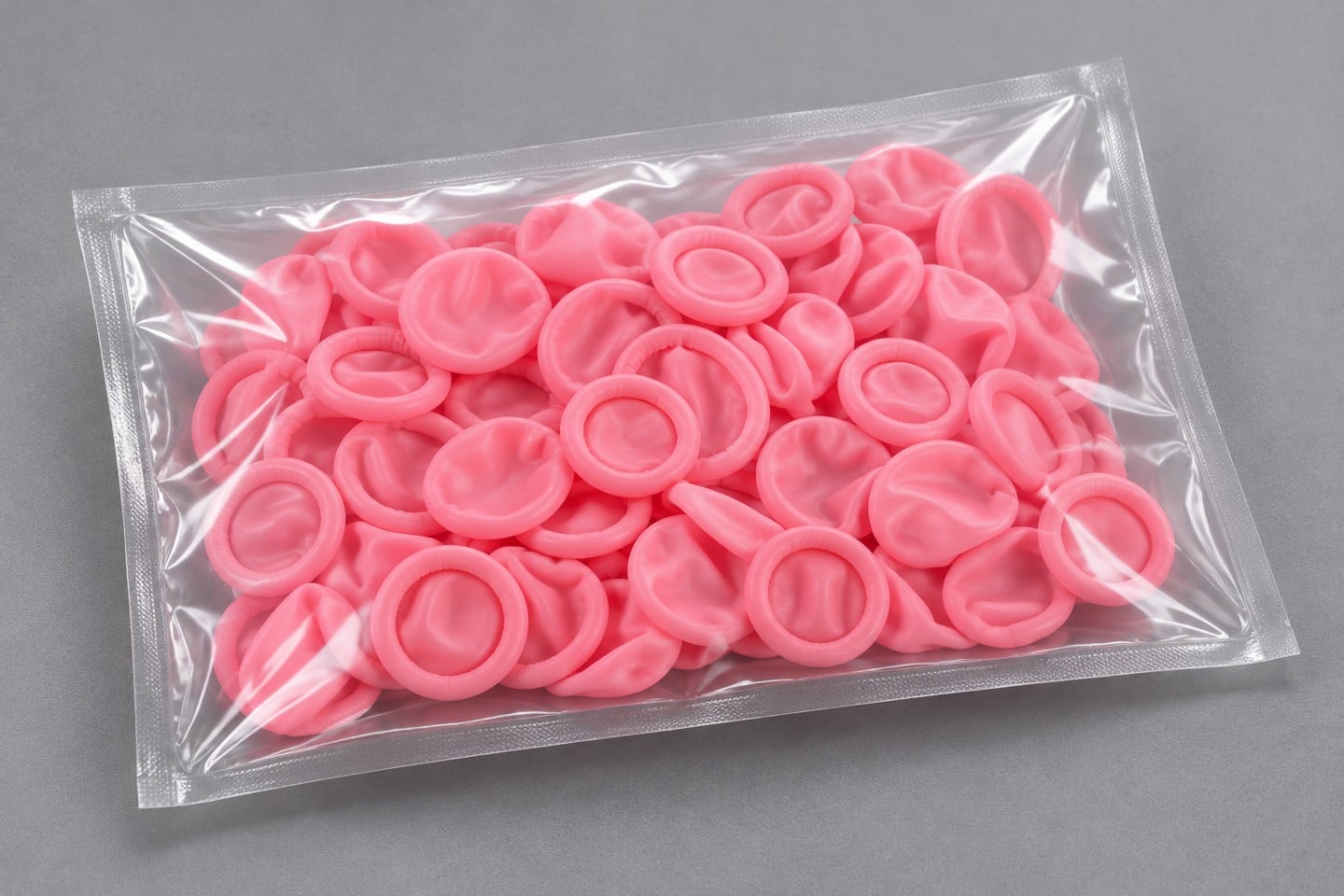
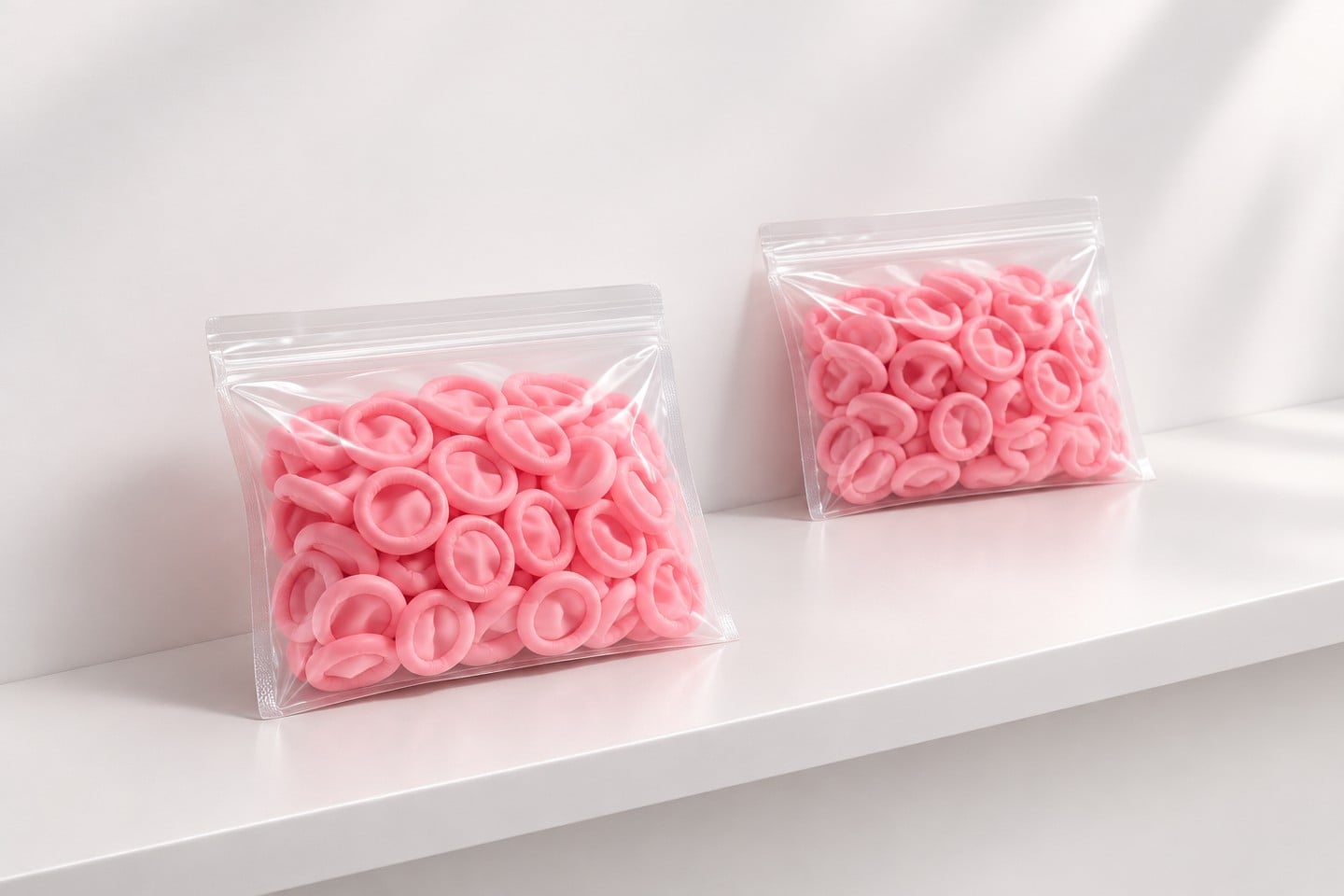
Benutzen Sie SWESD disposable finger cot product page to identify the product being discussed in an inquiry. Confirm the material, size, packaging arrangement and applicable storage instructions for the offered variant. The pink reference illustration identifies the pictured product family; color does not establish material composition, shelf life, cleanliness or resistance. The transparent pouches shown here illustrate a storage arrangement and are not a promise about the packaging supplied with an order.
Obtain the instructions before allocating a shelf
Ask the supplier for a storage statement tied to the item or specification revision, including any temperature, light, moisture or other exposure restrictions. Clarify whether a stated life starts at manufacture, shipment, receipt or another defined event. Record which date appears on the package and what to do if the label provides only a lot code. A purchasing date cannot automatically replace a manufacturing date. Where no expiry is stated, request clarification rather than inventing a date to make the inventory system accept the material.
Manufacturer literature reviewed for this topic uses different life and storage statements for different finger cot products. That variation is the reason to obtain item-specific instructions, not a basis for transferring another manufacturer’s numbers to SWESD stock. Keep the current approved statement in a controlled location accessible to stores and purchasing. If a quotation lacks it, make the missing statement an explicit clarification item before a large replenishment order creates a storage problem.
Keep the supplier identity attached to each pack
A shelf location should distinguish product, size and lot even when several packs look alike. Retain the supplier label and avoid placing an internal sticker over the original item, lot or date. An internal stock code can supplement those details, provided the mapping is controlled. If two codes point to one approved item, the stores record should make that relationship clear to a new employee without relying on remembered nicknames or the appearance of the product.
Das GS1 US barcode identification guidance distinguishes identification of trade items and logistics units. That provides useful general context for keeping a carton identifier separate from the identity of its contents. It does not require a particular barcode system for every finger cot purchase. A readable local record can work, but it must connect the pack being moved to the actual supplier item and lot instead of treating the storage bin number as the product identity.
Choose a location that preserves the approved conditions
Review the actual shelf position rather than assuming the whole room has uniform conditions. Consider nearby windows, heaters, frequently opened exterior doors, cleaning activities and other stored materials. Compare those observations with the supplied instructions. Use the site’s approved storage controls when monitoring is needed; do not improvise humidity equipment or refrigerated storage because they sound more protective. A location change should be reviewed when it changes the exposure assumptions on which the original allocation was based.
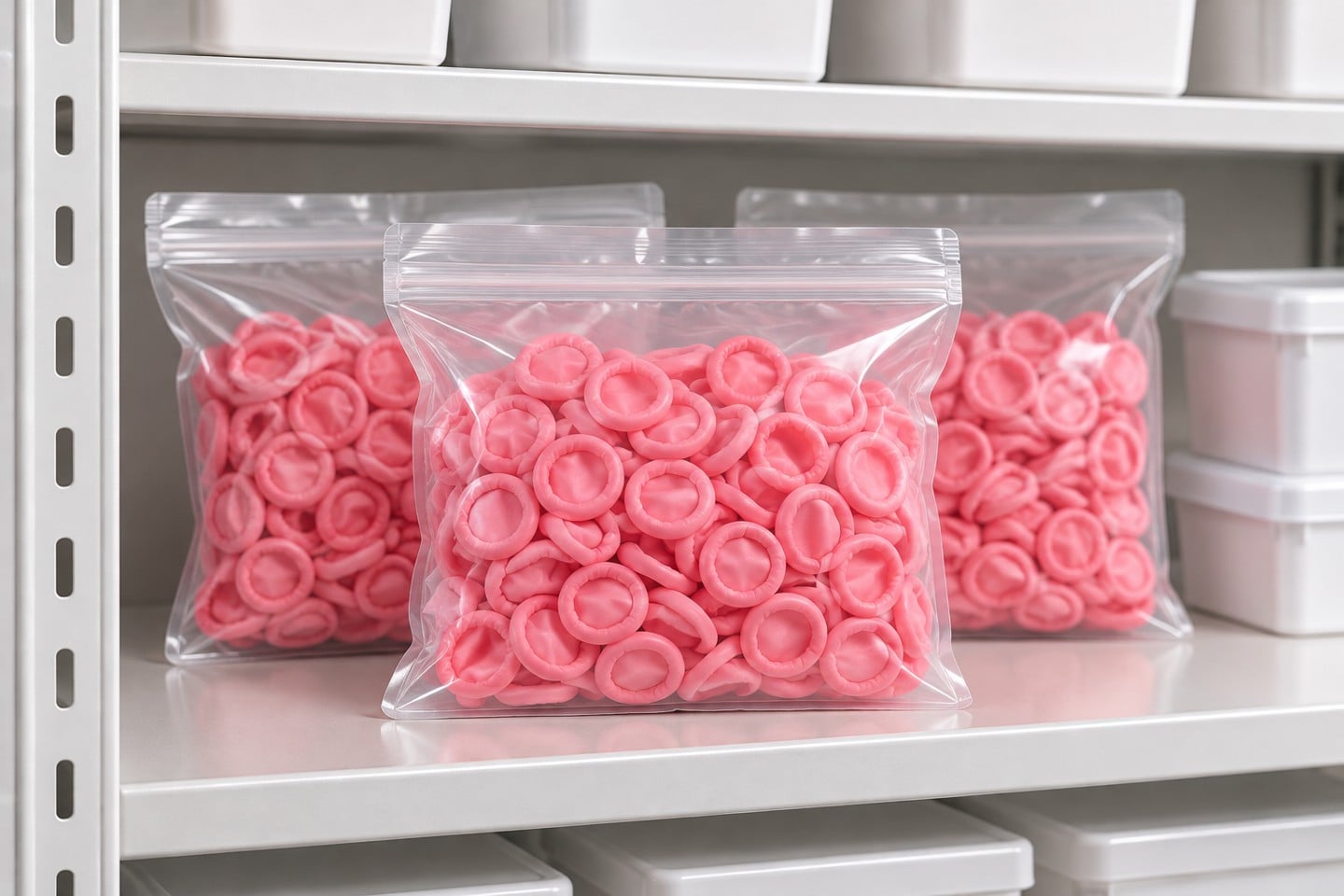
Keep unopened packs protected from crushing, puncture and contact with dirty shelving. Use a clean, suitable shelf container if local procedures require one, without discarding the original pack or concealing its label. Avoid overfilling a tote so that the bottom pouches carry the weight of unrelated stock. A secondary container is organizational support. Unless separately qualified, it does not add a cleanliness grade, electrostatic shielding function or extension of shelf life.
Use an unopened-pack condition check
The receiving inspection and the routine storage check answer different questions. Receiving establishes whether a delivery can enter stock; storage review checks whether accepted packs remain in an eligible state. The finger cot incoming inspection guide covers that earlier handoff. For unopened stock, focus on changed conditions such as broken closures, unreadable information, visible contamination, unexpected moisture or signs that a package has been compressed or punctured.
| Beobachtung | Immediate stores action | Evidence for disposition |
|---|---|---|
| Pack closed and identity readable | Keep in approved location if otherwise eligible | Item, lot and applicable date basis |
| Closure torn or punctured | Separate affected pack from issue stock | Photo and affected quantity |
| Item or lot unreadable | Hold pending identity clarification | Original delivery and transfer records |
| Possible unsuitable exposure | Record event and request review | Known conditions and duration, with uncertainty |
| Expiry or life basis unclear | Obtain supplier or quality decision | Current item-specific instructions |
This table is a proposed stores decision aid, not a product test method or a standard-derived acceptance limit. The responsible quality owner should adapt it to the supplied packaging and local procedure. A visibly normal pack may still have an unresolved exposure history. Conversely, a dusty outer transport carton does not by itself establish contamination inside every protected inner pack. Keep those observations separate and route the evidence to the person authorized to decide.
Rotate by the correct date and release status
If the product has a defined expiry, first-expiring-first-out can keep the earliest eligible stock visible. If it does not, use the site’s approved rotation rule while the supplier clarification is resolved. Stock on hold must not become the next issue merely because it is oldest. Arrange the inventory record so a picker sees both the date basis and the release status. A colored shelf card is useful only if it matches the current electronic or controlled paper record.
cURL Too many subrequests by single Worker invocation. To configure this limit, refer to https://developers.cloudflare.com/workers/wrangler/configuration/#limits.
cURL Too many subrequests by single Worker invocation. To configure this limit, refer to https://developers.cloudflare.com/workers/wrangler/configuration/#limits
cURL Too many subrequests by single Worker invocation. To configure this limit, refer to https://developers.cloudflare.com/workers/wrangler/configuration/#limits.
cURL Too many subrequests by single Worker invocation. To configure this limit, refer to https://developers.cloudflare.com/workers/wrangler/configuration/#limits.
cURL Too many subrequests by single Worker invocation. To configure this limit, refer to https://developers.cloudflare.com/workers/wrangler/configuration/#limits
cURL Too many subrequests by single Worker invocation. To configure this limit, refer to https://developers.cloudflare.com/workers/wrangler/configuration/#limits.
cURL Too many subrequests by single Worker invocation. To configure this limit, refer to https://developers.cloudflare.com/workers/wrangler/configuration/#limits cURL Too many subrequests by single Worker invocation. To configure this limit, refer to https://developers.cloudflare.com/workers/wrangler/configuration/#limits. For choosing hand coverage, the Fingerhülsen-gegen-Handschuh-Vergleich addresses a different decision from shelf storage.
Keep ESD qualification separate from warehouse appearance
Das EOS/ESD-Vereinigungs-Grundlagenserie explains the broader need to control electrostatic risks around sensitive devices. A stockroom inspection supports that program by preserving identified consumables, but it cannot demonstrate the electrical behavior of a finger cot. Keep the approved product specification and any required verification evidence connected to the item. Do not use pink color, an intact pouch or an ESD shelf sign as a substitute for that evidence.
The educational video below introduces electrostatic discharge as background for electronics handling. It does not prescribe finger cot shelf life, validate the illustrated storage arrangement or provide instructions for a particular product. The complete storage decision remains with the supplier’s applicable instructions and the site’s approved procedure. This distinction also prevents a generic training resource from becoming an unsupported purchasing claim when the article is shared with a supplier.
Send a focused replenishment inquiry
A useful inquiry states the approved item, required size, expected issue rate, delivery quantity and storage conditions available at the destination. Ask the supplier to identify packaging quantity, lot marking, manufacture or expiry information, storage restrictions and any minimum remaining life required on arrival. If split shipments are likely, clarify how each shipment retains its own lot information. These answers let purchasing compare offers on usable stock rather than assuming that a lower carton price produces an equivalent replenishment.
Close the review with a named owner and a simple action: retain in eligible stock, relocate under the approved conditions, hold pending clarification or remove from use under the site’s disposition process. Keep the reason linked to the affected pack or quantity. That record makes the next stock count faster and prevents the same unclear pouch from being repeatedly investigated, returned to the shelf and eventually issued without anyone consciously accepting it.
Häufig gestellte Fragen
Is there one shelf life for all ESD finger cots?
No. Obtain the life and storage conditions for the exact supplied item, including the event from which the stated period is measured.
Does an unopened pouch prove the stock is usable?
It supports the package condition check, but identity, dates, exposure history and the approved release requirements must also be resolved.
Can I combine two lots into one pouch?
Keep their identities separate. Combining pieces removes the original pack-to-lot relationship and complicates any later hold.
Should stock always be issued by arrival date?
Use the approved rotation rule. Where expiry applies, arrival order alone may differ from the earliest eligible expiry.
Can the pink color establish ESD performance?
No. Use the approved product specification and the required verification evidence for the intended electronics process.


Schreiben Sie eine Antwort