- Turbo
- Blog
A sticky mat has just been removed and a rectangular mark remains on the floor. Before installing its replacement, establish what the mark is, whether the flooring can be cleaned under the approved procedure, and who can release the doorway for traffic. A glossy outline may be transferred adhesive, finish affected by removal, cleaner film or simply a contrast between protected and exposed floor. The shape alone cannot identify the material.
A cleanroom sticky mat floor residue review gives facilities and contamination-control teams a short workflow between removal and reinstallation. It applies to disposable peel-off mats with an adhesive base. Follow the mat supplier’s directions and the flooring manufacturer’s approved care instructions, especially when the floor is coated, dissipative, or under a facility warranty.
Capture the condition before disturbing the area
Protect the doorway according to the site procedure. A tacky patch or a raised remnant may catch a shoe or cart wheel. Keep the inspection away from an active traffic path until the responsible team has reviewed it. Arrange an approved alternate route if the doorway is needed and do not cover the evidence with another mat simply to restore the route quickly.
Take a context photo and a closer view in available light. Include the removed mat position and note whether the mark follows the full perimeter, one corner or a strip. Record the mat identifier and lot if available, the floor finish, installation date or approximate dwell, and any cleaning changes since installation. Write down who removed the mat and whether it came away intact. A patch with a matching section missing from the underside is a stronger investigation lead than an outline alone.
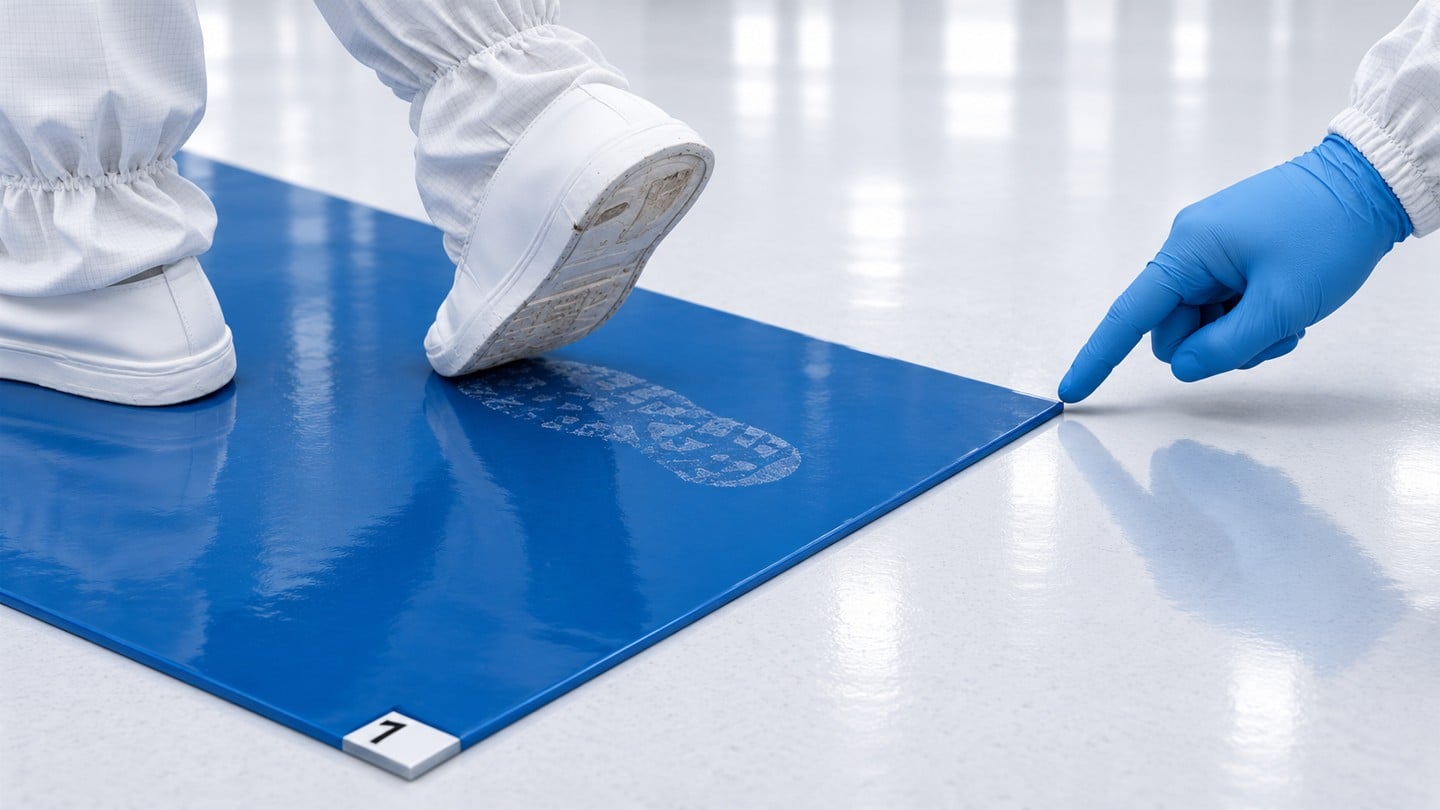
If the facility allows a closer inspection, document texture and visible fragments without scraping or adding chemicals at this stage. Use the approved site method for any contact test. A second view at a shallow angle may help separate surface material from a change in gloss. Photograph the adjacent floor and compare it with another location on the same floor system when possible. A highly traveled entry may have a different sheen even with no transfer from the mat.
Separate adhesive, cleaning film and floor change
The floor and mat need separate records. The mat supplier can identify the expected bottom layer, its appearance and removal instructions. The flooring team can establish what the finish should look like and whether a visual change warrants investigation. Bournas Medicals’ sticky mat installation instructions cover the difference between routine sheet changes and preparing the surface for a new mat. Liberty Industries’ tacky mat instructions emphasize cleaning the installation area and letting it dry. Use guidance for the actual installed items when deciding what applies to your floor.
| Beobachtung | Compare or document | Next owner |
|---|---|---|
| Perimeter outline | Photo at a shallow angle and adjacent floor finish | Einrichtungen |
| Tacky patch | Removed mat underside and matching location | Facilities and mat supplier |
| Streaks outside footprint | Recent cleaning method and area treated | Site cleaning team |
| Soft or discolored surface | Installed floor system and recent maintenance | Flooring owner |
| Clean dry surface | Local release criteria and replacement lot | Authorized release owner |
Where adhesive transfer is suspected, inspect the removed mat underside without introducing its used surface to a cleaner zone. A clean section and a torn section are distinct observations. Where cleaner film is suspected, check whether the area was recently cleaned, whether any rinse or drying step was missed, and whether a similar streak extends outside the footprint. If the floor appears lifted, discolored or soft, stop and refer the condition to facilities. Additional cleaning can remove evidence or worsen an affected finish.
Approve the cleanup method for the floor
Select the method from the current flooring care instructions and site cleaning procedure. A supplier may suggest an agent appropriate for some substrates while the floor system has its own limitations. Confirm the exact product, concentration, contact method, ventilation and any safety requirements through the approved process. Avoid transferring an agent recommendation from an unrelated mat or from a different finish. If there is no approved method for the condition, hold the area while facilities obtains written guidance.
If the procedure calls for a small trial, define the test spot and record the before condition. Use the allowed tools and materials and inspect after the specified drying interval. Look for residue removal as well as any change to appearance or surface condition. Document the result before extending the method to the entire footprint. Some facilities also have acceptance checks for electrical properties or floor condition after maintenance. Apply the checks required for the actual installed system and record them independently from the visual review.
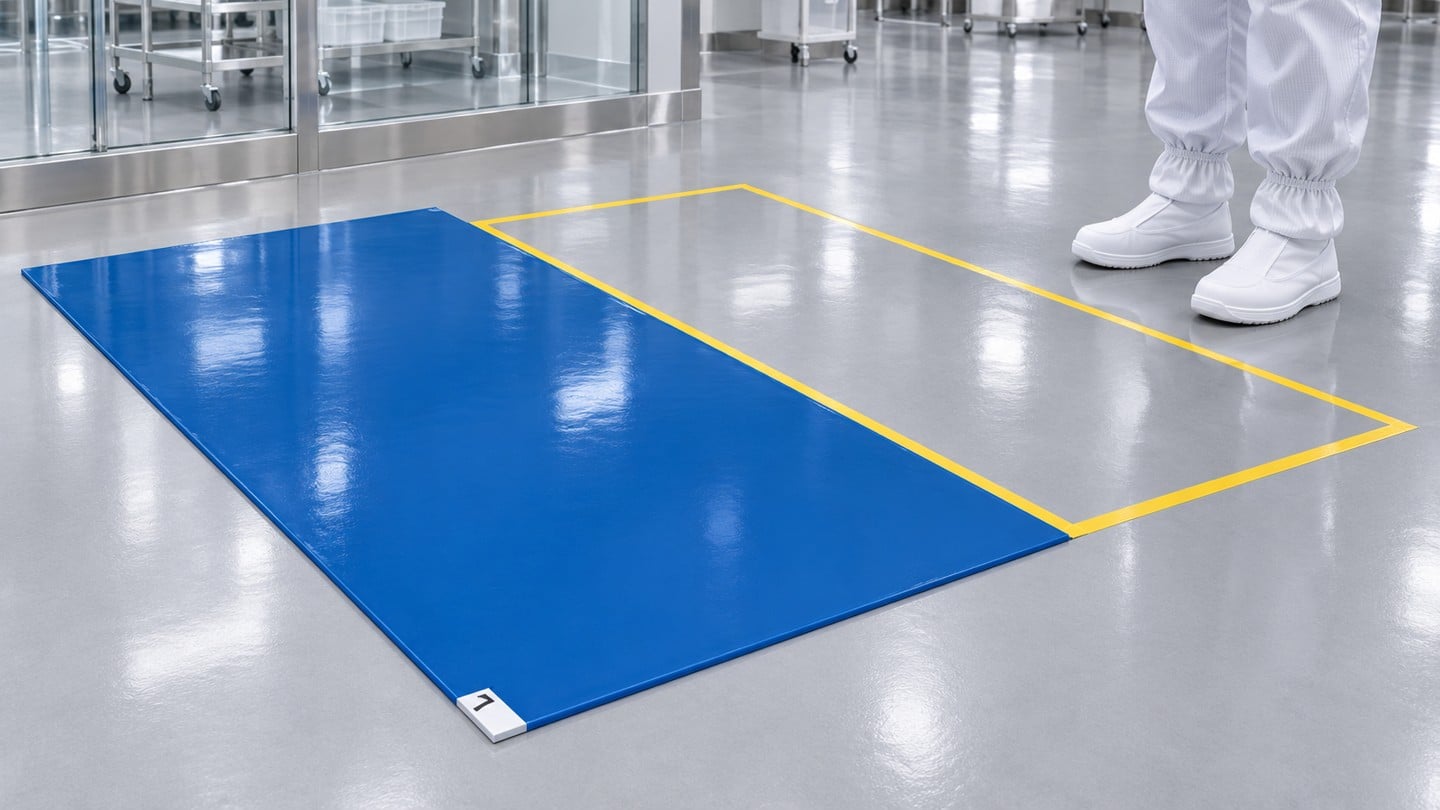
When the cleaning method is already approved, work within the designated boundary and protect neighboring clean zones from removed material. Track whether several approved passes were required and whether the condition returned after drying. If the result is inconclusive, hold the doorway or follow the approved traffic control plan while the owner reviews it. Reinstalling too early can conceal remaining film and make the next removal difficult to interpret.
Release the surface and replacement separately
First, verify the floor meets the site’s release criteria. Record what was seen and what was actually tested. A clean, dry-looking floor may be appropriate for visual acceptance under one procedure while another requires further checks. The person authorizing the location should know which criteria apply. If a condition is merely cosmetic and accepted by facilities, document that decision so the next shift can distinguish a known mark from a new failure.
Second, confirm the replacement mat and position. The new mat should match the approved identifier and placement drawing, and its packaging and backing should be intact. Install per the supplier directions and site requirements. Record the lot and the reinstallation time. When the issue occurred repeatedly at one doorway, consider an approved observation after the first traffic interval to see whether edges lift or the surrounding floor shows signs of renewed transfer. Use the same location and lighting for comparison where practical.
Das SWESD cleanroom sticky mat product page can help identify a candidate for purchasing review. When the floor finish is a concern, ask for the supplier’s documented substrate restrictions, full-mat removal procedure and guidance for an approved trial. For related purchasing context, see the Anleitung zur Auswahl der Klebematte und der cURL Too many subrequests by single Worker invocation. To configure this limit, refer to https://developers.cloudflare.com/workers/wrangler/configuration/#limits. cURL Too many subrequests by single Worker invocation. To configure this limit, refer to https://developers.cloudflare.com/workers/wrangler/configuration/#limits.
cURL Too many subrequests by single Worker invocation. To configure this limit, refer to https://developers.cloudflare.com/workers/wrangler/configuration/#limits
cURL Too many subrequests by single Worker invocation. To configure this limit, refer to https://developers.cloudflare.com/workers/wrangler/configuration/#limits.
cURL Too many subrequests by single Worker invocation. To configure this limit, refer to https://developers.cloudflare.com/workers/wrangler/configuration/#limits cURL Too many subrequests by single Worker invocation. To configure this limit, refer to https://developers.cloudflare.com/workers/wrangler/configuration/#limits cURL Too many subrequests by single Worker invocation. To configure this limit, refer to https://developers.cloudflare.com/workers/wrangler/configuration/#limits.
cURL Too many subrequests by single Worker invocation. To configure this limit, refer to https://developers.cloudflare.com/workers/wrangler/configuration/#limits.
cURL Too many subrequests by single Worker invocation. To configure this limit, refer to https://developers.cloudflare.com/workers/wrangler/configuration/#limits
cURL Too many subrequests by single Worker invocation. To configure this limit, refer to https://developers.cloudflare.com/workers/wrangler/configuration/#limits.
Häufig gestellte Fragen
Does a rectangular outline prove adhesive transfer?
The outline establishes the former mat location. Look for matching material, compare the surrounding finish and review cleaning history before classifying it.
Can I use a solvent recommended by another mat brand?
Check the instructions for the actual mat and floor system. Use only a method approved for that finish and site conditions.
Should I install the next mat over the mark?
Wait for the floor owner to release the area. A new mat can hide residue or a change in the finish and make the investigation harder.
What is the most useful evidence for a supplier?
Provide the exact mat and lot, floor finish, location, dwell if known, removal photos and the documented cleaning method used before installation.
Do visual checks replace electrical verification on a dissipative floor?
Use the site electrical acceptance process when required. A visual review addresses appearance and cannot establish electrostatic performance.
Schreiben Sie eine Antwort