- Turbo
- Blog
A cleanroom wipe can look fresh after a pass even when the working face has already picked up material. If that face is turned onto the next fixture, the operator has created a transfer path without changing the wipe SKU, solvent or room conditions. A cleanroom wipe folding procedure should make the next action obvious: present a verified unused face, replace the wipe, or stop and reset the task. The procedure is particularly useful at shared electronics workstations where several operators may clean the same fixture using different habits.
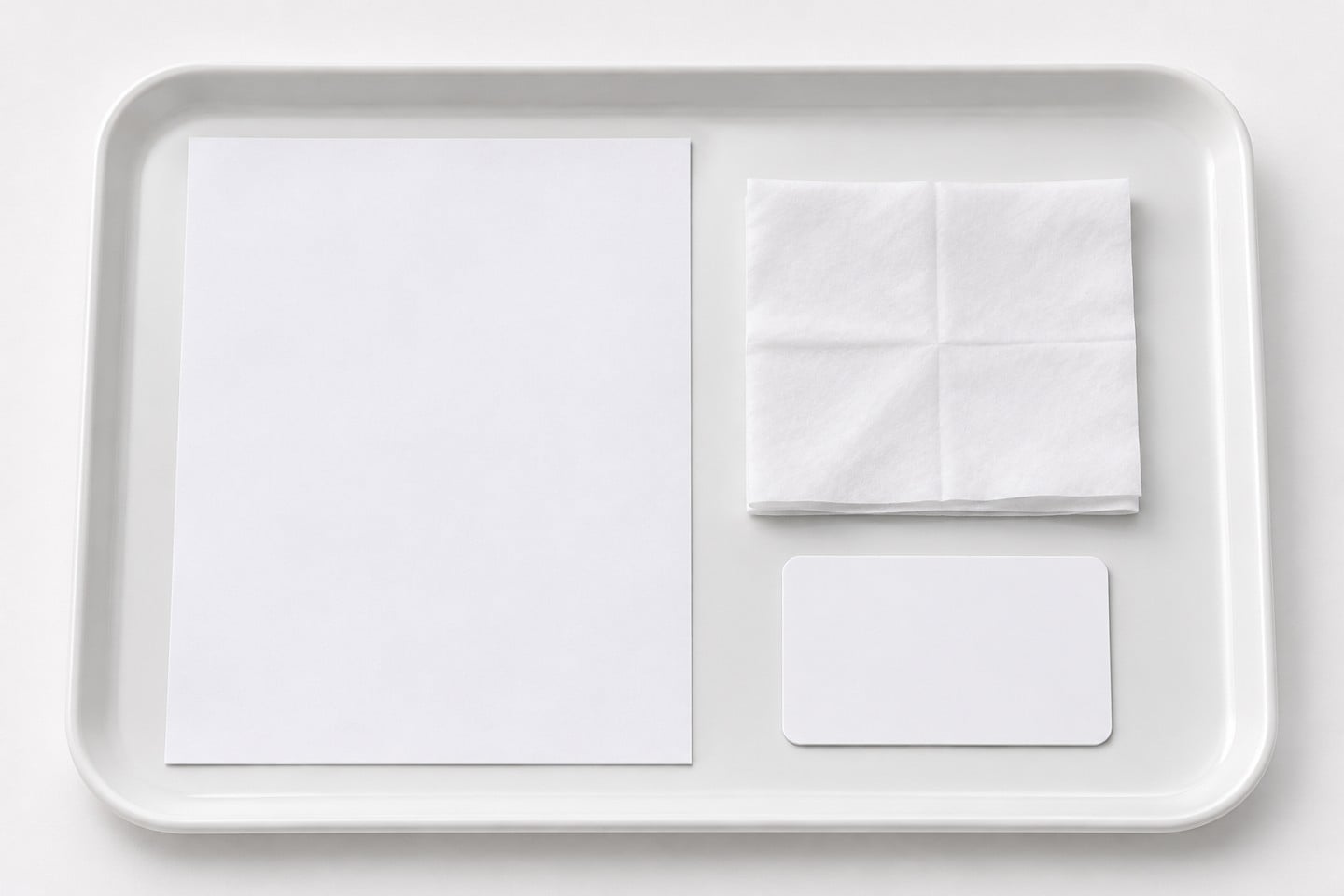
Quarter-folding gives operators a compact working pad and several surfaces to present in a controlled order. It is useful only when people know which faces have touched something. Start by defining what counts as an unused face for the task, where the operator can hold the wipe, and what ends its use. Then demonstrate those choices on the actual fixture with the gloves, wipe size and cleaning agent specified by the site.
Define the cleaning zone before choosing a fold
Draw the boundaries of the work in the instruction. For example, an approved station procedure might cover the flat insert of a fixture and its removable cover while treating the underside and handles as separate zones. Document where each pass starts and stops. A short drawing with arrows is generally easier to follow at a bench than a paragraph that tells people to clean thoroughly. Identify any recess, fastener or hinge where the pad cannot sit flat. These details determine whether the same folding method works throughout the task.
Agree on what happens between zones. A contact face that is suitable for continued work on one surface may be unacceptable after crossing a visibly dirty joint or contacting a handle. Set the boundary according to the site procedure and the risk to the product. Keep the instruction for opening, returning or discarding stock separate from the used-wipe sequence. The SWESD opened pack handling guide covers stock at the point of use.
Demonstrate the grip and the contact face together
Das Texwipe cleanroom wiping guide describes folding in midair, retaining the loose edges in the hand and presenting the folded side toward the work. Contec’s wiping technique guide illustrates how a quarter-folded wipe can present fresh faces. Use those references to explain the physical technique while following the approved local procedure for gloves, agents and disposal.
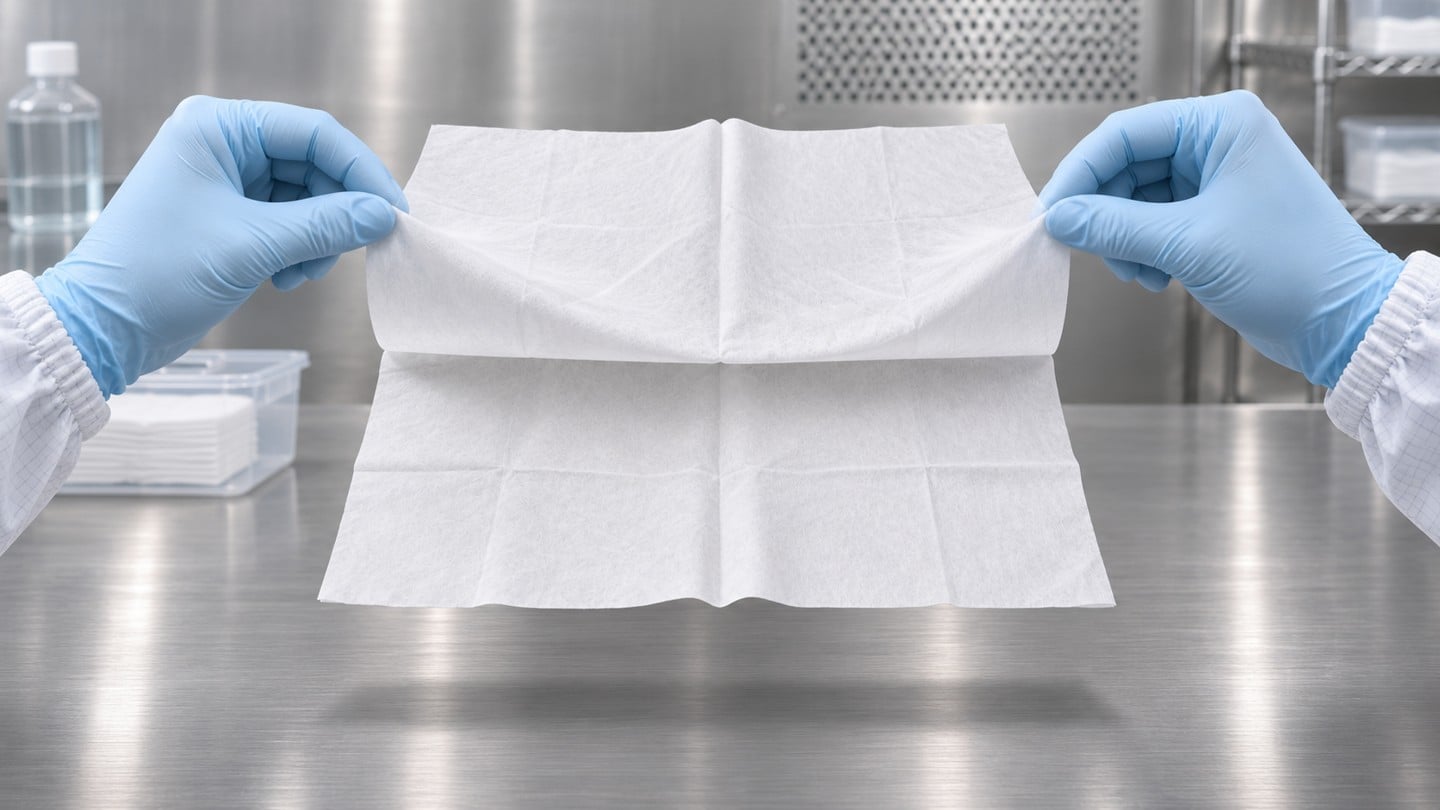
Have the operator start with an unused wipe and show the trainer which part of the wipe will first meet the fixture. Ask them to fold above the work without touching an adjacent table or putting the wipe down. Then have them show where their thumb and fingers hold the loose edges. This check often reveals a mismatch between the drawing and the operator’s glove fit. If a person must grasp the broad working face to keep the pad together, trial a more suitable wipe size or a site-approved presentation before revising the instruction.
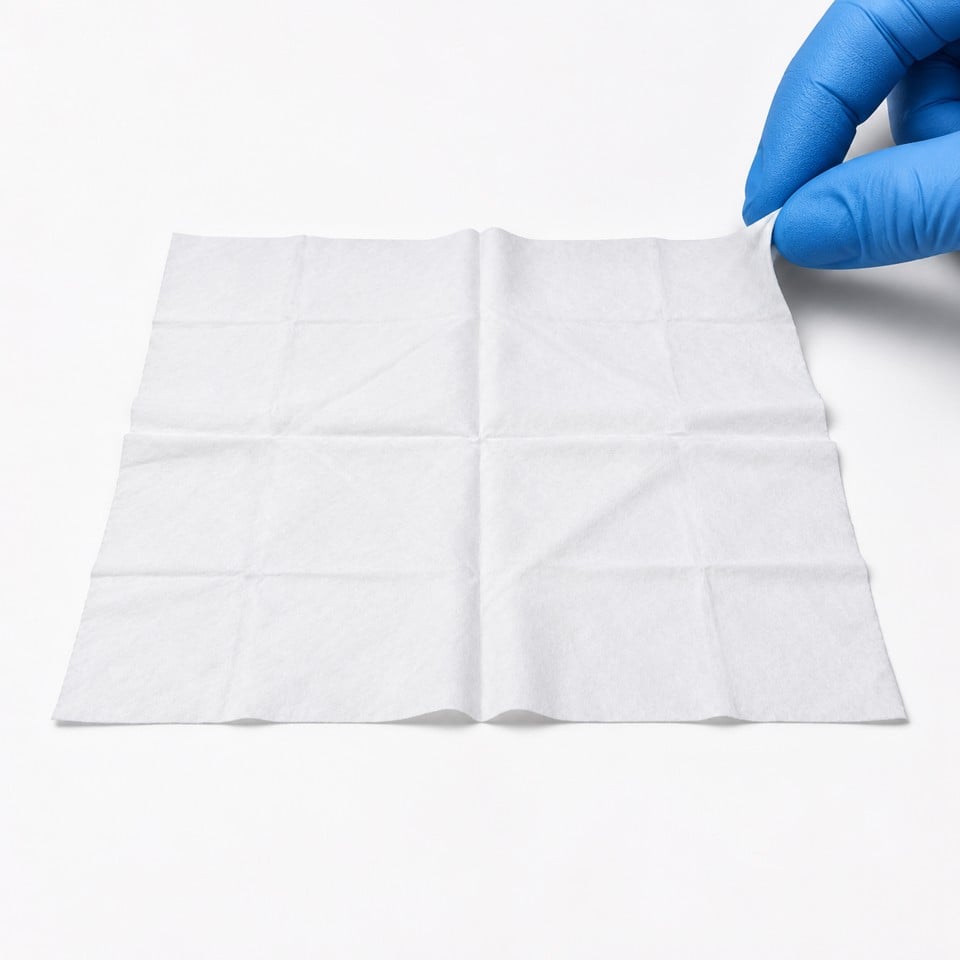
A flat coupon is a useful demonstration surface because the trainer can see the grip and pad contact from the side. A production fixture may have a narrow lip, a raised feature or a cutout that lifts the pad off the intended area. Watch what the operator does at that point. Pressing harder may just concentrate pressure at the lip. The correct response may be a separate pass, a fresh wipe, or an approved tool for the inaccessible geometry. Keep any change within the approved equipment cleaning procedure.
Plan the turn, the pass and the discard
Use a sequence that the operator can demonstrate without guessing. With a training wipe, the trainer can point to the first contact face, the fold that opens to present the next face, and the grip area. Keep marked training materials away from production. In the production instruction, describe each hand movement with a photo or simple drawing. Include the decision to discard if the operator loses track. Counting folds alone can fail when a gloved hand brushes a working face or a used face touches an unused one.
| Operator observes | Nächste Aktion | Record if repeated |
|---|---|---|
| Unused face identity is clear | Present it as the procedure directs | Face sequence |
| Grip contacts intended working face | Replace or reset under site procedure | Grip or pad fit issue |
| Pad contacts unintended surface | Follow discard rule before continuing | Contact point |
| Pad lifts at a fixture lip | Stop and use approved method for that geometry | Fixture feature |
| Wipe becomes hard to control | Replace and review the cause | Wipe identifier and condition |
Start at the cleanest area identified in the site procedure and follow the planned route. Use a deliberate stroke in the direction specified by that procedure. At the end of the stroke, lift the pad before moving back to the start of another lane if the approved method calls for one-direction wiping. Select the next face before contacting the next region. Training should show the transition in real time, including where the operator can pause safely if interrupted.
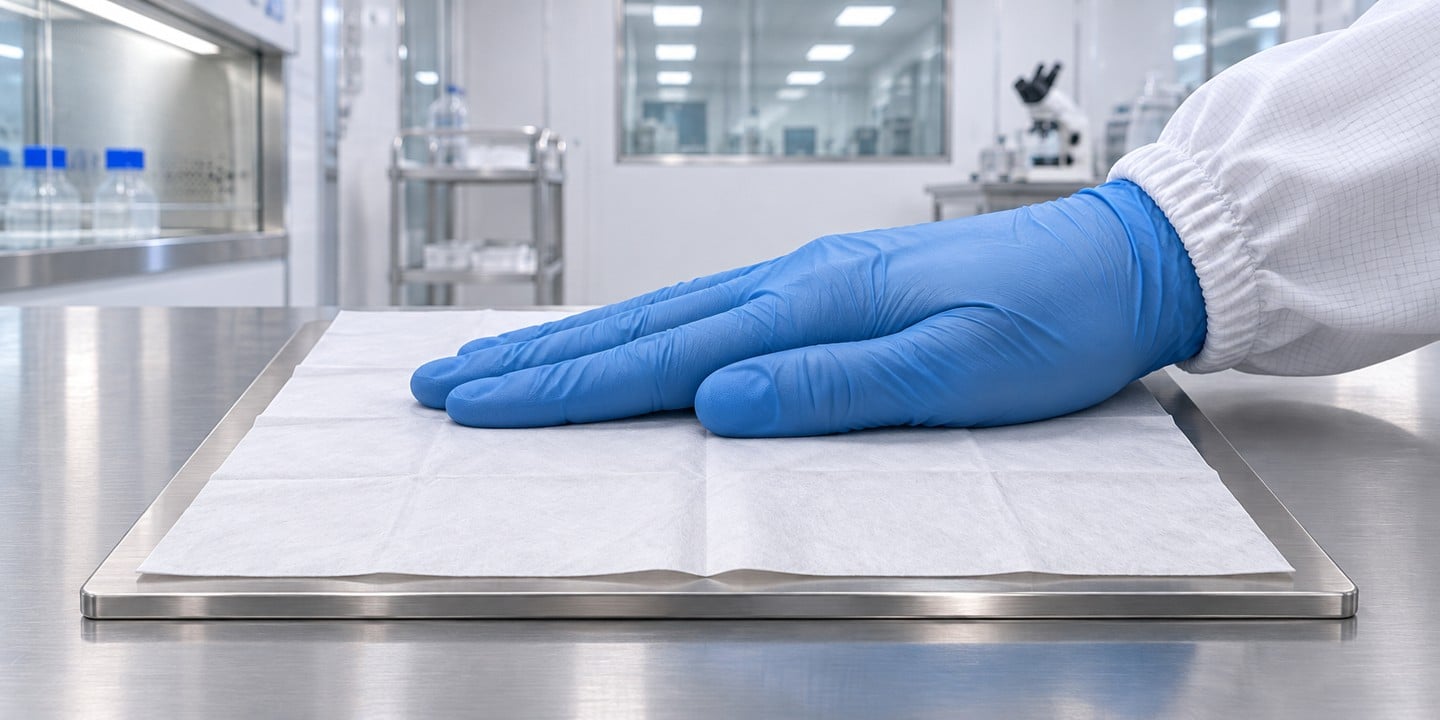
Write down task-specific replacement triggers. Examples for a qualification trial include loss of face identity, contact with an unintended surface, a tear, a saturated pad that no longer handles predictably, or completing a zone after which the wipe may not travel. The approved trigger can be stricter for a sensitive process. An apparently clean face does not prove absence of residue. If a procedure requires replacement after one pass or one zone, keep that rule even when an operator can expose another panel.
Test the method on the fixture before release
Run a controlled demonstration with the proposed wipe and the gloves normally used. Include an easy flat section and the hardest geometry the instruction covers. Ask operators to repeat the full sequence while a trainer watches from an angle where they can see both the hand and pad. Record where they turn the pad, whether they touch a new face, and where the pad bunches or lifts. Repeat with a second operator to find unclear steps that an experienced trainer might unconsciously work around.
Evaluate functional observations separately from cleanliness evidence. A wipe can be easy to fold and still leave unacceptable residue for the task. Conversely, an otherwise suitable material may be hard to control at a particular width or when used with the approved agent. Record the wipe identifier, fixture surface, agent, and observed point of failure. Use the process owner’s established cleanliness evaluation and acceptance limits. Do not generalize the findings to a different agent, finish or wipe construction without reviewing the change.
For tight geometry, compare the size of the folded footprint with the usable flat area. Ask whether the pad can be held securely while keeping the loose edges clear. If the wipe is too large, operators may trap an extra flap in the grip or drag an edge across a nearby part. A very small wipe can make the grip and working area hard to separate. Test both effects in the representative trial before setting an approved size.
Record purchasing changes that can alter the fold
Start a supplier conversation with the exact application and wipe identifier rather than a request for a generic cleanroom wipe. SWESD lists an ESD clean wiper for precision work. Ask which item is supplied, its unfolded dimensions, how it is presented in the pack and how to identify its lot. Request samples if the package presentation or hand feel matters to the established technique. For other related consumables, the SMT supplies collection gives a product-family starting point.
An apparently small substitution can change how the pad holds a fold or how much material protrudes beyond the operator’s grip. Compare the proposed item in the approved wet and dry conditions that actually apply to the task. Request change notification for attributes the site depends on, and route the sample through the normal approval process. If the facility qualifies edge construction separately, see the SWESD cut-edge and sealed-edge comparison. A supplier photo can clarify presentation but cannot establish how the wipe performs in the fixture.
Include a short record in the work instruction that can survive a shift handover. Identify the wipe, approved grip and face sequence, zone boundaries, replacement trigger, and where a technician records deviations. During a refresher, show one normal pass and one interrupted pass. Ask the operator to explain what they would do if the wipe falls on the bench, contacts the glove outside the grip area, or is set down midway through the task. The answer should follow a documented rule that another operator can apply consistently.
Keep electrostatic controls in the workstation procedure
At electronics workstations, the wipe and its technique are only part of the controlled process. The following ESD Association video provides general background for operators who work around sensitive assemblies. The site work instruction still governs the wipe, cleaning agent and face sequence used on a particular surface.
Häufig gestellte Fragen
Kann jede Fläche eines viertelgefalteten Reinigungstuchs verwendet werden?
Use only faces that remain eligible under the approved procedure. Grip contact, transfer or uncertainty can make a panel unavailable.
Warum die losen Kanten festhalten?
Die Greifvorrichtung hält lose Kanten zusammen, sodass die ausgewählte Fläche und die gefaltete Kante stets gleichmäßig präsentiert werden können.
Sollte ich das Pad drehen, während es die Vorrichtung berührt?
Heben Sie das Pad an und bringen Sie die nächste geeignete Fläche gemäß den Vorgaben des Verfahrens in Position. Üben Sie diesen Übergang während der Schulung.
Was ist, wenn ich nicht feststellen kann, welche Oberfläche verwendet wurde?
Befolgen Sie die Regel zum Zurücksetzen der Website. Ein vollständiges Zurücksetzen von Anfang an vermeidet, dass Sie raten müssen, welches Gesicht infrage kommt.
Can a new size use the same folding instruction?
Prüfen Sie den Griff, die Auflagefläche des Pads und den Kontakt an der tatsächlichen Vorrichtung, bevor Sie die Änderung genehmigen.
Schreiben Sie eine Antwort