- Turbo
- Blog
ESD shielding bag incoming inspection should verify the delivered product identity, packaging condition, visible bag construction, closure operation and the evidence required by the purchase specification. Keep unresolved deliveries under an identified hold until an authorized reviewer accepts the evidence or decides another disposition. A silver appearance, yellow warning symbol or successful zipper closure does not prove shielding performance. Visual receiving inspection supports the release process; product qualification and electrical verification remain separate technical decisions.
This guide focuses on receiving a delivered lot. Use the shielding bag selection guide when deciding which packaging function and construction the application needs. Selecting the correct bag and confirming that a shipment matches the approved purchase are related tasks with different evidence and different decision points.
Establish the approved receiving basis
Start with the purchase order, agreed product specification and approved supplier information. Identify the model or part number, nominal size, closure type, quantity, packaging arrangement and required documents. Resolve contradictions between those records before deciding that a delivery is incorrect. An outdated sample or informal email description can create a false rejection if it no longer represents the approved requirement.
Define who checks identity and physical condition, who reviews technical documents and who authorizes release. Receiving staff may be able to confirm a shipping quantity without being authorized to accept an alternative construction. The inspection instruction should make that distinction clear. Avoid a single checkbox that appears to approve every electrical, dimensional and packaging requirement at once.
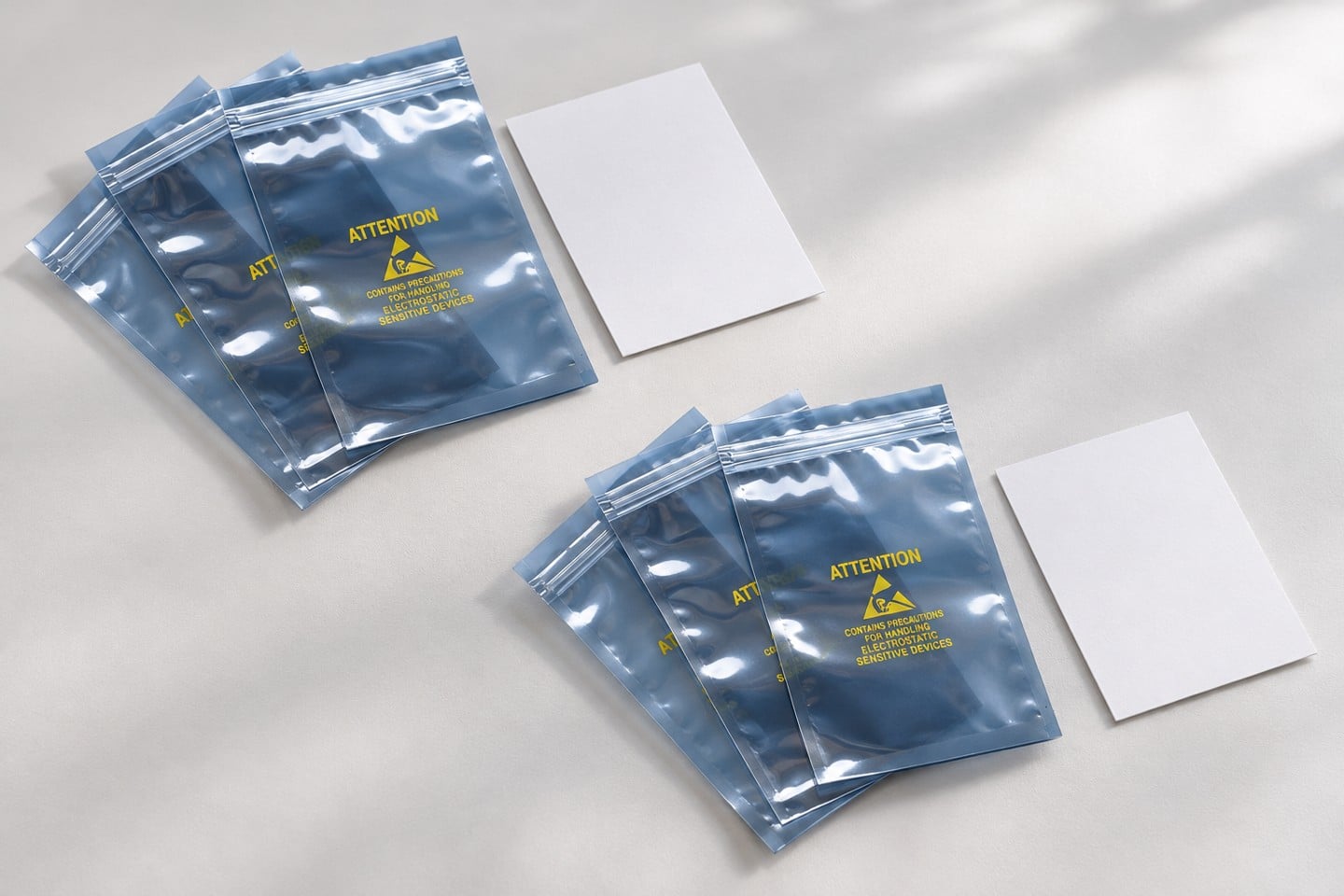
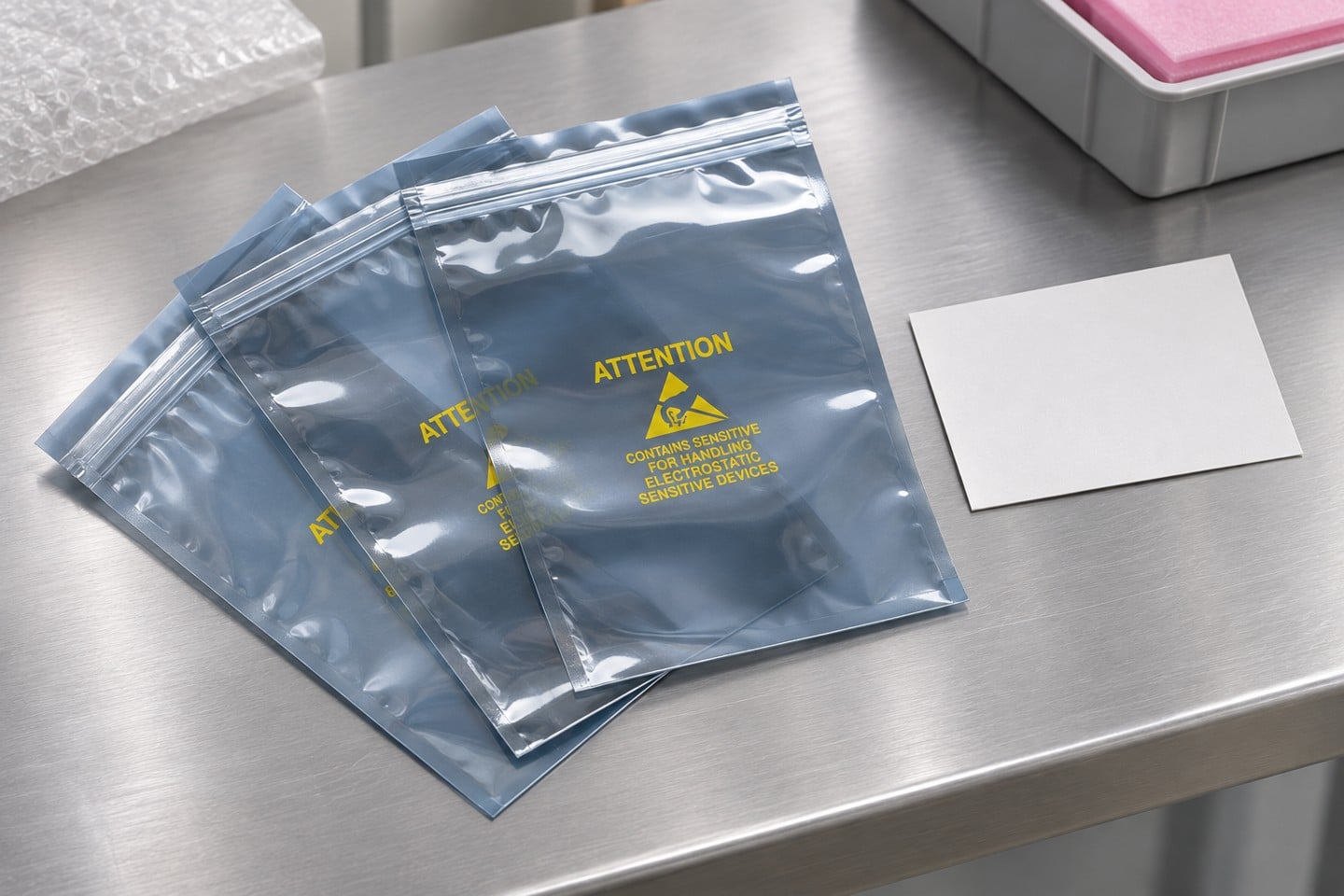
The SWESD shielding bag product is a concrete reference for discussing the delivered construction. Obtain the applicable supplier documents for the intended item rather than treating its website image as the acceptance sample or a test certificate. Do not infer moisture-barrier capability, a required shielding value or a reuse lifetime from metallic appearance.
Preserve identity from the outer package to the sample
Record the supplier, delivery reference and the product and lot identifiers that are actually present. Maintain the link when a shipping carton contains multiple inner packs. If an inner pack has no independent lot mark, record how it remains associated with the outer identification instead of creating a fictitious lot number. Traceability needs a defensible relationship, not just a field filled with text.
Inspect shipping and inner packaging for damage or signs of an unexpected condition. A damaged outer carton does not automatically prove that every bag inside is unusable. Equally, a clean inner pack does not resolve a mismatch in the delivered product identity. Describe the observations and determine the scope of further review through the approved receiving process.
Use a sample-handling arrangement that preserves the delivered condition. Identify which pack each inspected bag came from and what was done to it during inspection. If the sample will be retained, mark its inspection status using an approved method. Do not return a handled or destructively tested sample to released stock simply because it resembles the untouched bags.
Check dimensions against the actual requirement
Where dimensions are part of receiving acceptance, use the agreed measurement method and tolerance. State whether a dimension refers to the outside bag, usable internal space or area below the closure. These measurements answer different questions. A bag can match an external dimension yet still fail to accommodate the intended assembly once closure clearance is considered.
Evaluate fit with an approved representative item when the receiving plan calls for it. Protect both the sample item and bag during that check. Look for pressure at corners, interference with the closure and an arrangement that requires folding the intended contents in an unapproved way. Avoid inserting a sharp or contaminated substitute merely to demonstrate capacity.
If the supplier and buyer use different dimension conventions, document the discrepancy and seek clarification before rejecting or accepting by assumption. The resolution may require a corrected drawing or specification, not a change to the actual bag. Preserve the original order and delivery evidence so the reason for the decision remains understandable after the receiving team changes shifts.
Observe film, edges and closure without overstating results
Inspect representative bags under the defined conditions for visible punctures, tears, open seals, foreign material and other conditions addressed by the specification. Describe where the observation occurs: the body film, side seam, bottom seal, top edge or closure. Avoid interpreting every wrinkle or reflection as damage. Metallic films can reflect lighting in ways that obscure what the inspector is actually seeing.
Check closure operation using the approved handling method. For a resealable bag, confirm that the closure can be engaged as intended along the relevant opening and note obvious misalignment or obstruction. A closure that feels engaged is an observed mechanical condition. It is not evidence of a specified electrical shielding performance, hermetic seal or moisture-barrier rating.

Do not improvise puncture, rubbing, tearing or water tests at receiving. Such actions can damage the sample and may have no established relationship to the required performance. When an observation calls for a laboratory or electrical assessment, preserve the sample identity and request the applicable method. The correct response to uncertainty is a targeted evidence request, not a more dramatic informal demonstration.
Review documents for the delivered item and claim
Compare document identifiers with the product, supplier and lot scope required by the order. A report can be authentic yet irrelevant if it covers another construction, another size family or an unconnected sample. Record the claimed scope and any limitations. A document headed “ESD test” is not enough to establish that every necessary packaging property has been evaluated.
Distinguish qualification evidence from routine lot-release documentation. The purchase specification should state which records accompany each delivery and which remain part of supplier approval. Do not demand a new qualification report with every carton unless that is the agreed requirement. Conversely, a historical qualification report does not replace a required shipment-specific conformity record.
For background, the EOS/ESD Association overview of control procedures and materials explains the relationship between packaging and the wider control program. It does not supply acceptance results for this bag shipment. Review the applicable packaging requirements and methods through the responsible technical authority before deciding whether the evidence is sufficient.
Apply a documented sampling and disposition process
Use the receiving sampling plan approved for the product and risk. This article does not prescribe a universal sample count or acceptance number. Record how samples were selected and how the result relates to the delivery. Inspecting several bags from the easiest-to-open pack should not be described as a representative lot assessment unless the approved plan supports that approach.
The table below suggests questions and records for a qualitative receiving workflow. It is not a numerical test specification, a mandatory standard or evidence that SWESD bags possess unverified properties. Use it to make the local decision process clearer.
| Receiving question | Record or observation | Decision boundary |
|---|---|---|
| Does delivered identity match the order? | Product, supplier and lot associations | Resolve substitutions before normal release |
| Is visible condition acceptable? | Actual film, edge, seal and packaging observations | Do not infer unmeasured electrical performance |
| Does the closure operate as intended? | Observed engagement under the approved method | Mechanical observation is not shielding qualification |
| Do dimensions match the requirement? | Measurement convention, method and result | Use the agreed tolerance and usable-space basis |
| Do required records apply? | Document identity, scope and delivery association | Technical reviewer resolves evidence gaps |
| Can the lot be released? | Sampling record and completed dispositions | Authorized owner records the decision |
If an issue is found, identify the affected stock and hold scope accurately. Distinguish a known defect from an unresolved document question. Some situations justify holding the entire delivery while scope is clarified; others can be resolved for a clearly identified portion under the approved process. The authorized reviewer should decide this rather than allowing stock availability to dictate the conclusion.
Handle discrepancies without losing the evidence trail
A useful supplier query states the order reference, delivered identifiers, observation, sample scope and specific question. Include photographs or measurements where appropriate, together with the method and conditions needed to interpret them. Ask for a resolution tied to the delivered item. A generic assurance that “our bags are good” does not answer a mismatched document or a visibly open seam.
Keep replacement stock and investigation evidence separate. Receiving a replacement may restore supply, but it does not automatically establish the condition of the original lot or explain the discrepancy. Record whether the original stock is returned, rejected, accepted under an authorized decision or retained for further review. Avoid removing hold labels before the inventory record is updated.
If a delivery is an unapproved substitution, route it through the appropriate technical and purchasing review. A similar size and appearance do not establish interchangeability. The packaging supplier qualification guide addresses the wider evidence needed for a new supply arrangement. Keep that work distinct from routine receiving checks on an already approved item.
Protect accepted stock and retained samples
After release, preserve pack identity and the applicable storage conditions. Opening bulk packs and redistributing loose bags can break the link between physical stock and the accepted delivery evidence. Establish how split packs remain identified and how inspection samples are separated. Do not write a new expiration date unless a valid requirement and evidence support that date.
The ESD packaging shelf-life guide discusses storage and requalification questions. Receiving acceptance records the condition and evidence reviewed at one point in time; it does not guarantee future suitability after uncontrolled storage, damage or reuse. Define how later concerns return stock to review so that an old receiving approval cannot override a newly observed problem.
Train inspectors on the limits of the check
The EOS/ESD Association training and auditing guidance supports trained personnel and review of control practices. For this workflow, train staff to distinguish product identity, visible observations, measured values and authorized release. The accompanying education video provides ESD-control background only; it is not a bag receiving test demonstration or proof of shipment performance.
Review recurring receiving issues with purchasing and the technical owner. Repeated dimension misunderstandings may require clearer drawings; recurrent missing records may require a supplier communication change. Use the actual evidence to improve the specification and inspection instruction. A shorter, precise checklist that produces reliable decisions is more useful than a long form whose ticks imply tests no one performed.
Frequently asked questions
Does metallic color prove that a bag meets the required shielding performance?
No. Appearance is not a performance test; review applicable evidence for the intended packaging function.
Should every delivery receive the same sample count?
Use the approved sampling plan for the product and risk; there is no universal count in this guide.
Does a closed zipper prove moisture-barrier capability?
No. Closure engagement does not establish moisture-barrier or other unmeasured performance.
Can an inspection sample go straight back into released stock?
Follow the approved sample disposition and handling rules, especially if inspection altered the sample.
Does replacement delivery automatically close the original discrepancy?
No. Record the original stock disposition and resolve the evidence or technical question separately.

Leave a Reply