- Blog
Conductive foam is not automatically a complete IC-protection system. It may provide a shaped contact, cushioning or a controlled discharge path. A grounding wire is a separate design decision that makes sense only when the box, insert, contact surfaces and buyer’s ESD program define where that path goes. Specify the assembly, not a material adjective.
Define the job of the foam
Start with the device and the movement: bare ICs, leaded parts, a populated module, a kit or a rework return. Record the pins or surfaces that must not be touched, the required orientation, the cavity count, the lid behavior and whether the box stays in-plant or leaves the EPA.
The American Additive packaging overview separates shielding, cushioning and identification. Use the same separation here. Foam can cushion a part and control contact, but the enclosure and route still need their own requirements.
| Package need | Foam question | Evidence to request |
|---|---|---|
| Pin protection | Which surfaces may touch the insert? | cavity drawing and sample fit |
| Cushioning | What motion or impact is expected? | handling trial and damage inspection |
| Charge control | What material behavior is required? | test method and result for the quote |
| Traceability | How is lot and orientation marked? | label/insert drawing |
Distinguish foam categories
“Antistatic,” “static dissipative” and “conductive” are not interchangeable. Rogers Foam’s comparison describes different discharge behavior, while DieCut123’s guide shows how conversion and die-cut geometry affect a finished insert.
The Konlida discussion also separates ESD protection from EMI shielding. A conductive foam insert may be useful in an ESD package, but it does not make the box an EMI enclosure by itself. Match the material and the test to the risk that the buyer is actually controlling.
Decide whether a grounding wire belongs in the design
A wire may be relevant when the package is intentionally bonded to a known point during handling, or when the buyer’s design calls for a defined drain path. It is not a universal accessory. A loose lead can become a snag, an unverified contact or a false sense of protection.
Before specifying one, answer:
- What is the reference point and when is the wire connected?
- Which box, insert or conductive surface does it contact?
- Can an operator tell that the connection is present and intact?
- What test method verifies the complete box-and-wire assembly?
- What happens when the package is disconnected, moved or packed for shipment?
The ESD Association materials guidance supports treating packaging as part of the program. The wire cannot be evaluated independently from that program.
Set cavity and handling boundaries
Protect the device from edge crush, pin drag, uncontrolled contact and wrong orientation. Validate loading and unloading with the real part, not an empty cavity. Check lid pressure, separator retention, label placement, cleaning method and the condition after the intended number of handling cycles.
| If the buyer needs… | Then specify… | Do not infer… |
|---|---|---|
| repeatable IC orientation | cavity drawing and keying | that a generic insert fits every package |
| a bonded path | connection point and test record | that a loose wire is grounding |
| shipping protection | outer package and cushioning | that in-plant foam is enough for transit |
| cleanroom or controlled handling | cleaning and particle limits | that material name proves cleanliness |
Start with the box architecture
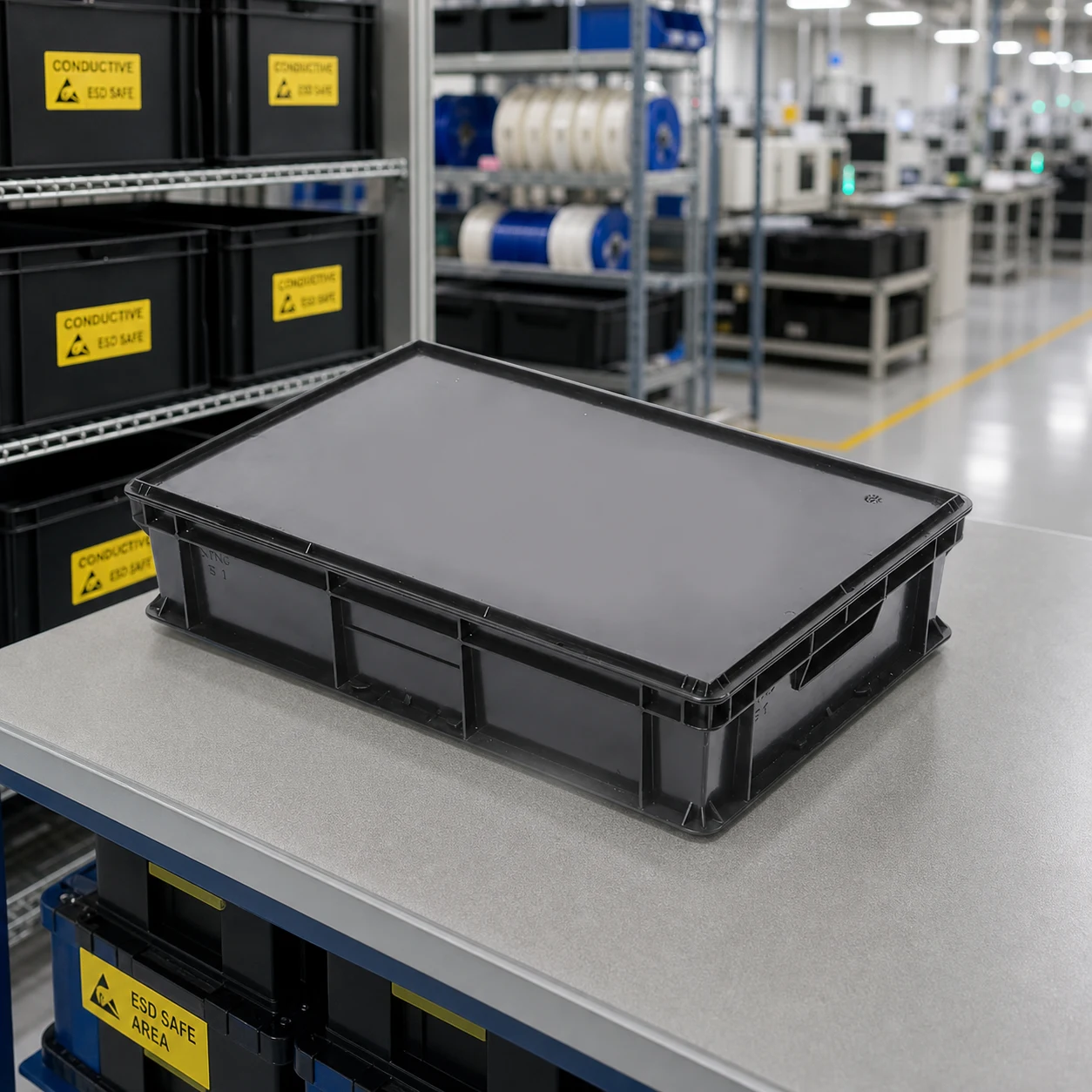
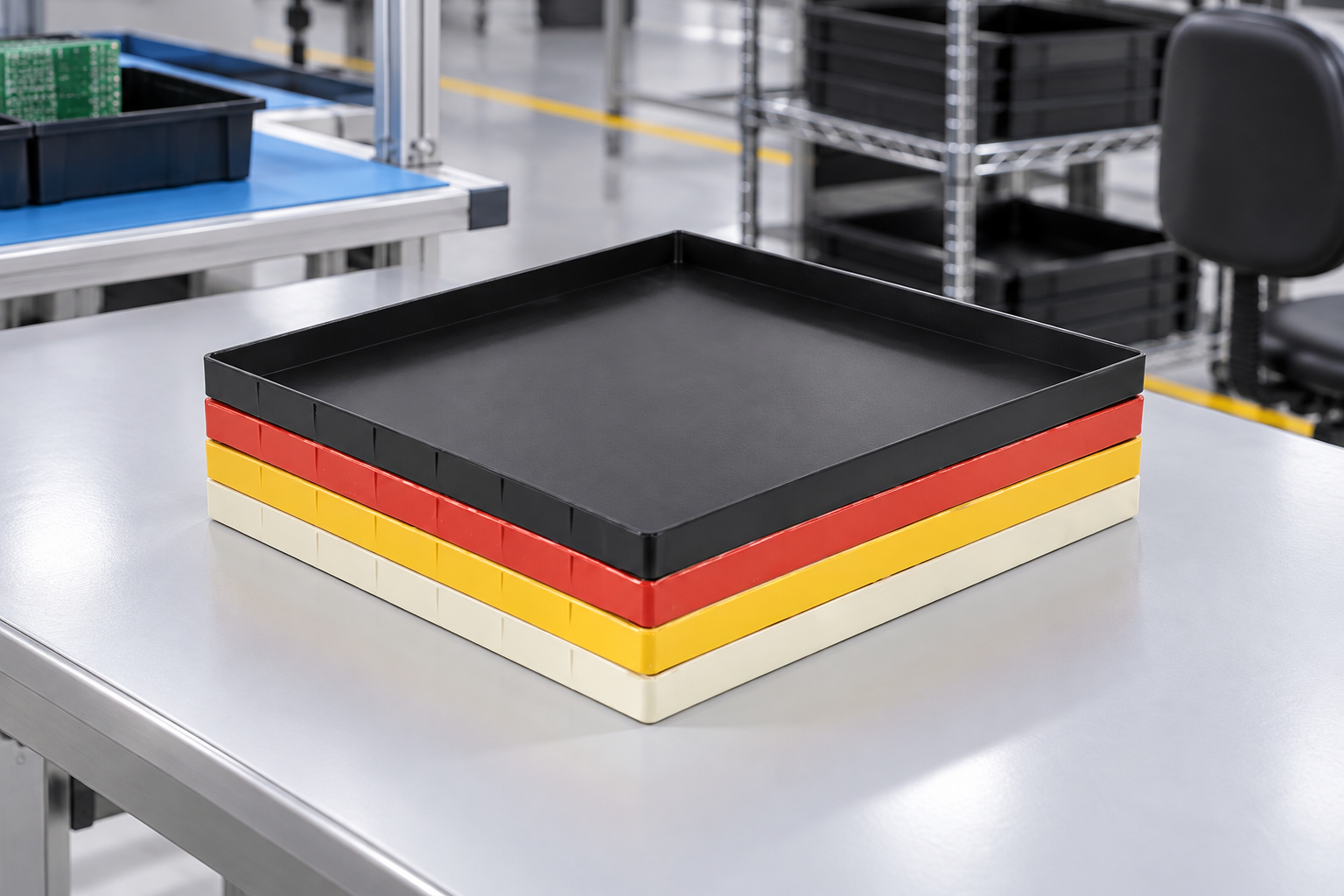
Use the SWESD ESD Box route to discuss the enclosure and the ESD Tray route when a flat, oriented carrier is more appropriate. Send Contact Sanwei the device drawing, cavity count, foam type under consideration, wire connection concept, route, cleaning, trial plan and required evidence.
FAQ
Does conductive foam itself ground an IC?
Not necessarily. The contact path, enclosure, reference point and test method must be defined and verified together.
Should every IC box include a wire?
No. Add a wire only when the buyer’s process and design require a known connection and can verify it.
Is foam a substitute for shielding packaging?
No. Foam, enclosure and route address different parts of the protection problem.
References
- ESD Association — Principles of ESD Control
- ESD Association — Basic ESD Control Procedures and Materials
- American Additive — ESD Packaging Materials
- Correct Products — Conductive ESD Foam
- Konlida — Conductive Foam and ESD
- DieCut123 — Conductive Foam Guide
- Rogers Foam — Foam Comparison
- ESD Goods — Anti-Static Bag Series


Leave a Reply