- Turbo
- Blog
Cleanroom sticky mat relocation needs a review of the new transition, not simply a transfer of the old installation’s approval. Confirm which people and materials will cross the proposed position, how the mat will fit the revised route, and who will maintain it. Check the old location as well: removing a mat can leave an unmanaged transition or a floor condition requiring attention. A blue adhesive sheet at a new doorway does not by itself establish a controlled contamination path.
Use this guide when an equipment move, doorway change or revised workflow changes where a mat is needed. The broader sticky mat selection guide covers purchasing and initial selection. Here the deliverable is a documented location decision with a practical handoff to the people who will use and replenish the mat.
Define what is changing and why
Describe the trigger before proposing a position. A temporary construction diversion, permanent production move and minor adjustment beside the same doorway can have different implications. Name the old and new locations, the planned start date, and whether the former route will remain active. Link the decision to an identifiable layout or work order so a later shift can distinguish the current route from an obsolete arrangement.
State the problem the new position should solve. It might capture an actual approach path that bypasses the current mat, keep access clear after a machine relocation, or provide a managed transition for a new material movement. Avoid writing only that the mat will be moved closer to production. That description says little about who crosses it or what contamination transfer the change is intended to address.
Separate location approval from reuse approval. Moving the collection point does not establish that a previously installed mat can be lifted and reapplied. Confirm whether a new unit is required and what the supplier permits for the actual construction. Keep unopened replacement stock available if needed, without assuming that an old base will remain flat or retain its intended attachment after removal.
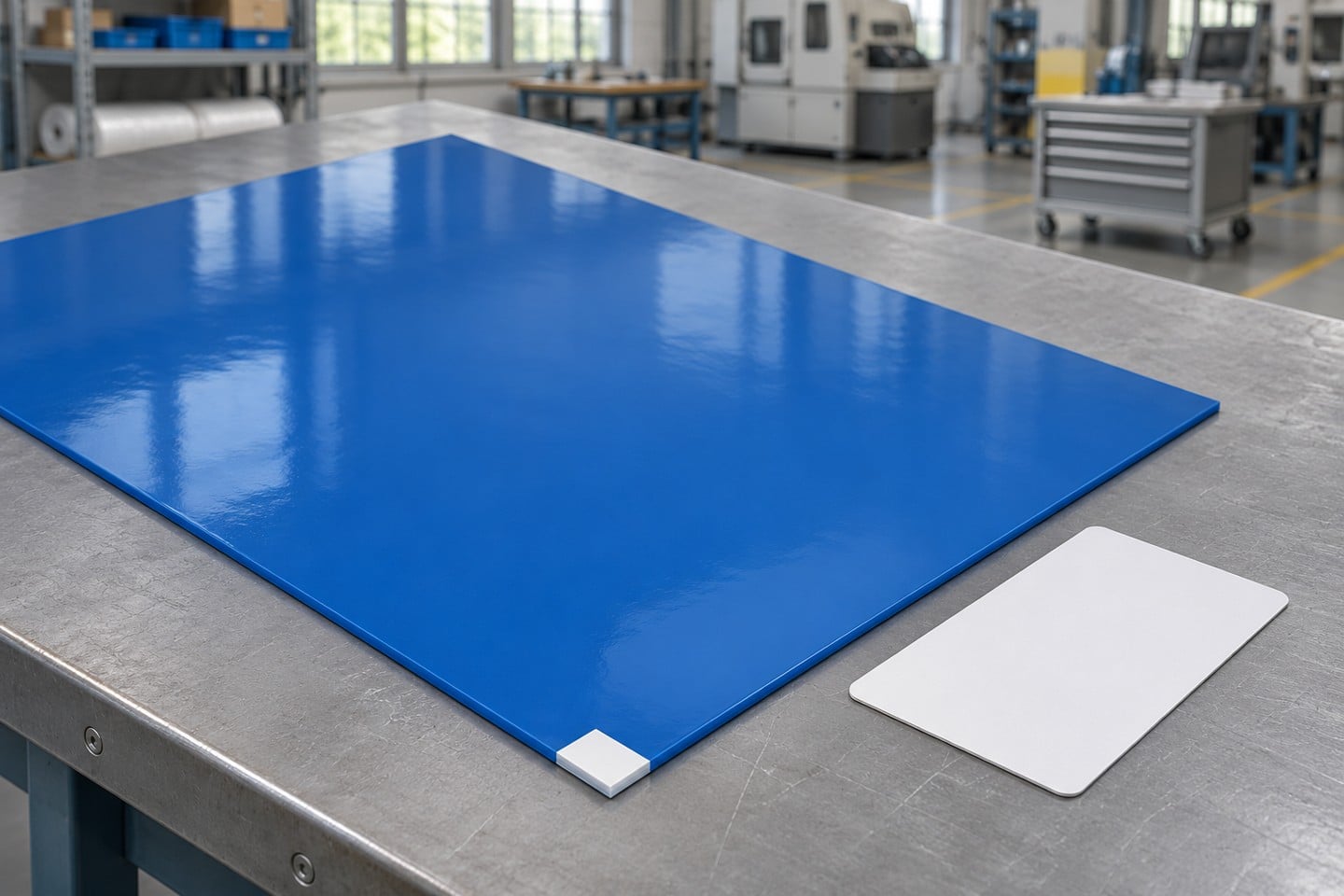
Map both the old and proposed traffic routes
Observe the existing movement before the change. Include routine operators, visitors, maintenance staff, waste handling and supply replenishment where relevant. A route drawing can look satisfactory while people carrying bulky items approach from another direction. Identify bypasses and adjacent doorways, and distinguish normal production from occasional access. The change review should be based on the real movement that matters to the controlled area.
At the proposed location, check how users approach and leave the transition. Look for turning, queuing, door swing, carrying tasks and places where users may naturally step aside. Where carts are included, use the separate cart wheel contact-path review for that detailed assessment. Do not use a person walking across the mat as evidence that every cart wheel follows the same path.
Also decide what happens at the old position. If it remains an active transition, another control may still be needed. If it is retired, update the associated instructions and remove misleading signs through the approved process. A relocation is incomplete if the new point works while an old entrance continues to be used without an assigned control.
Set the acceptance questions before installation
The table below is a planning aid for the location review. It contains no claimed contamination reduction, traffic limit or mandatory mat dimension. Select acceptance criteria that fit the actual room, route, floor and operating procedure. Each question needs an owner able to resolve it before the revised transition becomes normal practice.
| Review area | Evidence to collect | Owner decision |
|---|---|---|
| Change purpose | Old and new route with reason for move | Confirm intended transition |
| Actual movements | People and materials observed using the route | Identify relevant users and exceptions |
| Position and access | Door movement, approach and available floor | Accept safe practical placement |
| Supplied unit | Item, dimensions and installation instructions | Confirm appropriate material and method |
| Old location | Continued use and condition after removal | Retire or maintain the former transition |
| Routine service | Replacement stock, waste route and shift ownership | Accept the maintenance handoff |
Use the public IEST cleanroom operations reference as a route to the relevant operations guidance, not as a published installation drawing for this particular doorway. Its public page does not establish a universal distance from an entrance. The layout and release checks in this article are proposed operational controls that need acceptance within the site’s own program.
Bring the receiving area, facilities team and consumable owner into the review when their responsibilities differ. A mat can be in a convenient physical position but have no agreed replenishment owner. Conversely, a well-stocked location can be ineffective if the new route naturally bypasses it. Resolve both the flow and the ownership while the change is still being planned.
Review the new floor and installation conditions
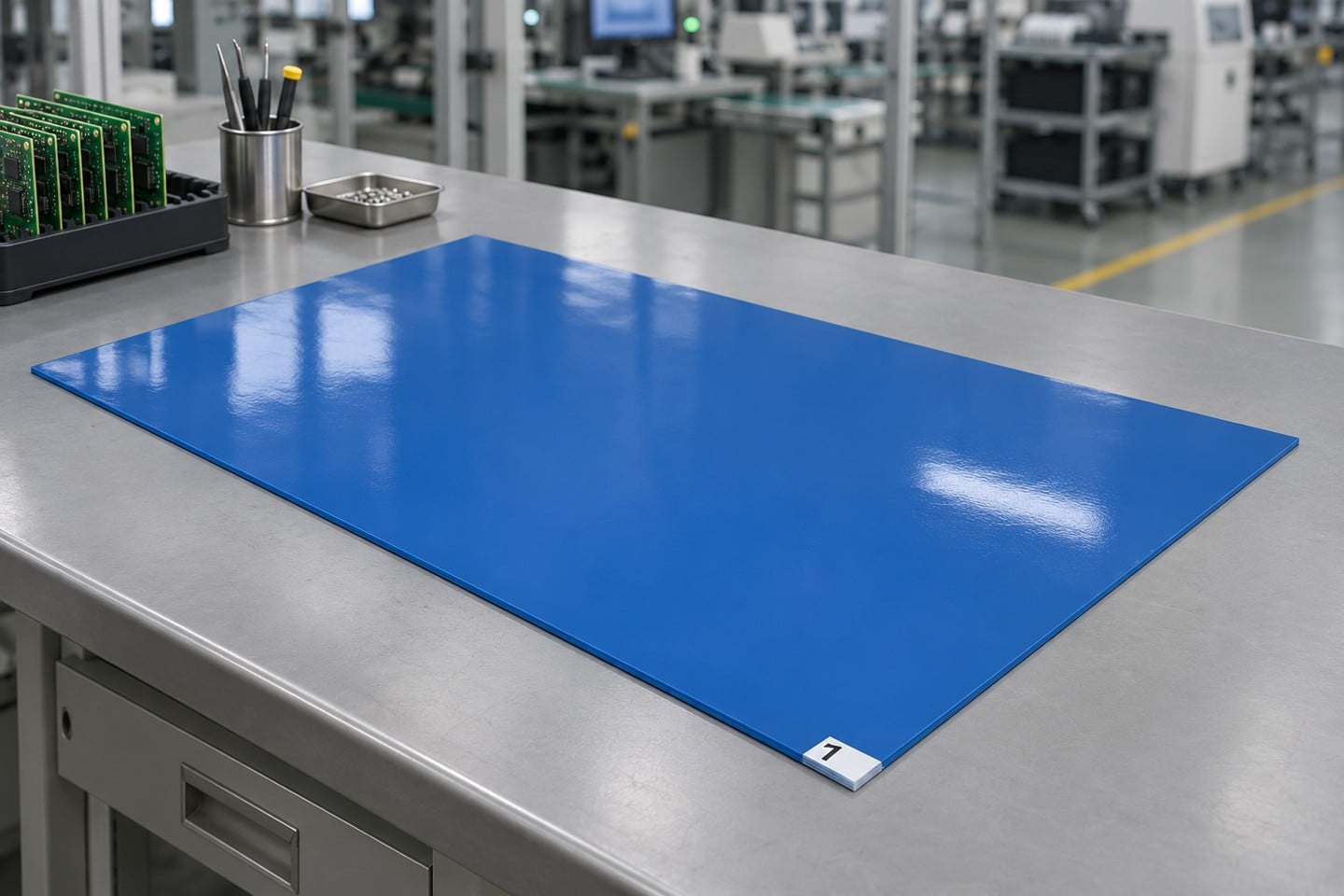
SWESD’s 3W-87 sticky mat is the product reference for this discussion. Confirm the exact supplied item, footprint and installation instructions before approving the position. A product image shows the general form, not the condition of your floor or the fit at your doorway. Ask for information appropriate to the actual surface and expected traffic.
Check whether the proposed floor finish, approved cleaning process and local conditions differ from those at the old location. Obtain suitable preparation and installation instructions rather than carrying over a remembered method. Do not assume that a location change permits new cleaning chemicals. Where floor residue or finish damage is already present, resolve that condition before hiding it under a new unit.
Keep the initial installation trial within the approved change plan. Define who can stop the trial and what observations require reassessment. Do not deliberately create an unsafe snag, slip or trip condition to demonstrate a failure. A trial should observe the representative arrangement safely, with responsibilities and temporary access understood by everyone involved.
Observe normal use without overclaiming the result
Once installation is ready under the accepted instructions, review representative use of the route. Record the footwear and material movements actually observed, approach direction and any bypass. If the trial covers only one shift or one type of movement, say so. Do not convert a short observation into a claim that all personnel and cart combinations have been verified.
Assess whether users can approach, cross and leave without an awkward detour. Look for unintended waiting at the doorway, collision between incoming and outgoing traffic, or interference with an adjacent operation. These observations support a location decision; they do not measure airborne cleanliness or establish a numerical particle-removal efficiency. Keep any separate environmental or surface monitoring under its applicable procedure.
The IEST housekeeping reference describes a broader program in which cleaning effectiveness and appropriate frequency are considered. It does not certify that a mat relocation maintains the room classification. Where the change may affect a monitored transition, have the contamination-control owner decide what additional evidence is appropriate.
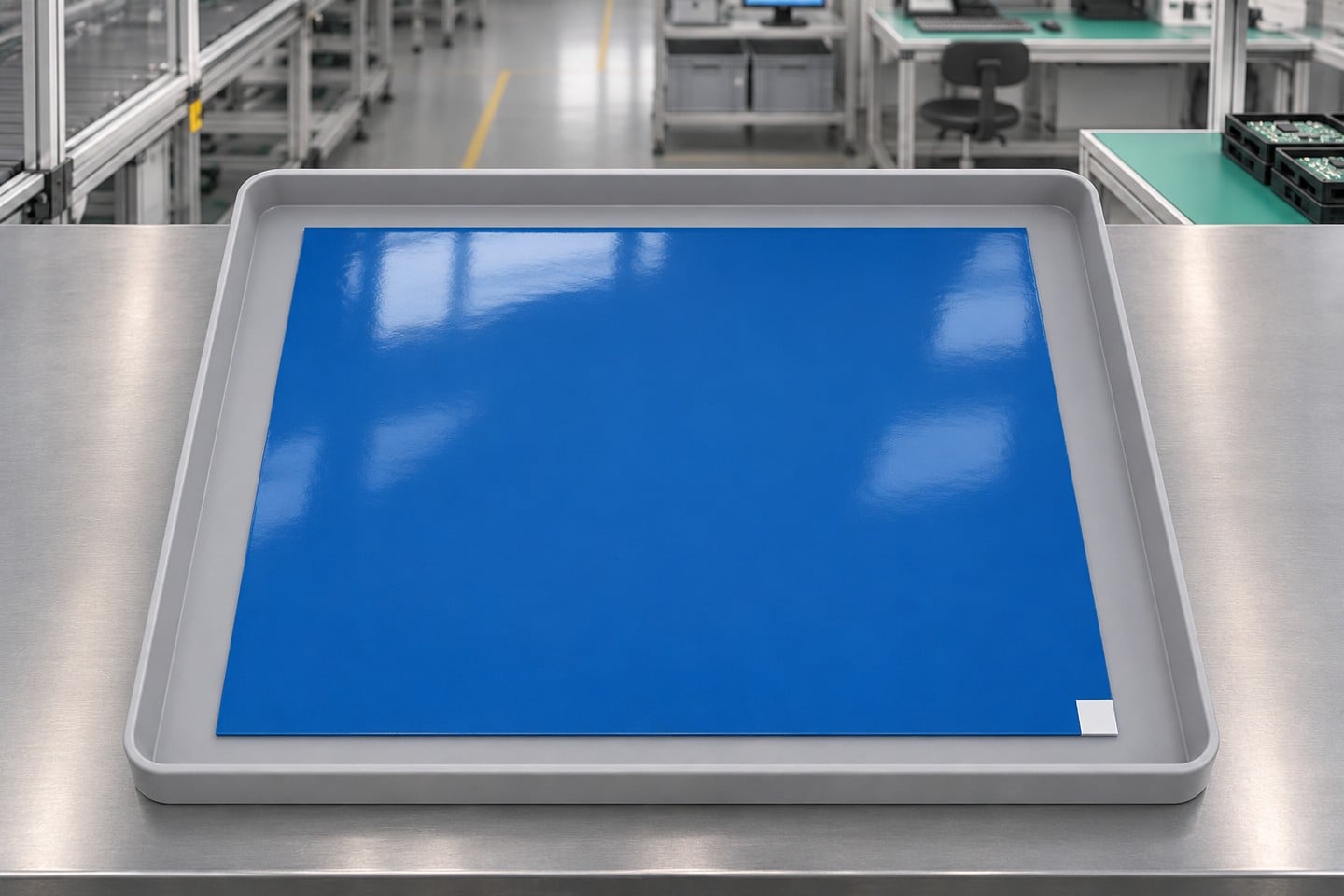
Reassign replenishment and waste handling
Write down who checks the new collection point, where replacement stock will be held and how a low-stock condition is escalated. The new location may be farther from the existing supply cabinet or serviced by another shift. Check that these practical differences have been addressed rather than assuming the old routine will follow the mat automatically.
Agree how used sheets and packaging will leave the area. The route for waste should not require the operator to carry exposed discarded material through clean supply storage. Coordinate the arrangement with the existing used-sheet disposal procedure and the final-layer replenishment handoff. These are supporting tasks, not reasons to invent a fixed replacement interval.
Update instructions and location identifiers at the same time. A replenishment sheet referring to the old doorway can send a worker to the wrong point even when the installed mat is clearly visible. Include the new position in shift handover and make sure the responsible people know when the change takes effect. Retire superseded local notes so they do not compete with the approved route.
Use training as context for the location decision
The IEST educational video below covers cleanroom floor cleaning. It helps place the mat within the wider housekeeping routine and reminds the team that the surrounding floor also needs an accepted process. It does not prescribe a sticky-mat location, demonstrate reuse after relocation, or replace the facility’s installation and change instructions.

Where personnel need to learn a changed route, show the actual new transition and explain the relevant entry instruction. A general video cannot communicate the local doorway, supply point or waste collection arrangement. Keep the training focused on what each user must do differently and how to report a problem, with responsibility for visitors and temporary staff included when applicable.
Release the new location and review early observations
Close the change with the approved position, supplied item, installation record, observed movement types and remaining limitations. Identify the accepting owner and the time the route becomes effective. Preserve a simple photograph or drawing that makes the position unambiguous. If the old location is retired, include evidence that its access instructions and any floor condition have been addressed.
Select a follow-up appropriate to the reason for the move. If the concern was bypassing, observe whether bypassing still occurs. If congestion prompted the change, ask the affected operators about the actual movement after normal work resumes. Record exceptions and adjust the plan through the same responsible owner. Do not describe an unobserved shift or untested equipment route as accepted merely because the first observation was satisfactory.
For a supplier enquiry, provide the proposed floor, available footprint, expected footwear and cart routes, existing cleaning process and installation constraints. Ask for the material and instruction details needed to assess the actual use. A clear application brief is more useful than asking for a mat rated for an unspecified cleanroom, and it keeps the purchase connected to the location decision.
Frequently asked questions
Can an installed mat simply be peeled up and moved?
Do not assume reuse is permitted. Follow the actual product instructions and use a new unit when required.
Does a new doorway inherit the old location's approval?
No. Review its route, floor, users, installation conditions and maintenance responsibilities.
Does walking across the mat verify cart coverage?
No. Assess the actual cart and wheel path separately where carts use the transition.
Does a successful location trial prove the room classification?
No. Route observations cannot replace the applicable environmental monitoring and qualification.
What happens to the old collection point?
Decide whether the old transition remains active, address its floor condition and update the associated instructions.

Leave a Reply