- hanqi
- Blog
For electronic component storage, shipping, assembly, and servicing, most people agree that the best option is to use ESD boxes for static-sensitive components and use Greenwald or other general-purpose storage boxes for non-static-sensitive components. However, the real question is not which is better in general, but how well each option protects your components, your process, and your budget in your specific application.
When comparing Greenwald to ESD with your vendor, the most important variable is protection from electrostatic discharge. While standard plastic storage containers can provide an economical, durable, and space-saving method for storage, if they are not designed with static-dissipative or conductive properties, they may hold a charge and then cause damage to circuit boards, integrated circuits, sensors, connectors, and other electronic parts. Many manufacturers, repair depots, and distributors of electronic components prefer to use esd storage containers as part of their overall ESD control program.
The Short Answer to ESD vs. Greenwald
If any product consists of electronic components, circuit board assemblies, semiconductor chips, surface mount technology parts, microchips, sensors, relays, modules, or any component that could be damaged by static electricity, then an ESD box would better meet your needs. However, if you will be using a container for general storage, tools, hardware, mechanical parts, labels, product samples, or other non-static-sensitive products, then a Greenwald storage container or any similar general-purpose non-ESD storage container may be a better option..
Similarities and Differences of a Greenwald Box and an ESD Box Side by Side
The key difference between a regular storage box and an ESD storage box is electrical performance. A regular plastic storage box may generate static electricity through movement, friction, or contact with other materials. Discharge of static charge from a person or object into a vulnerable electronic part may create immediate damage, loss of performance, or long-term latent damage.
| Comparison Factor | ESD Storage Boxes | Greenwald or General Storage Boxes |
|---|---|---|
| Static protection | Contain conductive, static-dissipative, or antistatic materials to minimize electrostatic discharge risk. | Typically do not contain materials designed for static discharge control unless specifically stated by the manufacturer. |
| Best for | Electronic components, PCB assemblies, semiconductors, SMT parts, sensors, modules, and other electrically sensitive items. | Tools, screws, fasteners, mechanical parts, samples, labels, and general non-electrical supplies. |
| Risk level for electronics | Lower risk of electrostatic shock damage when used correctly as part of a static control program. | Higher risk because standard plastic can generate and store electrostatic charges. |
| Material performance | Often includes documented specifications for surface resistance, static discharge performance, or other ESD data. | Often focuses on durability, cleanliness, compartment layout, and cost rather than electrical performance. |
| Typical cost | Typically higher than general storage boxes, but can reduce costs caused by electronic component failure from static discharge. | Typically less expensive than ESD storage boxes and mainly used for organizing items that are not sensitive to static discharge. |
| Use in ESD-protected areas | May be used if they comply with your site’s ESD control requirements. | Not recommended inside an EPA unless specified by the manufacturer as ESD-safe. |
| Buyer recommendation | Purchase for electronic manufacturing, repair, warehousing, shipping, and handling of electronic components. | Purchase for warehousing non-electrically sensitive inventory items where static discharge is not a consideration. |
An ESD box is created to mitigate the risk of electrostatic charge. Properly grounded conductive boxes in an ESD-safe area can help move charge away quickly. Static-dissipative boxes allow for safe and gradual dissipation of charge. Antistatic materials help reduce charge build-up. Your choice of box depends on how you handle the product, the level of sensitivity of the product, and your overall ESD control plan.
When ESD Boxes are the Best Option
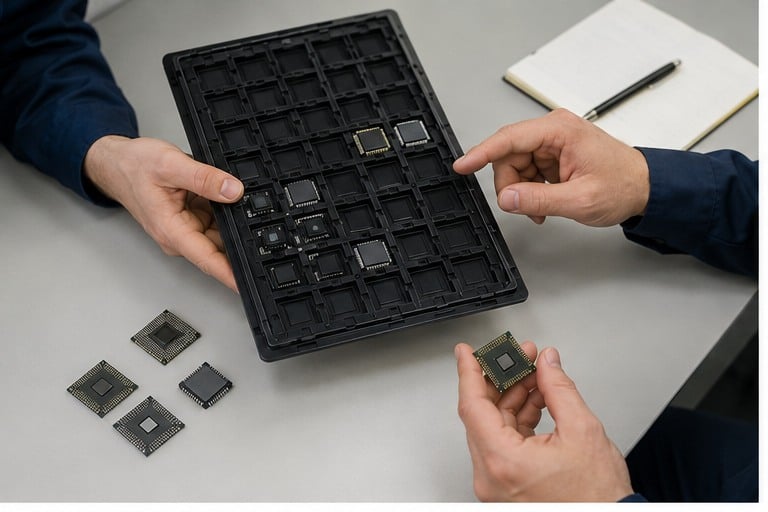
If you are dealing with electronic products or have customers that expect ESD-safe handling, then ESD boxes are the best option. For those selling electronic components, assembling PCB boards, repairing electronic devices, operating a warehouse for spare parts, or shipping OEM products, using the wrong storage box can create unnecessary ESD risk that may damage products.
ESD boxes are especially important in areas where an operator frequently opens, closes, moves, or sorts the boxes. Each time an operator touches or moves a box, there is an opportunity for static electricity to be generated if the materials are not properly controlled. If you are storing small parts that can be mixed together, you may want to consider ESD-safe divider boxes so the parts will not be mixed while still remaining within an ESD-safe container.
If traceability and consistent process control are important, ESD storage can support your ability to demonstrate to customers that you have a controlled process. Many buyers are not only looking for a box to put their ESD-sensitive product in; they are looking for a packaging solution that supports audits, quality systems, and confidence in doing business with you.

When General Storage Boxes May be Sufficient
General-purpose storage boxes may be appropriate for items that are not static-sensitive. Items that can fall into this category include screws, washers, mechanical parts, hand tools, fixtures, sample hardware, instruction cards, and many types of workshop supplies.
In these cases, a suitable general-purpose storage box may be very cost-effective. There are many reasons a box might be lighter, clearer, and cheaper to buy than its ESD equivalent. You may not need to pay extra for ESD characteristics if the contents are non-electronic and the box will never enter a protected area.
The key thing to remember is not to use a general-purpose box for static-sensitive parts just because it looks similar to an ESD box. Using a general-purpose box for an electronic part can create a hidden cost that is greater than the difference in price.
How to Choose the Right ESD Box for Your Application
When choosing an ESD storage box, you should start with the parts that need protection. Consider the sensitivity of the items, their size and weight, how frequently they are accessed by an operator, and how the box will be used, such as for storage, internal transport, shipping, or kitting.
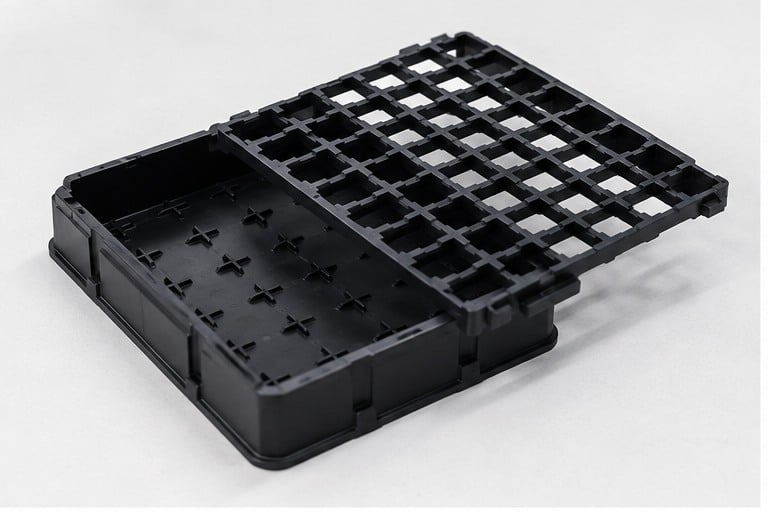
When looking at small parts, the divider layout is very important. An adjustable divider ESD box can increase organization while decreasing the likelihood of picking errors. When dealing with PCB assemblies, interior dimensions and support design are much more critical. For warehouse and distribution center operations, stackable and labeled ESD boxes can make daily functions easier.
Material selection is also very important. Conductive polypropylene, static-dissipative plastics, conductive plastic, and ESD corrugated materials all provide different types of protection from static electricity and differ in their benefits. Conductive plastic boxes are typically durable and reusable, while corrugated ESD boxes often represent a cost-effective solution for shipping or temporary storage. For long-term use, buyers should also consider cleanliness, chemical resistance, load capacity, and lid design.
Key Features Buyers Should Look For
When purchasing ESD storage boxes, review specifications prior to making the purchase. A reputable vendor should be able to explain the ESD performance of the materials and provide real-world advice for your application.
- Type of ESD material, such as conductive or static-dissipative plastic
- Resistance ranges or related testing data
- Component size compatibility with PCB boards and small parts
- Divider options for organized storage and accurate picking
- Stackable design for warehouse or production line use
- Durable hinges, lids, handles, and locking features when needed
- Compatibility with ESD workstations, carts, shelving, and packaging procedures
If a product description only mentions “anti-static” without indicating test data, request clarification on ESD performance. Vague product descriptions are not acceptable for professional electronic handling. The best esd storage box to purchase is one that matches your true level of ESD risk, rather than the least expensive one that simply has an ESD label.
ESD Storage Boxes vs. ESD Packaging Boxes
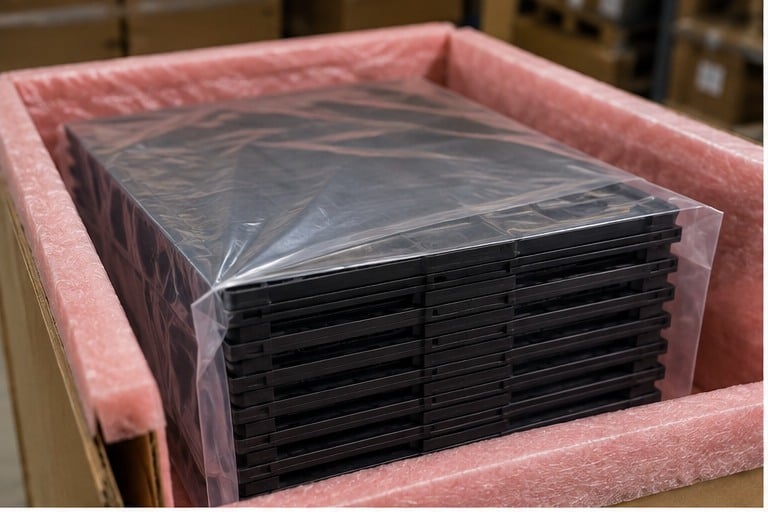
The two types of boxes are related, but they may serve different purposes. Storage boxes are typically utilized over and over again for organization, internal movement, and continual access, while ESD packaging boxes may be used for shipping purposes, protecting items while traveling to their destination, or customer distribution.
For example, reusable conductive divider boxes may be utilized to hold components while assembling finished products on the production line. When the finished product is ready to leave the production line, it may be packaged in ESD shielding bags and ESD corrugated packaging boxes. A well-structured process will utilize both types of containers depending upon the stage of the item’s journey.
Buyers should always consider the complete journey of the item and ensure that static protection is maintained through the entire process, including after it arrives at the warehouse. The process should include all steps from picking and assembly through inspection, packing, shipping, and receiving.

ESD Mistakes When Purchasing Packaging
One error in purchasing ESD packaging is selecting based solely on the color of the box. Many buyers believe that all black plastic boxes are conductive or ESD compliant, but that is not the case. Always check the specifications on the product.
Another mistake when purchasing ESD packaging is using ESD containers to transport items while storing them in non-ESD boxes before shipping. Static electricity can damage components at any point. If sensitive components are kept in a non-ESD box for days or weeks prior to their final shipping package, that packaging cannot undo the static exposure that occurred during their time in a non-ESD container.
A third mistake when purchasing ESD packaging is not considering the usability aspects of the box. For example, if the dividers in the compartments are too small, labels are difficult to read, or the lid does not fit tightly, employees may create workarounds that reduce protection and efficiency. An effective ESD storage container will protect your components and make it easier to handle them on a daily basis.
Cost Comparison: Is ESD Worth the Extra Price?
Typically, an ESD box will be more expensive than a standard storage container. However, the decision regarding which type of container to purchase should be based on risk and total cost, not simply unit price. The cost of one damaged PCB assembly, one rejected batch, or one returned product can be more than the difference between an ESD-compliant box and a standard box.
When considering the purchase of ESD packaging for customer-critical electronics or high-value components, investing in ESD-compliant storage may be a wise decision. When evaluating storage containers for low-risk components that are not electronic in nature, a standard storage container may be the more cost-effective solution. The best purchasing option balances protection, durability, workflow efficiency, and replacement cost.
Practical Suggestions For Buyers
When comparing ESD to Greenwald, the first step is to divide your inventory into static-sensitive items and non-static-sensitive items. Use ESD boxes for electrical components and assemblies, and use non-ESD storage boxes for hardware, tools, and items that do not require static control.
For mixed-use environments, such as environments containing both static-sensitive and non-static-sensitive items, it may be helpful to standardize color coding, labeling, and storage zones. For example, ESD-safe containers can be used for storing ESD-sensitive product only in the electrostatic protected area, while general boxes remain outside protected areas. This helps minimize confusion and simplify training for operators, warehouse workers, and quality personnel.
If you are purchasing for production, maintenance, or distribution, ask your suppliers for product recommendations based on the component type, length of time in storage, and method of handling. Your supplier should be able to assist you in selecting from ESD safe divider boxes, conductive storage bins, ESD corrugated packaging, or custom ESD packaging solutions.
Frequently Asked Questions
Which Ones are Better, ESD or Greenwald Boxes?
ESD boxes are better for storing and handling static-sensitive electronic components. Greenwald boxes, or general-purpose boxes, may be a better choice for storing non-electronic items where static protection is not an issue. If there is a chance of ESD damage to the item being stored, use a form of ESD-safe storage.
Can I Use A Regular Plastic Box To Store Electronic Components?
No, it is not advisable to use a regular plastic box to store static-sensitive electronic components. Static charge can be generated and stored on regular plastic, which may damage integrated circuits, printed circuit boards, sensors, connectors, and electronic assemblies. Always use an ESD-safe container or approved ESD packaging when transporting or storing these electronic components.
How Do I Know If a Box Is ESD-Safe?
To determine if a box is ESD-safe, check for specifications using words like conductive, static-dissipative, antistatic, or ESD-safe, and confirm the surface resistance data and compliance status of the box. Do not depend only on appearance or color.
Is There a Difference Between Conductive and Static-Dissipative Boxes?
Yes. Conductive boxes allow an electrical charge to dissipate rapidly, while static-dissipative containers allow an electrical charge to dissipate at a slower rate and in a controlled manner. Both types of boxes have value in controlling ESD, and the correct type depends on the sensitivity of the component being stored, the work environment, and the handling process.
Are ESD Safe Divider Boxes Useful?
Yes. ESD safe divider boxes are useful for organizing smaller electronic components while reducing the potential for static. They can enhance picking accuracy, reduce the possibility of mixing parts, and support cleaner production or repair processes.
Are ESD Storage Boxes Required to Be Used with Other ESD Safe Products?
ESD storage boxes work best when they are part of an ESD control system, which may include ESD workbenches, ESD wrist straps, ESD floor mats, ESD grounding points, ESD bags, ESD carts, ESD shelves, and ESD training procedures to ensure that the ESD control system functions properly.
ESD safe storage boxes and Greenwald-style general storage boxes can both serve the purpose of storing material, but they have different priorities. ESD safe storage boxes are considered a more professional and safer option when storing electronic components, PCB assemblies, and static-sensitive parts because they are designed to reduce hidden damage, enhance quality, and promote customer confidence. General storage boxes are sufficient for storing non-static-sensitive tooling and mechanical supplies. When selecting an ESD safe storage box or a general storage box, match the type of box to the type of risk. Use ESD safe storage boxes whenever static is a significant risk, and use general storage boxes whenever static is not a risk.
Leave a Reply