- توربو
- مدونة
ESD packaging for contract manufacturing should protect customer-owned components while preserving ownership, lot identity and process status from receipt through production and return. Start with the customer’s handling requirements and the actual component configuration, then define who approves packaging, who controls changes and what happens to unused or questionable material. An ESD-labeled container does not settle those responsibilities. A useful agreement connects the required protective function, accepted physical arrangement, incoming evidence and custody records. This guide focuses on customer-owned inventory and handovers, so purchasing teams can distinguish packaging approval from material ownership and avoid mixing protected components with unidentified production stock.
Agree on responsibilities before material arrives
Identify the owner of the components and the parties responsible for receiving, storage, in-process handling and return shipping. Define who approves the packaging specification and who may authorize a change. A customer may supply components in its own package, but the contract manufacturer still needs an accepted receiving and handling procedure. Do not assume that supplied packaging is suitable for every internal operation or that the manufacturer may replace it without review. Establish the approval path before a production shortage or damaged package creates pressure for an improvised substitute.
Record the information needed to connect the physical shipment to the customer’s order and component lot. Include relevant part identity, revision, quantity and handling instructions without copying unnecessary confidential information onto exposed labels. Agree how discrepancies are reported and how material is held pending disposition. If records and container contents disagree, do not quietly correct the count and release the job. Preserve the observation and obtain the responsible decision. Ownership and protective packaging need to remain connected even when several customer jobs use the same component family.
Define the protective functions by route
Map the route from receipt to accepted storage, kit preparation, production staging, use and return of unused material. At each stage, identify the required ESD function and the physical arrangement that supports it. An external shipment may need protection different from an internal transfer within an approved handling area. Do not assume that an open conductive container provides every function required outside that area. Request evidence for the complete package and distinguish contact-material properties from shielding or other functions that require their own evaluation.
ال ESD Association’s principles of ESD control explain why sensitive items need coordinated handling controls. The basic control procedures and materials guidance provides further context for the work area. Neither establishes acceptance of a specific customer’s package. Use the agreed component requirements, approved site methods and product-specific evidence to define the arrangement. A commercial material name or dark color is not sufficient to connect the package to the customer’s actual risk and route.
Keep ownership and process status separate
A customer name identifies ownership, but it does not show whether components are awaiting inspection, released, allocated to a job or held for investigation. Preserve those distinctions in the inventory system and the accepted physical identification arrangement. Define how partial lots and split containers are identified, and keep their connection to the original lot. Avoid relying on container location alone to communicate status; a moved tote can otherwise appear released when it is simply waiting for a receiving decision.
When parts are transferred into another accepted container, record the transfer and maintain the link to the source lot and customer. Do not combine residual quantities from separate lots or owners unless the responsible agreement permits it and the required traceability remains intact. A shortage in one job does not authorize borrowing unidentified material from another customer’s kit. Packaging can make controlled separation easier, but the inventory and disposition rules determine whether the physical transfer is allowed. Keep those responsibilities explicit rather than embedding them in an informal label convention.
Inspect supplied packaging without assuming approval
At receipt, compare the shipment with the agreed package specification and inspect its condition. Record damage, missing closures, contamination, unclear labels and any uncertain protective function. Preserve relevant evidence before discarding the outer packaging. Distinguish delivery from release for use. A shipment can be delivered successfully while its inner package or records still require review. Define where questionable material is held and how it is protected during the investigation so that quarantine does not create another uncontrolled handling step.
Ask whether the supplied package may be reused internally and under what conditions. A shipping package can be awkward for repeated picking or unsuitable as a workstation holder. If material must be transferred, use an accepted arrangement and preserve identity throughout the move. Do not open multiple lots at once without controls that prevent confusion. Record substitutions and obtain approval where the customer specification requires it. The useful receiving decision states what is accepted, what is held and what actions are needed, rather than a single checkbox saying the delivery is complete.
Use a customer-owned material control table
| Handover | Owner to define | Evidence to preserve |
|---|---|---|
| إصال | Receiving and quality decision owners | Customer, lot, quantity, package condition and discrepancies |
| Package approval | Customer and technical approval owners | Required functions, complete arrangement and accepted scope |
| Internal transfer | Source and receiving process owners | Lot identity, status and approved replacement holder |
| Exception | Quality and customer disposition owners | Original requirement, observation and authorized action |
| Unused return | Inventory and dispatch owners | Reconciled quantity, status, lot history and return package |
Use the table to assign clear owners and evidence at each handover. The details should be agreed before routine shipments start and updated when the component, package or route changes. Avoid a generic instruction that the factory will handle ESD correctly without identifying the actual arrangements and approval responsibilities. The evidence does not need to be excessive, but it must be sufficient to connect the customer’s requirement to the accepted packaging and material status. This reduces ambiguous decisions when a replacement container or partial return is needed quickly.
Specify physical support for the actual components
Components and assemblies need an accepted arrangement that prevents damaging contact and uncontrolled movement. Ask for the actual part envelope, prohibited contact areas, orientation and picking restrictions. A package designed around a nominal outline may not cover protruding connectors or sensitive surfaces. Evaluate representative items and document what is included in the accepted scope. If a customer supplies different revisions, identify which revisions share the arrangement and which require review. Do not infer compatibility because several parts belong to the same commercial product family.
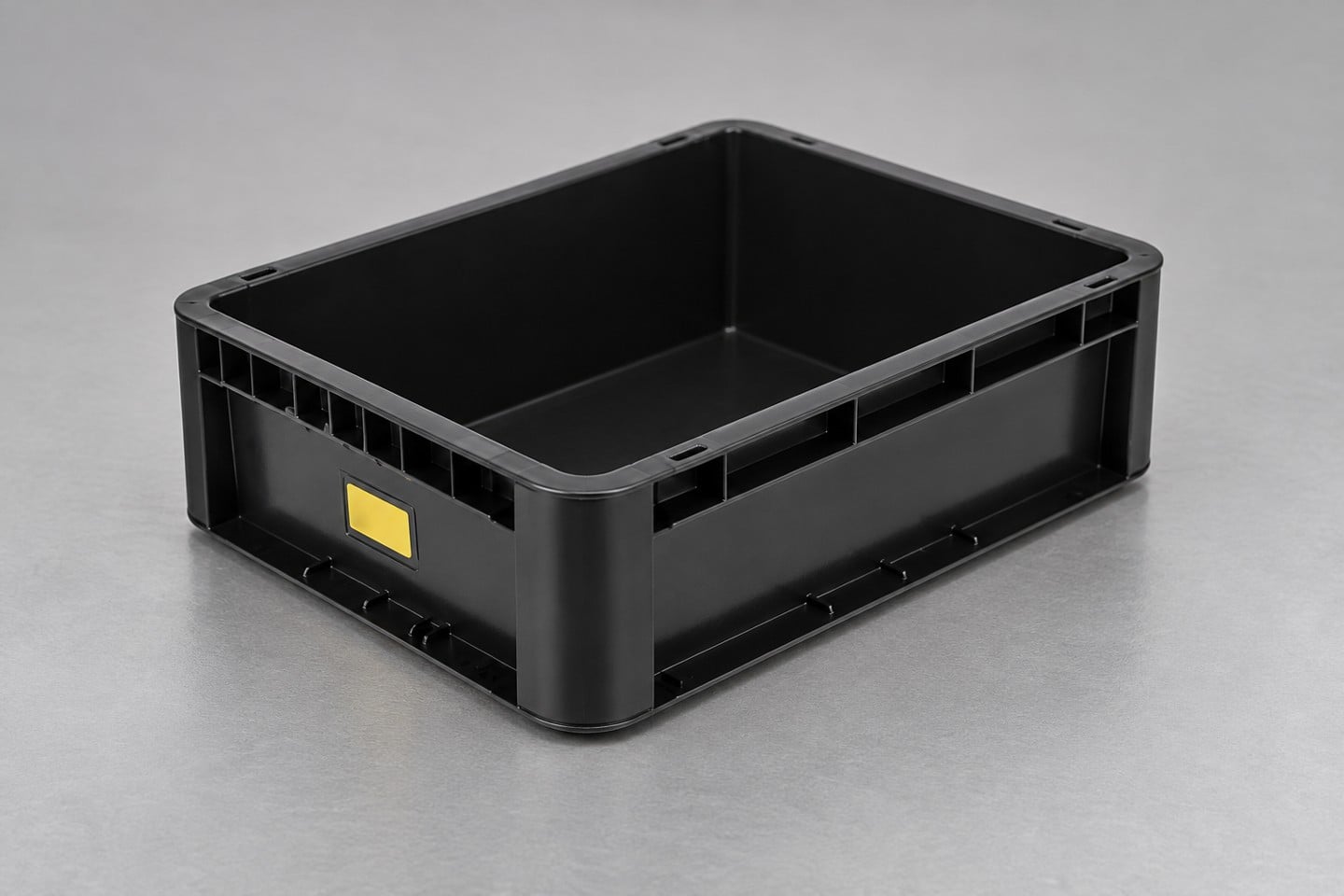
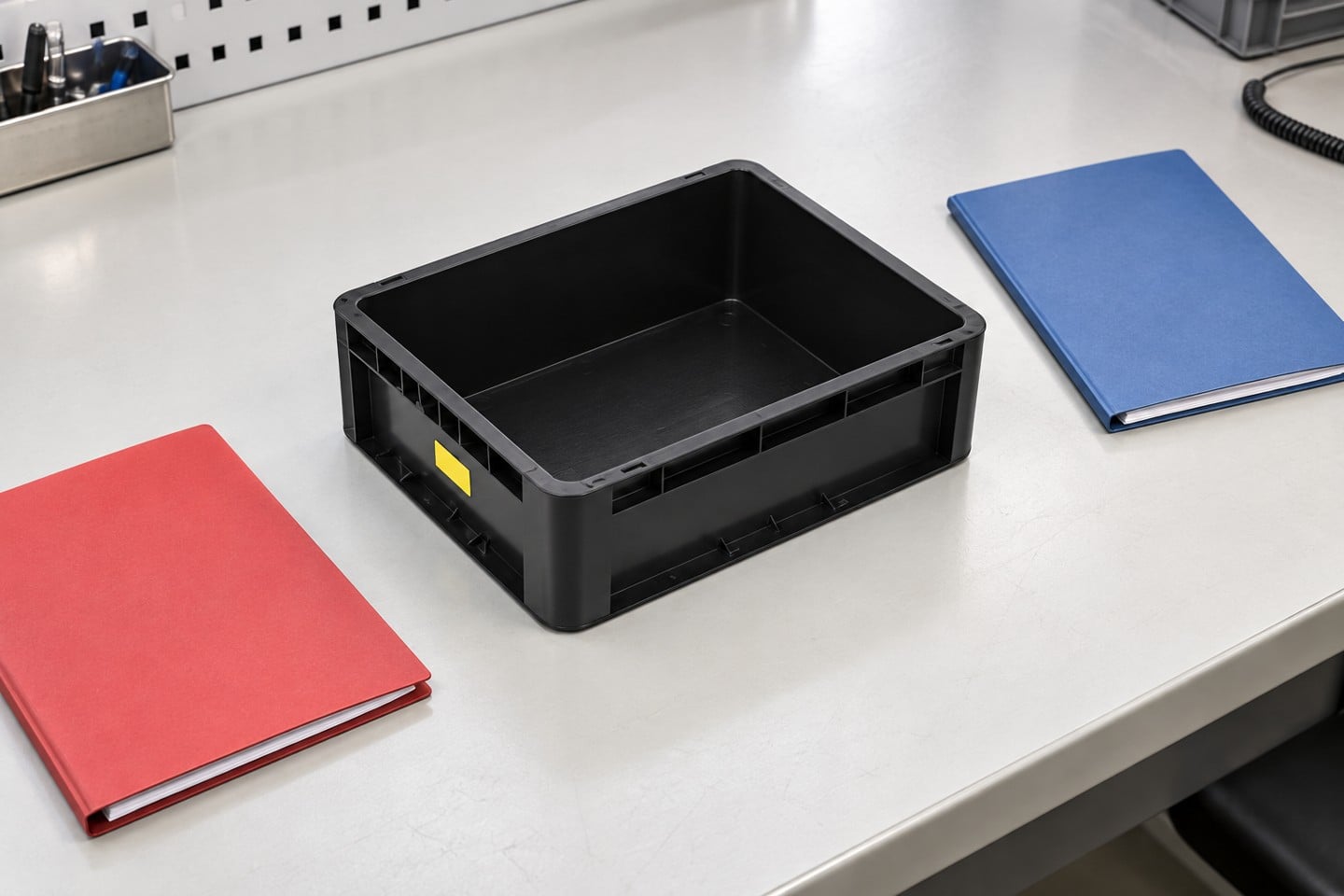
ال SWESD molded ESD box product reference in the illustrations shows an empty open container. It does not establish a qualified insert, shielding function, load rating or acceptance for a particular component. Request documentation for the supplied construction and confirm the complete handling arrangement. The B2B packaging RFQ checklist helps organize drawings and evidence, while the PCB packaging requirements discussion provides wider application context. Keep the customer-specific approval record separate from those general guides.
Control kit preparation and production staging
Define when packaging may be opened and where components may be placed during kitting. Maintain ownership, lot and job identity as material moves into accepted in-process holders. If only part of a quantity is needed, protect and identify the remainder rather than leaving it in an open package with an assumed count. Record how quantities are reconciled with the inventory system and how exceptions are handled. A visually tidy staging area can still contain ambiguous material if the records do not follow the transfer.
Keep the handling method suitable for the site’s process and the actual component requirements. Do not introduce an unapproved bag, insert or cleaning method because it makes picking easier. Ask the technical owner to review the change and the necessary evidence. Where a workstation holder is reused across jobs, inspect and prepare it under the approved procedure before the next job. Remove obsolete identification and verify the new material association. This is a practical control against mixing jobs, but it does not replace electrical or mechanical acceptance of the holder itself.
Manage changes and uncertain material openly
Packaging damage, a supplier substitution or an unexpected component revision can require a change to the accepted arrangement. Define who evaluates the impact and who authorizes release. Keep the original requirement and the deviation visible in the record. Do not describe a temporary substitute as equivalent without supporting evidence. If production must pause while approval is obtained, record the reason and protect the material under an accepted holding arrangement. An undocumented workaround can be harder to investigate than the original delay.
Material suspected of exposure or damage needs a technical disposition appropriate to the evidence and risk. Packaging cannot reverse an ESD event, and a normal visual appearance does not prove that a component was unaffected. Avoid automatically labeling every handling concern as confirmed damage, but do not silently release it either. Record the event, material identity, circumstances and decision. The responsible quality and customer owners should determine the required evaluation and whether the material can be used, returned or otherwise handled under the agreement.
Return unused inventory with its history
At job close, reconcile the unused quantity and identify which lots and owners it belongs to. Inspect the accepted return package and preserve the relevant material status. Do not combine open quantities into a convenient container without the required traceability and approval. State whether the material is unopened, transferred into an accepted holder, exposed to a documented process or held for a specific reason. The receiving customer should be able to understand what is being returned without relying on a telephone explanation from the previous shift.
ال PCB repair and return packaging guide addresses the separate route for assemblies sent to repair. For unused customer components, use the accepted contract and component requirements to define the return arrangement. Where formal transport evaluation is needed, discuss the complete package and product scope with qualified packaging personnel. The ISTA testing overview is a reference for that discussion, not evidence that an illustrated open tote or a particular shipment has passed a transport test.
Build an agreement that can survive a busy shift
Summarize the accepted package, handling route, identification rules, approval owners, exception process and return requirements in a form the receiving and production teams can use. Link the agreement to the actual component and job records. Review it when customers add parts, change suppliers or revise handling requirements. A short, specific agreement is more useful than a long statement that leaves substitutions and ownership decisions undefined. The goal is reproducible control of customer-owned inventory, supported by packaging evidence and clear custody records rather than assumptions based on labels or appearance.
Educational background
The following educational video introduces electrostatic behavior as context for protecting sensitive components. It does not prescribe a customer’s inventory rules or approve an individual package. Use the agreed requirements, the actual component documentation and qualified site procedures for the decisions described in this guide.
الأسئلة الشائعة
Does customer-supplied packaging automatically suit every internal operation?
No. Confirm the approved receiving and handling arrangements, including any transfer into in-process holders.
Does a customer name establish release status?
No. Ownership and process status are different records. Preserve both through the accepted identification and inventory controls.
May unused lots be combined for convenience?
Only if the responsible agreement permits it and the required identity and traceability remain intact.
Can a package substitution be called equivalent from appearance?
No. Review the required functions, physical suitability and supporting evidence, and obtain the defined approval.
What should accompany a partial-lot return?
Preserve customer and lot identity, reconciled quantity, relevant handling history, status and the accepted return-package record.
أحدث مشاركة
-

-
 PCB Magazine Trolley Design for High-Mix Production11 أكتوبر,2026
 -
اترك ردًا