- توربو
- مدونة
Cleanroom glove unopened stock return reconciliation should connect the physical packs coming back from production to their original issue, product and lot records. Keep the returned material separate until identity, packaging condition, handling history and the required release decision are resolved. Unopened does not automatically mean acceptable for reserve stock. This guide covers internal returns of unused supplies in electronics manufacturing; it does not authorize reuse of disposable gloves, restore a cleanliness claim or prescribe a supplier’s commercial return policy. Use your approved stock-control and contamination-control procedures for the actual product.
Define the kind of return being received
Start by distinguishing unopened internal stock from opened packs, loose gloves, worn items and supplier returns. These categories have different histories and may require different dispositions. Record why the material came back: an unused reserve after a job ended, an over-issue, a size allocation error or a process change. Avoid using one general returned-stock label that conceals whether the protective packaging was opened.
Identify who is handing over the material and the original issue reference where available. The receiving person should understand what was actually observed, rather than assume that a closed outer carton contains only unopened inner packs. If the return includes a mixture, separate and record the categories under the approved procedure. Do not open protected inner packaging merely to make a convenient count unless the relevant inspection and handling rules permit it.
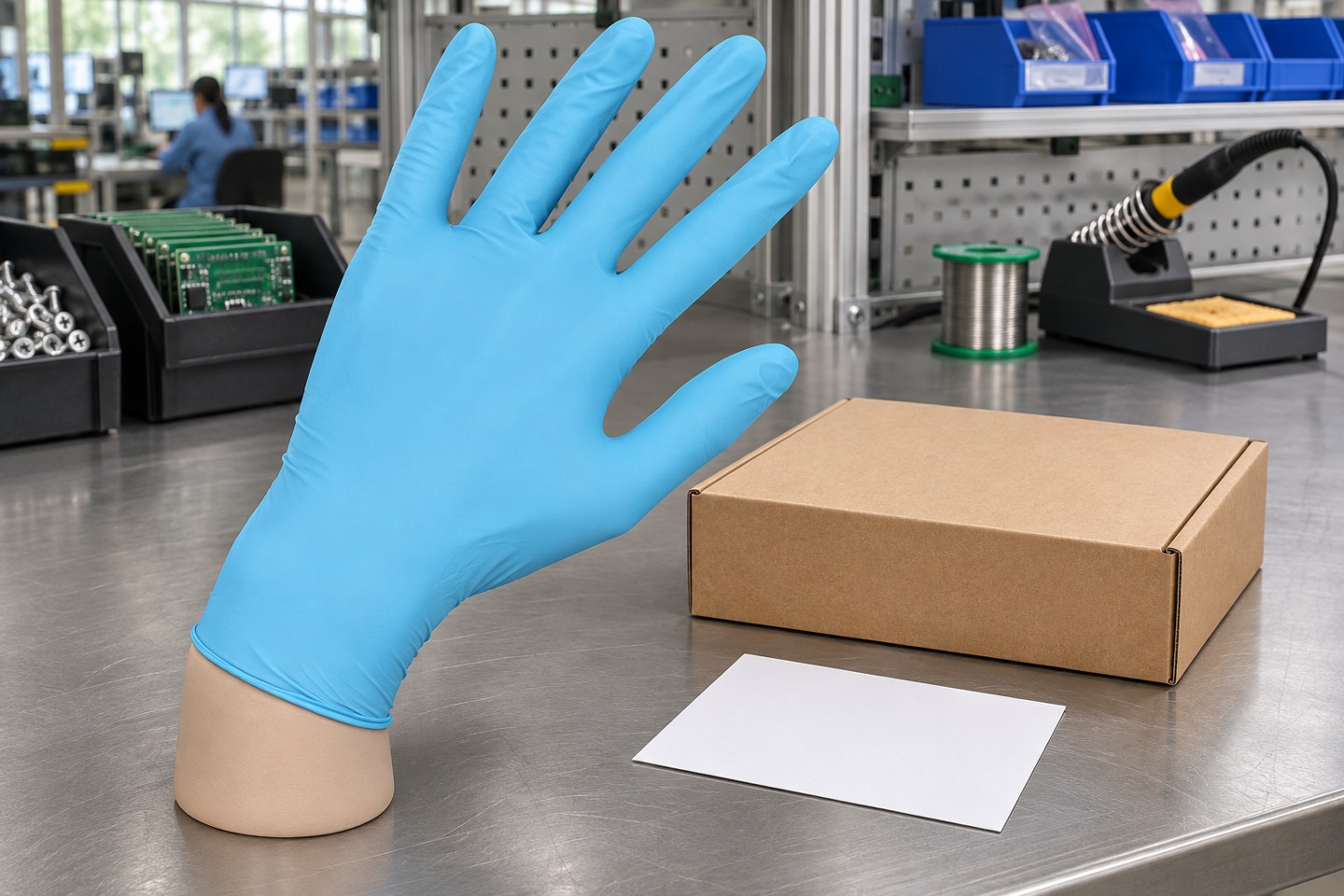
ال صفحة منتج القفاز الأزرق من نيتريل SWESD provides the product reference for this discussion. Ask for the specification and packaging information for the actual supplied item. Neither its blue appearance nor the illustrative photographs establishes sterility, a cleanroom classification or a verified ESD property for a returned pack.
Preserve original identity through the return
Match the approved product code, size, lot identity and relevant receipt or issue reference using the records your process requires. Keep original labels readable and linked to the physical material. If outer cartons were split during issue, use the established record connecting the returned inner pack to its source. Do not create a replacement lot number from recollection or copy the nearest carton label because it looks similar.
Where identity is incomplete, record the uncertainty and retain a review status. A plausible match can guide an investigation but should not be presented as a confirmed traceability link. Ask the issuing area for records and compare them with the returned quantity. If evidence remains insufficient, let the responsible owner decide disposition. A small return does not justify assigning an unsupported identity merely to close the transaction quickly.
ال cURL Too many subrequests by single Worker invocation. To configure this limit, refer to https://developers.cloudflare.com/workers/wrangler/configuration/#limits explains the wider chain from approval to line issue. This article concentrates on the reverse movement back from an issuing area, with particular attention to stock that appears unopened.
Reconcile quantities without restoring stock early
Use one agreed unit at each comparison. Distinguish gloves, pairs, inner packs, boxes and cartons, and record the verified conversion where your actual packaging uses more than one unit. There is no universal number of gloves in a box. A packing convention from another product cannot resolve the quantity of this return. Preserve the count basis, including which packs were physically inspected and which quantities were established from controlled records.
ال GS1 EANCOM receiving-advice introduction distinguishes the receipt of goods from discrepancies and acceptance information. That distinction is useful when designing a local return worksheet: received and accepted need not be the same quantity. It does not require your internal process to implement EDI, and it does not establish product-specific cleanliness or electrical acceptance criteria.
Compare the return against the original issue and any already recorded consumption, transfer or prior return. Investigate a quantity that exceeds the possible balance rather than silently increasing stock. Check for duplicate transaction entries and different units before assuming a physical surplus. Keep the original record and add an explained correction where needed. An audit trail should show what changed and why, rather than only the latest convenient total.
Separate receipt, review and release
| سجل | الأدلة للحفظ | ما يثبته |
|---|---|---|
| Original issue | Issue reference, product, size and lot | Traceability starting point |
| Physical return | Actual packs, unit and count basis | What arrived |
| Identity review | Readable label and linked records | Whether source is confirmed |
| Condition review | Packaging and relevant handling history | Evidence for disposition |
| Pending quantity | Identified material awaiting decision | Stock not yet released |
| Accepted return | Authorized quantity and destination | Approved inventory transaction |
| Other disposition | Supplier return or other authorized route | Separate accountable handover |
This proposed worksheet organizes a local stock decision; it is not a GS1 standard form or a glove test method. Its purpose is to keep physical receipt, evidence review and stock release distinct. Your procedure should define the actual acceptance conditions and the person authorized to release or reject returned material.
Assign a return reference that remains with the material throughout the review. A tray location alone is insufficient if the tray can be moved without updating the record. Record any split disposition, such as some identifiable unopened packs awaiting approval and a separate group with uncertain history. Do not blend the groups to simplify counting. Each quantity should retain the evidence and status that apply to it.
Assess packaging and handling history separately
Inspect packaging under the product-specific receiving and transfer rules. Look for conditions that need assessment, such as unreadable identity, an unexpected opening, damage or evidence of uncontrolled handling. A visually intact outer box does not prove the condition of every protected layer. Follow the cleanroom glove packaging integrity guide for the related receiving-to-issue framework, while using the actual supplier instructions for acceptance.
Ask where the returned packs were stored and how they moved between controlled areas. Preserve relevant observations without inventing a storage limit, exposure time or cleaning method. If the handling history is unknown, say so. Wiping the outside of a carton does not recreate missing evidence, and this article supplies no method for restoring the stated condition of a compromised package. Refer uncertain material to the responsible quality or process owner.
Do not put worn gloves or loose items back into unopened reserve stock. Likewise, do not reseal an opened package and relabel it as never opened. If the site’s procedure allows continued use of a particular opened pack, give that material its appropriate status and controlled route. Keep that decision separate from the return of genuinely unopened supplies so stores personnel can distinguish them at the next issue.

Make the release decision useful to the next shift
Record the evidence reviewed, accepted quantity, unresolved quantity, final destination and decision owner. If the material is returned to approved inventory, update its location and status through the authorized transaction. Receipt at a review bench is not the same event as release to reserve stock. A planned release should remain pending until the required decision has actually been made and recorded.
If the disposition is supplier return, disposal or another controlled route, preserve the quantity and handover evidence appropriate to that action. A carton prepared for collection remains on site until collected. Do not close the internal balance merely because a return authorization was requested. If the supplier later reports a different quantity, record and resolve the difference rather than overwriting the physical receipt without explanation.
ال glove dispenser replenishment guide covers the next issue stage. Released returns should enter that process with their identity and status intact; a return transaction must not become an informal shortcut directly into an operator’s dispenser.
Prevent repeat returns from becoming hidden waste
Review recurring reasons by product, size, issuing area and job type where useful. Repeated over-issue may indicate that reserve quantities are poorly matched to actual work. Repeated identity problems may indicate that inner-pack records are lost when cartons are split. Describe the observed pattern and change the relevant issue process through its owner. Avoid turning one return into an unsupported conclusion about every glove or every operator.
When purchasing replacement supplies, ask for packaging and identification that support the required supply-to-use path. Agree how product changes will be communicated and how retained records will connect to the shipment. Keep these requests specific to the problem found. Additional paperwork is valuable only when it helps preserve a needed identity, verify a condition or resolve an actual discrepancy.
Keep stock reconciliation separate from ESD qualification
ال EOS/ESD Association control-materials introduction provides the wider context for selecting controls for sensitive electronics. A successful return count proves neither electrical suitability nor cleanliness. Keep those approvals tied to the relevant product and process evidence. Releasing returned stock should preserve the original approval boundary rather than expand it to a new application.
The Association’s educational video below introduces glove measurement. It explains why an electrical question requires its own method and evidence, even after identity and quantity have been reconciled. It is not a test of the illustrated gloves or proof that any returned batch is acceptable.

الأسئلة الشائعة
Does unopened mean acceptable to restock?
لا. يجب التحقق من الهوية وحالة التغليف وسجل المناولة واتخاذ قرار الإفراج المطلوب.
هل يمكن نسخ رقم التشغيلة المفقود من كرتونة مماثلة؟
لا. حافظ على حالة عدم اليقين، واطلب أدلة تربط المادة الفعلية بهويتها الأصلية.
هل يؤدي استلام المرتجع إلى زيادة المخزون المعتمد فورًا؟
Keep physical receipt separate from release. Update approved stock only through the authorized decision and transaction.
هل يمكن إعادة وضع الملصقات على العبوات المفتوحة وتصنيفها على أنها غير مفتوحة؟
No. Keep their actual condition and use the disposition allowed by the approved procedure.
Does a correct count prove electrical or cleanroom suitability?
No. Quantity reconciliation and product suitability require their respective evidence.


اترك ردًا