- Blog
End-to-end PCB storage and handling becomes easier to control when each carrier has one primary job. Use a rack to separate boards, a tray to preserve orientation, a box or tote to enclose a route, and a trolley to move the selected carrier. At every handoff, record status, owner, board fit and the condition that allows release.
Build the storage hierarchy
The ESD Association principles require a program that protects sensitive items as conditions change. Storage is therefore a process decision, not just a shelving purchase.
| Primary job | Carrier starting point | Decision to record |
|---|---|---|
| Separate multiple boards | Magazine rack | board envelope, slot/interface and status label |
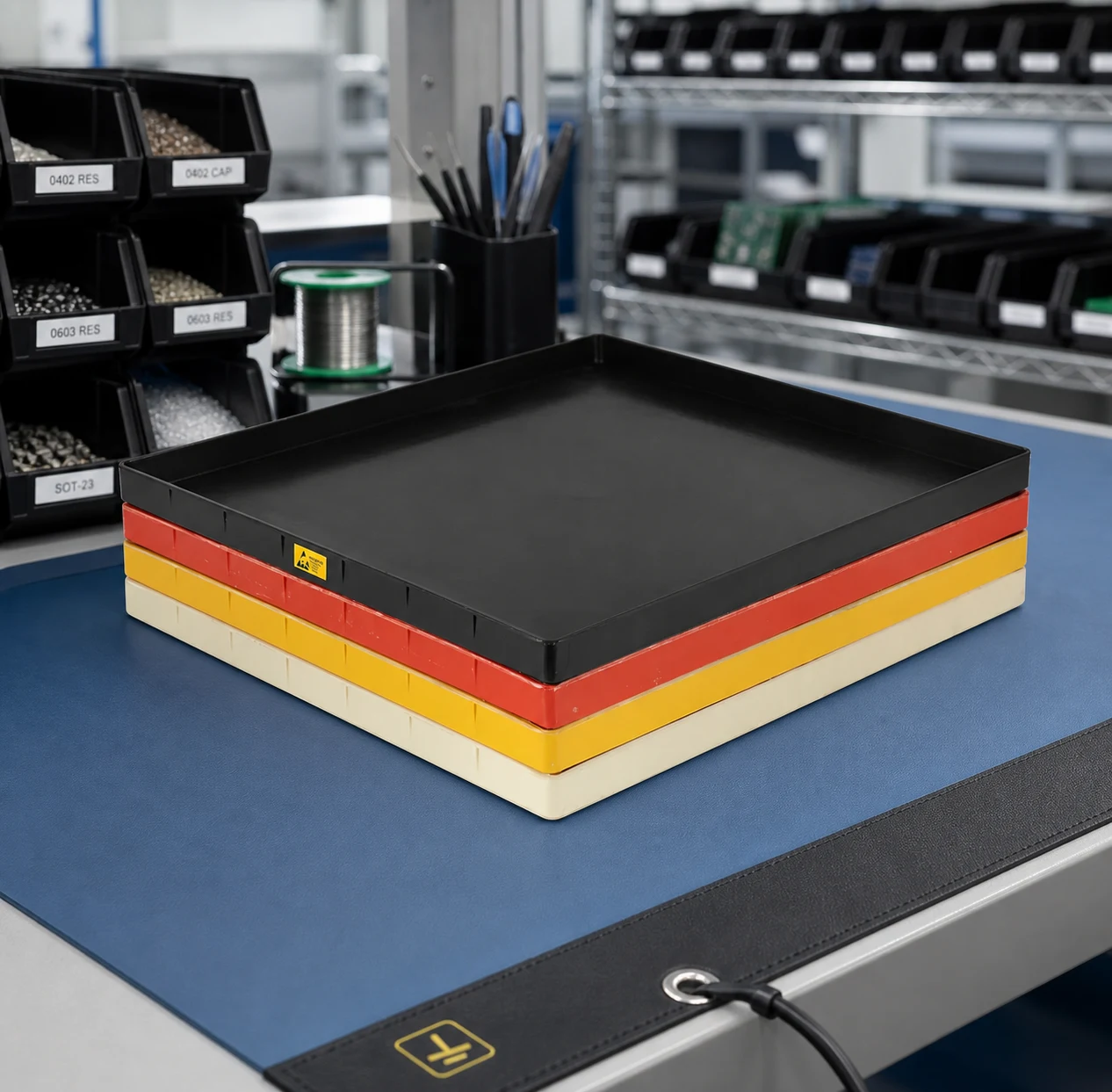
| Preserve one orientation or kit | Tray | contact edge, orientation and cavity/partition |
| Enclose a route or return loop | Box or tote | lid/closure, label, cleaning and reuse |
| Move a loaded carrier | Trolley or cart | route, ownership, floor/doorway constraints |
The GoToPAC PCB handling catalog separates carts, racks and carriers. Use that separation in the plant layout so a trolley is not overloaded with an undefined storage function.
Design the receipt-to-line handoff
At receipt, verify identity and condition before placing a board into a carrier. At line feed, show the lot and process status. At inspection or rework, make holds visible. At finished goods, define whether the carrier stays inside the EPA or enters an approved package.
The Metro storage guide connects fixed and mobile storage to electronics environments. ALLPCB handling guidance reinforces the value of controlled containers and careful contact.
Make tray fit a real-board decision
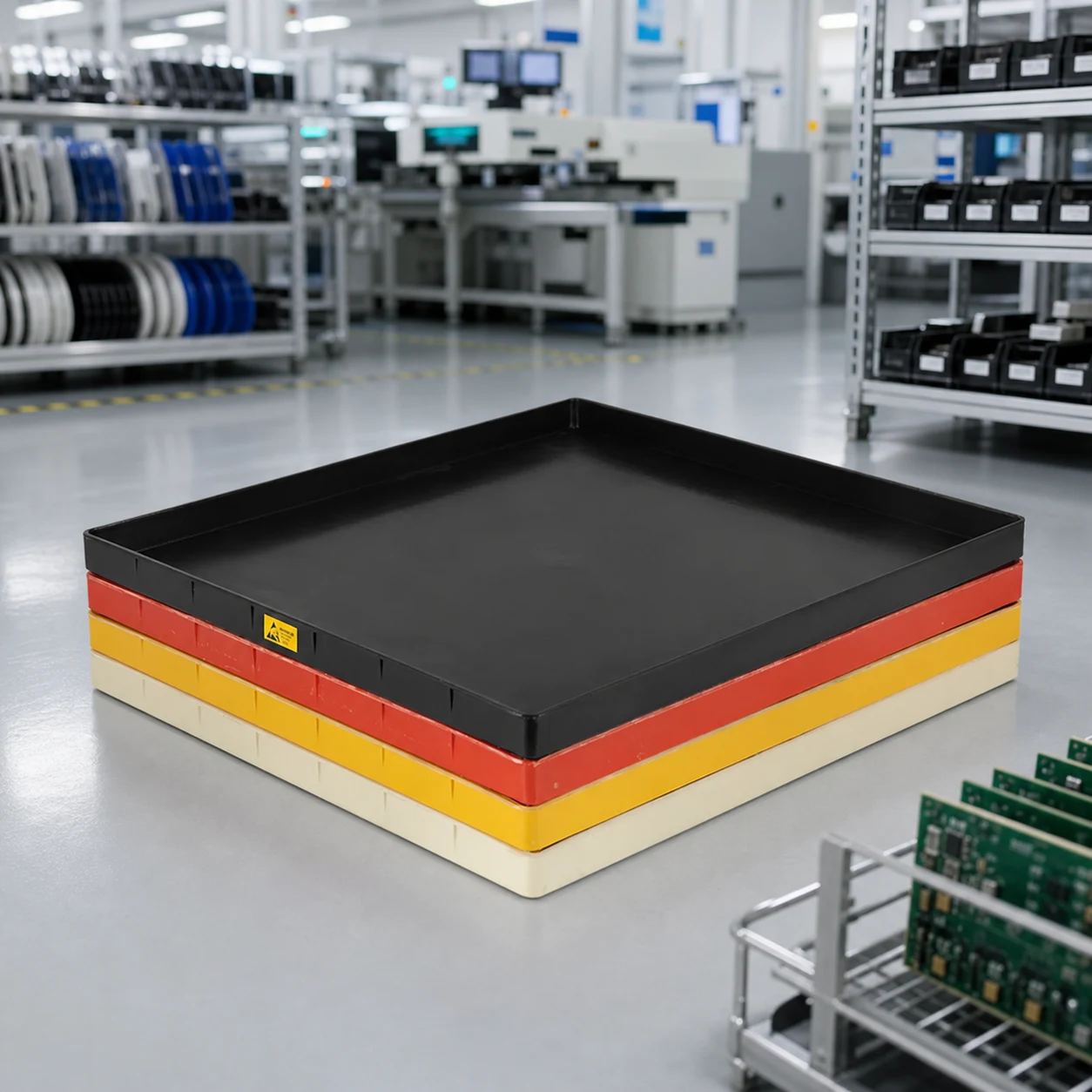
The Elsepack tray overview and MKTPCB tray explanation both point to geometry and handling as selection inputs. Confirm the maximum populated envelope, component keep-outs, permitted contact edges, loading direction, retrieval method and label visibility with the actual board.
Do not infer slot count, pitch, heat resistance or surface behavior from a photograph. Trial the filled carrier with the operators who load and unload it. Inspect the board and carrier after the intended movement and cleaning cycle.
Control movement and exceptions
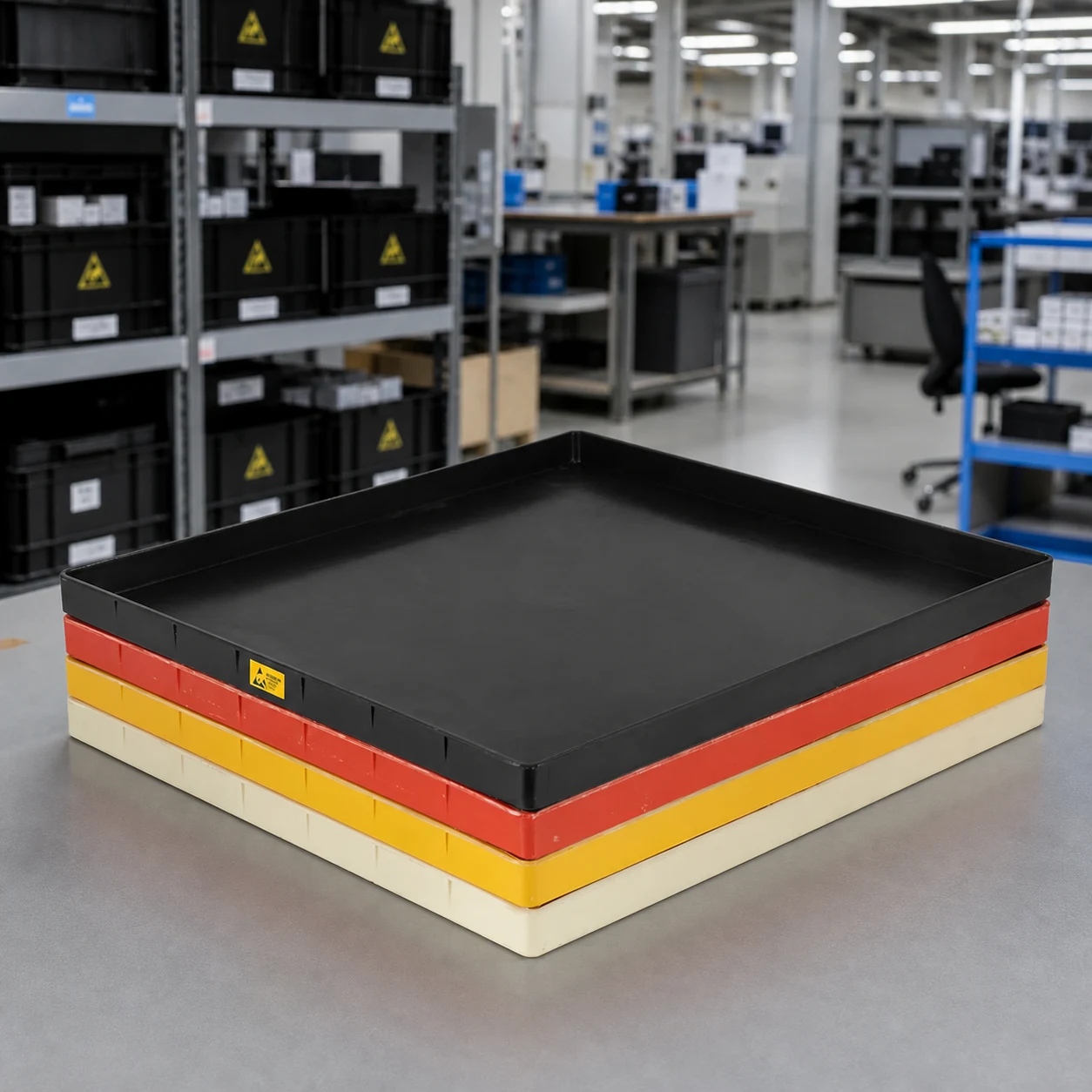
Before a trolley leaves one station, the sender records the status and destination. The receiver accepts ownership and checks the carrier. If the route leaves the EPA, apply the packaging procedure described in the ESD Association materials guidance. The Antistat EPA overview is useful for defining the boundary, but the site’s own procedure determines the release rule.
| Checkpoint | Owner | Release evidence |
|---|---|---|
| Carrier selection | Engineering | drawing and approved interface |
| Loading | Operator | identity, orientation and status |
| Movement | Material handler | destination and carrier condition |
| Receipt | Next process owner | count, label and visual condition |
| Outbound transition | ESD coordinator | approved package and record |
Build the circulation-equipment set
Use the SWESD ESD Tray route for oriented board handling, then compare the ESD Box and ESD Trolley routes for enclosure and movement. Send Contact Sanwei the board drawing, quantity, route, status method, cleaning, floor and doorway constraints, required ESD test method, trial plan and destination.
FAQ
Is a rack enough for PCB movement?
Not necessarily. A rack separates boards; a trolley or other approved movement method may still be needed for the route.
Should every PCB use a closed box?
No. Choose closure from the route, environment, handling frequency and the buyer’s ESD program.
What proves a carrier fits?
A configuration drawing, agreed acceptance method and a trial with the real board and process provide stronger evidence than a generic image.
Leave a Reply