- hanqi
- Blog
Throughout modern electronics manufacturing, ESD protection box solutions have taken on great importance and necessity for safe and functional production environments on today’s assembly lines. With the continued demand for semiconductors, automotive electronics, industrial control systems, and medical devices, there is an increased need for manufacturers to avoid ESD damage during not only the storage and handling of these materials, but also while they are being manufactured. As such, there has been strong growth in the request for ESD protection box containers designed for high volume assembly manufacturing operations.
The marketplace has been shifting toward more comprehensive compliance to international standards including IEC 61340-5-1 and ANSI/ESD S20.20 as a result of both buyer demand for higher durability, improved traceability, and tailored configurations for automated production lines. In addition, procurement teams continue to contend with issues related to material stability, long-term performance of conductive materials, potential for contamination, and compatibility with high temperature processes.
In this article, we will do a structured industry overview of ESD storage containers; we will cover manufacturing technologies, material science considerations and offer practical buyer guidance) for B2B procurement decisions.
Industry Demand and ESD Control Trends in Assembly Line Logistics
The micro-level product failures triggered by the effect of static discharges have caused increased sensitivity in the electronics supply chain on a global basis. All industry sources corroborate that ESD-related defects in semiconductor and Printed Circuit Board (PCB) manufacturing processes create a large percentage of hidden failures.
Key trends shaping the market include:
- Miniaturization of electronic components, increasing sensitivity to static charges
- Expansion of automated SMT assembly lines, requiring standardized ESD-safe logistics containers
- Rising adoption of cleanroom manufacturing environments in automotive and medical electronics
- Stronger enforcement of IEC 61340-5-1 (IEC 61340-5-1) and ANSI/ESD S20.20 (ANSI/ESD S20.20)
Electrostatic discharge (ESD) boxes and ESD storage bins have become critical components, or integral parts of production systems, rather than merely optional accessories in relation to the production environment’s overall makeup.
What Is an ESD Protection Box and Why It Matters in Manufacturing
A container designed to either dissipate or conduct, the ESD Protection Box is a safe way to transport and store electronic devices without creating an electrostatic charge.
Read More:
ESD Safe Box: Essential Protection For Your Electronic Components – SWESD
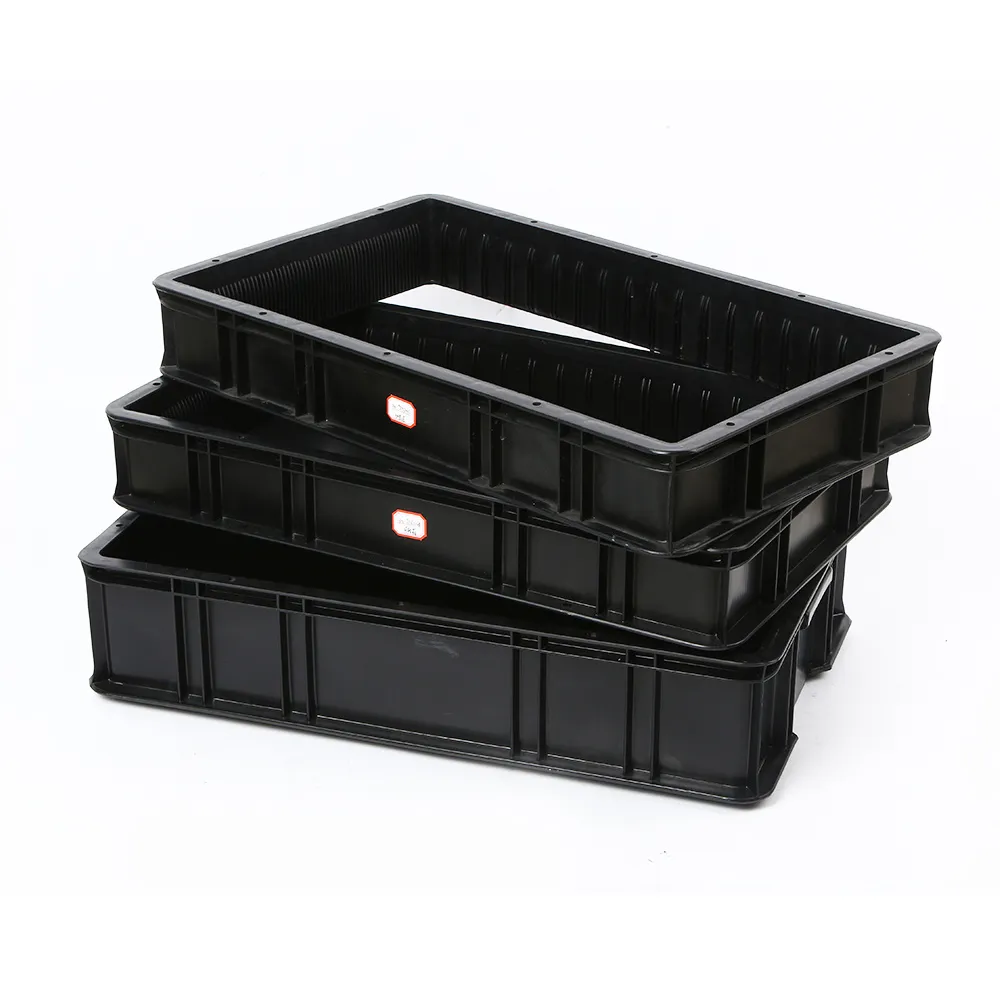
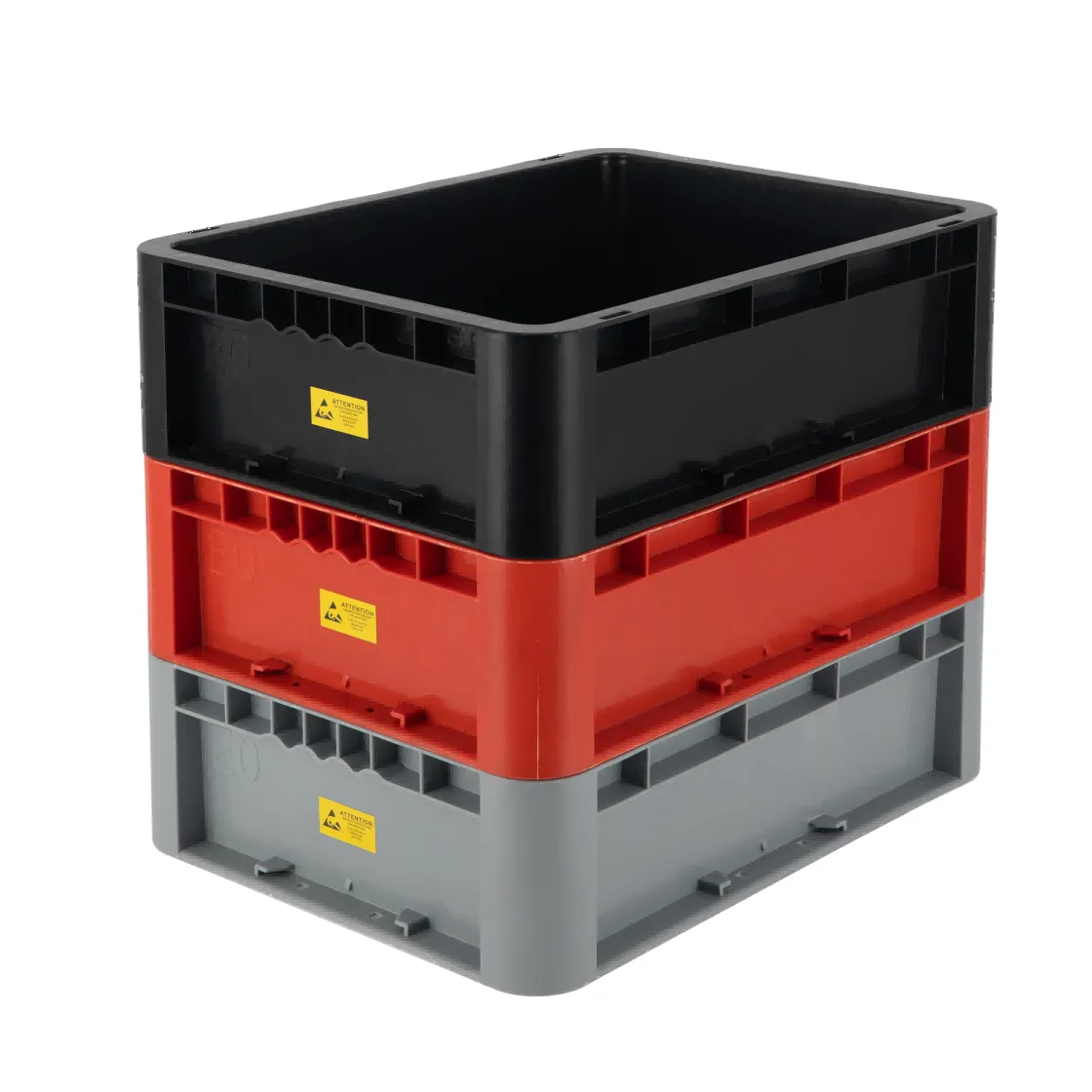
Common product categories include:
ESD Box Industrial Conductive Plastic Container For SMT Production Line | SWESD
ESD Box 400(L)*300(W) Carbon Filled PP ESD Turnover Crate | SWESD
The Hidden Threat of Electrostatic Discharge and Core ESD Storage Mechanics
The high-speed automated assembly lines generate a significant amount of static electricity from the friction produced by the conveyor belts and the assembly process, as well as the constant motion of humans involved in assembly. As that charge accumulates, then subsequently discharges into the sensitive components of manufactured electronic products produces permanent physical damage and/or latent defects in those products which do not manifest until they are received by the end-user.
Plastic containers do not properly catch the static electricity stored in them, and therefore contribute to the formation of static electricity. A professional ESD storage box uses special conductive or static dissipation materials to produce a Faraday Cage effect that will create a safe and controlled path to ground, preventing static from building up in that area. The best ESD boxes have a surface resistance that varies from 10⁴ to 10¹¹ ohms/sq. The result is a controlled and safe discharge of static electricity at the right rate to provide electrical and physical protection to the expensive parts on the production line.
Faraday Cage Effect: A method of blocking external electrostatic fields using conductive materials to create a closed system that protects sensitive components from static discharge by shielding them with conductive materials.
Material Science Deep Dive: The Underlying Logic of ESD Safe Bins Reliability
Many procurement departments are making the same mistake of focusing only on the initial surface resistivity value report when purchasing ESD storage bins. In many cases, they are not considering the longevity of the anti-static properties of those bins. Many low-cost products are made with only a topical anti-static coating and as a result, they will quickly degrade after being washed, subjected to friction from use, or exposed to chemical solvents, resulting in the loss of protection to sensitive assemblies.
Intrinsic material science provides the basis for true reliability. Many of today’s top manufacturers have instead focused their energies on creating high performance conductive and anti-static composites that give you permanent protection.
|
Material Technology |
Lifespan |
Durability |
Best Application Scenario |
| Topical Coatings | Short (Months) | Low (Washes off easily) | Temporary storage, non-critical low-sensitivity items. |
| Anti-static Low-warpage PP | Permanent | High (Excellent toughness) | Automated handling, heavy load-bearing environments. |
| PBT/PET Alloy Composites | Permanent | Very High (Impact resistant) | Complex workshop environments requiring chemical stability. |
Purchasing agents can eliminate the anxiety of coating failure by upgrading to ESD storage containers with advanced materials that contain inherently dissipative properties (like PP or PBT/PET alloys); thus, achieving true “deploy & forget” reliability.
Low Warp: A type of plastic (plastic molded products) having special properties that provide very consistent dimensional accuracy and a very flat base surface after the process of injection molding or after long-term, heavy loading is very critical to the function of robotics as they automate the handling of these products.
Addressing Industry Blind Spots: Container ESD in Extreme Heat and Cleanroom Environments
Often, when discussing the solution for ESD with containers, discussions in the industry usually terminate when room temperature applications are discussed. In the case of assembly lines that involve SMTs, bake-in testing or aerospace grade manufacturing with a high degree of precision, extreme temperatures and stringent controls on particulates are the true operational bottlenecks experienced.
1. Endurance in Extreme High-Temperature Environments
Standard plastic anti-static containers may warp, melt or emit considerable off gases at high temperature burn-in testing. Only a few select leading manufacturers with substantial engineering experience in material science have the ability to custom-make high-temperature resistant anti-static containers to withstand temperatures as high as 200°C. These custom anti-static containers have very strict dimensional tolerances as well as resistivity metrics that remain consistent with their dimensional specifications and withstand extreme thermal stress and represent a critical void in the market for high heat ESD protection.
2. The Rigorous Demands of Cleanroom Manufacturing
Boxes made of normal, conductive carbon are often affected by “sloughing off” or “sifting out” of carbon powder during friction. In Class 5 (also called Class 100) cleanrooms, that type of particle contamination is unacceptable. The answer to this blind spot is to replace the use of conductive carbon with permanently anti-static, clean white material. These carbon free composites can be used in applications that exceed 160ºC and significantly diminish the risk of outgassing and contamination from particulate matter, making them an optimal choice for the manufacture of medical electronics and for advanced semiconductor wafer assembly lines.
Outgassing refers to the release of volatile molecules from plastics or composite materials when exposed to high temperatures or in a vacuum. Outgassing can lead to substantial contamination of precision wafers and sensors in a cleanroom.
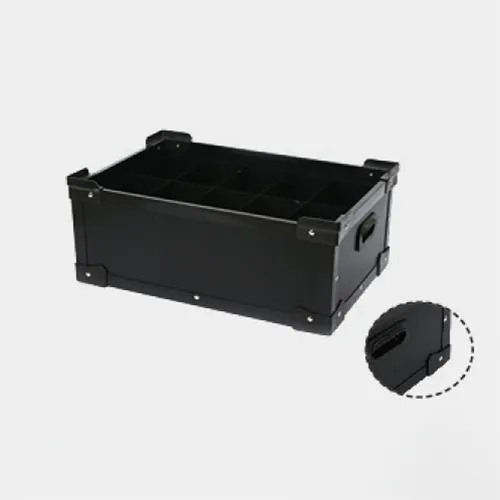
Automation Adaptability and Customization: Integrating ESD Safe Divider Boxes
With the advancement of assembly lines involving increased levels of automation (using AGVs and highly precise robotic arms), the size and shape tolerances of an ESD Protection Box are now as important as the electrical characteristics.
Low-Warpage Control for Robotic Precision
If the plastic experiences any internal stresses after being injected into the mold, that will cause the piece of equipment that is injected (e.g., box) to warp over time as well. Although some warping, probably in the range of a couple millimeters, may only be an inconvenience to an operator; the same cannot be said for optical sensors located on robotic end effectors and robotic grippers; as they are likely to experience mispicks, drop parts and additional costs of time for production due to excessive down time. Thus, it is imperative to use low-warp polypropylene composite materials in order to achieve fully automated manufacturing processes.
Lean Manufacturing and OEM/ODM Customization
In Lean Manufacturing, precise positioning of PCBA is critical. ESD Safe Divider Boxes can be utilized by facilities to adjust their internal spacing so that no physical collisions occur between two PCBs when placed inside ESD Safe Divider Boxes.
Getting your products from an established producer (especially those with a multi-functional distribution base) with many years in service providing worldwide sourcing (from a single source) since 1988 will provide you complete OEM / ODM access, including custom engineering drawings, voltage specific formulations, custom colors, custom-designed nameplates, etc. These customized capabilities will guarantee that your storage solutions fit seamlessly into your proprietary 5S / ASW automated management and warehousing systems.
Global Compliance and Supplier Evaluation: Building a Trustworthy ESD Supply Chain
Global brand owners, utility companies and EPC contractors who work with brands worldwide including those across North America, Europe, Singapore and in the Middle East must comply with the laws of the country they operate in. Therefore they must comply with strict guidelines when it comes to their use of anti-static boxes which are expensive and have been designed and developed in a laboratory environment.
When evaluating vendors, purchasing agents need to ensure the certifications and capabilities listed below are met:
“IEC 61340-5-1 + ANSI/ESD S20.20: The Definitive Global Electrostatic Control Program Standards. Products must pass these protocols to ensure the dissipation of safely charged electrostatic discharges.”
SGS-certified testing and RoHS compliance to ensure safe products from hazardous materials and their environment.
Military and high-tech national standards: Manufacturers classified as National High-Tech Enterprises or who follow defense related military standards generally have better internal quality control staff and testing facilities that are all integrated for mechanical stability, heat resistance and routine electrical testing.
Partnering with a supplier that exports to your region will cut down misunderstandings and provide you with assurance that each of the containers that arrive on your production line come from a world-class, standard industrial manufacturer.
Buyer’s Guide: How to Choose the Right ESD Storage Containers
When selecting ESD storage containers or ESD boxes, procurement teams should take into consideration both the technical side and the operational side of things.
1. Surface Resistance Range
2. Mechanical Strength
3. Temperature Resistance
4. Application Fit
5. Lifecycle Cost
Industry Application Scenarios and Hidden Optimization Opportunities
Beyond standard storage, ESD logistics systems are increasingly used for:
l Smart factory automation integration
l RFID-based component tracking
l Lean manufacturing kitting systems
l Cross-border supply chain standardization
One area of ESD logistics container modularization that is rarely discussed is the use of standardized dimensions for all boxes to improve:
l Conveyor compatibility
l Warehouse automation efficiency
l Packing density optimization
This is becoming a key focus in Industry 4.0 manufacturing upgrades.
Frequently Asked Questions
1. What is an ESD protection box used for?
Safely storing and moving electronic components through the assembly and logistics process while protecting them from damage caused by electrostatic discharge.
2. What is the difference between ESD storage boxes and regular plastic bins?
While regular plastic bins can develop harmful electrostatic charges, ESD storage cases can be either made from conductive or dissipative materials, preventing any buildup of static electricity.
3. What are ESD safe divider boxes?
These storage containers have many compartments and are designed to keep ESD from destroying the electronic components stored in a separate compartment.
4. Are ESD storage containers reusable?
Yes, high quality electrostatic disruption (ESD) containers can withstand years of continual use while retaining their consistent electrical performance.
5. What industries use ESD safe bins?
Containers that are safe for ESD are frequently utilized for manufacturing electronics, automotive electronics, aerospace, telecommunications, and production of medical devices.
6. How do I choose the right ESD storage box for my assembly line?
You must take into account surface resistance, load handling capability, temperature resistance and compatibility with automated systems before making your decision.
7. Do ESD boxes lose effectiveness over time?
There are low-quality anti-static products that will degrade over time; however, with permanent / long-lasting anti-static materials, you can achieve consistent performance over time in industrial applications.
8. Can ESD storage bins be customized for OEM projects?
Yes. OEM/ODM Customization includes size, color, trademarking, structure and application-specific engineering design.
References
EOS/ESD Association, Inc. (ESDA). (n.d.). ANSI/ESD S20.20: Standard for the Development of an Electrostatic Discharge Control Program.
Retrieved from https://www.esda.org
International Electrotechnical Commission (IEC). (n.d.). IEC 61340-5-1: Electrostatics – Protection of electronic devices from electrostatic phenomena.
Retrieved from https://www.iec.ch
JEDEC Solid State Technology Association. (n.d.). JESD625: Requirements for Handling Electrostatic-Discharge-Sensitive (ESDS) Devices.
Retrieved from https://www.jedec.org
International Organization for Standardization (ISO). (n.d.). ISO 14644-1: Cleanrooms and associated controlled environments — Part 1: Classification of air cleanliness by particle concentration.
Retrieved from https://www.iso.org

Leave a Reply