- Tăng áp
- Blog
ESD tray outgassing should be evaluated as a separate contamination question from electrical resistance and mechanical fit. Ask what substances could leave the complete tray assembly, under which temperature, pressure and exposure conditions, and whether the resulting contamination would matter to the protected item or process. A claim of ESD suitability does not establish low volatile residue. A vacuum outgassing report also does not automatically qualify a tray for every cleanroom application. Buyers need traceable material identity, an appropriate test plan and acceptance criteria connected to the actual exposure rather than a generic statement that a plastic is clean.
Define the contamination problem before requesting a test
Describe what the tray will hold, which surfaces are sensitive and whether the item contacts the tray directly. Record whether the concern is residue on an optical surface, a film on a bond area, contamination of a processing chamber or a general cleanliness requirement. These cases can need different evidence. A particle count, a surface extract and a vacuum outgassing measurement do not answer the same question.
Map the period when the sensitive item is exposed. Include storage, movement, heating, cleaning, enclosure and any later process that could reveal transferred contamination. Do not assume that the tray’s short visible handling period is the whole exposure. An insert, label or protective film may remain near the item for much longer. Identify every constituent that shares the enclosed space before deciding which material specimens should be submitted.
Keep electrical and chemical suitability separate
The EOS/ESD Association material-control overview describes packaging within an electrostatic-control program. It does not make every electrically suitable material appropriate for every contamination-sensitive process. Conductive or dissipative behavior is not a chemical cleanliness certificate. Review charging, resistance, shielding where applicable, particles and volatile residue as separate characteristics with their own evidence.
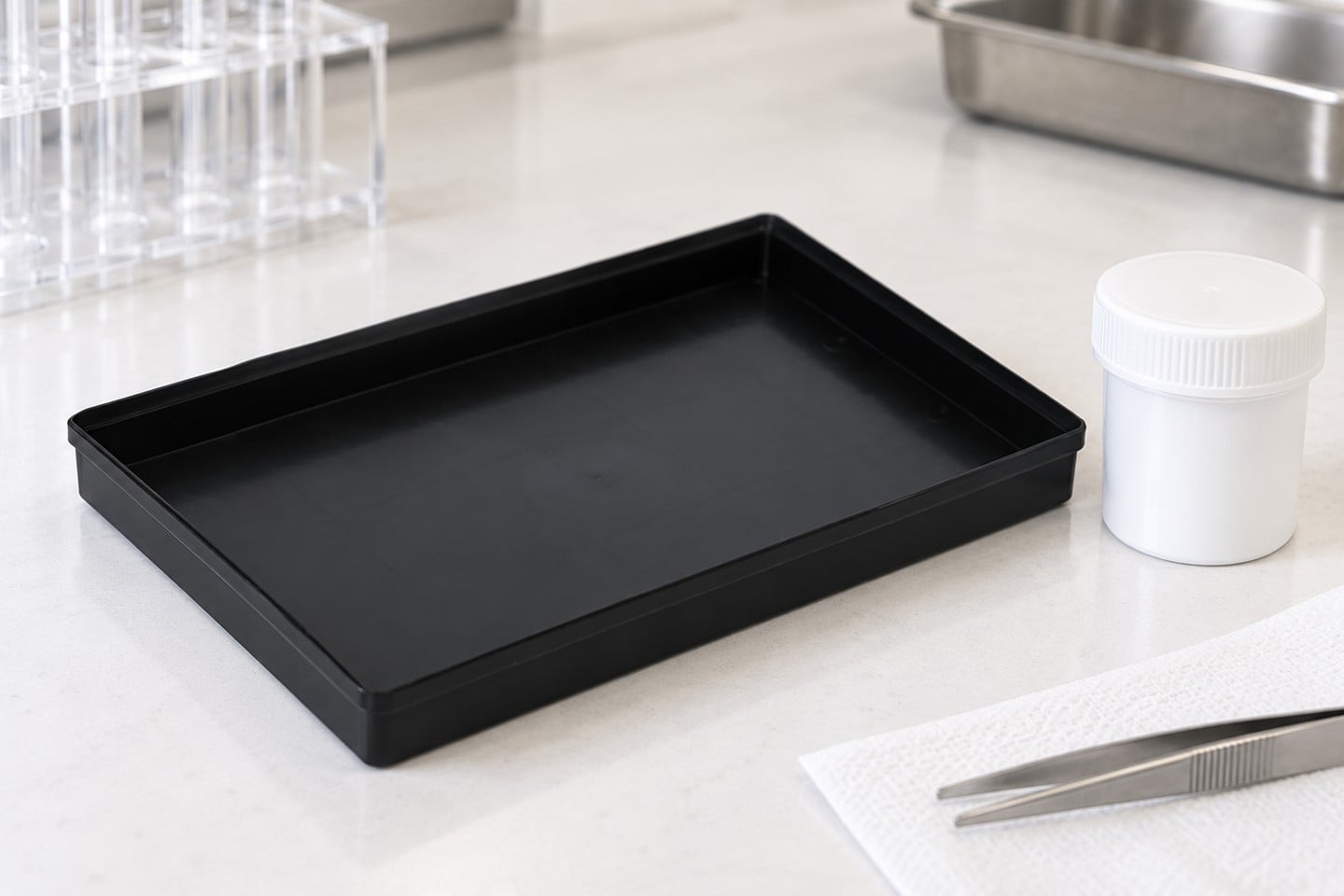
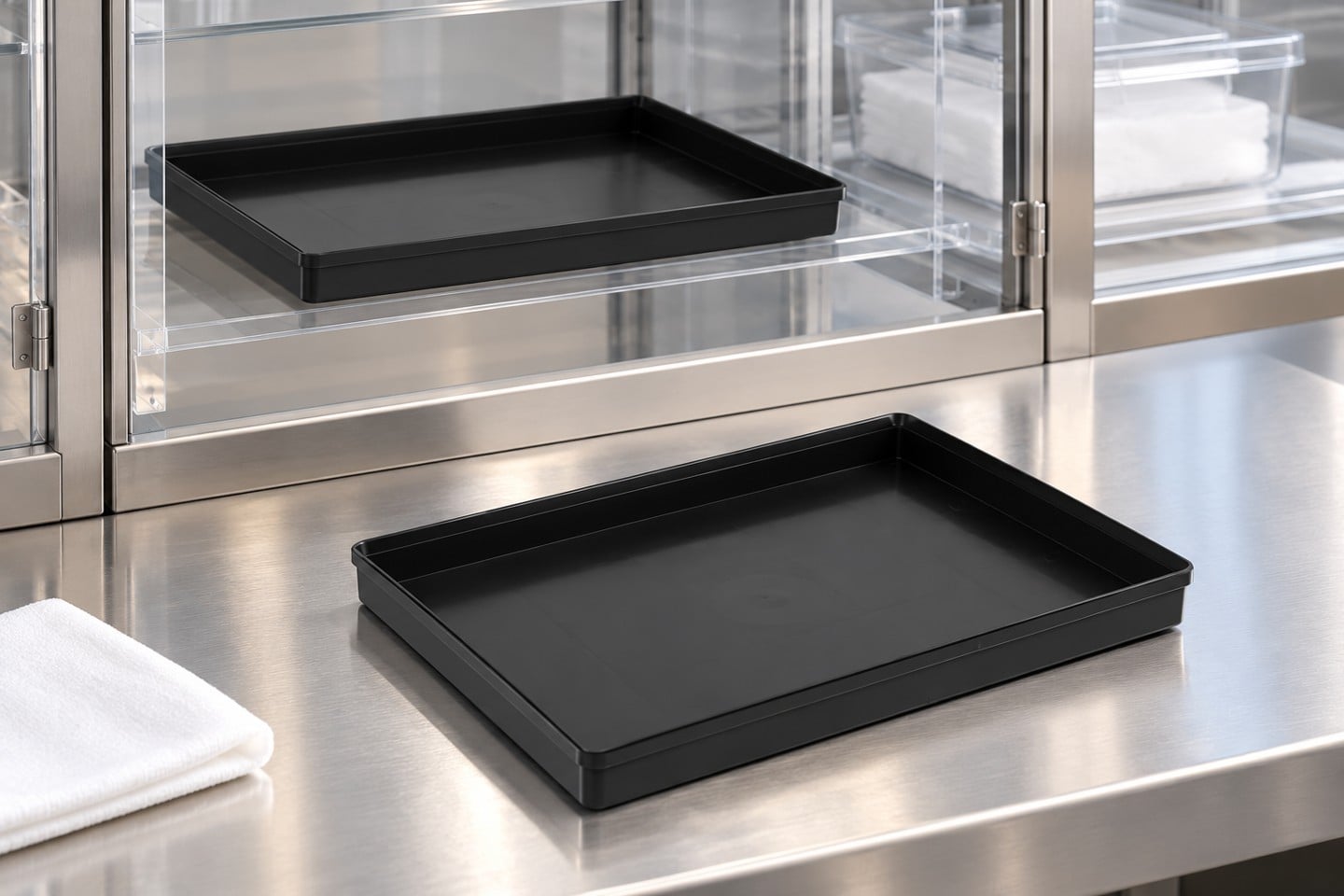
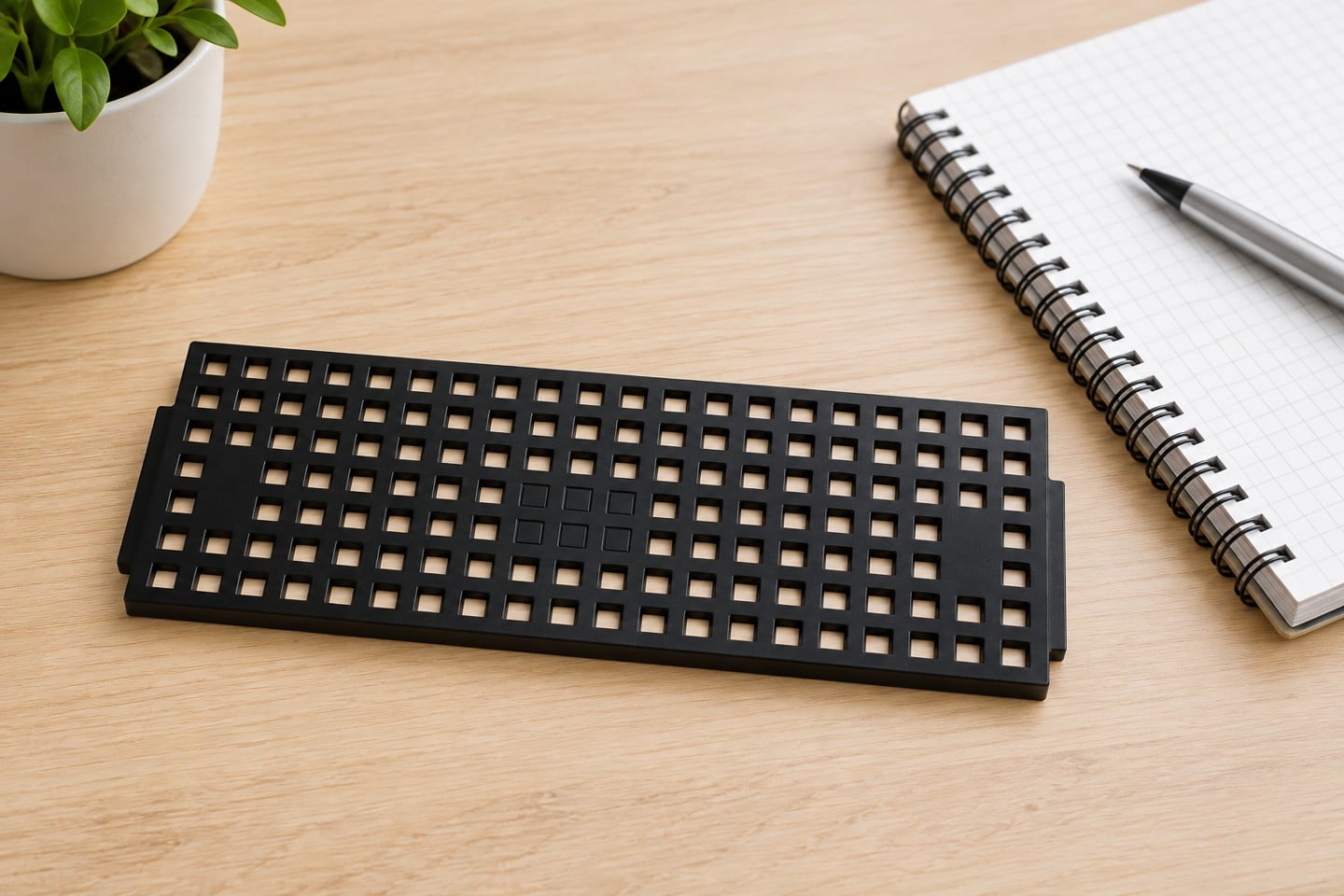
A SWESD tray sample request should name the required material and intended environment. The product photograph can help identify the physical tray, but it cannot demonstrate its additives, cleaning history or emission behavior. Obtain the supplier’s current specification for the offered grade. If a customer requires a particular chemical or outgassing qualification, state that requirement before ordering rather than assuming it follows from the ESD product description.
Understand what a vacuum outgassing report actually covers
NASA’s vacuum outgassing database description explains testing based on ASTM E595 for total mass loss and collected volatile condensable material in a vacuum environment. Those measurements have a defined specimen and exposure. They should be interpreted within that scope, rather than used as a universal statement that no contamination can arise under atmospheric handling conditions.
Ask the responsible contamination engineer or laboratory whether that method is appropriate for the actual application. Some projects need a different material-screening or surface-contamination assessment. Do not automatically apply spacecraft acceptance criteria to an electronics factory tray. A standard’s public overview does not replace the current complete method, the contract requirements or the laboratory’s interpretation of the specimen and test limitations.
Match the report to the ordered material and revision
A useful report identifies the manufacturer, material designation, formulation or controlled grade, specimen preparation and relevant conditioning. Check whether the test concerns base resin, a finished molded part, a coated surface or a complete assembly. The information cannot be treated as interchangeable. A database entry with a familiar polymer name is a screening reference, not proof that the currently offered tray is the tested material.
Request a connection between the report and the actual product revision or material-control record. Include colorants, fillers, surface treatment and processing changes where relevant. If the supplier cannot disclose a proprietary formulation, ask how it maintains material identity and communicates changes. The goal is traceability sufficient for a technical decision, not an unsupported promise that every future batch will behave identically because the trade name remains unchanged.
| Evidence item | Question to ask | What not to infer |
|---|---|---|
| Material report | Does it identify the exact offered grade and preparation? | A shared polymer name is not product qualification |
| Vacuum outgassing data | What method and exposure were used? | The result is not universal atmospheric cleanliness approval |
| Finished assembly | Are liners, labels and treatments included? | A bare-tray result does not cover every addition |
| Sample handling | Is preparation and identity traceable? | Unrecorded cleaning can change the specimen |
| Application trial | What contact and process boundary was represented? | No visible residue does not prove zero contamination |
Include labels, liners and cleaning residues in the boundary
A tray can acquire additional materials after molding. Consider adhesive labels, foam liners, protective films, bags and any residue left by an approved cleaning process. A favorable result for the bare tray does not automatically cover those additions. Review the completed use configuration and decide which contact or enclosed-space contributors need separate assessment. Record whether the label stays on the outside or shares the same enclosure as a sensitive surface.
The tray liner selection guide explains the mechanical and handling reasons for adding an insert. For contamination-sensitive work, make the insert specification part of the controlled package. Do not improvise a substitute liner or adhesive after qualification. Likewise, a cleaning change that improves visible appearance may introduce a new residue; manufacturer permission and a documented process assessment are needed before adopting it.
Prepare representative samples without contaminating them
Agree the specimen preparation and packaging with the laboratory before cutting or cleaning a sample. Record whether a specimen is as received, cleaned by the approved process or deliberately conditioned for the application. Use clean handling tools and sample containers suitable for the selected analysis. An unrecorded solvent wipe or a convenient storage bag can make the specimen unrepresentative of the production tray.
Keep a sample chain of identity from the supplier lot to the laboratory result. Include the tray revision, preparation date, operator and storage arrangement. If the laboratory requests a different specimen geometry from the production part, document why and what conclusions that specimen can support. Preserve reference samples when practical. A result without a credible connection to the ordered product cannot resolve a buyer’s material-qualification question.
Set acceptance criteria before receiving the result
The process owner should define which measurement or observation matters and why it is appropriate. Identify the relevant customer requirement or engineering limit and the permitted decision scope. A number described as low in a supplier brochure is not an acceptance criterion. If the application has no established limit, treat the work as an engineering comparison and state the additional evidence needed before production release.
Compare candidates using the same method and preparation where possible. Retain blank or control information required by the chosen analysis, as well as reporting limits and any deviations. Do not rank two trays using different units, conditioning or specimen exposure without a justified interpretation. If a result is outside the accepted range, isolate the affected material and investigate rather than changing the limit after testing to match the preferred supplier.
Use an application trial for the final decision
A material-screening result supports only part of the decision. Conduct an approved application trial when needed to assess transfer, handling, contact and process consequences with representative samples. Protect valuable production items while the configuration remains unapproved. State what the trial can show and what it cannot; absence of a visible film does not prove absence of molecular contamination.
Keep this review connected to the packaging supplier qualification process while preserving the narrower outgassing decision. If the application also involves heating, review the JEDEC tray pre-bake guide for a separate discussion of material and process boundaries. Neither a bake label nor a successful fit trial establishes volatile-residue suitability for another configuration.
Maintain the accepted configuration through purchasing
Record the approved product identity, preparation procedure, report, application scope and release owner. Define which material, processing, coating, label or cleaning changes require review. Ask the supplier to communicate relevant changes before supply. A repeat order should refer to the accepted specification rather than only a photograph or generic tray description.
For incoming material, verify the identity and documentation needed to show that the qualified configuration was supplied. Keep suspect or undocumented stock separate while the responsible person resolves the evidence gap. This control does not claim a universal non-outgassing tray. It creates a defensible link between the actual item, its measured properties and the particular contamination-sensitive application for which it was accepted.
Học vấn
The EOS/ESD Association video below explains the electrostatic-control context. It is not an outgassing demonstration and does not establish chemical cleanliness. The relevant laboratory method and the application’s contamination requirements govern that separate qualification.
Các câu hỏi thường gặp
Does ESD suitability establish low outgassing?
No. Electrical behavior and chemical contamination are separate requirements.
Can a NASA database entry approve a tray with the same polymer name?
No. Establish the connection to the exact material and product configuration before using the data for qualification.
Does ASTM E595 represent every cleanroom application?
It concerns defined vacuum outgassing measurements. The responsible engineer must select methods appropriate to the actual environment.
Should labels and liners be included?
Yes, review all constituents that contact the item or share the relevant enclosure, according to the application boundary.
Can cleaning make an unqualified tray acceptable?
Do not assume so. An approved cleaning process and appropriate evidence are needed, and a change may require requalification.
Bài đăng gần đây
-
 Kiểm tra độ lệch của hộp ESD: Đo kích thước phù hợp trước khi phát hành22 tháng 10 năm 2026
-
 Kiểm tra điện trở bề mặt khay JEDEC: Hình dạng, tiếp xúc và báo cáo22 tháng 10 năm 2026
-
Để lại phản hồi