- Turbo
- Blog
An ESD waste bin is a collection container selected for use in an electrostatic-protected production area. Choose it for a defined waste stream, location and handling routine, with evidence for the required electrostatic function of the actual bin and any liner. A black color or ESD symbol does not by itself prove suitability. The container must also fit the site’s housekeeping and waste-safety rules. This guide covers routine collection around electronics workstations; it does not approve an ordinary plastic bin for solvents, batteries, sharp objects, hot material or hazardous waste.
Define what belongs in the container before selecting its size
List the materials operators are expected to discard at the collection point. Separate ordinary dry production refuse from material that needs a controlled recovery, security, recycling or hazardous-waste route. A rejected electronic assembly may need identification and disposition before disposal. Do not let a convenient open bin become the unrecorded destination for products awaiting a quality decision.
Write an explicit accepted-material description for the station. For example, a location might be intended for a particular type of clean packaging offcut after the waste owner has approved that stream. The description should also identify exclusions and the person to contact when an unfamiliar item appears. Avoid relying on “general waste” where operators could reasonably interpret it in different ways.
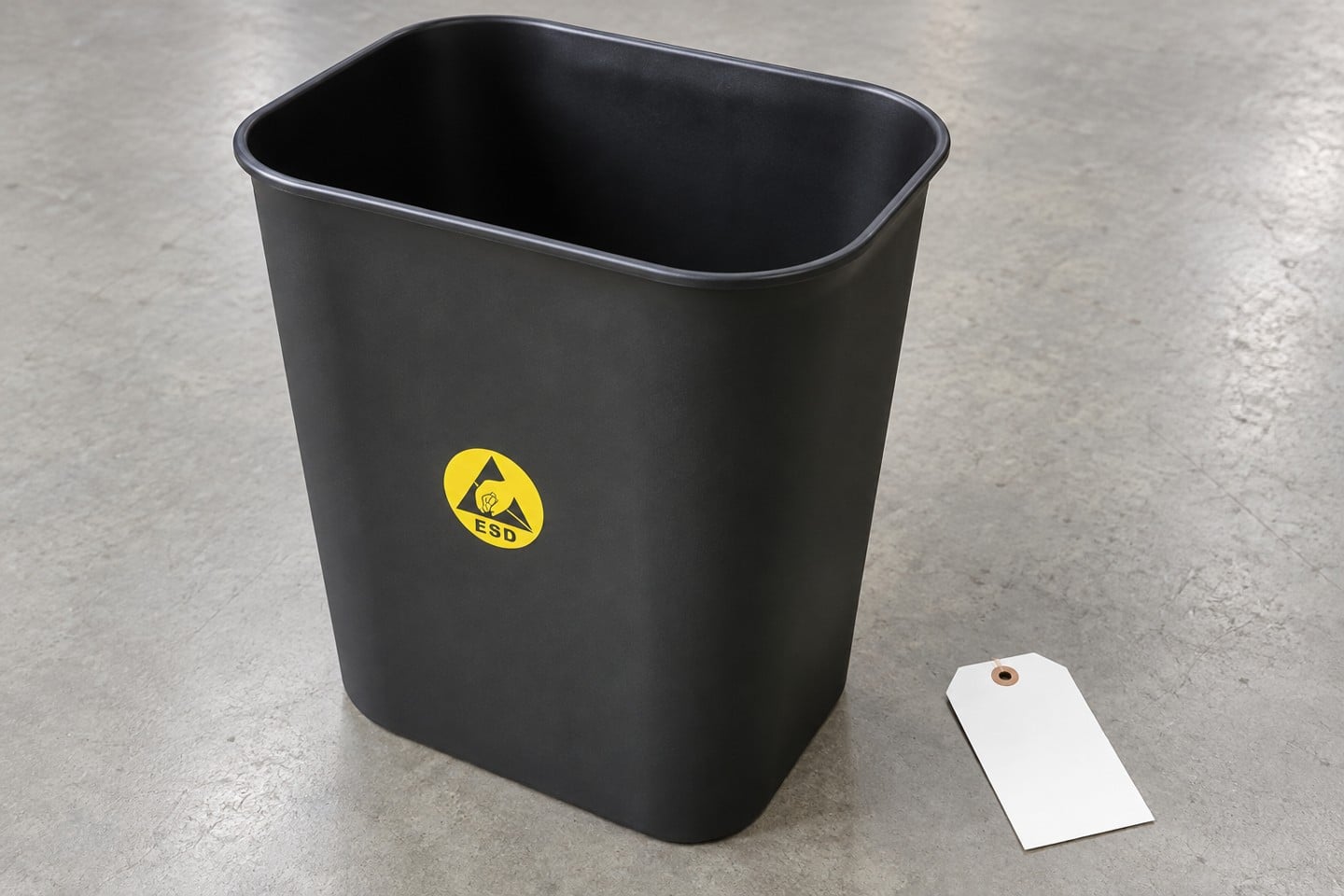
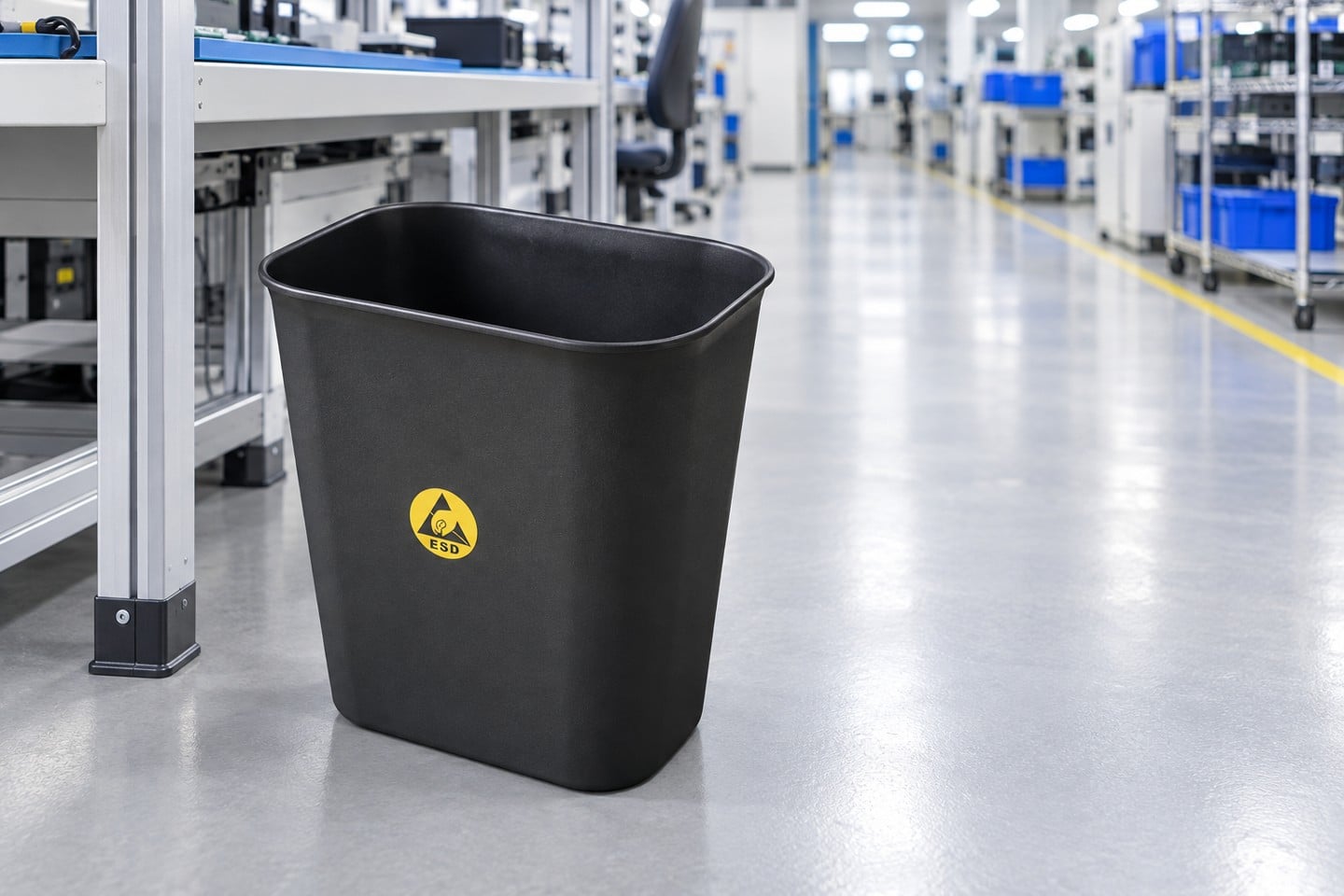
The SWESD industrial ESD waste bin provides a product starting point. Request the exact dimensions, material specification and relevant test information for the offered configuration. The reference illustration shows an open-top black container; it does not establish a resistance value, chemical compatibility, fire rating or approved disposal use.
Map the collection point within the production workflow
Observe where the waste originates and how it reaches the container. Does the operator discard it while seated, carry it from another station, or remove it during a changeover? Check that the movement does not bring unnecessary packaging or loose debris close to exposed sensitive devices. Keep the waste route separate from clean incoming supplies and released product storage.
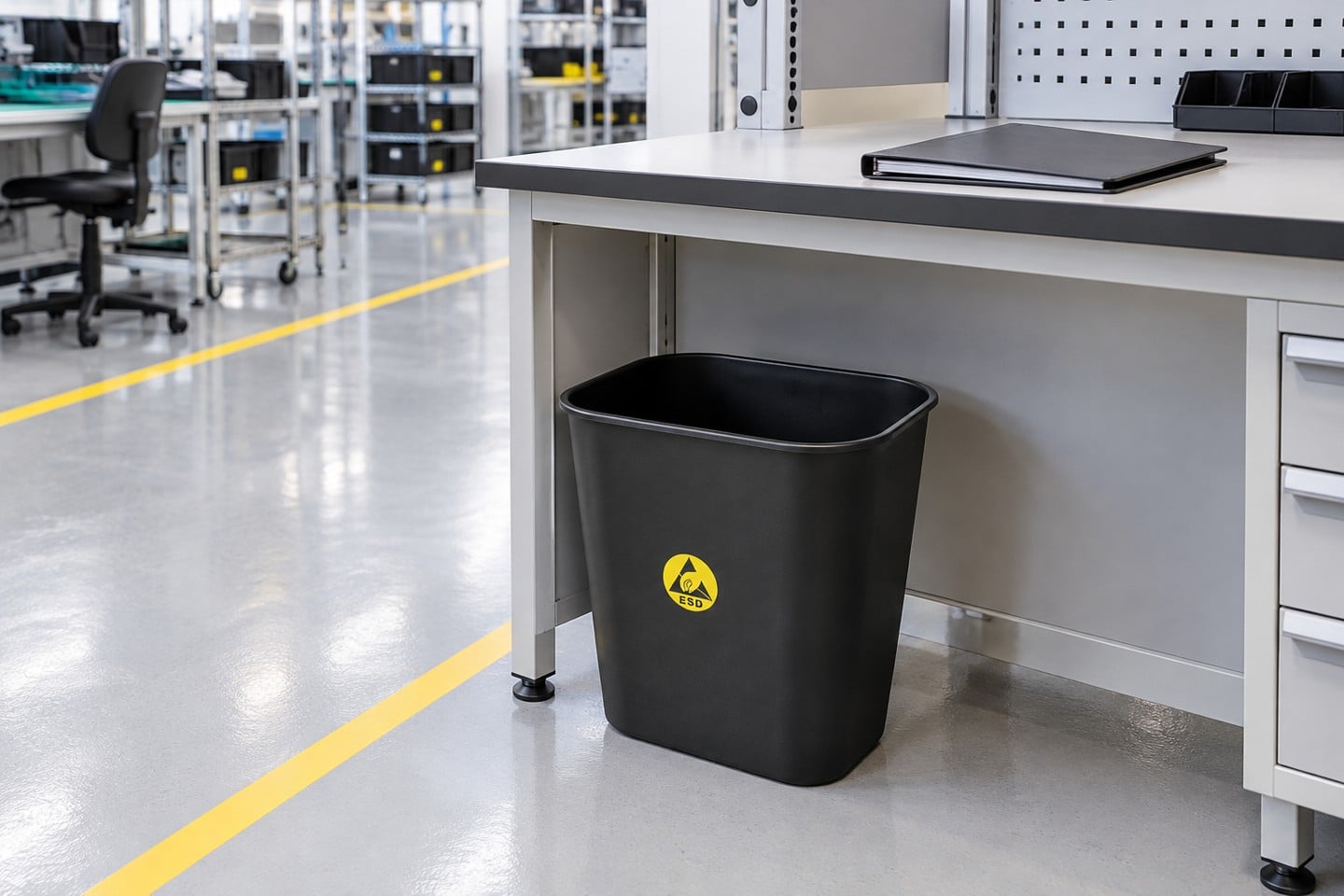
The CCOHS workplace housekeeping guide emphasizes planned waste collection and clear access routes. Use that principle when choosing the location. A container placed close enough to encourage use still needs a position that leaves walking space, equipment access and emergency facilities unobstructed. Review the actual workstation arrangement rather than approving a location from a catalog photograph.
Include collection staff in the decision. They must be able to identify, remove and replace the container without entering a sensitive work position unexpectedly. If access requires shifting production fixtures or lifting over a bench, reconsider the arrangement. The correct container is part of a usable collection system, not merely a product with the preferred label.
Verify the electrostatic role of the complete arrangement
Ask the ESD coordinator which property is required and how it will be verified for the intended use. A material resistance report, a ground-path check and an assessment of charging behavior answer different questions. Do not treat one reading or an ESD logo as evidence for all three. The applicable control plan should identify the method, conditions, acceptance rule and responsible owner.
The EOS/ESD Association principles of control explain why necessary materials and handling operations must be assessed within the ESD program. A container’s surroundings matter: floor, placement, accessories and handling can change the arrangement being evaluated. Verify the delivered setup instead of transferring an approval from a different workstation without review.
Do not improvise an electrical connection, clip a wire to an arbitrary point, or assume a chain is necessary for every bin. Request the manufacturer’s intended installation and the site’s approved verification procedure. A product photograph without a connection accessory cannot establish that accessory’s specification or effectiveness. If a required path cannot be confirmed, keep the application approval open.
For related control planning, see the EPA personnel-grounding checklist ve ground-continuity failure investigation guide. Neither turns a waste container into personnel-protection equipment or authorizes electrical installation work.
Treat liners as a separate controlled component
A liner can change the surfaces presented to waste and operators, so record its product identity and intended use. Do not assume that a conductive bin makes every bag placed inside it suitable. Conversely, a liner described as antistatic does not establish the properties of the complete collection arrangement. Have the ESD owner decide what evidence is needed for both components together.
Fit also matters. An unsuitable bag can slip into the container, obscure its identification, snag during removal or encourage overfilling. Review installation, normal use and removal with the actual candidate. If no liner is approved for the process, do not add an ordinary bag simply to keep the container looking clean; resolve the cleaning and collection method instead.
Record the liner’s supplier, part number, size, packaging and change-control requirements in the purchasing specification. A last-minute substitute from general stores may seem minor yet alter the reviewed process. Make the approved replacement easy to identify and maintain a clear escalation route when it is unavailable.
Use a decision table to release the collection station
The following checklist organizes an application review. It supplies practical questions rather than universal electrical limits, a hazardous-waste classification or a legal compliance certificate. The relevant site owners must provide the acceptance criteria for their responsibilities.
| Review item | Question to answer | Record to retain |
|---|---|---|
| Waste stream | What is accepted, excluded or subject to quality disposition? | Approved stream description and escalation contact |
| Electrostatic role | What function does the complete arrangement need? | Applicable evidence, method and ESD owner decision |
| Liner | Which liner, if any, is approved with this bin? | Part identity, fit and combined-configuration review |
| Placement | Can operators and collectors use it without obstructing access? | Location review and observed collection routine |
| Capacity | Does the collection routine prevent overflow or difficult handling? | Observed production trial and collection trigger |
| Maintenance | How is it cleaned, checked and removed from service? | Approved instructions and responsible owner |
For broader hazard segregation, the CCOHS general housekeeping inspection checklist includes checks for appropriate separate waste containers. Apply the rules relevant to the actual facility and jurisdiction. ESD suitability is one part of the review and cannot replace the separate decision about whether a waste stream requires a specially approved receptacle.
Check capacity using actual collection behavior
Estimate the generated volume from observed production and the planned emptying routine. Do not select a large container solely to reduce collection trips. A larger receptacle can occupy more working space, conceal inappropriate material or become difficult to move before anyone recognizes that a limit has been reached. An undersized one can lead to overflow or makeshift temporary containers.
Define the visible condition that triggers collection and who responds. Use a criterion appropriate to the waste and handling arrangement, rather than inventing a universal fill percentage or weight allowance. Where load handling matters, have the responsible site personnel evaluate the full task. The product’s nominal volume is not an instruction to fill it with arbitrarily dense material.
Include peak conditions such as changeovers or the end of a production batch in the review. A station that works during an ordinary hour may fail when several operators discard packaging simultaneously. Record the trial observations and adjust placement or collection service before releasing the final routine. This is more useful than assuming a container capacity guarantees a workable process.
Plan cleaning, inspection and removal from service
Use a cleaning method approved for the container material and the production environment. Request the manufacturer’s guidance and involve the contamination-control owner where appropriate. A cleaner that removes visible dirt may leave residue or affect a treated surface. Record what is permitted, who performs the task and what checks are required before returning the bin to use.
Inspect the rim, walls, base and identification during the normal collection routine. Look for cracks, damage, contamination, sharp edges or unapproved attachments. Separate an item needing review from released equipment so it is not quietly returned to the same position. Do not infer continued electrical suitability from an undamaged appearance alone; follow the verification schedule in the ESD program.
Assign a practical identifier to the collection station and link it to its approved configuration. This can help investigate a recurring issue without claiming that every bin needs an elaborate asset-management system. Keep the record proportionate: location, accepted stream, bin and liner identities, inspection method, collection owner and relevant approval references are usually useful starting fields.
Keep product recovery distinct from ordinary waste
Scrap components may remain sensitive, confidential or subject to inventory controls before final disposition. Do not place them in an ordinary waste bin on the assumption that they no longer need protection. Quality and materials personnel should define the route, identification and authorized release. A waste container’s ESD description does not resolve traceability or customer-owned material obligations.
If a component is placed in the wrong stream, stop treating the situation as routine housekeeping. Follow the site’s recovery and incident procedure, preserving identity where possible and involving the responsible personnel. Do not reach into an unknown waste mixture or improvise a sorting operation at the production bench. Preventing ambiguity in the station instructions is preferable to relying on recovery afterward.
The packaging failure investigation guide addresses a separate situation involving retained shipment evidence. Materials under investigation should stay within that controlled process rather than being discarded during a cleanup. Define responsibility at the handoff between production, quality and collection staff.
Build an RFQ and a first-use approval record
Send suppliers the required container form, available space, accepted waste description, intended location and the evidence requested by your ESD owner. Specify whether a liner or other accessory is included in the quotation. Ask suppliers to distinguish confirmed product attributes from optional features and to identify changes requiring reapproval. Do not accept an unrequested lid, wheeled base or grounding accessory as an equivalent configuration without review.
At receipt, compare the delivered part, dimensions and visible construction with the approved sample and purchasing record. Confirm that identification and requested documents refer to the same product. Perform the defined first-use checks with the actual collection staff, then retain the decision and any conditions. A sample approval should lead to a repeatable routine, not a one-time demonstration disconnected from daily use.
The EOS/ESD Association introductory lecture provides background on electrostatic risk and control principles. It does not certify the illustrated bin or replace the site’s waste classification, installation instructions or verification method.
Sık sorulan sorular
Does a black bin or ESD symbol prove suitability?
No. Request evidence for the actual configuration and the electrostatic function required by the site control plan.
Can an ordinary liner be added to an ESD bin?
Only after the complete arrangement is reviewed and approved for its intended use; the bin label does not qualify an arbitrary liner.
Does every ESD waste bin need a grounding chain?
Do not assume that. Follow the manufacturer intended arrangement and the site approved verification procedure.
Can an ESD bin collect solvent-soaked wipes or batteries?
The ESD description does not authorize those uses. The waste and safety owners must specify a separately suitable approved collection route.
What belongs in the purchasing specification?
Record bin and approved liner identity, required form and fit, application evidence, collection arrangement and changes requiring review.


Bir Yorum Bırakın