- เทอร์โบ
- บล็อก
When comparing types of electrostatic meters for production, handheld and fixed field meters answer different operational questions. A handheld instrument helps technicians investigate locations and compare defined survey points. A fixed installation observes a chosen position repeatedly, subject to its response, mounting and data-handling limits. Choose from the process decision, measurement geometry and required evidence rather than assuming permanent installation is automatically more accurate. Neither format independently measures packaging shielding, component damage or every source of static charge in a factory.
This guide compares mobile surveys with continuous observation of one location. It does not replace the electrostatic voltmeter versus field meter guide, which addresses a different choice between measurement principles. The SWESD handheld electrostatic field meter provides a relevant product starting point; this article does not imply that SWESD supplies a fixed monitoring system or undocumented output functions.
Define the decision before choosing the instrument format
Start with a concrete process question. A technician locating charge accumulation around packaging handling may need to move among several stations. A process engineer investigating repeated changes at one controlled location may need repeated observations there. These jobs differ in coverage, timing, access and interpretation, even when both involve an electrostatic field measurement.
Write down the target material, location and process event. Identify whether the result will guide troubleshooting, compare an intervention or trigger an operational decision. Specify who reviews the result and what action is allowed. Without this definition, a permanent sensor can generate more data without resolving the original question, while an informal mobile survey may miss events that occur between visits.
เดอะ EOS/ESD Association principles of ESD control explain the wider relationship between charge control and protection of sensitive items. Instrument selection should support that control plan rather than creating an isolated measurement activity with no decision attached.
Where handheld surveys provide useful coverage
A handheld meter allows a trained operator to inspect multiple locations and investigate a suspected problem without installing a separate instrument at each position. This flexibility is useful during process development, layout changes and troubleshooting. A survey can examine upstream and downstream steps, provided each observation uses a defined and suitable arrangement.
Mobility also creates a responsibility to control positioning. Different operators can hold the instrument at different distances or angles, select different target areas or observe at different times after handling. Define the points and procedure so a later survey can be compared with the first. A handheld instrument is portable; its results are not automatically interchangeable across arbitrary geometries.
Keep the original observations, including unfavorable or unstable results. Record what changed during the investigation and avoid adjusting the procedure simply to obtain a lower number. Use the field meter data interpretation guide for broader reading interpretation, while this comparison remains focused on instrument deployment.
Where fixed observation can help
A suitable fixed instrument can repeatedly observe a defined location without requiring a technician to stand there for every reading. This may help identify temporal changes or correlate observations with documented process events. The benefit depends on whether the target remains within the approved measurement geometry and whether the instrument and recording system can capture the behavior of interest.
Permanent mounting does not guarantee that the target is always in the same position. A moving web, changing tray height or shifting package can alter the arrangement. The instrument must be suitable for the available distance, target size and surroundings. Confirm those conditions with the actual system documentation before relying on an alarm or trend.
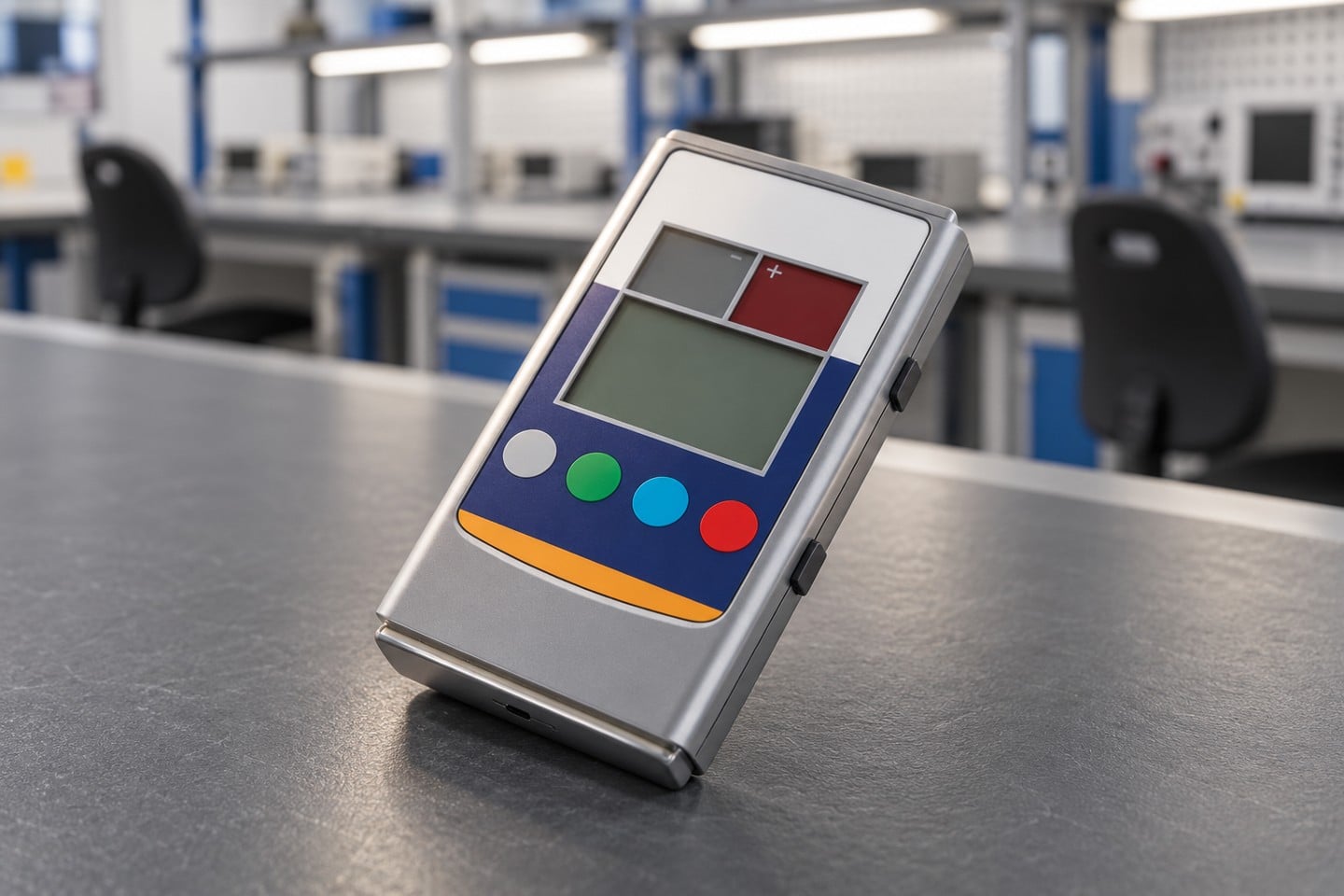
Do not assume a fixed device includes a particular output, sampling rate, remote interface or alarm function. Specify the required functions and obtain evidence for the selected model. The SWESD handheld product illustrated here should not be shown as an installed fixed sensor or described as having permanent-monitoring features that are not established by its documentation.
Compare the evidence each format produces
A mobile survey provides observations at selected locations and times. It can offer broader spatial coverage, but the sampling schedule limits conclusions about what happened between measurements. A fixed installation provides repeated observations at one location, but that location may not represent the whole line. More readings from one point do not demonstrate that every relevant point is controlled.
Separate coverage from measurement quality. For either format, evaluate calibration scope, range, response, geometry and repeatability for the intended use. Review the NIST guidance on metrological traceability when specifying how consequential results relate to references. A permanent mounting bracket is not a substitute for suitable calibration and a qualified use method.
| Question | Handheld survey | Fixed observation |
|---|---|---|
| Spatial coverage | Selected locations visited by an operator | Chosen location represented by installation |
| Timing | Observations at planned survey times | Repeated observations within system capability |
| Positioning | Operator procedure and suitable fixture | Installation geometry and target movement control |
| Records | Survey points and original observations | Configuration, time and data validity |
| การบำรุงรักษา | Condition and method checks | Instrument, mounting and recording checks |
Use this comparison to write the purchase specification. Replace general expectations with actual process requirements and supplier evidence. If an output or monitoring function is essential, list it explicitly; do not infer it from a product photograph or the word “digital” in a description.
A hybrid approach for process investigations
Some facilities need both approaches at different stages. A handheld survey can locate a useful observation point and identify geometry constraints. A qualified fixed installation may then follow that point over time. Mobile checks elsewhere can remain valuable because one fixed location cannot reveal every change in the process.
Do not assume the two instruments will produce identical numerical results. Confirm that they measure comparable quantities under comparable arrangements before merging data. Where direct equivalence is not established, keep the records separate and use each within its intended scope. Apparent disagreement can reflect positioning, target coverage or response differences rather than a faulty instrument.
Document the handoff from investigation to monitoring. Record why the location was selected, which process conditions it represents and which conditions remain outside its coverage. A fixed measurement should have a defined owner and review schedule so collected data lead to useful decisions rather than accumulating without interpretation.
Mounting, access and environment
For handheld use, ensure technicians can reach the target while maintaining the specified geometry and following the site’s safety rules. Do not reach into moving equipment or energized areas to obtain a reading. Plan safe access, permitted process states and repeatable positions before beginning a survey.
For a fixed installation, assess mechanical clearance, vibration, contamination, cleaning and cable routing using the selected system’s documentation. Nearby conductors and changes in line layout can affect the environment. Review changes to the installation instead of assuming the original measurement arrangement remains valid after equipment is moved.
Maintenance must include the measurement environment as well as the instrument. A dirty or shifted fixture, changed target height or altered process route can undermine comparison. Define when these changes require reevaluation, and record the actual arrangement used after maintenance. Electrical and mechanical installation should be handled by qualified personnel within the applicable equipment instructions.
Avoid misleading alarms and dashboards
An alarm threshold should come from a defined control decision and suitable measurement method. Do not select an arbitrary number solely because it produces a convenient green indicator. Confirm how the system handles unstable readings, out-of-range values, missing data and startup conditions. A missing value must not silently become an acceptable result.
If recorded data will be reviewed later, retain instrument identity, configuration, units, time information and relevant process state. Explain what the measured location represents and which events the system can miss. A smooth chart may reflect averaging or display settings rather than a stable physical process; understand those settings before drawing conclusions.
Assign an action to each meaningful condition. Determine who investigates an unexpected result, what observations must be preserved and when affected operations are reviewed. Keep adjustments traceable. Changing a threshold or averaging setting can change the apparent trend even when the process has not changed.
Training and verification requirements
Train handheld operators in target selection, positioning, zeroing, grounding and recordkeeping according to the exact instrument instructions. Demonstrate the limitations of observations outside the specified geometry. Include an example of an unacceptable setup so technicians can recognize when a number should not support a release decision.
For fixed systems, train users in status interpretation and the documented response to alarms or missing data. Verification should cover the functions actually used, including recording and alarm behavior where applicable. Review field meter verification between calibrations for the distinction between routine checks and formal calibration.
Neither training path should depend on memorizing a generic distance or voltage limit from another model. Maintain the approved procedure and current manual with the instrument record. Review them when the instrument, fixture, target or decision changes.
RFQ checklist for a defensible purchase
Describe the process question, target geometry and intended measurement location. State whether the instrument is used for mobile surveys or repeated fixed observations. Request the measurement-distance definition, applicable target constraints, range, response information, calibration evidence, required grounding and environmental limits for the exact model.
For a fixed system, add the actual output, logging, alarm and installation requirements. Ask how configuration changes and missing data are handled. For handheld use, request suitable carrying, positioning and documentation provisions without inventing accessories. Evaluate demonstrations against your approved method rather than accepting a favorable reading from an unrelated sample.
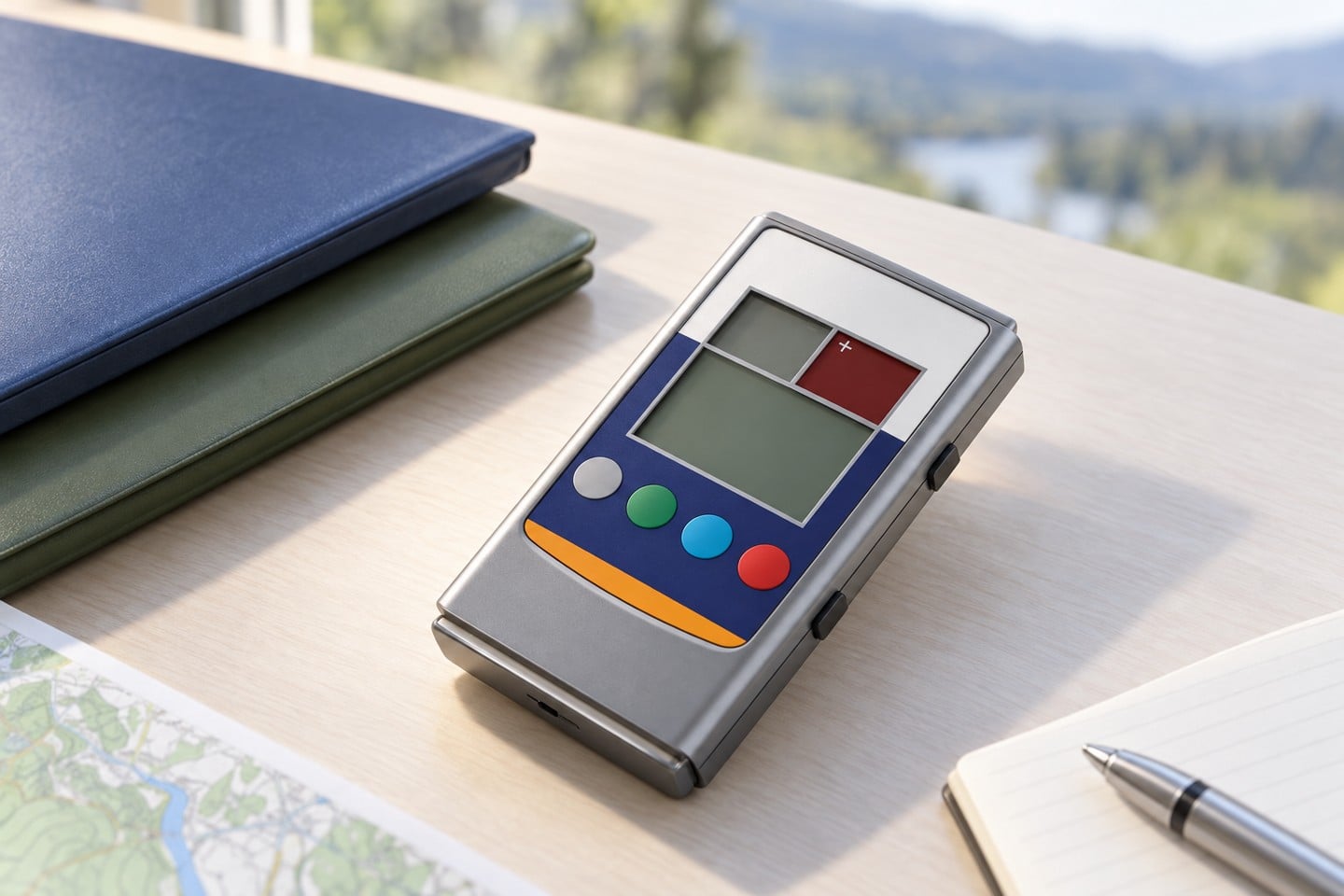
The illustrations show the actual SWESD handheld product in planning contexts. They are not photographs of a qualified fixed installation and establish no output capabilities. Use documented product functions and representative process evidence to choose the format that answers your operational question.
Further learning
The following EOS/ESD Association educational video introduces the broader static-control context. It complements this deployment comparison without replacing instrument-specific operating and installation instructions.
คำถามที่มักถูกถาม
Is a fixed field meter automatically more accurate?
No. Accuracy and suitability depend on the actual instrument, geometry, calibration scope and intended use, not simply the mounting format.
Can one fixed sensor represent an entire production line?
Only within demonstrated coverage. A chosen location cannot automatically represent every material or process step.
When is a handheld meter useful?
It supports defined mobile surveys, troubleshooting and investigation of several locations when operators control the measurement arrangement.
Can handheld and fixed results be combined?
Establish that quantities, geometry and response are comparable before merging data. Otherwise retain separate records and interpretations.
Does the illustrated handheld product include fixed monitoring outputs?
No such capability is established here. Request documented functions for the exact product before specifying outputs, logging or permanent monitoring.
โพสต์ล่าสุด
-
 Handheld vs Fixed Electrostatic Field Meters12 ต.ค.,2026
 -
-
 ESD Packaging for PCB Repair and Return Shipments11 ต.ค.,2026
แสดงความคิดเห็น