- เทอร์โบ
- บล็อก
ESD touchscreen gloves should be qualified for two separate outcomes: reliable interaction with the actual screen and suitability for the approved electronics-handling arrangement. A glove that operates one tablet is not automatically suitable for every display, production task, or ESD requirement. Identify the glove and screen combination, define representative touch actions, record errors and unintended contacts, and review the separate electrical and cleanliness evidence. This guide helps buyers approve the interface without assuming that a touchscreen label proves every property of the glove.
Identify the real screen and operating task
Record the display model, installed configuration, screen protector, approved cleaning state, and relevant settings. A handheld tablet and a fixed production terminal can present different interactions. Define which actions operators actually need: selecting a control, entering information, scrolling, dragging, confirming a transaction, or working near adjacent controls.
Do not begin by testing arbitrary gestures on a convenient personal phone. The trial should represent the production interface and its operating conditions. Where the interface controls machinery or another consequential process, use the site’s authorized evaluation and safety arrangements. A glove trial is not permission to test live controls casually or to bypass an established interlock or confirmation step.
Confirm the exact glove construction
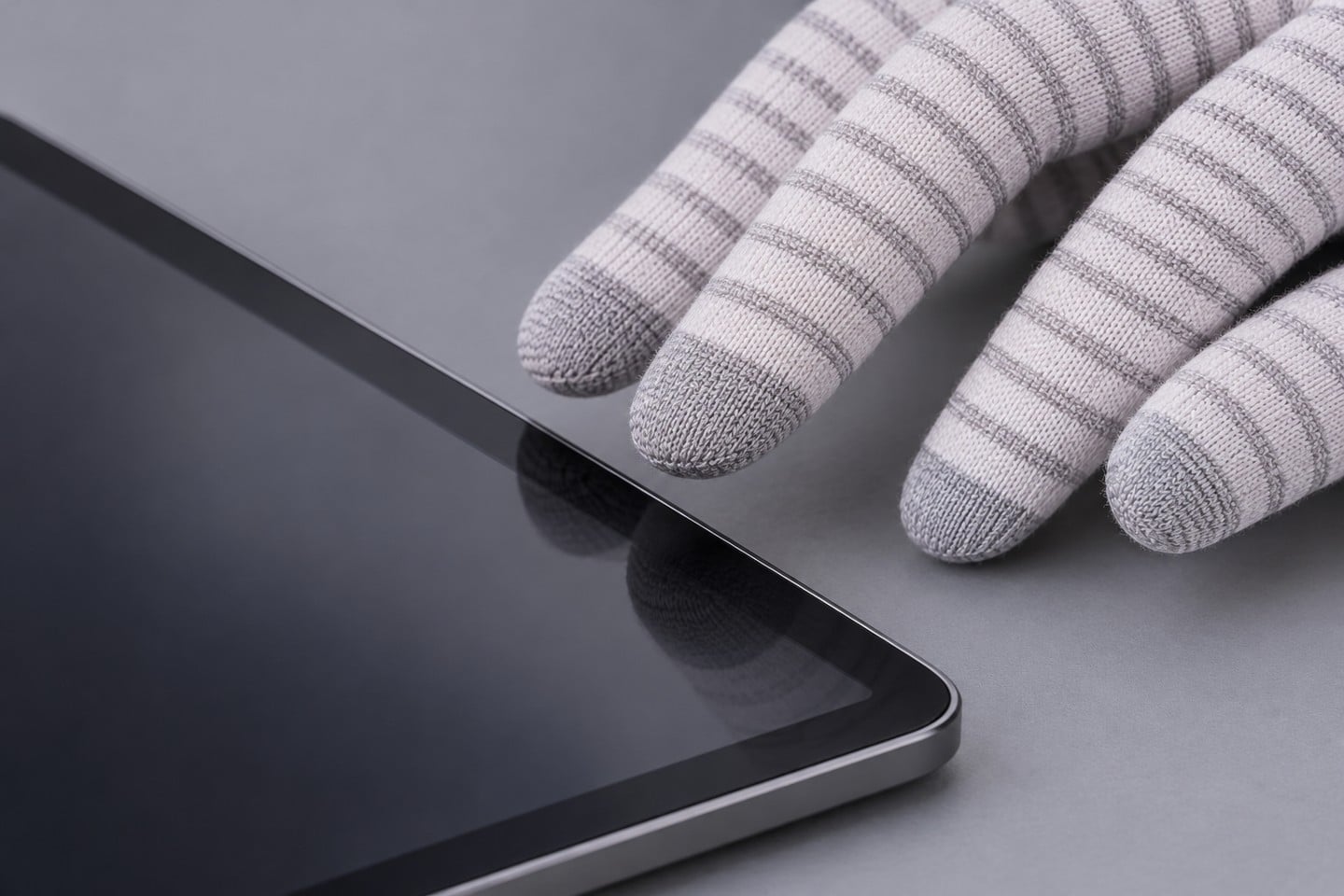
เดอะ SWESD touchscreen fingertip knit glove has a visible striped knit construction and distinct fingertip areas. Match the delivered sample to its exact model, size, revision, and supplied preparation. Do not infer touchscreen performance, resistance, or cleanliness from the product picture alone.
Ask the supplier what the touchscreen claim covers and what evidence supports it. If the product family includes different fingertip treatments, coatings, or sizes, identify which version was evaluated. A successful demonstration of one sample does not automatically qualify another construction. The glove RFQ checklist provides the broader purchasing framework; add the actual screen and task information to make this interface request specific.
Keep touchscreen response separate from ESD evidence
เดอะ EOS/ESD Association principles of control emphasize controlling the complete process and defining the required protection. Touch response is one operating requirement within that process, not a substitute for the approved personnel and material controls.
ใช้ glove resistance testing guide to request the electrical evidence for the exact glove and intended arrangement. Do not remove approved grounding or other controls just to make a screen respond. If the screen-glove combination does not work within the approved arrangement, review that combination with the responsible owners rather than modifying controls informally.
Define a representative interaction sequence
Create a short sequence using the actual control sizes and motions needed during work. Include the relevant single taps, repeated selections, scrolling, dragging, or data entry. Use an authorized test interface or safe operating mode where appropriate. Identify the screen state and what a correct outcome looks like before collecting observations.
Record missed touches, delayed recognition, unintended activation, double entries, inaccurate dragging, and the need to remove or adjust the glove. Count only actions actually performed and preserve the conditions. This guide does not establish a universal acceptable error rate. The process owner should decide what evidence is sufficient for the consequences and demands of the task.
Use an interface qualification matrix
| Trial input | Record | Decision supported |
|---|---|---|
| Glove | Exact model, size, revision and preparation | Identify the supplied construction |
| Screen | Model, protector and authorized configuration | Identify the evaluated interface |
| Actions | Representative taps, selections and movement | Observe actual task performance |
| Observations | Missed, delayed or unintended actions | Evaluate against task-specific criteria |
| Separate controls | Required electrical and cleanliness evidence | Avoid treating touch response as full approval |
The matrix should connect a finding to a specific glove, size, screen setup, action, and condition. A simple worked once statement cannot show whether a combination is reliable during normal use. Equally, one failure should be investigated in its actual context rather than attributed automatically to every glove in the product family.
Compare candidates under the same controlled conditions. If the screen protector, cleaning state, operator posture, or software interface changes between samples, record that difference and assess its effect on the comparison. A trial can remain useful with limitations, provided those limitations are explicit and do not disappear when the result is summarized for purchasing.
Evaluate fit and posture at the screen
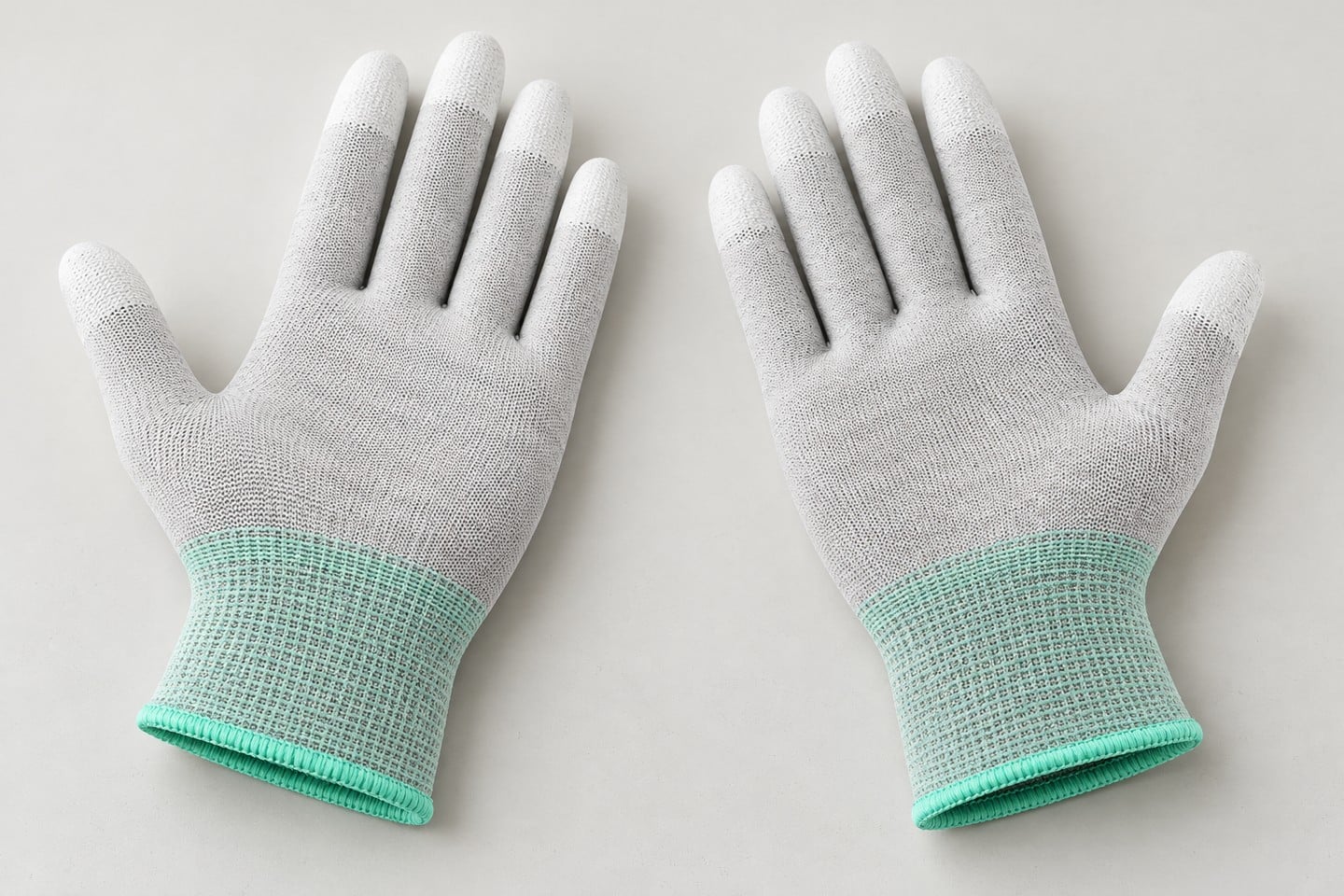
A loose fingertip can change the effective contact and placement accuracy. Excess fabric may bunch during repeated tapping, while an unsuitable fit can encourage operators to stretch or remove the glove. Check the size and wearing instructions before concluding that the underlying touchscreen technology is incompatible.
เดอะ glove sizing and dexterity guide provides the separate fit-trial framework. Include the actual terminal height, reach, angle, and permitted work posture in the interface evaluation. The aim is to represent the task, not to train operators to use an awkward workaround that is absent from the approved procedure.
Check surface contact and contamination concerns
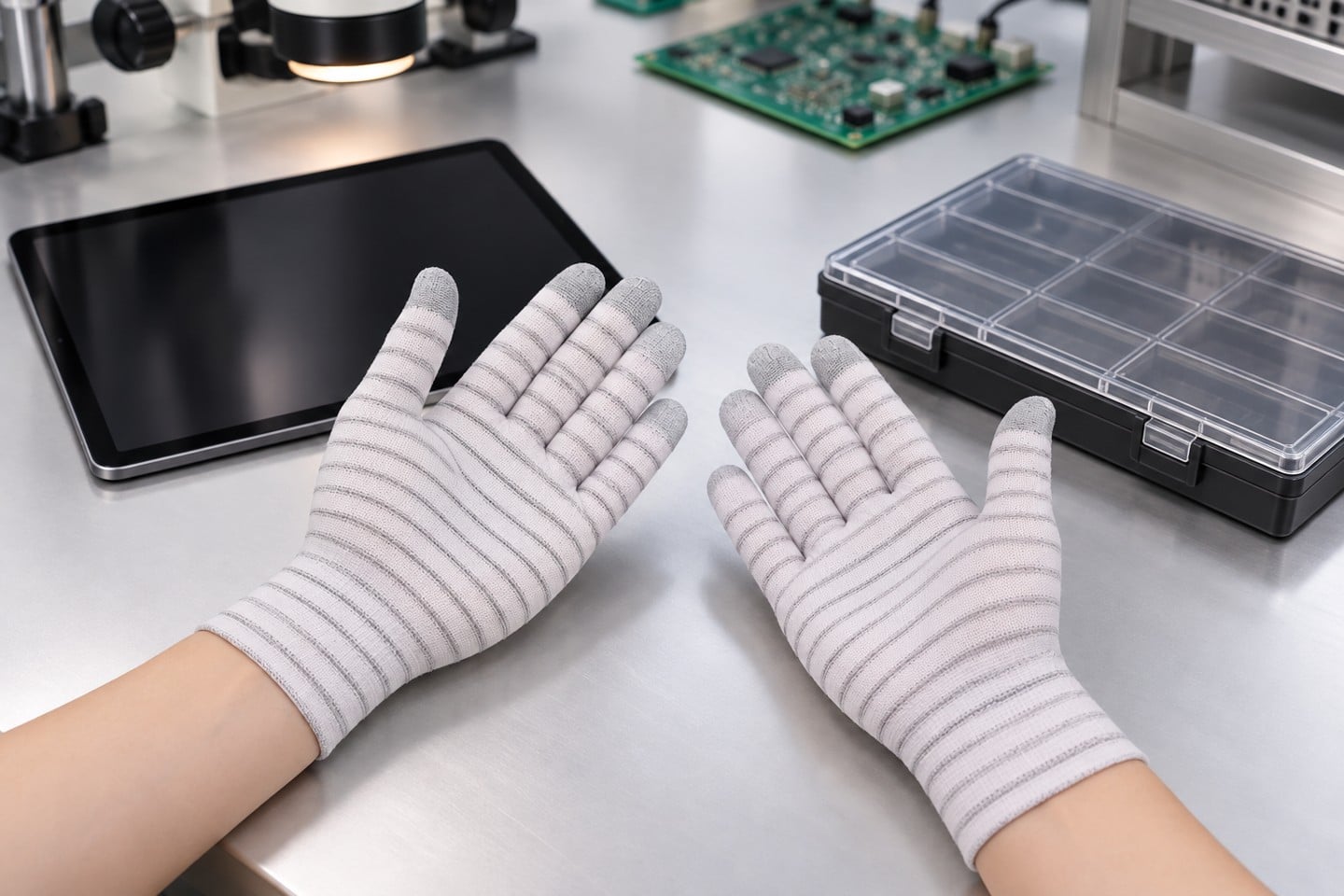
A glove used on a terminal may then touch the product, a tool, or a carrier. Map that route. Determine whether screen contact introduces a contamination concern requiring an approved change of glove, cleaning step, or different work sequence. Do not assume that a screen is clean because it is inside an electronics factory.
Ask the process owner what surface-transfer and cleanliness evidence is needed. The supplied glove, screen cleaning method, and operator sequence all matter. This article gives no universal residue limit or cleanroom classification. A successful touch-response trial establishes only the observed interaction under its conditions unless the separate contamination requirement has also been evaluated.
Include the condition at the point of issue
Identify whether the glove is evaluated new, after permitted cleaning, after a defined period of use, or in another approved state. A touchscreen response observed with a new sample may not describe every later state. Record visible wear, contamination, fingertip condition, and any preparation that was part of the trial.
Do not invent laundering or solvent-cleaning instructions for a knit glove. Obtain the exact product care restrictions and the required review after cleaning. If a screen requires unapproved changes to the glove, such as wetting, cutting, or adding material, stop that workaround and investigate the interface through an authorized route. Those alterations create a different arrangement from the supplied product.
Investigate failures without bypassing controls
Start by verifying glove identity, fit, screen setup, approved settings, and the interaction sequence. Check whether the observation is repeatable under the agreed conditions and whether other relevant users encounter the same problem. Keep the initial failed observation and any changes made during investigation.
Avoid removing grounding accessories, discarding required hand coverage, or increasing the force applied to a display without authorization. If the combination is unsuitable, consider a supplier-supported glove variant, an approved input device, or another interface arrangement reviewed by the responsible team. The appropriate solution must preserve the complete process requirements rather than solving only touch response.
Choose trial participation and duration to represent the actual operating question. Include the users and permitted glove sizes relevant to the intended release, rather than testing only the easiest combination. If the trial excludes a particular screen, shift condition, or operator task, record that exclusion explicitly. There is no universal number of successful taps that qualifies every production interface; the evidence should be proportionate to the required action and the consequences of an incorrect input.
Release a defined combination and train its use
A final approval should identify the glove model and size range, supplied or serviced state, screen setup, allowed actions, task, required controls, and replacement triggers. Include change-review conditions for screen protectors, display replacement, interface redesign, glove construction, and cleaning changes. A different screen should not inherit approval by appearance alone.
เดอะ EOS/ESD Association training and auditing guidance provides the context for verifying actual behavior. Observe whether operators use the accepted gloves and follow the approved sequence. Repeated glove removal or improvised touching methods can reveal that the interface qualification did not represent the practical work adequately.
Educational background and supplier handoff
The following introductory EOS/ESD Association lecture explains electrostatic-discharge principles. It helps explain why successful screen operation does not replace the rest of the control program. It does not test this touchscreen, rate the glove’s accuracy, or certify the pictured construction.
Send suppliers a specific request containing the screen and task description, glove identity, preparation, representative actions, observed failures, required electrical evidence, and relevant cleanliness needs. A response that addresses only touchscreen compatible remains incomplete. The useful outcome is a reproducible combination with clear operating limits and a controlled response when any element changes.
คำถามที่มักถูกถาม
Does operating one phone qualify every screen?
No. Evaluate the actual display configuration and required actions.
Can grounding controls be removed to improve touch response?
Do not bypass approved controls. Review the interface through the authorized process.
Does a touchscreen claim prove ESD suitability?
No. Review separate evidence for the exact glove and intended arrangement.
Should fit be checked before rejecting the interface?
Yes. Confirm size and wearing instructions because loose or bunched fingertips can affect interaction.
What changes trigger review?
Review relevant changes to glove construction, preparation, screen, protector, interface and cleaning.

แสดงความคิดเห็น