- เทอร์โบ
- บล็อก
An ESD gloves resistance test should identify whether it measures the glove material itself or the glove worn by a person as part of a system. These results are not interchangeable. Choose the method and application criteria with the ESD coordinator, preserve sample identity and conditioning, and use the prescribed equipment and fixture. Replacement decisions should combine the applicable electrical evidence with damage, contamination, cleaning history, and process requirements; a gray fabric, conductive-looking yarn, or ESD label cannot establish a pass. This guide helps electronics buyers plan qualification, interpret reports, and create defensible replacement rules without inventing a universal resistance threshold.
Start with the contact and process requirement
Describe what the glove will touch and why it is being worn. Handling sensitive electronic devices, protecting a clean surface, limiting contamination, and providing physical or chemical protection are different requirements. Some processes need several of them, but evidence for one does not automatically prove the others. Identify the device or surface, handling operation, approved personnel-grounding arrangement, and any contamination or safety constraints.
Define the exact glove construction. Knit material, coatings, coverage, cuff, size, and manufacturing revision can matter to an evaluation. A result for one construction cannot be transferred automatically to another glove sold under a similar name. Record the model and lot and retain the supplier’s description. If the supplied item differs from the report’s specimen, resolve the discrepancy before approving it for production.
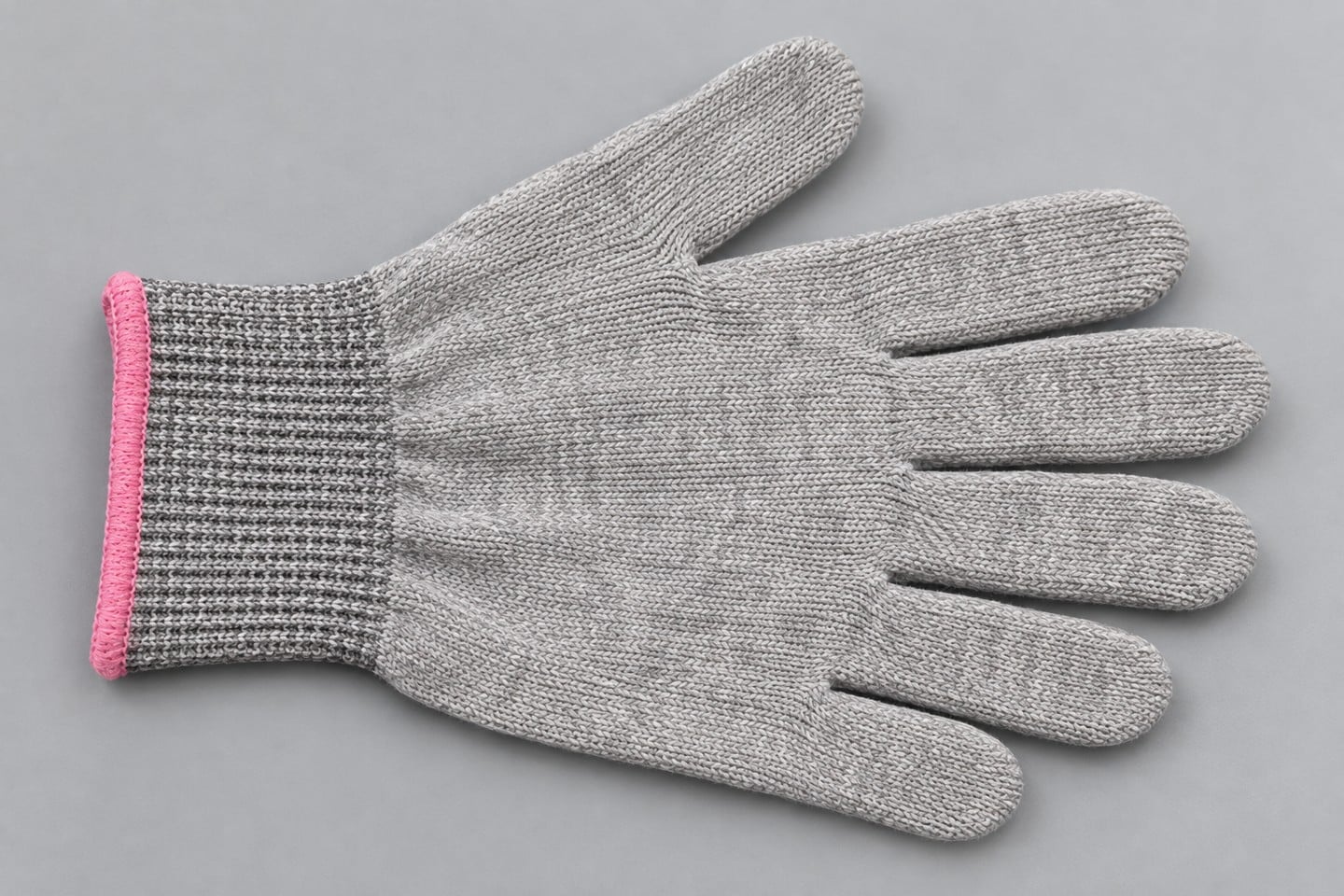
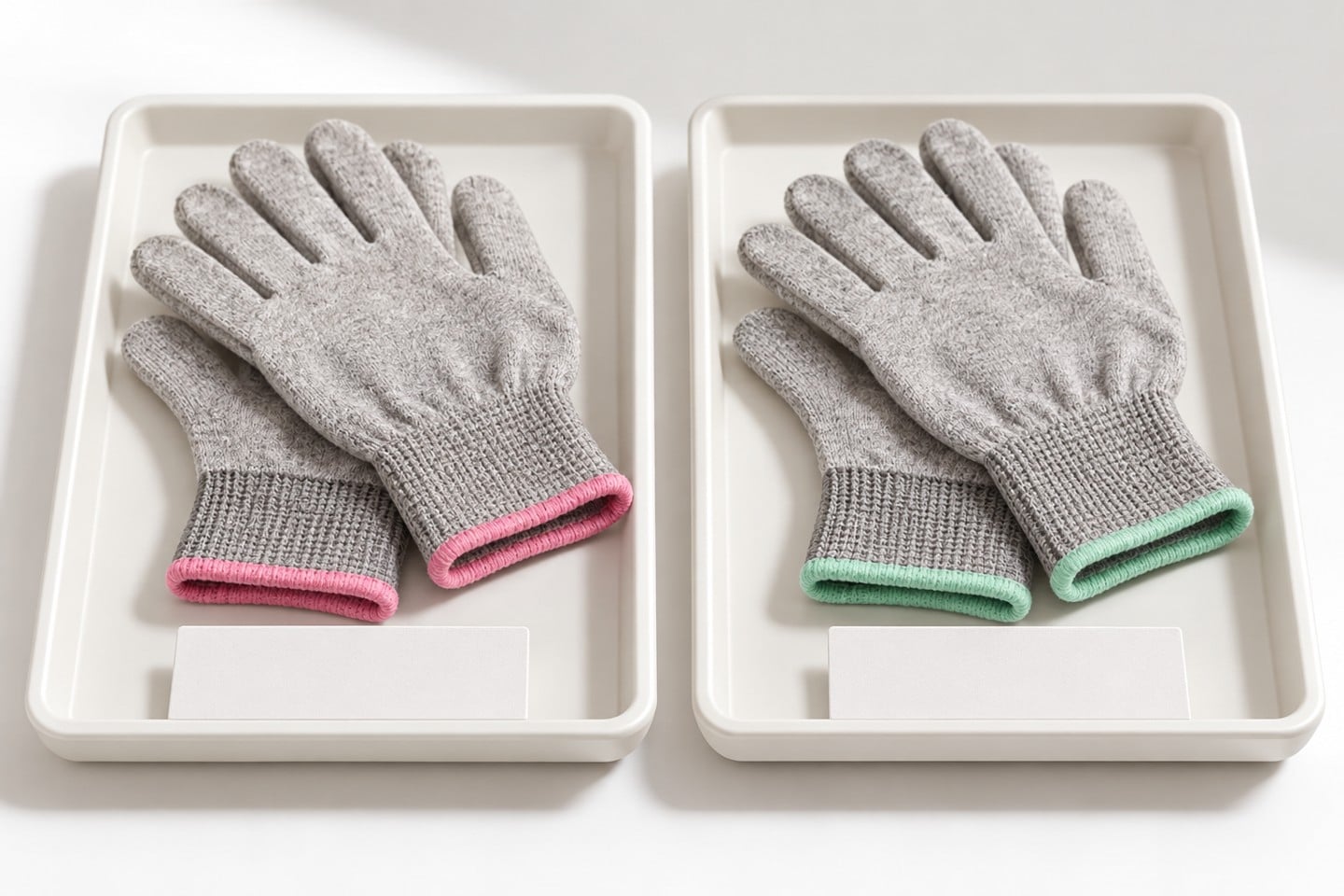
เดอะ SWESD anti-static glove product page provides a product starting point for an inquiry. Ask for evidence relevant to the exact item and intended process. The illustrations here use the real gray knit-glove reference, including its ribbed cuffs and colored trim. They depict visual condition and sample separation, not an electrical test or verified glove performance.
Separate intrinsic and worn-system resistance
เดอะ EOS/ESD Association description of ANSI/ESD STM15.1 identifies procedures for intrinsic resistance of gloves and finger cots and for their resistance together with personnel as a system. The system data apply to the user’s environment and application. This distinction is essential when reviewing a supplier’s claim: ask which scope produced the result and whether that scope answers your question.
An intrinsic measurement can describe a glove or material under its specified test arrangement. A worn-system measurement includes additional interfaces and conditions. Neither should be treated as a universal prediction of every handling operation. Review the full applicable method and current edition with competent personnel rather than recreating the procedure from a product listing or a summary on a website.
The Association’s release explanation for the glove and finger-cot method describes the distinction and the use of a specified contact fixture for system measurements. Obtain the complete procedure for fixture, force, contact, conditioning, and timing details. Do not press an ordinary probe onto a fingertip and call the reading an equivalent system test. Different contact conditions may produce a different measurement.
Define the acceptance decision before testing
State whether the task is initial qualification, supplier comparison, investigation of a changed lot, evaluation after approved cleaning, or a check of used gloves. These decisions require a suitable sampling plan and criteria. Ask the ESD coordinator and process owner to select the applicable method and define how results, uncertainty, variation, and incomplete tests will be treated. Record the rule before reviewing the candidate results.
Do not adopt an unsupported resistance number from a marketing sheet or an online discussion. Published proposals, historical document editions, and a customer’s internal rule may not be the requirement for your application. Confirm the current relevant document and the site’s approved program. If the decision criterion is not yet defined, the correct status is pending evaluation, not pass because the glove resembles an item already in use.
Keep other acceptance properties visible. A glove can satisfy the defined electrical criterion and still fail a particle, residue, chemical-compatibility, fit, or protective-performance requirement. The purchase decision must address all required properties. Avoid asking a laboratory to issue a broad statement of ESD and cleanroom suitability when the agreed test measures only one electrical property.
Use a report-review table to prevent false equivalence
The table below supplies qualitative review questions, not a universal electrical limit. Each observation must be interpreted within its actual method and application. Keep the units, specimen identity, environment, preparation, and result linked to the acceptance decision. A report that omits these details requires clarification before use.
| Evidence or condition | Review question | Decision boundary |
|---|---|---|
| Intrinsic glove resistance report | Is the exact construction and method identified? | Does not automatically establish worn-system behavior |
| Worn-system report | Are personnel, contact, preparation and application conditions documented? | Applies to the evaluated arrangement, not every operator or task |
| Supplier qualification certificate | Does it link to the actual model, lot, method and criteria? | A generic certificate cannot approve an unidentified item |
| Used-glove test | Is use, cleaning and sample state recorded? | Preserve failures and explain authorized retests |
| Visible damage or contamination | Does the site or manufacturer require removal? | A previous electrical pass does not override condition requirements |
| Cleaning or material change | Does accepted evidence still cover the revised item? | Review or requalify as the approved plan requires |
Request the actual test observations needed for the decision, rather than only a pass certificate. Ask how the laboratory reports unstable readings, out-of-range measurements, specimen damage, or departures from the method. Preserve those results and the explanation. An average or a single favorable example should not conceal a condition that would change the product approval.
Control specimen handling and conditioning
Identify the glove size, lot, construction, and sample state. Record whether the glove is unused, cleaned, worn, or returned from a problem workstation. Keep the samples separated and avoid introducing contamination during collection or storage. Do not combine gloves from several lots in an unidentified bag and expect a laboratory report to support a lot-specific purchasing decision.
Follow the conditioning and preparation required by the chosen method. Environmental state and sample history may affect the measurement, so record them and disclose departures. Do not alter the preparation of one supplier’s sample to improve a comparison, or clean a suspect glove before documenting its as-received condition. Where an authorized cleaning evaluation is needed, make it a separate recorded stage.
Use the specified equipment and fixture and maintain its verification records. Test personnel should be competent in the method and its limitations. When a full procedure or suitable equipment is unavailable, commission a qualified laboratory or retain the item as unapproved pending resolution. This article intentionally does not provide substitute fixture dimensions, force settings, voltages, or test times.
Evaluate the worn arrangement where the process requires it
A glove worn by a person adds contact conditions that an intrinsic sample test does not capture. The evaluation must use the approved arrangement and the method’s prescribed contact. Fit, cuff position, glove condition, and other relevant factors should be recorded according to the procedure. Do not assume an acceptable intrinsic result guarantees an acceptable worn-system result.
Gloves do not replace the site’s personnel-grounding controls. The EOS/ESD Association basic control guidance explains the wider grounding and handling context. If the operator’s approved grounding arrangement is not acceptable, a glove claim does not resolve that failure. Keep the controls and evidence for each function separate in the process plan.
Our personnel-grounding entrance checklist helps organize the operator check, while the wrist strap alarm troubleshooting guide addresses corrective investigation at a monitored workstation. The glove evaluation should complement these controls rather than become a reason to ignore a failed operator or workstation check.
Build replacement criteria around observed condition
Inspect gloves for tears, damaged cuffs, contamination, loss of suitable fit, and other conditions defined by the process or manufacturer. Record the criteria that require removal and the authorized response. A glove should not remain in service merely because its supplier once provided an acceptable qualification result. Qualification of a new item and continued acceptable condition in service are different questions.
Electrical replacement criteria must be tied to the approved method and program. If a used-glove result fails, preserve the sample and investigate the condition before assuming a material defect. Damage, cleaning, wear, and the actual test arrangement may be relevant. Keep the failed result, any authorized retest, the corrective action, and the release decision together. Do not discard the first result because a later reading was favorable.
No universal replacement interval suits every glove and task. Single-use requirements, manufacturer instructions, contamination controls, and evidence from the process may establish the applicable rule. Where reusable gloves are allowed, track the authorized cleaning and inspection process. Do not promise a number of washes or service cycles unless the exact construction and relevant performance have been evaluated.
Manage cleaning and changes without losing traceability
Follow the manufacturer’s compatible cleaning instructions and the facility’s approved procedure. Solvents, detergents, sanitizers, drying conditions, and coatings can alter an item or introduce residues. An apparent return to a clean appearance does not demonstrate restored electrical or contamination performance. Evaluate the required properties after cleaning when the approved plan calls for it.
Request notification of material, knit, coating, cuff, construction, and manufacturing changes. A changed glove may need fresh qualification even if the catalog name is unchanged. Link the accepted specification and evidence to the purchase order and incoming inspection. Keep lot information suitable for investigating a recurring failure or identifying affected stock.
Use a supplier review that covers evidence and change control, not only price and delivery. Our cleanroom consumables supplier-audit checklist helps organize those questions. For a process needing cleanroom performance, request the relevant contamination evidence separately; gray knit gloves should not be assumed suitable for every cleanroom simply because they are sold for electronics work.
Investigate a failure without overclaiming the cause
Define the symptom and preserve the initial evidence. A device failure, surface contamination, and a glove resistance failure are different observations. One does not automatically prove the cause of another. Identify the glove lot and use history, operator arrangement, process, and test conditions. Have the quality and technical owners determine whether affected work needs a hold or further assessment.
Change one authorized factor at a time during investigation. Record what changed and how the result was verified. If a new glove stops a symptom, that is useful evidence, but it may not identify which property or interface was responsible. Avoid exposing sensitive production devices to a suspected failure merely to reproduce it. Keep the product protected while competent personnel evaluate the relevant controls.
Summarize conclusions as confirmed, probable, or unresolved according to the evidence. Assign an owner and next action for unresolved questions. A practical failure record helps identify recurring problems across lots, cleaning routines, or work areas without attributing every issue to the glove supplier. Update the acceptance or replacement procedure only when the findings support the change.
Further learning and procurement checklist
The EOS/ESD Association educational video below explains the wider context of electrostatic-control practices. It is supporting education for the grounding and handling chapter, not a glove resistance-test demonstration. Follow the complete applicable test method and approved process for measurement and acceptance.
Send the supplier the intended contact task, exact construction, electrical-test scope, contamination and safety requirements, acceptance evidence, cleaning constraints, traceability, and change-control expectations. Ask for written identification of unsupported requirements. An acceptable decision connects the actual supplied glove to a suitable method and an explicit process criterion; it does not depend on a generic ESD label or an improvised probe reading.
คำถามที่มักถูกถาม
Are intrinsic and worn-system glove resistance tests the same?
No. Intrinsic testing addresses the item under its method; worn-system testing includes the glove with personnel and has application-specific conditions.
Can an ordinary probe reading replace the specified glove test?
No. Follow the complete applicable method and its prescribed fixture, contact, preparation and measurement procedure.
What universal resistance limit should be used for ESD gloves?
Do not assume a universal limit. The ESD coordinator must define the applicable current method and application criteria in the approved program.
Does an ESD glove replace operator grounding?
No. Gloves complement the approved handling arrangement and do not resolve a failed personnel or workstation grounding control.
When should gloves be replaced?
Apply the site and manufacturer rules for damage, contamination, fit, cleaning history, construction changes and failed applicable checks, with recorded disposition.


แสดงความคิดเห็น