- Ханьци
- Блог
Риск одного необнаруженного разряда статического электричества в современной среде производства электроники заключается в том, что дорогостоящая печатная плата не будет работать — возможно, через несколько недель после прохождения окончательной инспекции. Скрытый дефект, который невозможно обнаружить стандартными проверками качества, является одной из наиболее распространенных причин риска надежности для глобальной цепочки поставок электроники. Из-за более высокой плотности, тонких выводов компонентов и более низких рабочих напряжений для печатных плат их чувствительность к электростатическому разряду значительно возросла.
ESD-упаковка — это не просто способ защиты от электростатического разряда (ЭСР), но и комплексная система, разработанная для контроля электростатических эффектов на протяжении всего срока службы изделия, независимо от того, собираете ли вы его на станке SMT, обращаетесь с ним в чистой комнате, отправляете грузовым авиационным или морским транспортом или помещаете на длительное хранение на складе; ESD-упаковка используется на протяжении всего жизненного цикла изделия. В этой статье представлен всесторонний анализ ESD-упаковки с точки зрения данных и технических аспектов для производителей печатных плат; включая типы возможных отказов, принципы работы ESD-упаковки, выбор материалов, международные стандарты ESD-упаковки, риски ЭСР в цепочке поставок и передовые практики закупки материалов, используемых при изготовлении ESD-упаковки.
Понимание упаковки для защиты от электростатического разряда
Упаковка ESD разработана специально для управления электростатическими свойствами печатной платы во время хранения, транспортировки и перемещения.
Стандартные пластики могут как создавать, так и удерживать статический заряд; тогда как ESD-упаковка имеет три основных электрических функции, основанных на её конструкции.
- Рассеяние – безопасное снятие статического заряда с поверхности упаковки с контролируемой скоростью.
- Экранирование – предотвращение проникновения внешних электростатических полей к расположенной внутри печатной плате, выполняя функцию клетки Фарадея.
- Изоляция – Предотвращение накопления трибоэлектрических зарядов, генерируемых трением, между упаковочным материалом и продуктами.
Эти параметры электростатической защиты (поверхностное сопротивление, время распада заряда и эффективность экранирования) обеспечивают достижение поставленных функций — не только за счет механической защиты [т.е. использования полиэтиленового пакета]. Плохо спроектированный полиэтиленовый пакет не обеспечивает существенной защиты от электростатического разряда. Правильно спроектированный экранирующий пакет от электростатического разряда может снизить вероятность электростатического повреждения на несколько порядков по сравнению с неправильно спроектированным. ESD пакет.
Отраслевая перспектива: Более 30% случаев необъяснимых отказов в эксплуатации автомобильной электроники связаны с скрытыми неисправностями, вызванными электростатическим разрядом (EOS/ESD Association, 2022).
Почему защита от электростатического разряда критически важна в цепочках поставок печатных плат
Одной из основных проблем надежности в производстве электроники является электростатический разряд (ЭСР). Наиболее вредоносным видом повреждения от ЭСР является скрытый отказ, который остается внутри и не влияет на непосредственную функциональность в краткосрочной перспективе, а вместо этого приводит к преждевременному отказу из-за термических циклов, механических нагрузок или длительных электрических нагрузок.
Неисправности, возникающие в условиях эксплуатации через несколько месяцев без видимых для пользователя причин, называются скрытыми неисправностями. Ассоциация EOS/ESD сообщает, что на долю скрытых неисправностей, связанных с электростатическим разрядом (ESD), приходится 30% всех возвратов продукции из эксплуатации по необъяснимым причинам; чаще всего это происходит на рынках, где предъявляются высокие требования к надежности.
- Автомобильная электроника – где один неисправный ЭБУ может привести к массовым отзывам.
- Аэрокосмические системы – там, где сбой недопустим, а расходы на выездную техническую поддержку достигают астрономических размеров.
- Промышленные системы управления — где внезапные простои нарушают работу целых производственных линий.
- Полупроводниковая упаковка – где толщина слоёв диэлектрика затвора в современных ИС составляет всего несколько нанометров.
Вот что вам следует знать: устройства, которые исправно работают при прохождении первых тестов и были правильно собраны, по-прежнему подвержены повреждению от электростатического разряда до тех пор, пока на них не повлияют фактические условия эксплуатации. Поэтому обеспечение защиты от электростатического разряда заключается в надежном производстве устройств, а не в логистике их упаковки.
Совет покупателю: При оценке поставщиков печатных плат запрашивайте информацию о соответствии их программы контроля электростатического разряда (ESD) требованиям, предусмотренным ANSI/ESD S20.20 — это наиболее широко признанный отраслевой эталон.
Электростатические механизмы отказа в системах печатных плат
Печатные платы подвержены повреждениям от электростатического разряда (ЭСР) из-за ряда установленных механизмов, каждый из которых должен быть понят инженерами для принятия обоснованных решений о соответствующей упаковке и обращении.
1. Скрытое повреждение от электростатического разряда
Когда электростатический разряд (ESD) вызывает появление микроскопических дефектов в полупроводниковых переходах или оксидах затвора, происходит внутреннее разрушение диэлектрика. Хотя эти дефекты не приводят к мгновенному выходу устройства из строя, они ослабляют его. Со временем устройство может выйти из строя в результате термоциклирования, механической вибрации или электрической нагрузки, действующей на ослабленную область. В большинстве случаев скрытые повреждения не выявляются при проведении стандартных электрических испытаний; поэтому именно они являются причиной многих отказов в эксплуатации, связанных с электростатическим разрядом.
2. Трибоэлектризация
Когда два предмета соприкасаются друг с другом и затем разделяются, электроны передаются с одной поверхности на другую, в результате чего возникает электрический заряд, который остается после разделения предметов. Этот процесс наиболее часто происходит при работе с печатными платами (ПП) и может возникать, когда компоненты скользят по полимерным лоткам, снимается защитная статическая пленка с оголенной ПП или во время вращения катушек на установщике поверхностного монтажа (SMT). Подавляющее большинство событий электростатического разряда (ЭСР) в автоматизированном производстве происходит из-за трибоэлектрического заряда (трение).
3. Влияние влажности окружающей среды
Уровень влажности влияет на то, насколько быстро можно удалить статические заряды с поверхностей; поэтому, если относительная влажность опускается ниже 30%, скорость удаления зарядов значительно снижается, а статические заряды могут достигать нескольких тысяч вольт. Такие уровни заряда в воздухе могут быть особенно опасны при перевозке грузов по воздуху; влажность в салоне самолета на высоте может быть ниже 10%, равно как и в зимний период на складах в регионах с холодным климатом.
Таблица 1: Сравнение механизмов отказа вследствие электростатического разряда
| Тип сбоя | Механизм | Видимость | Тайминг | Уровень риска |
|---|---|---|---|---|
| Скрытый сбой | Деградация диэлектрика | Невидимый | Задержка | Очень высоко |
| Катастрофический сбой | Прямой пробой | Видимый | Немедленно | Критический |
| Трибоэлектрическая зарядка | Накопление заряда за счет трения | Невидимый | Обработка этапа | Высоко |
| Зарядка, обусловленная влажностью | Сниженное рассеяние заряда | Невидимый | Окружающая среда | Высоко |
Отраслевая перспектива: Катастрофические сбои — те, которые вызывают немедленное видимое повреждение — составляют лишь 10–20% всех событий электростатического разряда. Подавляющее большинство скрыты и проходят стандартные проверки контроля качества.
Инженерные принципы ESD-упаковки
Основные компоненты современного Упаковка для защиты от электростатического разряда основаны на многоуровневой архитектуре электростатического управления. Хотя конструкции будут различаться в зависимости от их предполагаемого использования, базовая структура будет иметь три основные функциональные слоя.
- Диссипативный слой – В общем случае, внутренний слой с определенным проводящим материалом (10^6ceDitto 10^*0Dorrnit &0.^0Z), обеспечивающий безопасный или постепенный разряд.
- Проводящий слой Электрический заряд распределяется по поверхности большой площади посредством проводника, погребенного в диэлектрическом изоляторе: в результате разность потенциалов между точками на проводнике незначительна.
- Экранирующий слой В общем случае, металлический слой (алюминий, нанесенный на полиэстер), который функционирует как клетка Фарадея и предотвращает воздействие внешних электростатических полей на закрытую печатную плату.
Благодаря трехслойной структуре, такая конструкция обеспечивает как внутреннее управление зарядом (предотвращая накопление заряженных частиц вследствие трибоэлектрического эффекта), так и защиту от внешних электрических полей (предотвращая повреждение компонентов от близлежащих источников электричества). Трехслойная конструкция абсолютно необходима для любого устройства, содержащего чрезвычайно чувствительные компоненты, например, сложные ИС, РЧ-модули или MEMS-сенсоры.
Ключевые параметры эффективности
Выбор ESD-упаковки основан на квалификации ESD-упаковки с использованием измеримых электрических свойств. Таблица ниже обобщает наиболее критичные характеристики, определенные отраслевыми стандартами.
| Параметр | Типичный диапазон | Функция | Инженерная должность |
|---|---|---|---|
| Удельное поверхностное сопротивление | 10⁶–10¹¹ Ом/кв. | Рассеивание заряда | Предотвращает накопление статического заряда на поверхностях упаковки |
| Время спада заряда | менее 2 секунд | Скорость разряда | Обеспечивает быструю нейтрализацию накопленного заряда |
| Эффективность экранирования | 40 дБ | Блокировка поля | Снижает энергию внешних ЭСД до безопасных уровней для ИС |
| Влагостойкость | 20%–80% RH | Приспособляемость к окружающей среде | Поддерживает производительность в реальных условиях логистики |
| Тепловое сопротивление | до 160–200°C | Термостойкость | Обеспечивает совместимость с процессами оплавления и сушки SMT |
Испытание на время затухания заряда позволяет оценить время, необходимое для затухания начального напряжения (обычно ±1000 вольт) до значения, равного 10% от исходного напряжения, с целью определения способности материала рассеивать заряд. Согласно стандарту IEC 61340-5-1, требование считается выполненным, если измеренное время затухания заряда составляет не менее двух секунд. Если диапазон поверхностного удельного сопротивления материала находится в рассеивающей области, но измеренное время затухания заряда превышает две секунды, материал может оказаться непригодным для использования.
Материалы, используемые в системах ESD-упаковки
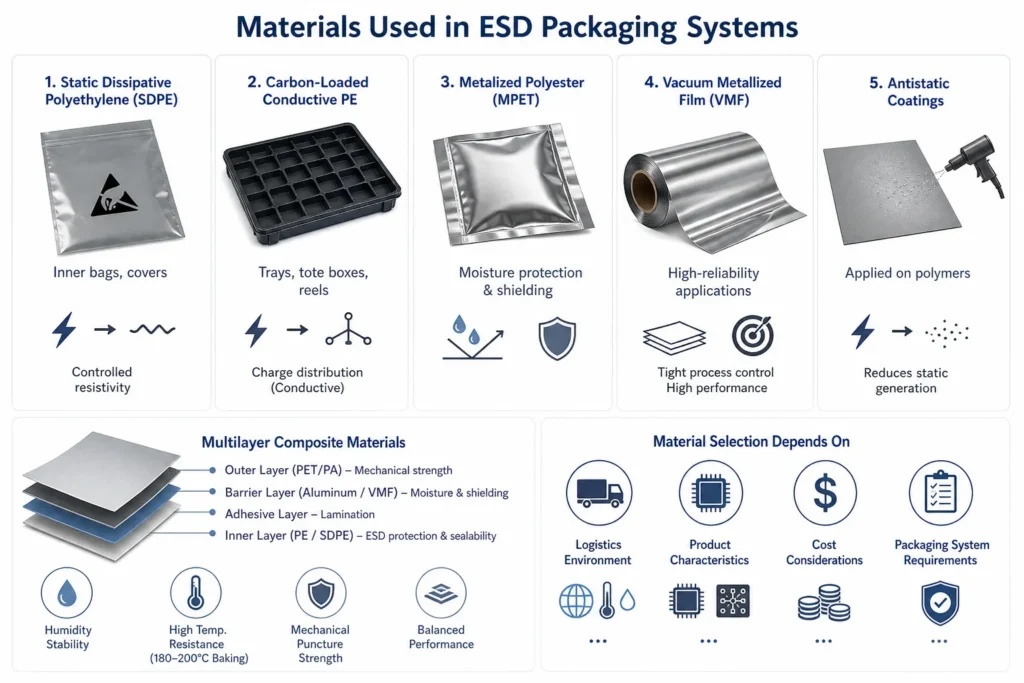
Упаковочные материалы ESD состоят из композитов, тщательно отобранных на основе их уникальных свойств (например, электрических, механических и термических) для удовлетворения конкретных потребностей. Примеры часто используемых материалов в ESD-упаковке включают:
- Полиэтилен со статической диссипацией (ПЭ ССД) – гибкая пленка с управляемым удельным сопротивлением, используется для внутренних мешков и чехлов.
- Углеродно-наполненный проводящий полиэтилен – используется для поддонов, коробок и катушек компонентов, где требуется распределение заряда.
- Металлизированный полиэстер (МПЭТ) — Тонкий слой алюминия наносится на ПЭТ-пленку для защиты от влаги и экранирования. Я часто использую полиэтилен, что означает, что он обычно используется в многослойных пакетах из фольги.
- Вакуумно-напыленная пленка (ВНП) – схожий с MPET, но с более строгим контролем процесса, часто используется для приложений с высокой степенью надежности.
- Антистатические покрытия – поверхностные покрытия, наносимые непосредственно на полимеры для уменьшения генерации статического электричества (хотя, как правило, они менее долговечны, чем встроенные диэлектрические изделия).
Многослойные композитные материалы разрабатываются путем объединения различных материалов в усовершенствованные упаковочные системы, обеспечивающие сбалансированные эксплуатационные характеристики, такие как стабильность к влажности, высокая термостойкость (выпекание при температурах примерно 180–200 градусов Цельсия) и механическая прочность на прокол. Выбор материалов будет варьироваться в зависимости от свойств упаковочной системы по отношению к конкретной логистической среде, характеристик упаковываемого продукта и соображений стоимости.
Производство и международные стандарты
Производство ESD-упаковки — это контролируемый процесс полимерной инженерии. Ключевые этапы включают:
- Полимерное компаундирование – Смешивание технического углерода, углеродных нанотрубок, графена или токопроводящих наполнителей с базовой смолой или добавление антистатических добавок в базовую смолу.
- Экструзия при контролируемой влажности – обеспечивая равномерное распределение и свойства поверхности.
- Металлизация или покрытие – нанесение тонких металлических слоев путем вакуумного испарения или напыления.
- Многослойное ламинирование – объединение функциональных слоев с клеями для поддержания целостности при изгибе и нагреве.
- Термосварка и формование – преобразование пленки в пакеты, мешки или жесткие лотки.
Вся ESD-упаковка должна соответствовать установленным международным стандартам:
| Стандарт | Область |
|---|---|
| IEC 61340-5-1 | Электростатические системы управления для электроники; глобальный справочник |
| ANSI/ESD S20.20 | Требования к программе контроля статического электричества; широко распространены в Северной Америке |
| ИПС-1601 | Руководство по обращению с печатными платами и их хранению; охватывает электростатически разрядную упаковку как часть контроля процесса |
| РОХС | Ограничение опасных веществ; экологическое соответствие |
Отраслевая перспектива: Более 80% поставщиков услуг по производству электроники (EMS) первого уровня требуют от своих поставщиков упаковочных материалов наличия сертификатов как по стандарту IEC 61340-5-1, так и по стандарту ANSI/ESD S20.20 для обеспечения соответствия международным требованиям.
Упаковка для защиты от электростатического разряда в цепочках поставок печатных плат
Риски электростатического разряда (ЭСР) выходят за рамки только производственных предприятий. Электростатические разряды (ЭСР) представляют риск на всей мировой логистической цепи. Величина риска, связанного с электростатическими разрядами (ЭСР), зависит от местоположения.
| Окружающая среда | Уровень риска | Основной источник | Рекомендуемая упаковка |
|---|---|---|---|
| Производственная линия SMT | Высоко | Трение машины, обращение оператора | Многослойные экранирующие пакеты или контейнеры |
| Авиаперевозки | Очень высоко | Низкая влажность (на высоте она может опускаться ниже 10% относительной влажности) | Металлизированная экранирующая пленка с влагобарьером |
| Складское хранение | Средний | Накопление заряда на поверхностях | Диссипативные пакеты или чехлы |
| Чистая комната | Высоко | Человеческий контакт, синтетическая одежда | Полная ESD-защитная упаковка (пакеты, коробки, этикетки) |
| Морские перевозки | Средний | Циклы температуры и влажности | Влагостойкие композиционные материалы |
Покупателям авиаперевозок следует запрашивать металлизированную экранирующую пленку с эффективностью экранирования выше 40 дБ, а также встроенным влагозащитным барьером. Поскольку в условиях воздушных перевозок очень низкий уровень влажности и наблюдается быстрое падение давления при наборе высоты, существует дополнительная возможность возникновения электростатического разряда.
Руководство по закупке антистатической упаковки
Выбор подходящего Поставщик ESD-упаковки не может быть достигнуто только исходя из цены; производительность инженерии является еще одним фактором, который следует учитывать. При проведении технического аудита могут быть включены следующие критерии:
- Сертификация соответствия стандартам IEC / ANSI – подтверждена независимой третьей стороной (SGS, TÜV и т. д.).
- Эффективность экранирования – измерено согласно IEC 61340-5-1 или ANSI/ESD STM11.31.
- Отчеты об испытаниях на спад заряда – показывающие время спада менее 2 секунд при указанных условиях температуры и влажности.
- Стабильность при различных значениях влажности и температуры — кривые рабочих характеристик в пределах предполагаемого диапазона логистических условий (например, 20%–80% относительной влажности).
- Возможность OEM/ODM – возможность индивидуального проектирования геометрии упаковки, выбора материалов и печати.
- Соответствие между партиями – внутренние данные контроля качества, показывающие значения CPK выше 1,33 для ключевых параметров.
Отраслевая перспектива: Выбор упаковки для защиты от электростатического разряда (ESD) исключительно на основе стоимости — без инженерной проверки — напрямую связан с ростом частоты отказов в эксплуатационных условиях на 5–8% среди производителей полупроводниковой упаковки. В настоящее время ведущие компании требуют проведения входного контроля качества (IQC) каждой партии.
Часто задаваемые вопросы
Q1: Для чего используется ESD-упаковка для печатных плат?
В2: Нужна ли печатным платам действительно ESD-упаковка?
Почему печатные платы все еще выходят из строя после ESD-упаковки?
Q4: Какая упаковка лучше всего подходит для перевозки печатных плат?
Q5: На что следует обратить внимание покупателям при выборе поставщиков?
В6: Могут ли стандартные антистатические пакеты из розового полиэтилена обеспечить адекватную защиту?
Q7: Как часто должна проводиться повторная квалификация ESD-упаковки?
В: Есть ли разница между “статически рассеивающим” и “проводящим” упаковочным материалом?
ESD упаковка для производителей печатных плат является технической дисциплиной, основанной на электротехнике, материаловедении и соблюдении стандартов. Это не вспомогательный элемент, а важнейшая составляющая общей системы обеспечения надежности электронных изделий. От понимания механизмов отказа и принципов многослойного проектирования до выбора материалов и квалификации поставщиков в соответствии со стандартами IEC и ANSI — каждое решение имеет значение.
Для отделов закупок и инжиниринга вывод очевиден: относитесь к ESD-упаковке как к инженерному решению для обеспечения надежности, а не как к товару. Инвестируйте в проверку поставщиков, тестирование производительности и дизайн, учитывающий логистику. Затраты на это невелики по сравнению с риском сбоев в эксплуатации, которые может вызвать скрытое ESD-повреждение, особенно в автомобильной, аэрокосмической и промышленной сферах, где надежность имеет первостепенное значение.
Применяя принципы и данные, изложенные в этом руководстве, покупатели и инженеры могут значительно снизить риски, связанные с Электростатическим разрядом (ЭСР), и построить более устойчивую цепочку поставок электроники.
Ссылки
- IEC 61340-5-1: Стандарт контроля электростатических разрядов – Международная электротехническая комиссия. https://webstore.iec.ch/en/publication/74748
- ANSI/ESD S20.20: Стандарт программы контроля электростатического разряда – Ассоциация EOS/ESD. https://www.esda.org
- IPC-1601: Руководство по обращению и хранению печатных плат – IPC. https://www.ipc.org
- Технические публикации Ассоциации EOS/ESD. https://www.esda.org
- MarketsandMarkets. “Отчет о рынке электронных упаковок” (2023). https://www.marketsandmarkets.com



Оставить ответ