- Turbo
- Blog
ESD foam material and lot segregation starts at receiving: keep the delivered item, material family, supplier lot and receipt reference connected before cartons are opened or sheets are cut. Separate uncertain deliveries from released stock, and transfer the identity when stock is divided. Color, feel and a familiar purchase description cannot establish equivalence. This guide explains a practical receiving workflow for electronics packaging teams. It concerns identity and release records; it does not replace electrical qualification, dimensional inspection or approval of the finished packaging system.
Identify the delivered material before combining stock
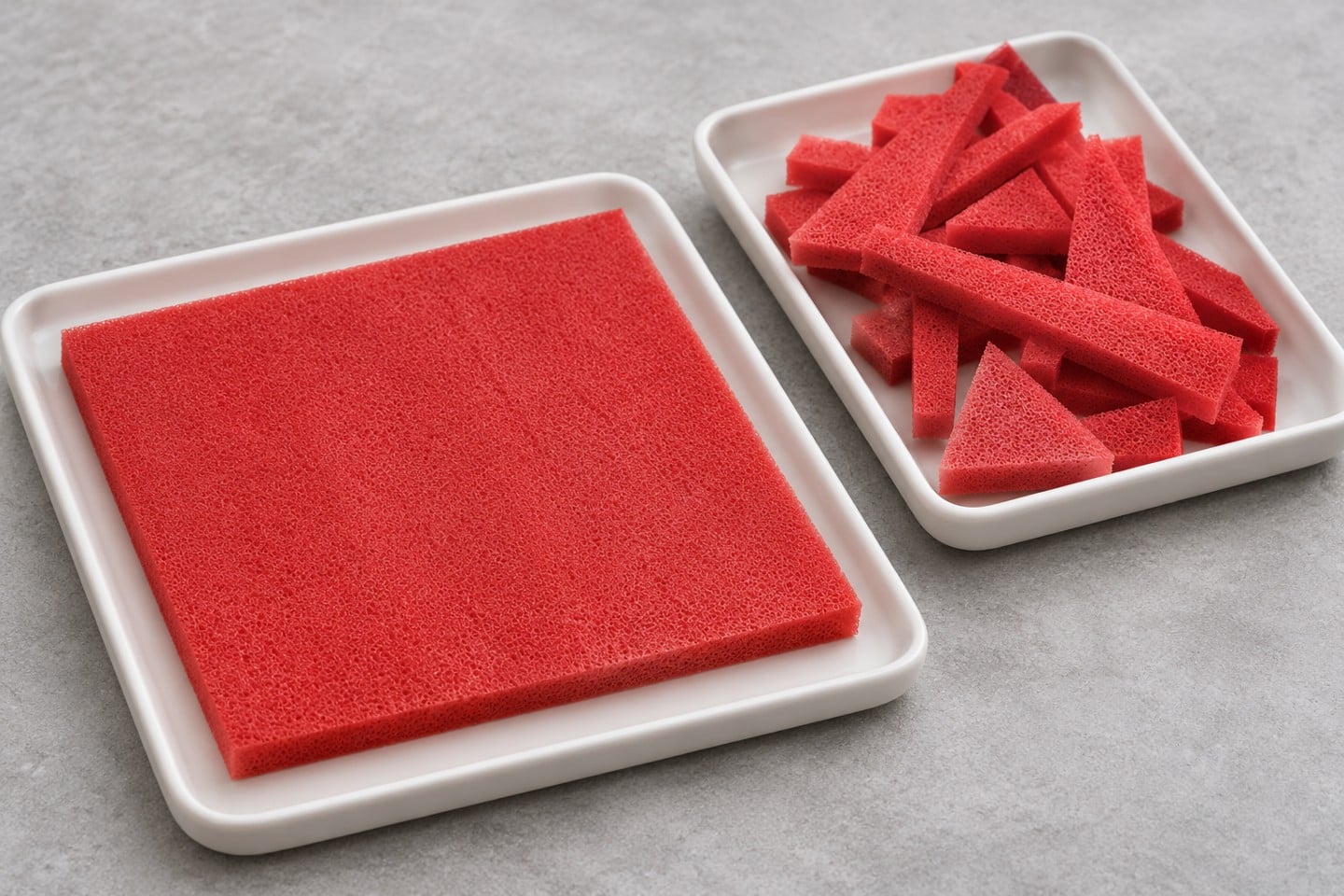
The SWESD ESD foam sheet range includes several material families. A receiving record should therefore identify the actual ordered and delivered variant, rather than treating the category name as a complete specification. Connect the purchase order line to the supplier item description, agreed material, dimensions and document revision. If any field is missing, ask the responsible buyer or quality owner to resolve it before the stock enters a shared location.
A matching color is useful for spotting an obvious discrepancy, but cannot establish polymer identity, electrical behavior or packaging suitability. Likewise, a sheet that feels familiar may differ in density, surface treatment or manufacturing history. Keep visual observations separate from verified documentary identity. Record what was actually delivered and what remains uncertain; do not fill a blank specification field with an assumption copied from an older receipt.
Distinguish manufacturer lot, receipt and internal location
A manufacturer lot connects material with the supplier’s production history. A receipt reference records a delivery event. A warehouse location says where stock is kept. These fields answer different questions and should remain distinct even when a small operation uses one label to display them together. Two deliveries may carry one manufacturing lot, while one delivery may contain several lots. Neither situation should be silently converted into a single invented batch.
The IEC 61340-5-3:2022 public preview discusses packaging identification and traceability. Use the applicable purchased standard and contract for formal requirements. The receiving practices below are an operational interpretation for preserving evidence, not a claim that every SWESD foam variant has been certified to that document. A reference to a standard is also not a substitute for a lot-specific supplier response.
Build a receiving record that survives splitting
Capture enough information to connect the physical stock with the source documents after the original carton is discarded. The following decision table is a suggested internal control. It deliberately avoids universal acceptance limits because the actual order and approved packaging design determine those limits. Use it alongside the conductive foam purchasing checklist when translating a buying specification into a receiving instruction.
| Identity field | Record before opening | Preserve after splitting |
|---|---|---|
| Ordered item | Purchase line and agreed variant | Link every cut group to the parent item |
| Delivered material | Supplier description and document revision | Do not infer material from color |
| Manufacturer lot | Actual supplier lot or documented uncertainty | Keep the genuine lot linked to the internal cut reference |
| Receipt reference | Delivery and receiving event | Retain delivery context across stock movements |
| Release status | Accepted, held or conditional scope | Make the current status visible before picking |
Record the identifier exactly as supplied, including meaningful prefixes or suffixes. If a label is damaged, photograph the surviving information and retain the packaging while the supplier clarifies the identity. An internal reference may be assigned to manage the hold, but it must be described as internal. Staff should be able to distinguish a temporary warehouse identifier from a confirmed manufacturer lot without relying on memory or label color alone.
Separate status as well as material
Physical segregation should make it difficult to pick a held delivery accidentally. Use the site’s authorized locations, status labels and system restrictions. A handwritten note hidden underneath a stack is a weak control because it disappears during normal handling. Put the status where a picker sees it before removing a sheet, and keep the status record consistent with the system that authorizes issue to production.
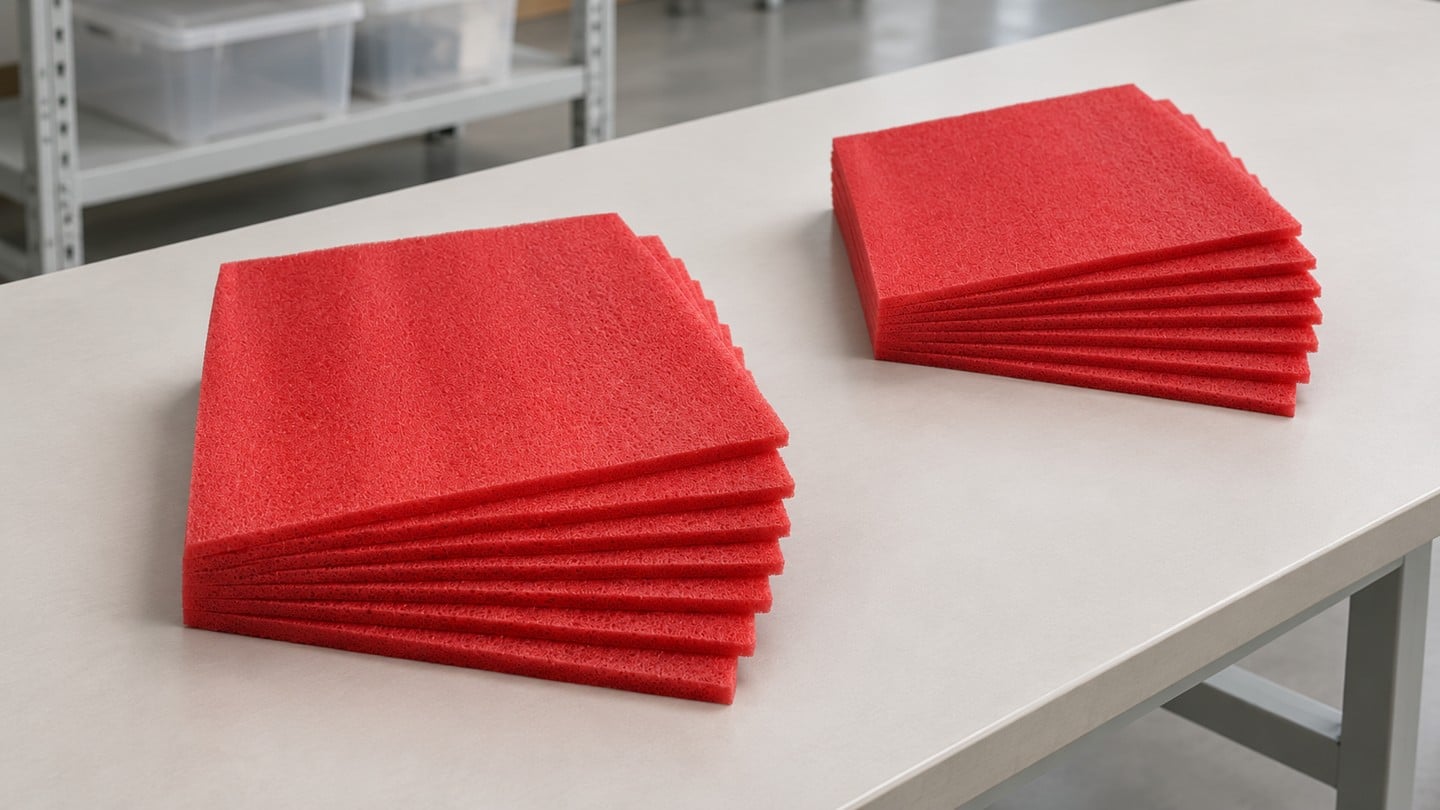
Separate unidentified offcuts from released full sheets even if they appear to be the same material. If the process intentionally permits mixed lots, document that decision and the resulting traceability limit. Otherwise, do not merge lots merely to make the shelf look tidy. Combining stock can turn a small supplier query into a larger investigation because the team can no longer show which material reached each packaging operation.
Transfer identity when a sheet becomes several pieces
Define the point at which the original label no longer travels with the stock. That point may be opening an inner pack, moving sheets into a cutting area, or dividing a sheet into several inserts. Before the split, prepare the approved transfer record or container identification. After the split, verify that every retained group can still be connected to the parent material and its current release status. The cut-edge particle inspection guide covers the separate condition check before loading; it does not establish the identity of an unlabelled offcut.
cURL Too many subrequests by single Worker invocation. To configure this limit, refer to https://developers.cloudflare.com/workers/wrangler/configuration/#limits.
cURL Too many subrequests by single Worker invocation. To configure this limit, refer to https://developers.cloudflare.com/workers/wrangler/configuration/#limits
cURL Too many subrequests by single Worker invocation. To configure this limit, refer to https://developers.cloudflare.com/workers/wrangler/configuration/#limits przegląd procedur kontroli i materiałów EOS/ESD Association cURL Too many subrequests by single Worker invocation. To configure this limit, refer to https://developers.cloudflare.com/workers/wrangler/configuration/#limits.
cURL Too many subrequests by single Worker invocation. To configure this limit, refer to https://developers.cloudflare.com/workers/wrangler/configuration/#limits.
cURL Too many subrequests by single Worker invocation. To configure this limit, refer to https://developers.cloudflare.com/workers/wrangler/configuration/#limits
cURL Too many subrequests by single Worker invocation. To configure this limit, refer to https://developers.cloudflare.com/workers/wrangler/configuration/#limits.
cURL Too many subrequests by single Worker invocation. To configure this limit, refer to https://developers.cloudflare.com/workers/wrangler/configuration/#limits.
Check the issue process with a small trace exercise
Before relying on a new identification arrangement, follow one realistic split from receipt through cutting and issue. Select a retained piece or container and ask a person outside the receiving team to find its parent documents. Then start with a supplier lot and identify the stock locations and issued groups connected to it. These two directions expose different weaknesses: a label may support backward lookup while the issue record fails to support containment.
This exercise is an internal process check, not a standardized material test. Record the steps that could and could not be reconstructed. Correct the missing transfer point, unclear identifier or inconsistent status before expanding the arrangement. The foam storage and stacking review addresses physical support after receiving; it should complement identity control rather than replace it.
Prepare a focused supplier clarification request
Send the order line, actual label photographs, delivery reference and exact discrepancy. Ask for the delivered material identity and the applicable lot or date code explanation. If the supplier uses a different coding convention, retain the explanation with the receipt so another employee can understand it later. Avoid requesting a new certificate with a preferred lot number merely to make the paperwork match; the response should describe the actual delivered stock.
For future orders, agree how multiple lots, split packs and substitutions will be identified. Ask whether the supplier can provide the required material and document revision consistently. Keep these commercial arrangements separate from claims about shielding, cleanliness or mechanical performance. Those properties need their own evidence and acceptance criteria. A clear identity trail makes that evidence usable; it does not create performance that has never been demonstrated.
Train staff around the difficult handoffs
Training should include the moments when labels are most likely to be lost: an urgent partial issue, a returned offcut, a damaged outer carton and a delivery containing several inner packs. Ask operators to show what they would do with uncertain material. A demonstration is more informative than asking whether they understand the procedure. Keep a workable hold route available so uncertainty does not force staff to choose between guessing and stopping all unrelated work.
Review errors for the missing control rather than adding more fields automatically. If the team cannot read a label from the normal picking position, improve placement. If cutting separates pieces from their source, fix that transfer. If software permits issue from a held location, address authorization. The best receiving record is the smallest one that preserves the necessary identity, status and material relationship through the real operation.
Educational background: packaging within ESD control
The following ESD Association educational video provides background on electrostatic control. It is not a receiving inspection demonstration or evidence of the properties of a particular foam lot. Use the documented material specification and your approved receiving procedure for release decisions.
Często zadawane pytania
Can foam color identify the material family?
No. Use the delivered specification and supplier information rather than color alone.
Is a receipt reference the same as a manufacturer lot?
No. One describes delivery and the other the supplier production identity.
Can unidentified offcuts be mixed with released stock?
Keep them separate until identity and disposition are resolved under the approved process.
Does a lot label prove electrical performance?
No. Identity supports traceability; performance requires appropriate evidence and acceptance criteria.
Should cutting create a new manufacturer lot?
No. Use an internal cutting reference linked to the actual source lot.

Napisz odpowiedź