- Turbo
- Blog
Cleanroom sticky roller handle inspection should check the condition and mechanical function of an approved tool before it returns to the task for which it was accepted. Examine the grip, frame, accessible mounting area and roller movement using the product-specific instruction, and hold a tool with unexplained damage, binding or contamination. Do not force a mechanism, invent an adjustment limit or infer electrical suitability from a metal handle. This guide concerns the reusable handle and assembly in service; it does not replace qualification of the roller material, cleaning method or intended work surface.
Identify the tool before choosing the inspection method
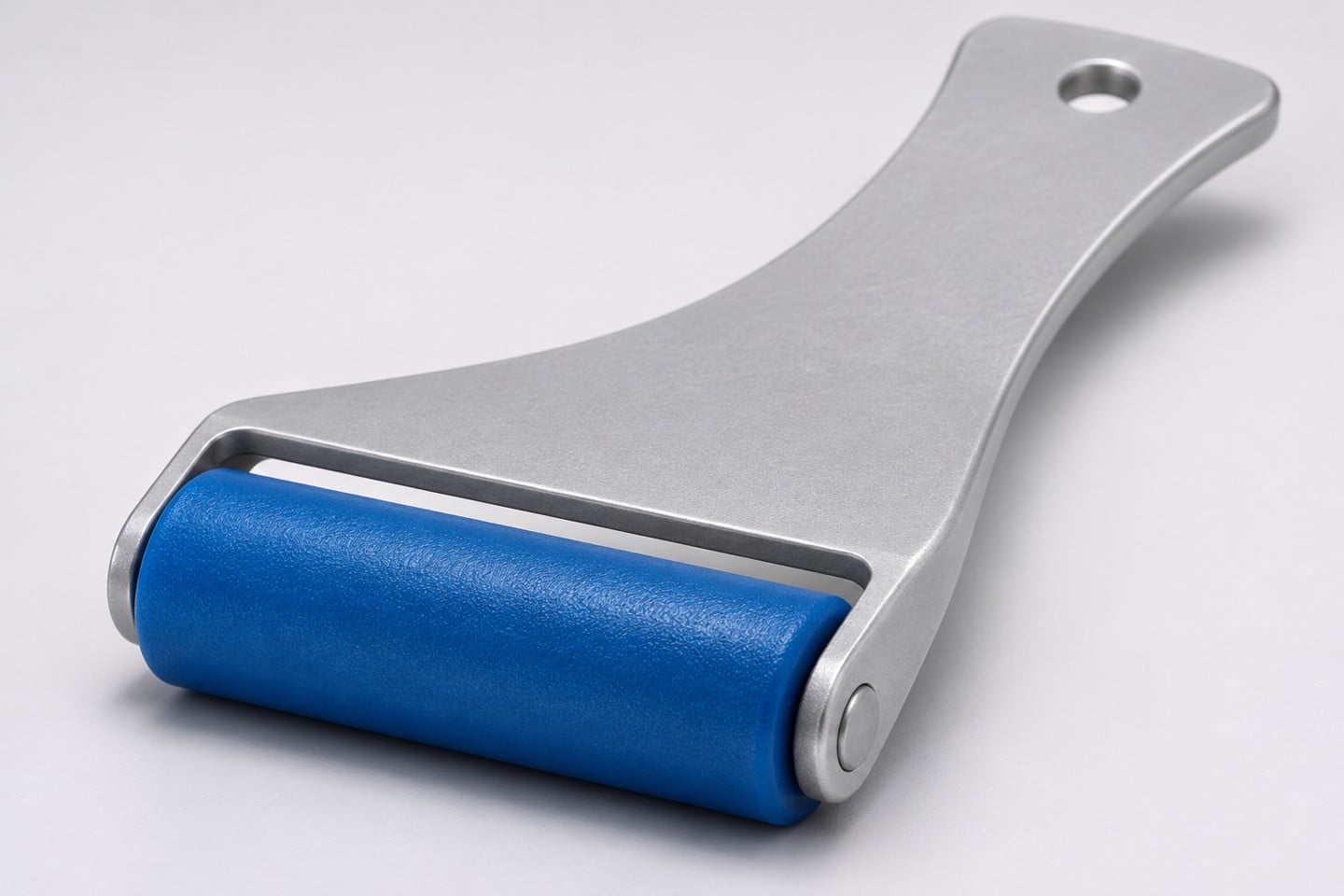
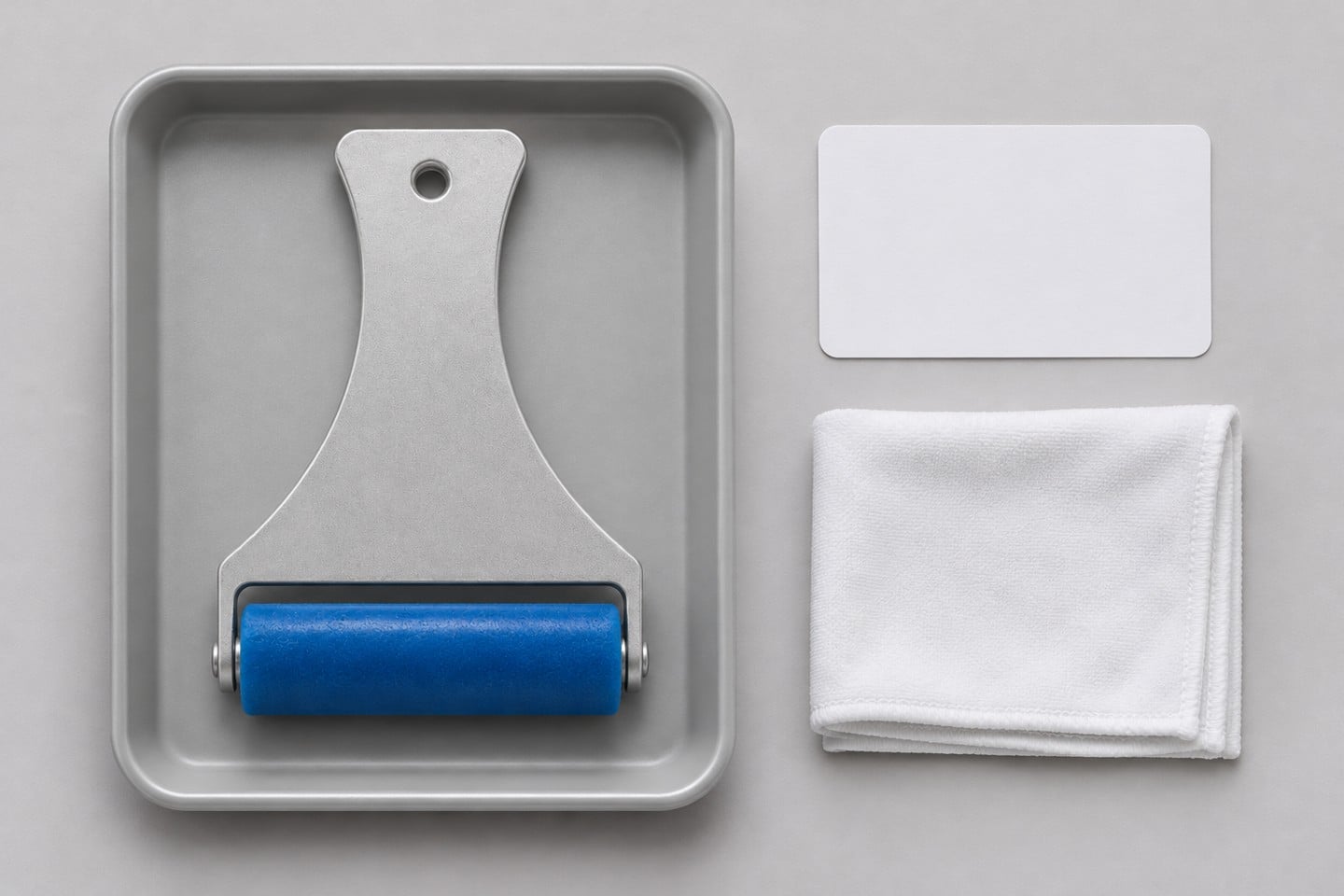
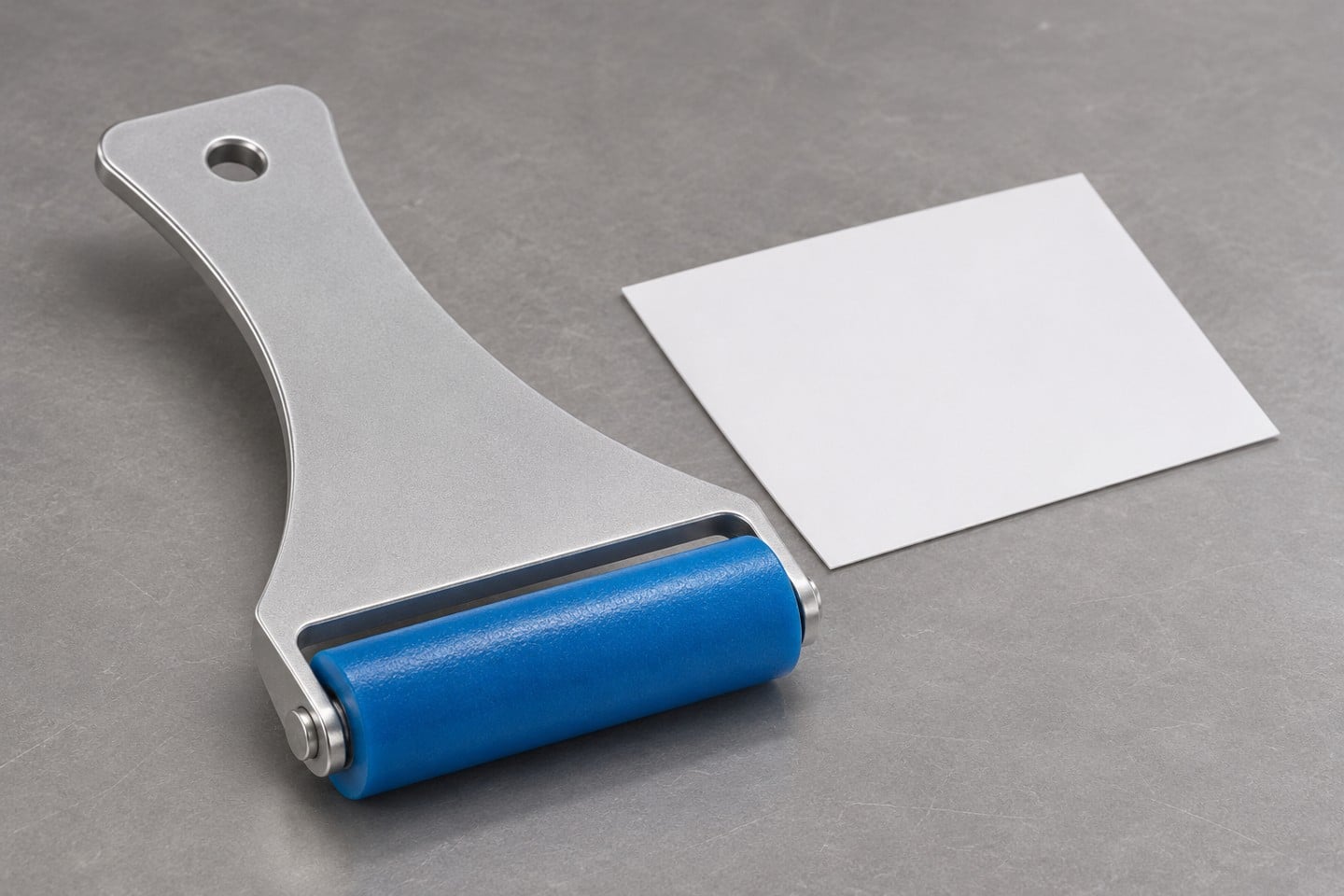
Start with the actual construction. The SWESD sticky roller reference shows a short blue roller with a broad silver paddle-shaped handle. Other cleaning tools may use long rods, sheet refills or different mountings. Instructions for removing a disposable film roll cannot automatically be applied to a solid contact roller. Record the product or local tool identity and use the applicable supplier instructions. If the assembly has been changed since approval, ask the responsible owner whether the existing inspection and use instructions still cover it.
Keep selection, qualification and routine inspection as distinct decisions. The sticky roller cleanroom guide addresses the broader choice and use of the tool. The sticky roller sample approval guide covers initial evaluation on representative surfaces. A handle that moves freely does not demonstrate that the roller is compatible with a new coating. Conversely, an earlier successful sample trial does not excuse a loose or damaged tool in daily use. The inspection record should state which decision is being made.
Prepare an observation that does not contaminate production
Use the inspection location, protective handling and support surface defined by the site’s procedure. Avoid testing questionable movement by rolling across a product, optical surface or production assembly. The check should not expose valuable work to an unresolved tool condition. If a representative surface or coupon is required, identify it and follow the approved method. Keep used cleaning materials and removed contamination away from the roller contact surface. An inspection can create a new problem if the tool is laid on an uncontrolled bench during the check.
Before cleaning away an unexpected condition, preserve the permitted observations needed for review. Record whether the tool was dropped, returned from another area or found with an unidentified residue. A clear description of where the material was seen may help distinguish a local handling problem from a supplier concern. Follow the site’s safety and contamination instructions when the residue is unknown; do not retain a suspect tool in an ordinary drawer. Where photographs are allowed, associate them with the tool identity and the inspection event.
Check the grip and frame without adding invented limits
Look at accessible surfaces for cracks, sharp edges, corrosion, deformation and residue. Include the grip and hanging-hole area where present. A cosmetic mark and a structural crack do not have the same meaning, but an inspector needs an approved basis for accepting either. Where the instruction does not resolve an observation, refer it to the responsible owner rather than choosing an arbitrary allowable length or depth. The aim is to identify a defensible return-to-use decision, not to create an unsupported dimensional specification.
Consider whether the observed condition can affect handling or introduce unwanted contact. A bent frame may bring the handle close to the roller surface or the workpiece; a sharp edge may damage an approved protective container during storage. Describe that relationship instead of merely writing “scratched.” Do not deliberately bend the frame back to its former shape or polish away a defect unless an authorized repair method permits it. A tool can look better after an improvised repair while retaining an unresolved integrity or contamination problem.
Observe the mounting area and rolling movement
Check accessible mounting points for visibly displaced parts or unexplained looseness within the scope of the instruction. Do not dismantle a tool merely to obtain a better photograph or copy a fastener arrangement from another model. If the mounting is not intended for user service, refer suspected defects through the authorized route. Keep the original components together where investigation is needed. Substituting a convenient washer, axle or handle can change clearance, material contact and the assembly identity even when the roller still appears to turn.
Observe movement using the approved unloaded or otherwise controlled check. Binding, intermittent motion, unexpected scraping or an unusual sound should trigger the defined response. Stop before forcing the roller through resistance. Do not introduce lubricant, a solvent or compressed air simply because those methods work on other workshop equipment. The substance, application and resulting cleanliness would need their own approval. A smooth movement observation supports mechanical function only; it is not a particle count, residue test, disinfection result or demonstration of electrical protection.
Keep cleaning instructions tied to the actual assembly
Confirm which parts may be cleaned, which agents and tools are permitted, and how the assembly must be protected afterward. A method approved for a metal surface may be unsuitable for the roller material or a joint. Likewise, a roller restoration method may not clean a handle crevice or identify corrosion. Do not infer compatibility from a generic instruction to use alcohol. Where instructions are incomplete, provide the supplier with the exact model and the proposed use so the answer relates to the assembled tool rather than a broad product category.
IEST’s overview of ISO 14644-5 operations describes the role of operational control, material movement and maintenance in cleanroom management. That framework supports having an owned procedure; it does not establish a universal roller-cleaning agent or inspection interval. Use the site’s contamination-control assessment and the applicable product instructions to define those details. If a procedure has not been approved for the actual assembly, keep the missing decision visible instead of treating a familiar cleaning habit as evidence.
Apply a condition-and-action checklist
The table below is a qualitative example for structuring observations. It intentionally provides no universal torque, clearance, wear limit or inspection frequency. Such values must come from the applicable manufacturer information or an authorized engineering assessment for the identified tool.
| Inspectiegebied | Observatie | Action boundary |
|---|---|---|
| Grip and hanging hole | Cracks, sharp edges or deformation | Hold if integrity or safe handling is uncertain |
| Frame and roller clearance | Distortion or unwanted contact | Stop before forcing movement |
| Accessible mounting area | Visible looseness or displaced parts | Use authorized review, not improvised adjustment |
| Rolling motion | Binding, irregular motion or unusual sound | Assess under approved unloaded check |
| Surface condition | Residue, corrosion or embedded debris | Apply only approved cleaning and review |
| Return to service | Identity, completed checks and decision | Release within original approved scope |
An inspector should be able to connect each rejected observation to a clear next step. “Check again later” leaves uncertainty about who owns the tool and whether it can be used meanwhile. Specify the hold location, review owner and information needed for disposition. If a replacement is issued, record the replacement identity and preserve the old tool’s status. Do not transfer a failed tool to a less visible workstation without an explicit decision about its intended use and condition. Moving the problem does not resolve it.
Recheck after an authorized intervention
After an approved cleaning, part replacement or repair, complete the required checks before release. Preserve what was changed, who authorized the action and whether the tool remains within its original scope. If replacement changes the product construction or materials, routine inspection may no longer be enough. Refer the change for the necessary application review. The cleaning supplies replacement guide provides complementary planning questions about replacement decisions; its general guidance does not override the instructions for this particular assembly.
Check storage and transport at the same time. A tool repeatedly returned with damage may be poorly supported in its container or mixed with sharp equipment. Provide the approved protection for the roller contact surface and keep tool identity readable without contaminating that surface. When a tool is moved between areas, follow the applicable transfer procedure rather than assuming its previous location guarantees its current condition. Recording recurring observations can help the owner improve handling and prevent repeated replacements for the same avoidable reason.
Separate mechanical condition from ESD suitability
A metal handle does not by itself prove a controlled path for charge dissipation through the complete assembly and user arrangement. The EOS/ESD Association explanation of control materials provides background on selecting appropriate controls for sensitive electronics. The specific electrical question belongs to the site’s ESD program and relevant verification method. Keep that result separate from the mechanical checklist so a freely turning blue roller is not mistakenly recorded as electrically qualified simply because its handle looks conductive.
Educational background and staff handoff
The EOS/ESD Association awareness video below explains why tools and materials around sensitive electronics need controlled use. It does not demonstrate mechanical handle inspection or approve this roller assembly. Train users on the actual stop conditions, hold location and return-to-use responsibility in addition to the background. A useful handoff ends with an identified tool, a known condition, a completed required action and an explicit release boundary. It should not leave the next operator guessing whether a blank inspection card means accepted, unchecked or awaiting repair.
Veelgestelde vragen
Zorgt een metalen handgreep voor een ESD-aardingsverbinding?
No. Electrical suitability depends on the complete arrangement and applicable verification.
Should a binding roller be forced free?
No. Stop and follow the authorized review method rather than risk damage or particle generation.
Can any replacement roll fit the handle?
No. Use the specified compatible assembly and verify the actual interface.
Does a clean appearance prove contamination compatibility?
No. Visual condition supports only part of the decision; required evidence and procedures remain necessary.
Does handle inspection replace a roller sample trial?
No. It checks an approved tool in service; sample qualification establishes a separate application boundary.
Plaats een reactie