- Turbo
- Blog
Humidity can affect ESD surface-resistance results, but a meaningful comparison requires controlled specimens, conditioning and measurement methods. Do not compare readings from different rooms as though humidity were the only changed variable. Identify the material and lot, use the same qualified contact arrangement and instrument settings, record temperature and relative humidity, and distinguish conditioning conditions from the conditions during measurement. Evaluate results against the specification that applies to the product and intended use. A favorable reading on a humid day does not establish performance in a drier environment, and raising room humidity is not a substitute for a complete ESD control program.
Define the decision before collecting readings
An environmental study should answer a specific question. Procurement may need evidence that a packaging material meets an agreed requirement under specified conditioning. Engineering may be investigating an unexpected change in installed equipment. Incoming inspection may need to decide whether a supplier report is comparable with the site’s accepted method. These decisions require different sampling and controls. Write the objective, specimen scope, conditions, method and decision rule before testing. Otherwise, it is easy to collect many readings without knowing what they can support.
Avoid setting a universal humidity pass band from an unrelated article. The relevant requirements come from the applicable standard, customer specification, instrument instructions and approved site method. Where the material must be evaluated across more than one condition, specify those conditions and the required preparation. Do not invent a qualification environment from the weather forecast or assume that one laboratory setting represents every shipping destination. The result should be tied to the stated scope, not promoted as proof that all black packaging performs identically in every climate.
Understand what humidity may change
Environmental moisture can influence the electrical behavior of some surfaces and materials. The effect depends on the material, surface treatment, contamination, condition and method. Do not assume that all conductive or dissipative products respond in the same direction or by the same amount. A molded container, a coated metal surface and a treated fabric can have different mechanisms and restrictions. Ask for product-specific evidence and distinguish an observed change from an explanation of its cause. A measured trend is useful, but it is not automatically a universal material law.
De ESD Association’s discussion of basic control procedures and materials provides context for evaluating materials within a control program. It does not justify using humidity alone as proof of protection. Charge generation, grounding, handling and packaging function still require appropriate controls. If the investigation concerns a specific container or tray, state which property the test measures and which functions remain outside its scope. Surface resistance does not by itself establish discharge shielding, mechanical protection or moisture-barrier performance.
Keep specimens comparable
Identify each specimen by material, product configuration, lot and relevant history. Record cleaning, wear, storage and prior exposure where they can influence the result. Compare representative samples rather than a freshly cleaned new sample with an aged production item unless that difference is deliberately part of the investigation. Define how specimens are selected and whether the same specimen is measured repeatedly or separate groups are used. Either approach needs controls and limitations, especially when prior conditioning could affect later observations.
Do not clean a specimen immediately before testing with an unapproved product simply to improve repeatability. Cleaning can leave residue, remove a treatment or change the surface. Use the preparation required by the method and retain its identity in the report. Keep the measured area consistent and document features such as ribs, joints or coatings. If the contact arrangement cannot sit properly on the actual product, obtain a qualified alternative rather than silently using a convenient flat sample and claiming that it proves the complete molded assembly.
Separate conditioning from measurement
Conditioning describes how a specimen is held before the reading; measurement conditions describe the environment when the reading is taken. Record both when the procedure requires them. Moving a sample from a controlled environment into a different room can begin changing its condition. The approved method should state transfer, stabilization and measurement requirements. Do not invent a waiting time or assume that the sample has equilibrated because its surface feels dry. If these controls are missing, mark the comparison as limited rather than presenting it as formal qualification.
Identify the environmental instrument and where its reading is taken. A wall display at the other end of a facility may not describe the specimen’s local conditions. Record temperature and relative humidity with the timing needed to connect them to the measurements. Where conditions drift during a series, preserve that history. A single number copied into the report after the work is complete can conceal a meaningful change. The environmental record should support interpretation, not serve as a decorative field in a template.
Use the same electrical measurement method
Keep the required contact geometry, placement, loading, test settings and reading procedure consistent. Use equipment suitable for the specified quantity and expected range. If the method calls for a particular applied voltage or timing, use that requirement and record it rather than borrowing a setting from a different tester. Confirm instrument and accessory compatibility. A handheld reading made with built-in contacts cannot automatically be compared with a laboratory measurement using a different electrode arrangement and then attributed entirely to humidity.
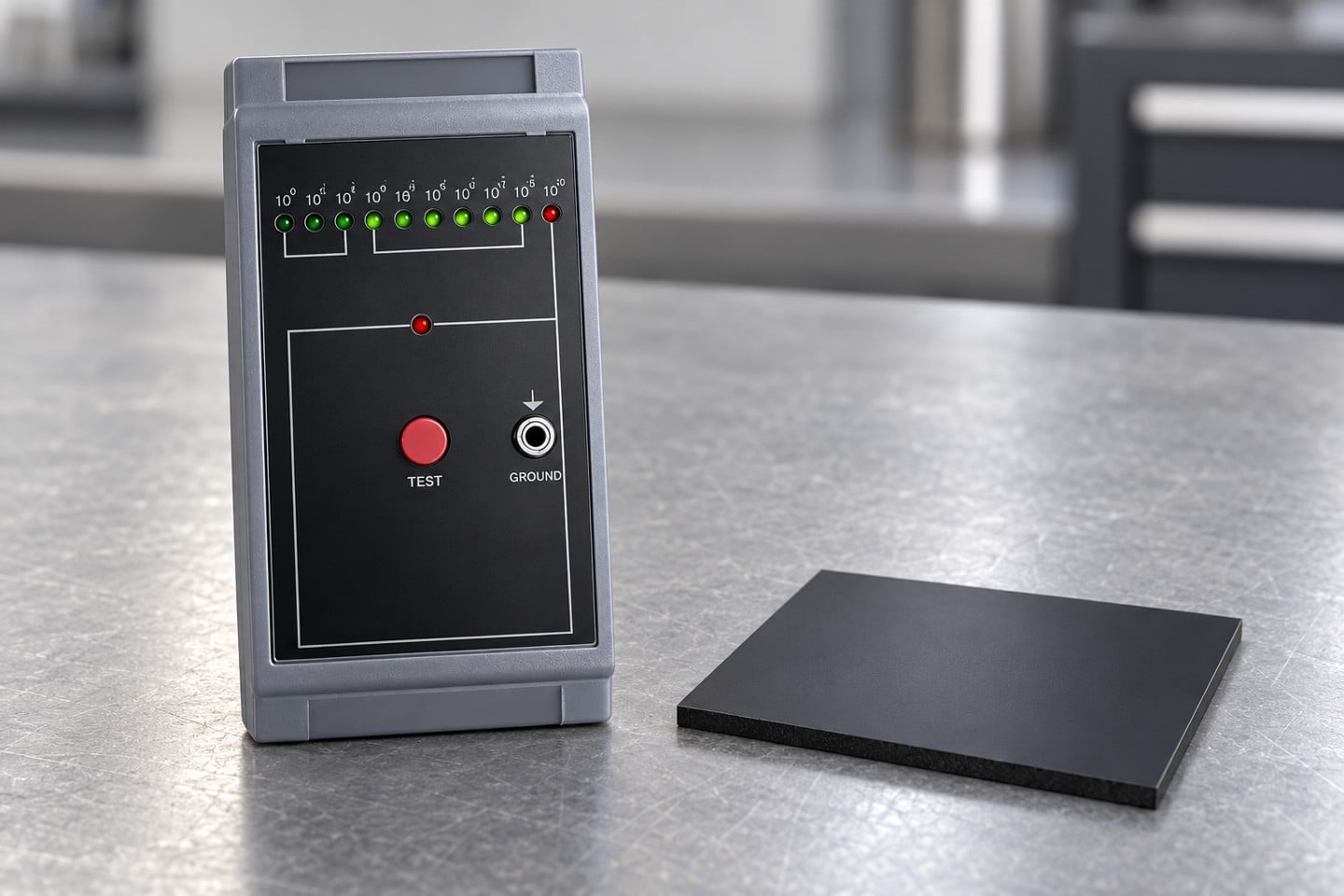
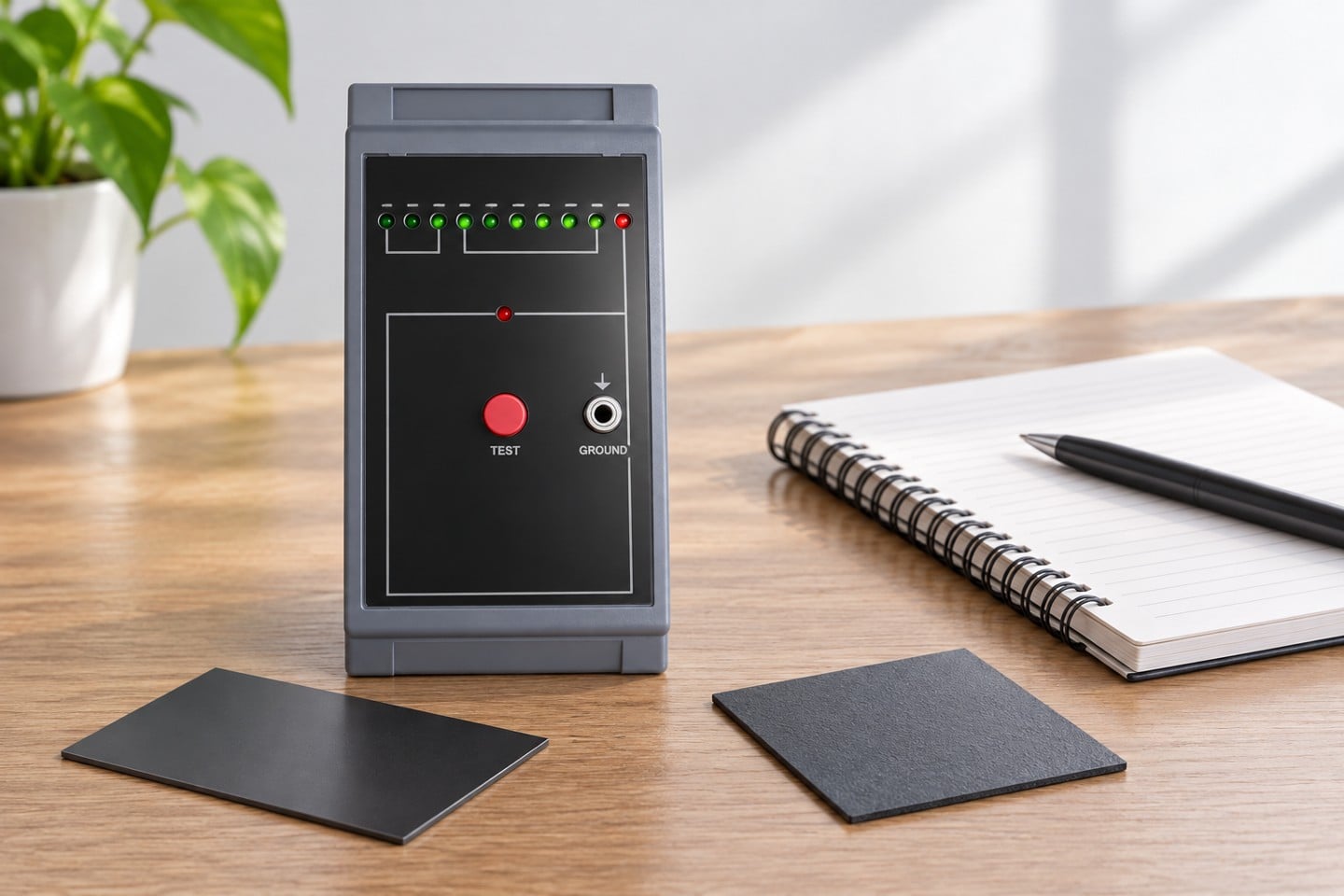
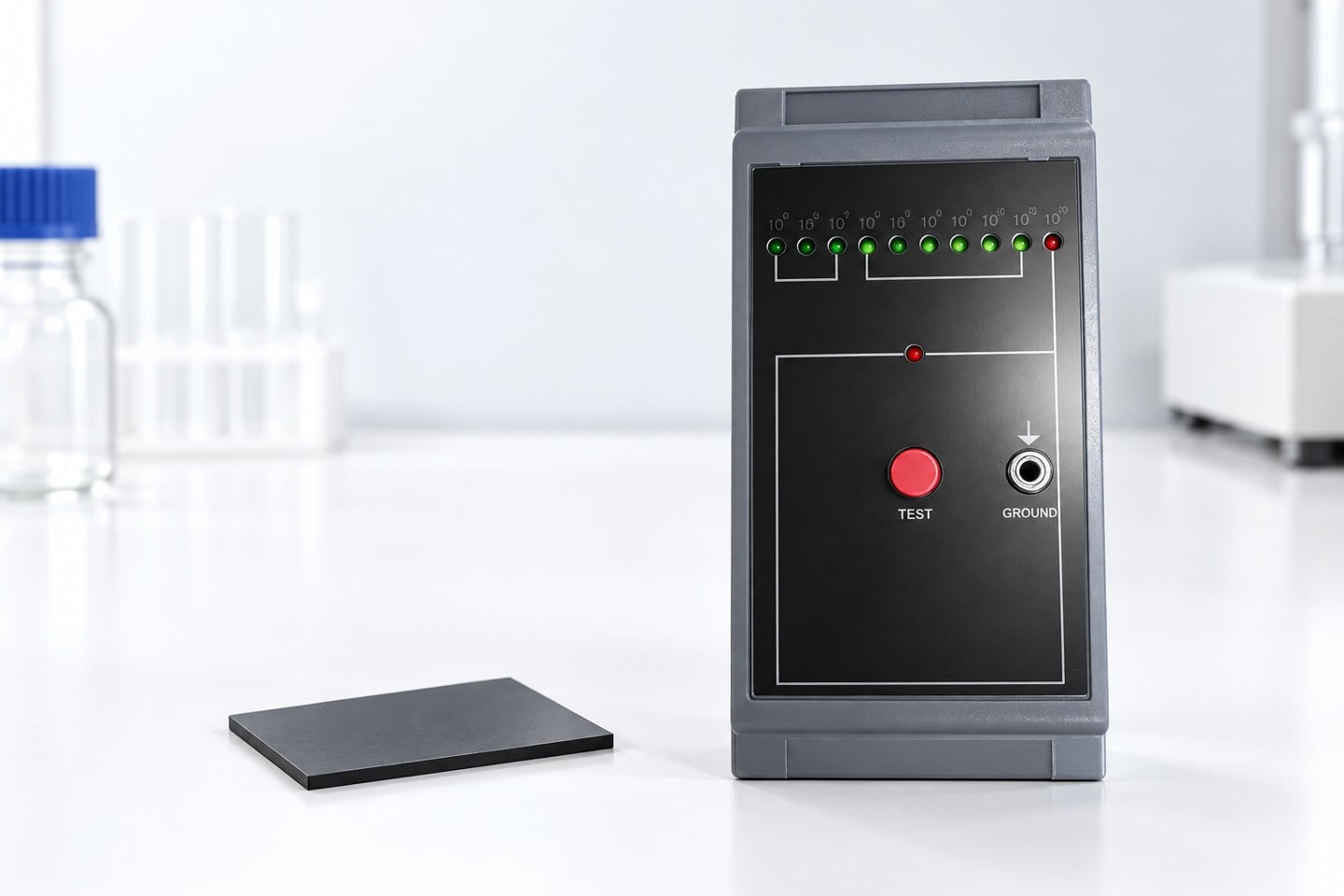
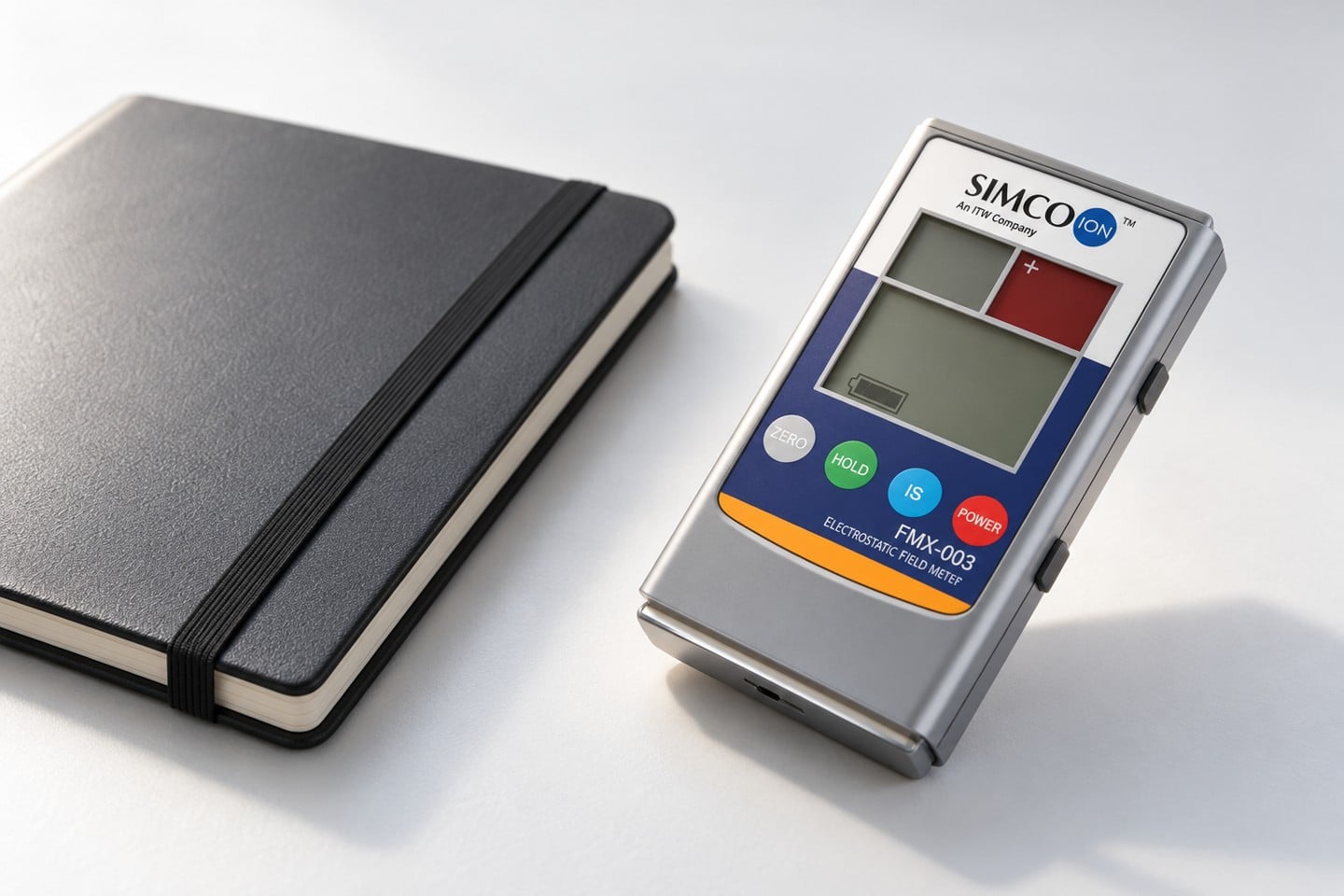
De surface resistance versus resistivity guide explains why quantities and geometry must remain distinct. Keep the raw measurement and any applicable conversion in the record. The surface resistivity method discussion can help frame the procedure questions, but the actual approved method controls the work. The SWESD surface resistance tester shown in the illustrations is a product reference, not evidence of a particular range, environmental capability or qualification result. Confirm those details for the supplied instrument.
Build a useful environmental comparison record
| Record | Wat te specificeren | Waarom het ertoe doet |
|---|---|---|
| Specimens | Material, lot, preparation and history | Separates sample differences from environmental effects |
| Conditioning | Environment, duration and procedure reference | Defines the specimen state before measurement |
| Measurement environment | Local temperature, humidity and time | Connects each result to actual conditions |
| Electrical method | Quantity, contacts, placement and settings | Prevents unlike measurements being compared |
| Results and decision | Individual values, deviations and acceptance rule | Supports review without hiding anomalous readings |
Record individual readings, not only an average. Averages can hide a poor contact, a changing environment or inconsistent specimen behavior. Preserve anomalous observations and the reason for any excluded reading. Where repeats are allowed, describe what was changed and keep the original record. Do not repeat the test until a desired result appears. A reviewer should be able to identify the specimen, reconstruct the arrangement and understand how the acceptance decision was reached from the observations.
For procurement, require the report to identify whether the results apply to a material coupon, a component or a complete assembly. Ask how samples represent the delivered lot and what deviations occurred. If the supplier provides only a typical value at an unspecified condition, treat that as incomplete qualification evidence. Request the missing method and environmental details before interpreting it as a guarantee. This is especially important when several suppliers use the same commercial material description but provide results under different preparation or measurement conditions.
Investigate a change systematically
Start by confirming that the measurement setup is unchanged. Check instrument condition, contact cleanliness, placement and settings, then review sample history and environmental records. A loose connection or changed contact location can create a difference that happens to coincide with a humidity change. If the investigation requires varying humidity, plan that variation deliberately while controlling the other factors. Do not use uncontrolled production readings to assign a precise humidity coefficient or predict behavior outside the conditions actually evaluated.
If the result fails the applicable requirement, isolate the affected material or equipment according to the site process. Ask the responsible technical owner to assess the cause and disposition. Possible actions can include correcting preparation, improving method control, obtaining additional representative samples or changing the approved material. Raising humidity to obtain a favorable reading should not be treated as a material repair. Any environmental change must be compatible with the facility, process and product requirements, and its role in the control program must be documented.
Keep measurement uncertainty and traceability visible
NIST’s explanation of metrological traceability helps distinguish a supported measurement result from a device simply carrying a calibration sticker. Retain relevant calibration information and the relationship between the instrument, reference and result. Consider the decision rule when a value is close to an acceptance boundary. Do not imply that the last displayed digit establishes compliance without considering the measurement method and uncertainty appropriate to the decision. The environmental instruments also need controls suitable for their role in the study.
Gebruik de tester calibration guide to prepare instrument-service questions, and the ESD test-report requirements to check whether the evidence file is complete. These supporting records should connect to the actual study, not remain separate documents that cannot be linked to specimen identity or measurement date. A clear evidence chain makes it easier to distinguish a genuine material concern from a reporting or measurement problem and avoids unnecessary supplier disputes.
Translate the evidence into purchasing requirements
An RFQ should state the product, intended use, required property, test method, conditioning and reporting expectations. Ask the supplier to identify what is confirmed for the exact delivered construction and what requires sample evaluation. Include any expected use environments that matter to the technical review, without assuming that an untested environmental range has been qualified. Request a representative report and agree on how future lots or material changes will be evaluated. Avoid a requirement that merely says humidity resistant, because it gives neither party a reproducible acceptance boundary.
After acceptance, keep change control connected to the qualification evidence. Material formulation, surface treatment, cleaning instructions and construction changes may require review. Field observations can inform that review, but a few favorable production readings should not silently replace the agreed qualification method. The goal is a purchasing requirement that can be tested and understood, backed by evidence for the relevant conditions. This supports reliable comparisons and realistic corrective action without promising that one environmental adjustment eliminates every ESD risk.
Educational background
The following educational video introduces electrostatic behavior. It is background for understanding why materials and their surroundings matter; it does not prescribe humidity limits or a surface-resistance qualification method. Follow the applicable procedure and qualified equipment documentation for the actual measurements and acceptance decision.
Veelgestelde vragen
Does higher humidity always improve ESD material performance?
Do not assume a universal response. Evaluate the actual material and property under the specified method and conditions.
Can readings from two rooms isolate humidity effects?
Not when other factors also change. Control specimen preparation, contact arrangement, settings and relevant environmental conditions.
Are conditioning and measurement humidity the same record?
They describe different stages. Record both when required and document transfers or stabilization under the approved procedure.
Can raising humidity fix a failed material result?
Do not treat it as a material repair. Investigate the cause and use the approved qualification and facility-control process.
What should a supplier report include?
Identify specimens, method, conditioning, measurement conditions, instrument evidence, individual readings, deviations and the acceptance decision.
Plaats een reactie