- Turbo
- Blog
ESD garment seam continuity testing asks whether the finished garment construction supports the electrical behavior required by the approved control program. A conductive-looking grid in a fabric sample is not evidence that every panel, seam, cuff, closure, or intended grounding connection in the assembled garment is suitable. Define the exact construction and the property to be evaluated, then use the applicable garment method and qualified laboratory procedure. This guide helps buyers review seam-related evidence without inventing electrode positions, resistance limits, or a universal test for every garment category.
Distinguish fabric evidence from garment evidence
A fabric report identifies the material evaluated under its stated conditions. It may be useful when reviewing a proposed garment, but it does not automatically describe the assembled jacket or trousers. Cutting, panel orientation, stitching, cuffs, fasteners, and other construction details belong in the finished-product review. Ask which of those features the report actually covers.
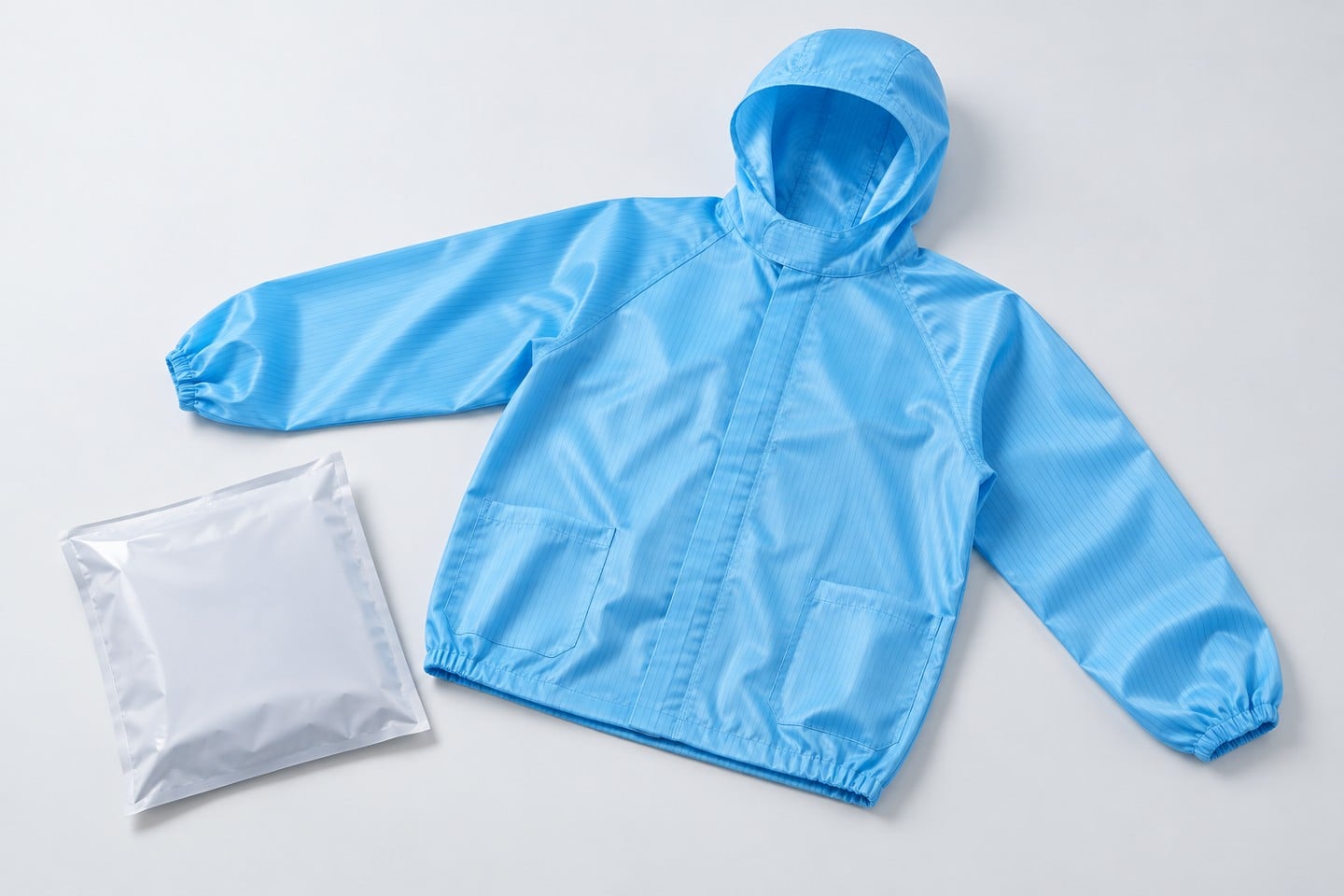
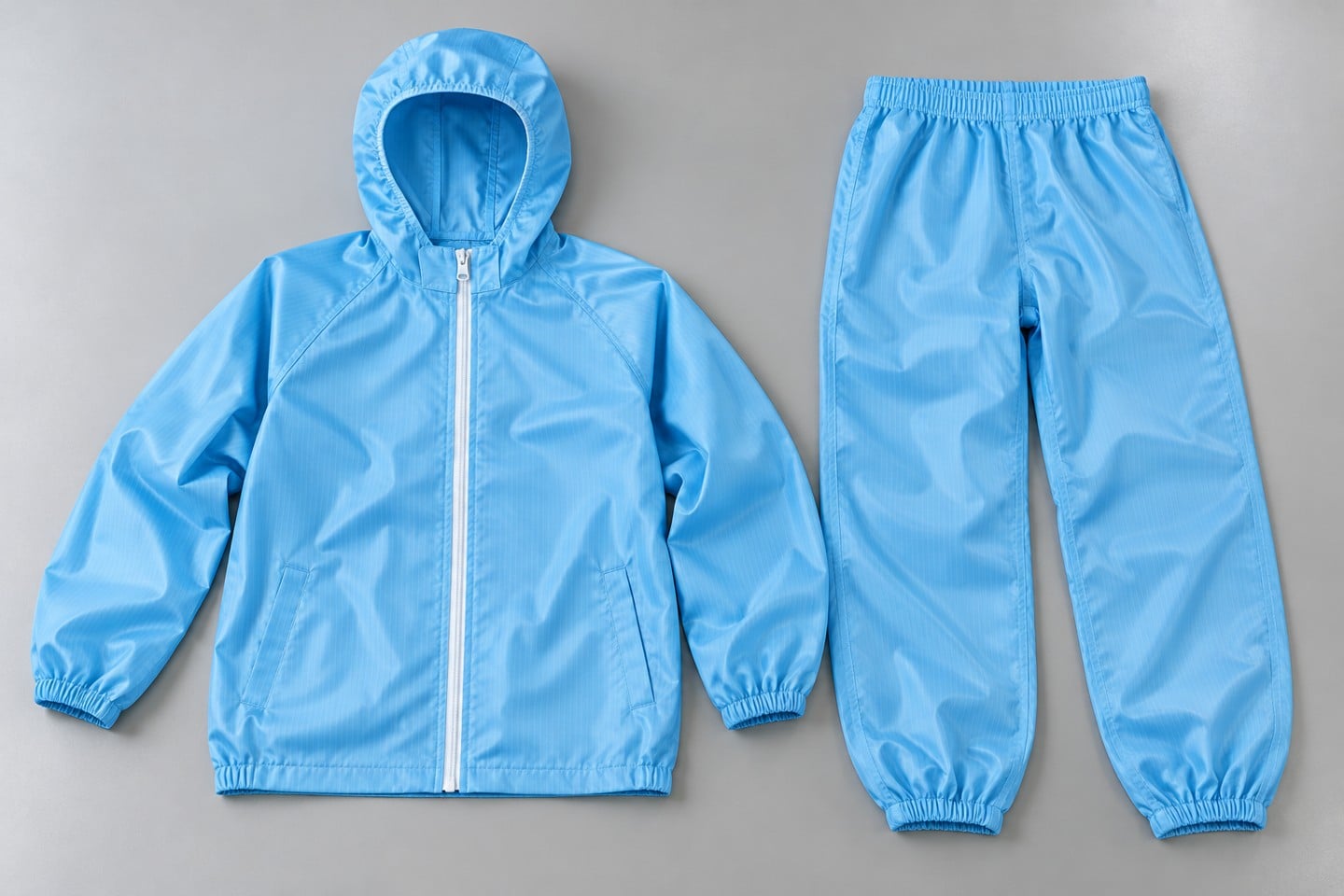
The SWESD two-piece cleanroom suit is a starting point for identifying the proposed construction. Confirm the particular hooded or unhooded variant, size, fabric, and assembly revision. Do not assume that a report for one variant covers all photographs or colors on a product page. The garment RFQ guide provides the broader purchasing context; this article addresses the narrower evidence gap between fabric and assembly.
Identify the intended garment category and role
Begin with the facility’s approved ESD program and the purpose assigned to the garment. A garment used to control fields from clothing is not necessarily the same arrangement as one intended to provide an approved grounding function. The test request must identify the role, rather than treating every item marketed as ESD clothing as equivalent.
The EOS/ESD Association control-material overview discusses garments in the context of control materials and identifies garment-characterization methods. Use the current applicable requirements and competent technical interpretation. This article does not replace the actual method or authorize a particular garment category simply because visible conductive threads appear to cross a seam.
Make the construction review traceable
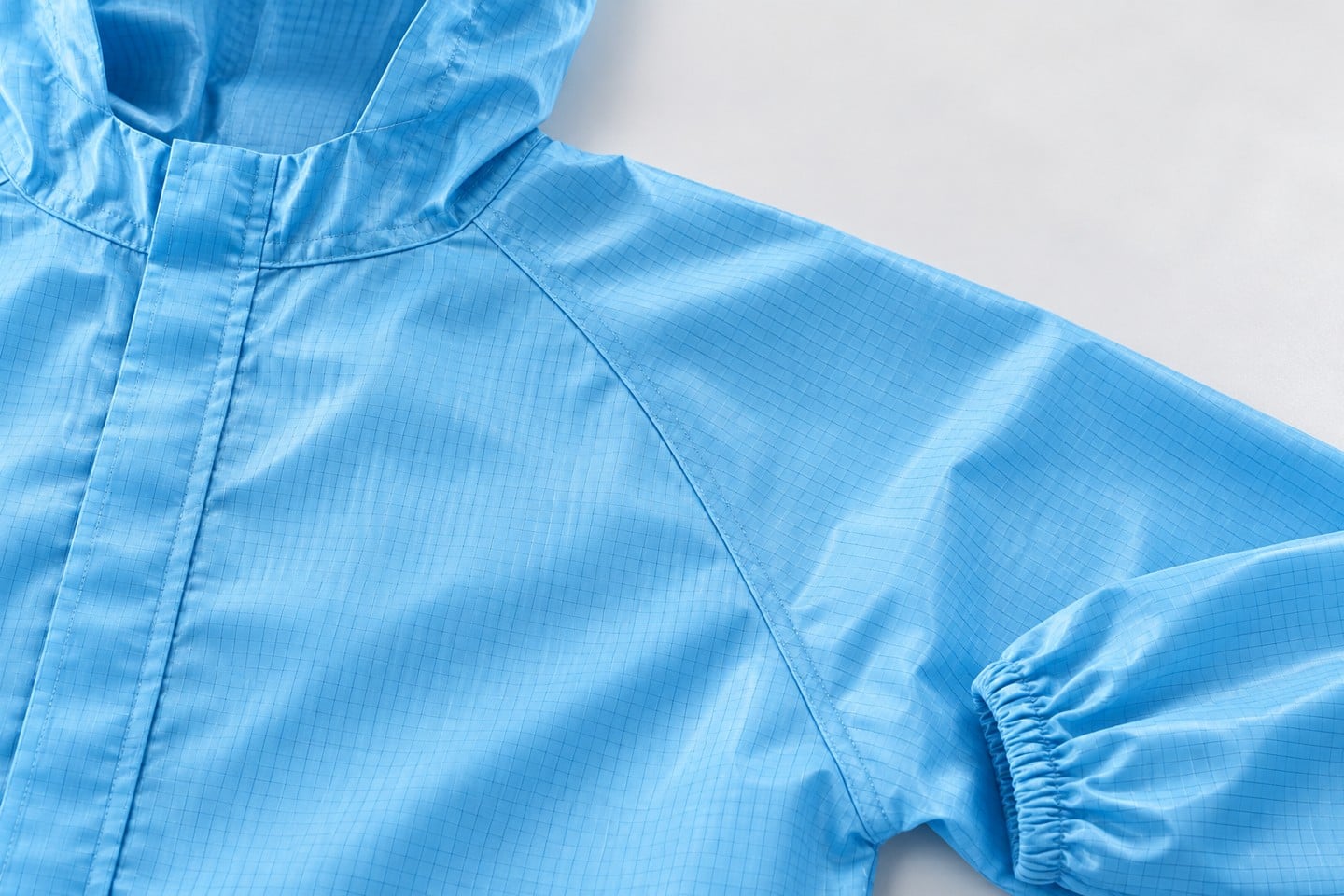
Request a drawing, construction description, or clear photographs that identify the panels and features relevant to the required evaluation. Include sleeve-to-body seams, shoulder construction, cuffs, front closure, trousers, and any intended connection features where applicable. Avoid adding an assumed electrical function to a visible zipper or fastener.
Match those records to the samples sent for evaluation. Record model, size, lot, revision, supplied condition, and any permitted preparation. If the laboratory must select representative features, agree the selection with the responsible owner and record the scope. A photograph annotated only with passed is much less useful than a report showing what was measured and why.
Commission the actual method instead of improvising
A convenient pair of multimeter probes placed across a seam does not necessarily implement an applicable garment test. Contact arrangement, specimen preparation, conditioning, equipment, and procedure influence what a result represents. Ask the laboratory to state the method and revision, the relevant setup, and any deviations clearly.
Do not publish a resistance limit copied from another property, a generic material chart, or a different garment category. Acceptance belongs to the applicable requirements and the site’s approved program. The test report requirements guide explains the identity, conditions, results, and decision information needed to review technical evidence consistently.
Where results are reported by location, retain a drawing or photograph that connects each result to the evaluated feature. An unexplained sequence of readings is difficult to review after samples have been returned. The location record should describe the actual test arrangement; it should not be reconstructed later from memory or from an unrelated product photograph.
Organize the evidence before comparing results
| Elemen laporan | Required context | Potential mismatch |
|---|---|---|
| Identiti | Exact construction, model, size and revision | Fabric report applied to another assembly |
| Method | Applicable procedure and revision | Convenient probe reading called characterization |
| Preparation | New, laundered or repaired state | New-supply result extended to all service histories |
| Scope | Relevant panels and features evaluated | Unexamined seam assumed acceptable |
| Acceptance | Approved decision and limitations | Lowest reading treated as universal approval |
Use this table to expose missing information before comparing suppliers. Two reports may contain numbers with the same unit while representing different specimens or measurement arrangements. Such reports cannot be ranked as though the smallest number automatically identifies the best garment.
Separate an overall acceptance statement from the underlying observations. A laboratory may report only the measurements requested; the purchasing organization still needs to determine whether that scope supports the intended release. If the report omits a relevant feature or does not identify the construction, request clarification rather than treating the omission as evidence that no problem exists.
Include the relevant supplied and serviced states
Decide which states the qualification must cover. New supply, permitted laundering, normal wear, and repaired garments are different populations. A baseline report for new fabric cannot establish all later states. Describe the preparation applied to each sample so the report can be connected to the actual issue condition.
The garment laundering qualification guide addresses process changes introduced by washing and drying. Keep that process review separate from seam construction, but connect their records when the garment is released after servicing. If a supplier proposes an extended wash life, request the supporting scope and do not replace missing evidence with a generic reusable claim.
Investigate an inconsistent observation
First verify identity, setup, conditioning, and the laboratory procedure. Then review construction features relevant to the observation, including seam damage, altered panels, closures, cuffs, or unauthorized repairs. A result that varies between specimens may indicate several possible causes; the number alone does not identify one of them.
Retain the original result and document any justified repeat evaluation. Record what changed and who authorized it. Repeatedly moving contacts or changing conditions until a favorable reading appears produces an unreliable record. Where the method or acceptance interpretation is uncertain, stop the release decision and obtain competent clarification while keeping other accepted garment lots separate.
Do not confuse electrical continuity with cleanliness
A seam may satisfy the applicable electrical evaluation while still presenting an unacceptable cleanliness or physical condition for a particular work area. Loose threads, damage, residues, or an unsuitable construction may need separate review. Conversely, a clean appearance cannot establish electrical suitability.
Ask the process owner which cleanliness and physical checks are required and how they are assessed. This guide does not define a cleanroom class, particle limit, or product capability. A garment should be approved only for the scope supported by its evidence. Keep the electrical, cleanliness, fit, and serviceability decisions visible so that one favorable result does not conceal another unresolved requirement.
Control revisions and repair routes
Define changes that trigger a construction review: a different fabric, conductive yarn arrangement, panel pattern, seam process, cuff, closure, connection feature, or repair technique. Supplier change notification should identify the affected product and revision, not merely state that quality remains unchanged.
An apparently minor alteration can change the evaluated garment. A local repair shop should not decide independently that an ordinary patch or seam reinforcement is equivalent to the approved construction. Keep rejected, awaiting-review, and accepted garments distinguishable. The approval owner should define the evidence needed before a modified item returns to service.
Give production an observable condition check
Routine operators do not need to reproduce laboratory characterization during every shift. They do need a clear way to identify the accepted garment, wear it as intended, notice relevant damage, and follow the rejection route. Define visible conditions they can check without asking them to infer resistance from appearance.
The EOS/ESD Association training and auditing guidance supports checking that the approved procedure is understood and followed. An audit can compare issued garments, construction records, servicing history, and rejection practice. The purpose is to find a meaningful mismatch early, rather than collect signatures while unapproved variants circulate.
Educational background and release package
The following introductory EOS/ESD Association lecture explains electrostatic-discharge principles and the reason for coordinated controls. It does not demonstrate the garment test, approve electrode placement, or certify the pictured suit. Use the current applicable method and the laboratory report for the actual construction decision.
A complete release package connects the garment identity, intended role, construction record, test method, evaluated states, results, acceptance authority, limitations, and change controls. Procurement can then repeat an order against an identified construction, and production can recognize what was actually approved. Where a seam-related requirement remains unresolved, describe that specific limitation instead of extending a fabric report beyond its scope.
Soalan Lazim
Does fabric evidence qualify every seam?
No. Review the actual finished construction and the scope of the evaluation.
Can ordinary meter probes define the garment test?
No. Use the applicable method, preparation, equipment and contact arrangement.
Is there one resistance limit for every garment?
Use the applicable requirements and approved garment role; this guide supplies no universal limit.
Does electrical acceptance prove cleanroom suitability?
No. Cleanliness, physical condition and fit require their own applicable evidence.
What changes need review?
Review relevant changes to fabric, panels, seams, cuffs, closures, connections and repairs.

Tinggalkan Balasan