- Turbo
- Blog
SMT stencil wiper roll winding direction verification starts with the approved printer instructions and a clearly defined view of the supplied roll. Confirm which core end faces the operator, where the free web leaves the supply roll, and how the web follows the specified cleaning path. Words such as clockwise, reverse or face-out are ambiguous without that reference. Do not determine loading direction from a generic product photograph, force a roll into place, or change the machine settings to accommodate an unidentified consumable. Record the accepted orientation for the exact printer configuration and roll item.
Separate winding direction from general roll selection
A roll can have the expected overall size while still being presented incorrectly for a particular cleaning unit. Equally, a correctly oriented roll can have the wrong core, web width or material. Keep these checks separate so a successful loading demonstration does not silently approve every other characteristic. Record the actual printer, cleaning unit revision where relevant, supplied roll identity and the existing approved reference before comparing an alternative.
The panduan pemilihan kain lap stencil covers the wider purchasing specification. This article addresses the narrower problem of communicating and confirming orientation. It does not supply a universal threading diagram. The printer manufacturer’s current instructions remain the authority for the machine path, safe access, operating modes and permitted verification steps. Obtain those instructions when they are absent rather than filling the gap with a familiar-looking diagram from another printer.
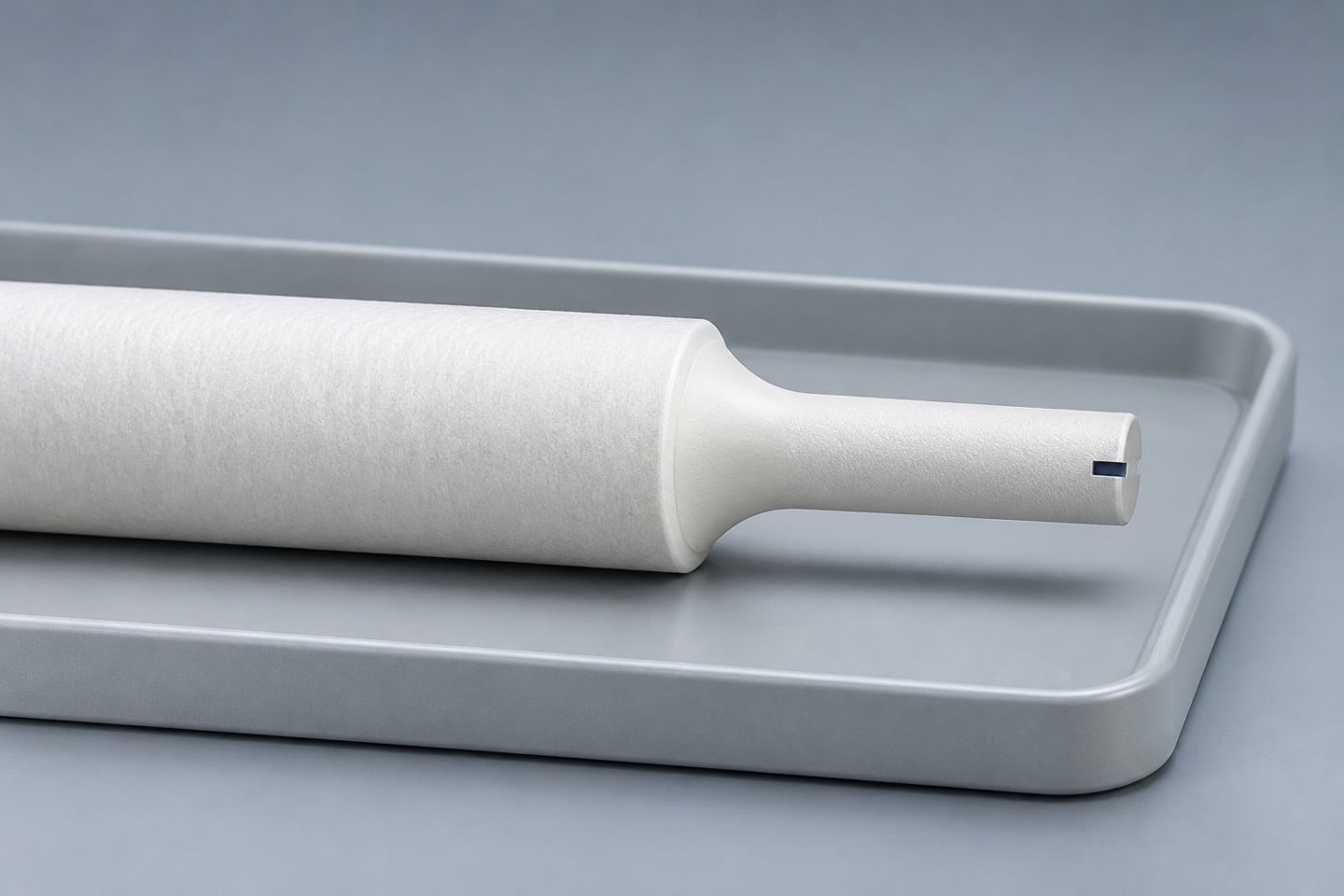
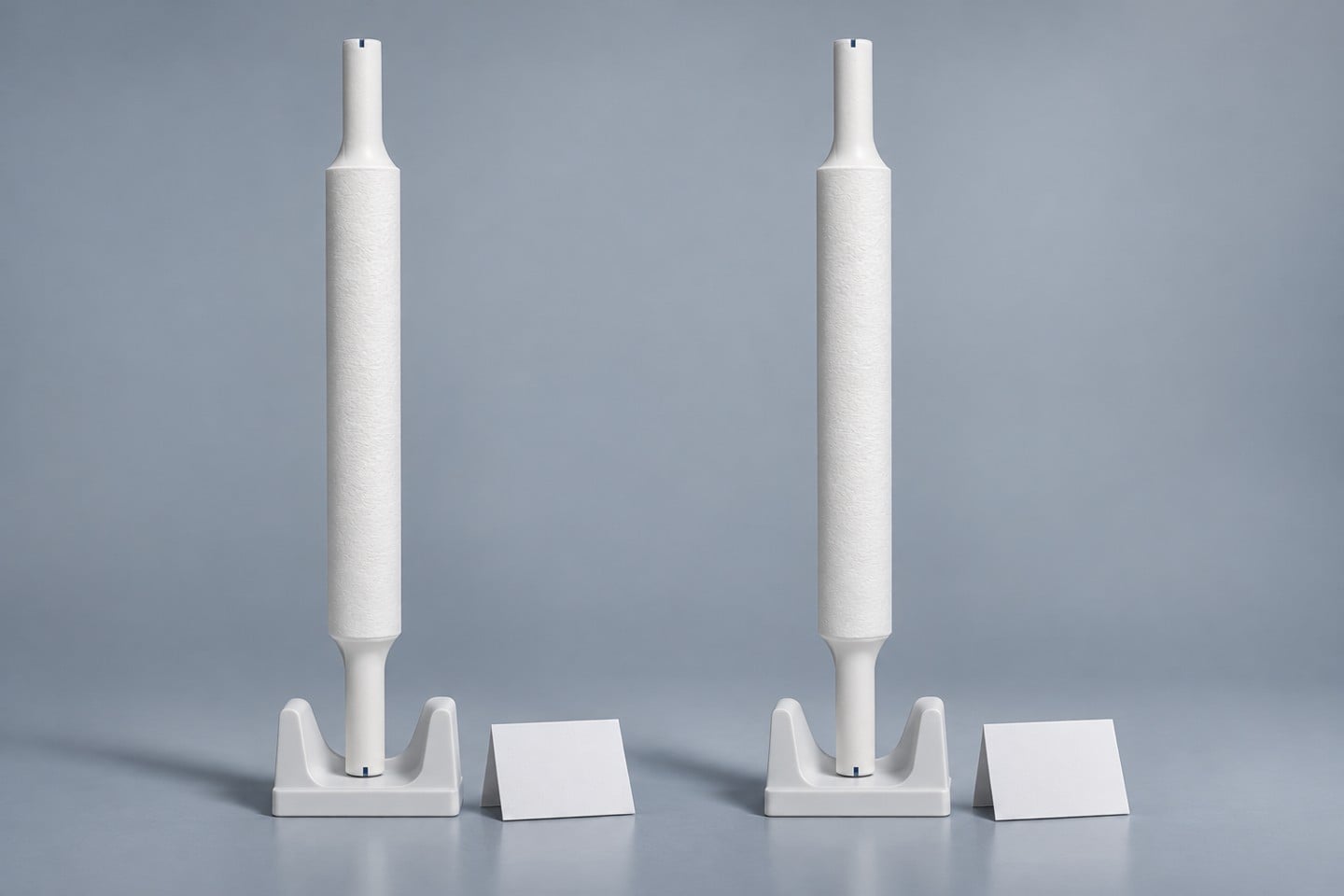
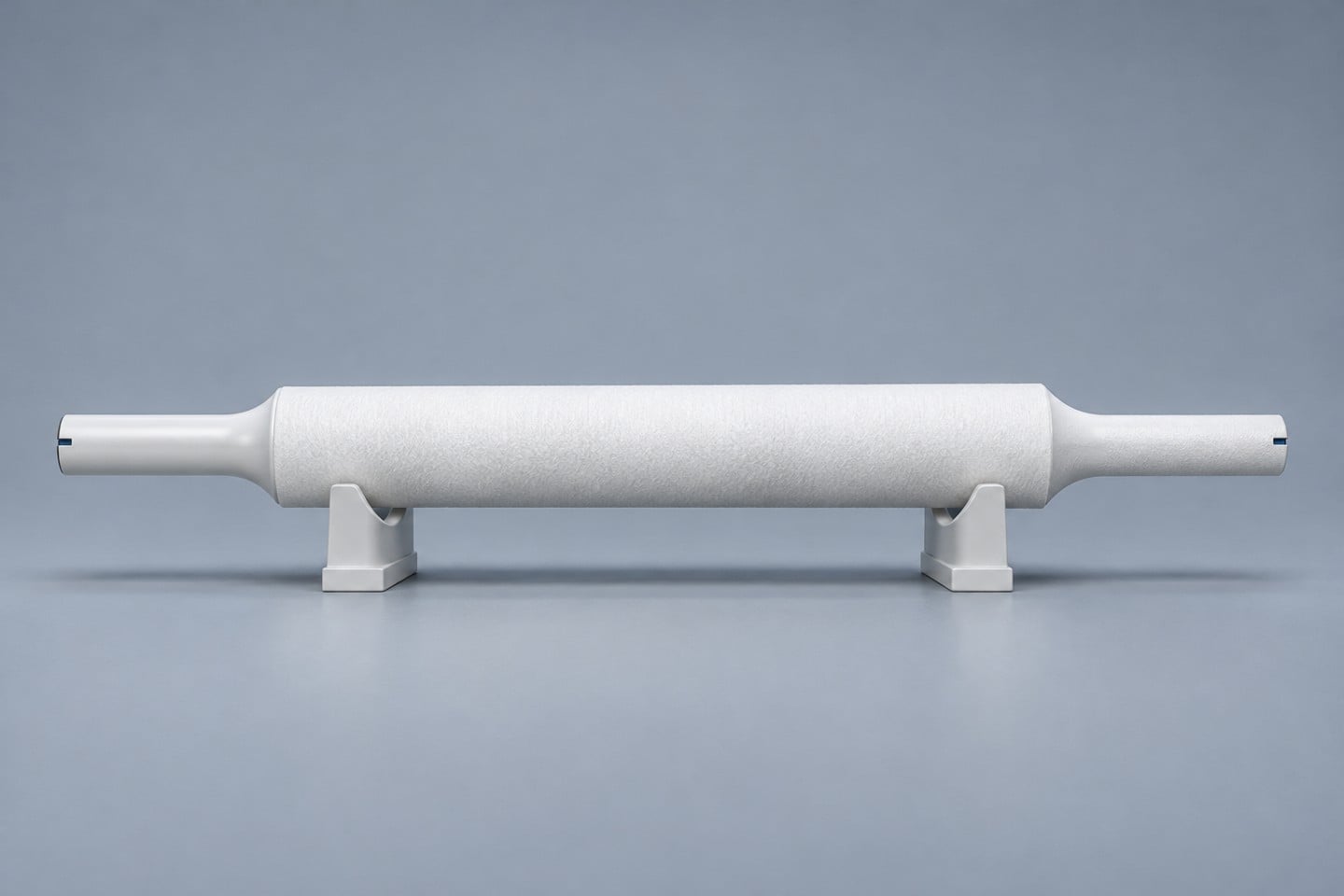
The SWESD stencil wiper product is a relevant starting point for an inquiry about the supplied roll. Its photograph shows a white wiping roll with projecting core ends. It does not prove a particular winding direction, active face, machine compatibility or end-slot dimension. Ask for the identified configuration and a drawing or photograph that answers the orientation question for the quoted item.
Define the viewing direction before using directional words
Clockwise changes meaning when a person moves to the opposite end of a roll. A sketch that omits the viewing end can therefore communicate the opposite arrangement to the one intended. Define a named end or a distinctive verified core feature, then state the viewing position. Where the ends are visually identical, add an approved external reference in the record rather than assuming that everyone will choose the same side.
Also distinguish roll rotation from the path of the free web. The record should show where the web leaves the supply roll relative to the defined view and which way it travels into the cleaning mechanism. A statement that the roll rotates one way is not enough if it omits how it is mounted. Use a simple supplier-approved sketch or an actual verified setup photograph, with the reference end made unambiguous.
Avoid marking the cleaning surface to make the diagram easier to explain. Ink, labels and tape can introduce materials into the web path. Use the approved documentation or packaging identification route instead. If a temporary reference is needed during an engineering check, the responsible owner should define a method that does not contaminate or damage the consumable or become part of an uncontrolled production setup.
Obtain the actual loading requirements
Ask the machine owner for the applicable manual section, approved setup record and any local instruction that affects access or loading. Identify the supply position, take-up arrangement, permitted core engagement and the instructed web route. Do not infer these from the front view of a printer or from a supplier’s list of compatible brands. Different configurations can exist within a brand or model family.
Follow the prescribed safe state before opening the cleaning area or manipulating the roll. This article does not authorize reaching into moving equipment, bypassing guards, defeating interlocks or running a cleaning cycle with access open. If an observation requires a special service mode, it belongs under the manufacturer’s instructions and the site’s authorization. A consumable trial should not turn into an improvised machine-safety experiment.
For a general regulatory reference, OSHA hazardous-energy overview explains why hazardous energy must be controlled during applicable servicing and maintenance. Applicability and exceptions depend on the actual task. The responsible site owner must determine the required procedure. The existence of a routine roll change does not itself establish which safety provision applies to every printer or every loading action.
Compare the supplied roll before installation
Check the sample identity against the requested drawing and the approved item. Compare the relevant core ends, engagement features, web position and specified direction using the same reference view. Keep packaging labels and sample records associated with the physical roll. If the orientation cannot be determined without unwrapping a substantial length, ask the supplier for a clearer definition rather than creating unnecessary handling and uncertainty.
Inspect for obvious damage separately from orientation. A deformed end, displaced winding or compromised enclosure may require a hold even when the direction appears correct. Do not cut, reshape or force an engagement feature to make a sample usable. A modified roll is no longer an uncomplicated comparison with the supplied configuration and may obscure the reason the original sample failed to seat correctly.
Where the supplier distinguishes two web faces, request the definition and the applicable evidence. Where the supplier does not make that distinction, do not invent an active side based on apparent texture in a photograph. Material construction and winding presentation are related purchasing questions but different claims. Record unresolved face information explicitly if it is necessary for the intended process approval.
| Semak | Rekod | Jangan anggap |
|---|---|---|
| Reference view | Named core end and observer position | Clockwise means the same from both ends |
| Web presentation | Exit position and approved path reference | Product photograph proves winding direction |
| Core identity | Supplied drawing and engagement features | Similar appearance proves fit |
| Sedang dimuatkan | Actual printer configuration and instruction | Brand name defines every cleaning unit |
| Pengesahan | Authorized sequence and observed advance | One check proves all process performance |
| Pembebasan | Item, setup reference and review scope | A different variant is automatically interchangeable |
Verify the path without redesigning the process
Install only through the approved instructions and authorized personnel. Confirm that the core seats as intended and that the web follows the documented path. Check the permitted engagement and clearance observations before any operation. If the roll cannot be installed without unexpected tension, an altered path or extra attachments, stop and return to the comparison. Making an alternative physically turn does not establish that it is correct.
Use only the manufacturer-permitted verification sequence to assess advance and collection of used material. Record the conditions and the observation rather than making a broad claim that the roll works on the printer. A short check may establish that one sample advances in one defined setup; it does not prove full-length reliability, compatibility with every cleaning agent or acceptable printing performance across all products.
If an issue occurs, record where the web deviates, slips, wrinkles or fails to advance, using observations that can be safely obtained. Distinguish supply orientation, threading, core engagement, damaged material and machine condition as possible questions for review. Do not repeatedly change several variables until the symptom disappears and then declare winding direction to have been the cause. Preserve the evidence needed to explain the decision.
Keep cleaning performance as a separate approval
Correct presentation is necessary for an intended loading arrangement, but it does not establish cleaning effectiveness. The approved web, cleaning sequence, liquid where used, stencil and printing process interact. A new winding configuration should not become an excuse to change cleaning frequency, liquid application or other process settings without their own assessment. Keep the original approved baseline visible while reviewing the consumable change.
The ESD wipes and cleanroom wipes comparison for stencil cleaning discusses related material distinctions. It does not authorize substituting a flat wipe for a printer roll or replacing an identified machine consumable with any low-lint material. Physical form and machine requirements still need to be confirmed. Use the comparison to frame material questions, then return to the actual specified configuration.
For methods relevant to wiping materials, consult the IEST recommended-practice overview. Its scope is broader than this orientation check. It does not certify the illustrated roll or provide a printer-specific feed diagram. Similarly, wipe absorbency testing addresses a material characteristic; a favorable absorbency observation cannot resolve an uncertain core orientation or loading path.
Make the accepted orientation repeatable
The release record should connect a supplied roll item to the named printer configuration, the reference view and the approved path document. Include the sample or lot reference, the comparison performed, the authorized verification and its outcome. Retain any supplier clarification. A later buyer should be able to tell what was accepted without asking the original trial operator to remember which end faced the door.
Give stores and production a practical identification route. If two otherwise similar variants exist, keep their supplied identity visible and prevent loose unmarked rolls from being mixed. An internal code can help, but it must link back to the approved configuration. Avoid names that depend solely on clockwise or reverse unless the controlled definition of those words is readily available to the people selecting the item.
A hypothetical mismatch illustrates the problem: purchasing orders a reverse-wound roll, the supplier defines reverse from one end, and the operator interprets it from the other. Both may believe they followed the instruction. Resolve the reference-view definition and compare the actual sample before assigning fault. The example explains a communication risk, not an observed defect or a claim that the SWESD reference has either particular winding direction.
Ask suppliers for an unambiguous quotation
Provide the printer configuration and the existing approved item reference. Request the core and web drawing, the named viewing end, the web exit presentation and any face distinction that the supplier actually specifies. Confirm whether the quoted dimensions and orientation describe the exact item being sampled. Ask how that configuration appears on packaging and how changes will be communicated before a repeat order is dispatched.
Do not accept a machine-brand list as a substitute for these details. Conversely, avoid requesting unneeded testing simply to make an orientation check look more extensive. The most useful evidence answers the precise open questions: what is supplied, how it is identified, whether it matches the approved loading arrangement, and what separate process qualification remains. Clear boundaries help both the buyer and supplier avoid an unsupported universal-compatibility promise.
The educational video below introduces electrostatic risk relevant to electronics production. It is background training only, not an SMT loading demonstration, machinery instruction or validation of the pictured roll. Use the actual printer documentation for the procedure described here. Keep the final acceptance tied to the verified configuration so the next roll change repeats a known arrangement rather than reopening the same directional ambiguity.
Soalan Lazim
Adakah arah jam merupakan spesifikasi penggulungan lengkap?
No. Define the viewing end, mounting reference and web exit presentation.
Bolehkah gambar produk menentukan keserasian pencetak?
No. Confirm the exact supplied configuration against the actual printer requirements.
Perlukah teras diubah suai jika ia tidak akan duduk?
Do not force or reshape it; stop and resolve the mismatch through the approved review.
Adakah kejayaan dalam kemajuan membuktikan keberkesanan pembersihan?
No. Feed verification and cleaning-process qualification answer different questions.
Adakah ilustrasi menunjukkan arah lilitan yang diluluskan?
No. It shows the referenced product geometry only; use the confirmed drawing and machine instructions for orientation.
Tinggalkan Balasan