- ターボ
- ブログ
SMT reel tray line clearance is the controlled separation of the previous work order’s materials from the next setup. Before a tray is reassigned, identify its contents, preserve each reel’s material and exposure records, move returns through the approved route, inspect the empty carrier and record who accepted it for the new job. An empty-looking tray is not proof that the line is cleared. This guide focuses on the reusable storage carrier and its immediate handoff. Machine setup verification, program release and first-article acceptance remain separate steps in the production procedure.
Set the boundary of the tray clearance check
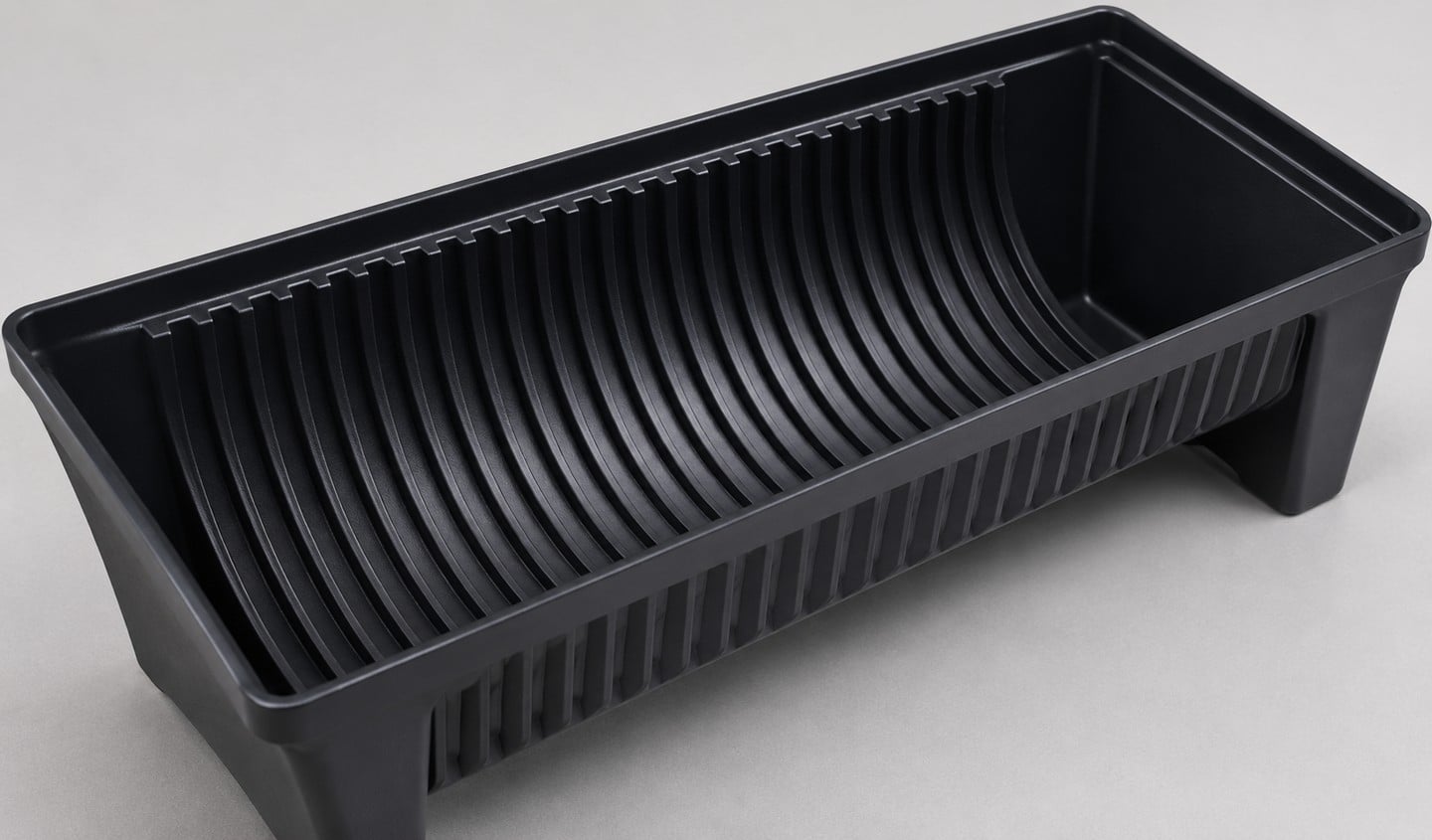
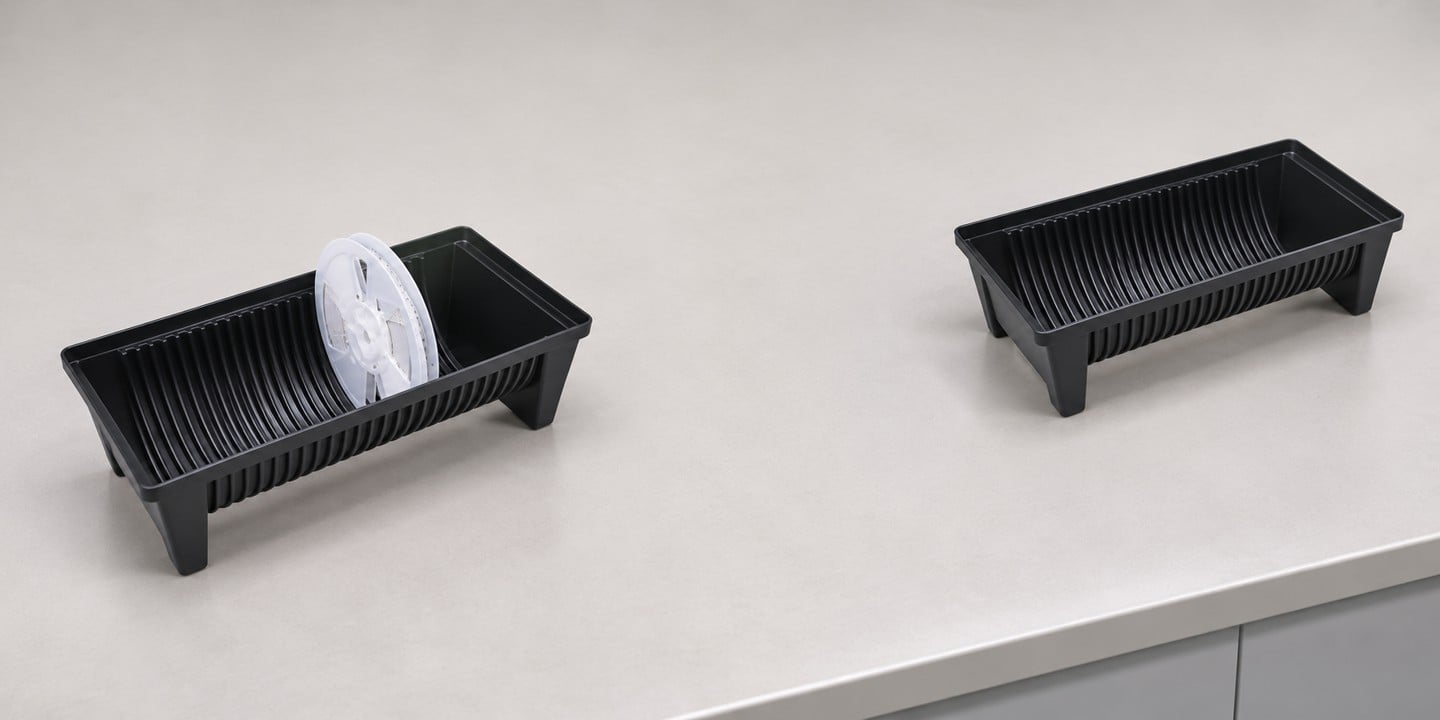
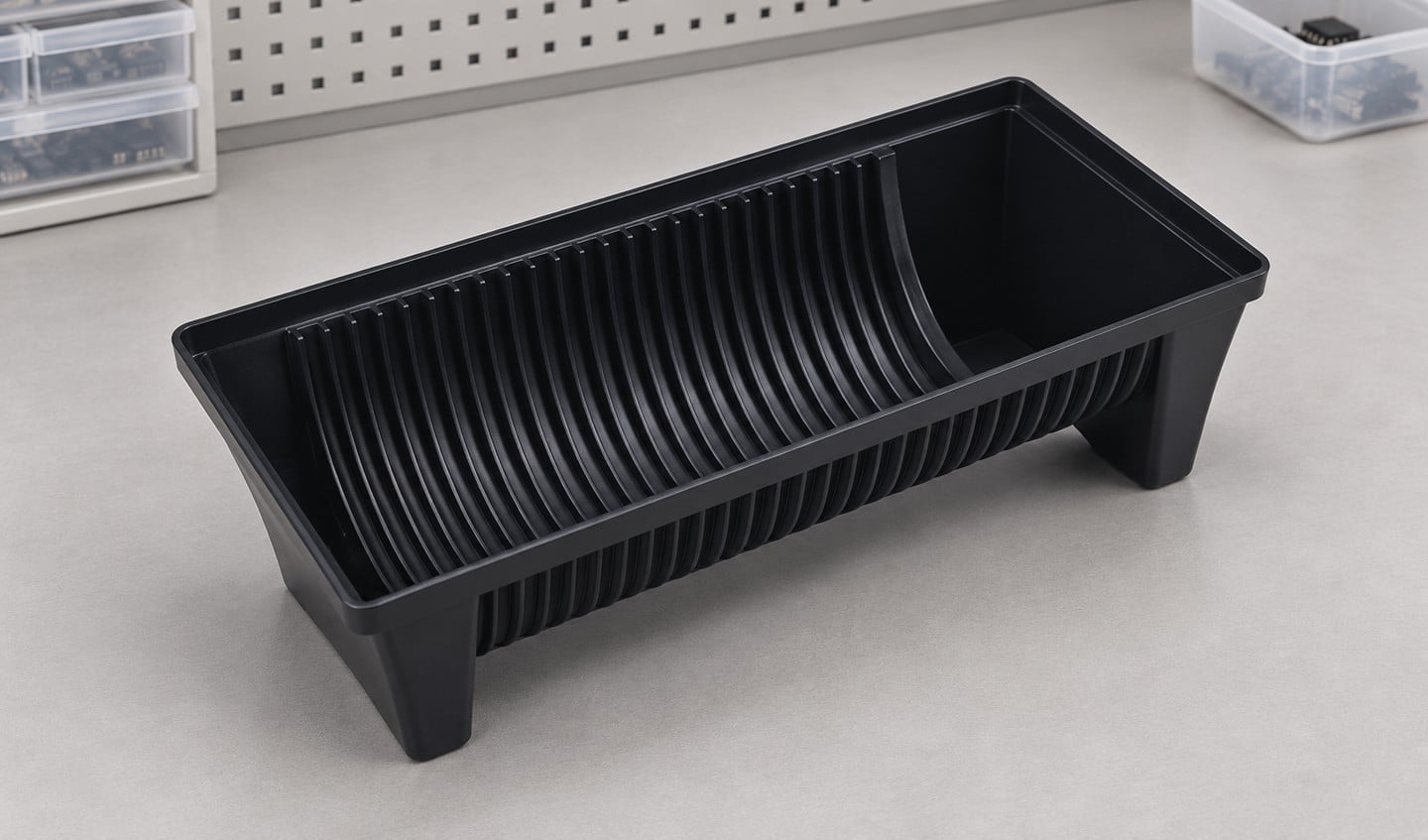
その SWESD SMTリール収納トレイ is a physical carrier for organizing reels. Its molded slots do not identify a component, verify a bill of materials or record floor-life exposure automatically. If a site uses scanning or electronic tracking, those functions belong to the surrounding system and approved work instruction. Do not assume they are built into the tray merely because it appears in a traceability workflow.
Define which carrier locations are included: the machine-side bench, a staging trolley, an off-line preparation area and any temporary return point. Reels often move outside the immediate operator position during a change. A clearance instruction that checks only the tray nearest the placement machine may miss a partial reel waiting behind another container. Map the real movement and name the points that must be reviewed before the next work order is introduced.
Freeze the old order identity before moving reels
Start with the work order, relevant setup revision and the identities of materials still present. Record actual stock status rather than assuming every reel in the tray belongs to the same job. A reel may have been staged for a later operation, substituted under approval or temporarily held after a discrepancy. Resolve that status through the authorized record before combining it with routine returns or new-order stock.
Do not remove or cover a component label while trying to make the tray look clear. The SMT reel label visibility guide explains why carrier position should preserve access to identification. During clearance, keep the reel identity attached to the material, and use the carrier label to describe the carrier or current handling status. A job label on the tray cannot replace an individual reel’s material record.
Separate disposition from physical removal
A reel leaving the line may return to released stock, go to a controlled hold or require another approved action. Moving it off the bench does not decide that disposition. Use the reel return and quarantine workflow to preserve the decision and its owner. Clearance should show that the material has entered the right route, rather than merely disappearing from the operator’s immediate view.
Keep unknown loose components separate from identified reel stock. Do not place them into an available pocket or attach them to a reel based on appearance. Record the finding and follow the site’s material-control process. Likewise, a partial reel with an unreadable identifier should not be relabeled from a neighboring reel. The right immediate action is to protect the uncertain material and escalate the identity question, while continuing unrelated authorized clearance work.
Use a carrier-level clearance record
The following table gives a suggested handoff structure for the tray. It is an operational aid, not a claim that a specific standard requires this exact form. Connect it with the actual production record so the site can reconstruct which carrier and materials were involved without creating duplicate documents that disagree about status or responsibility.
| Clearance field | What to verify | Keep separate from |
|---|---|---|
| Old work order | Actual job and material identities | Next-order setup approval |
| Material disposition | Authorized return, hold or retained shared scope | Physical removal alone |
| Component records | Reel identity and applicable handling history | Tray identity |
| Empty carrier | Slots, corners, residue and condition | Full-line clearance |
| Handoff acceptance | Named owner, exceptions and permitted next action | First-article release |
その IPC-hosted paper on SMT material control discusses material identification and setup verification within manufacturing logistics. It describes an implementation context, not universal performance results for a storage tray. The practical lesson here is to connect a physical movement with the information needed by the next operation. The tray check should support that connection without pretending to replace the production system.
Preserve component handling conditions during the change
A changeover does not suspend the component manufacturer’s handling instructions. Retain applicable moisture-sensitive, electrostatic and packaging records when reels move from the line to a temporary carrier or return area. The Honeywell surface-mount sensor handling note cURL Too many subrequests by single Worker invocation. To configure this limit, refer to https://developers.cloudflare.com/workers/wrangler/configuration/#limits.
cURL Too many subrequests by single Worker invocation. To configure this limit, refer to https://developers.cloudflare.com/workers/wrangler/configuration/#limits.
cURL Too many subrequests by single Worker invocation. To configure this limit, refer to https://developers.cloudflare.com/workers/wrangler/configuration/#limits
cURL Too many subrequests by single Worker invocation. To configure this limit, refer to https://developers.cloudflare.com/workers/wrangler/configuration/#limits.
cURL Too many subrequests by single Worker invocation. To configure this limit, refer to https://developers.cloudflare.com/workers/wrangler/configuration/#limits cURL Too many subrequests by single Worker invocation. To configure this limit, refer to https://developers.cloudflare.com/workers/wrangler/configuration/#limits cURL Too many subrequests by single Worker invocation. To configure this limit, refer to https://developers.cloudflare.com/workers/wrangler/configuration/#limits.
cURL Too many subrequests by single Worker invocation. To configure this limit, refer to https://developers.cloudflare.com/workers/wrangler/configuration/#limits
Some production plans intentionally retain common components between jobs. Treat that as an approved exception with identified material and setup scope, rather than as an informal shortcut. Record which reels remain, why they are permitted and how the next setup verifies them. A component that appears on two bills of materials may still have revision, approved-source or status requirements that need checking.
If shared reels remain in a carrier, do not mark that tray as physically empty. Describe the real state and the authorized retention decision. Separate it from carriers being returned for normal reuse so another operator does not assume all contents were newly kitted for the next job. Where the production procedure requires independent verification, follow that procedure; this guide does not invent a universal staffing rule or waive a site requirement.
Prevent the old-order and new-order flows from crossing
Provide distinct, identified places for outgoing returns, held materials and incoming kits. The distinction must remain visible during normal handling, including when a trolley moves or a tray is briefly placed on a bench. Avoid relying solely on left and right positions because staff may approach from different directions. Use the site’s accepted status identification and keep it connected to the actual carrier throughout the transfer.
Do not stage the next kit inside a tray that is still undergoing clearance. That creates an avoidable question about whether a loose component came from the old or new order. If space is limited, complete and accept one transfer before introducing the next material group. A short sequential handoff can be clearer than simultaneous movement that requires operators to remember several temporary exceptions. Document the chosen arrangement in the real work instruction.
Resolve discrepancies before declaring completion
When a reel is missing from the expected return, check the actual issue and movement records instead of forcing the count to match. It may still be installed, legitimately consumed, transferred elsewhere or awaiting disposition. Each explanation needs evidence appropriate to the site’s process. Do not claim reconciliation solely because the remaining quantities look plausible. Record unresolved differences and identify who must decide whether they affect restart.
If the tray itself cannot be confidently cleared, place it in the approved hold condition and use another accepted carrier where permitted. Do not allow one uncertain tray to encourage uncontrolled mixing across the whole changeover. Continue independent checks and preparation that remain authorized, while keeping the blocked item visible. The final record should distinguish completed actions, conditional acceptance and unresolved work rather than using one broad checkmark to conceal those differences.
Accept the handoff and then verify the next setup
Carrier acceptance should identify the tray, cleared scope, observations, exceptions and responsible person. The next operator should be able to tell whether it is empty and released, deliberately retaining specified shared material, or awaiting another action. Remove obsolete job information only through the approved identification method, after the old relationship has been preserved where required. Avoid leaving two active job labels on one carrier without a clear explanation.
Next-order setup verification then checks the actual material against the work order, approved setup data and relevant machine positions. It is a separate control because a perfectly cleared tray can still receive the wrong kit afterward. Likewise, a correct kit does not prove the old line was cleared. Keeping these decisions distinct makes the handoff easier to audit and helps the team identify whether an error arose during return, carrier preparation, kitting or setup.
Educational background: ESD during material movement
The ESD Association video below introduces electrostatic control principles relevant to moving sensitive components through electronics production. It does not demonstrate line clearance or certify this tray. Use it as background for why the approved ESD controls must continue throughout changeover, alongside the actual component instructions and site material-control procedure.
よくある質問
Does an empty tray prove the whole line is clear?
No. Check the defined line scope and material records as well as the carrier.
Can a tray reset component exposure history?
No. Preserve applicable component handling records through the move.
Must every shared reel be removed between jobs?
Follow the approved process; retained shared materials need explicit identity and authorization.
Does the tray automatically verify reel identity?
No. The carrier has no inherent scanning or setup verification function.
Is carrier acceptance the same as next-order setup approval?
No. Clearance, carrier release, setup verification and first-article acceptance address different decisions.

コメントを送信