- ターボ
- ブログ
ESD magazine rack load capacity should be approved for the complete loaded rack, not estimated from slot count or a metal-looking base. Define the heaviest PCB assembly, number and position of boards, rack orientation, handling route and acceptable permanent deformation. Request the supplier’s rating and test conditions, then trial the actual configuration. Check frame alignment, slot spacing, board retention and ESD performance after loading and movement. This guide helps SMT engineers and buyers specify a repeatable capacity check without inventing a universal kilogram rating for SWESD products. A rack can have many grooves yet still be limited by its base, side panels, joints or transport interface.
Calculate the proposed load correctly
Start with the mass of the finished board assembly, including mounted components, fixtures and any protective carrier that remains in the rack. Multiply by the maximum number of boards permitted in the loading pattern and add any inserts or identification hardware that is part of the payload. That total is a planning input, not an approved rack rating. If boards vary, use a documented worst-case mix rather than a simple average.
Slot count is not the same as capacity. A 50-slot rack may be used with fewer heavy assemblies, and a full rack of light bare boards may present a different stability problem. Record whether every slot may be occupied, whether gaps are required for component clearance, and whether the load is centered. The site’s anti-static magazine rack overview describes the broader line-side role; this article isolates the mechanical load decision.
Map where the weight travels
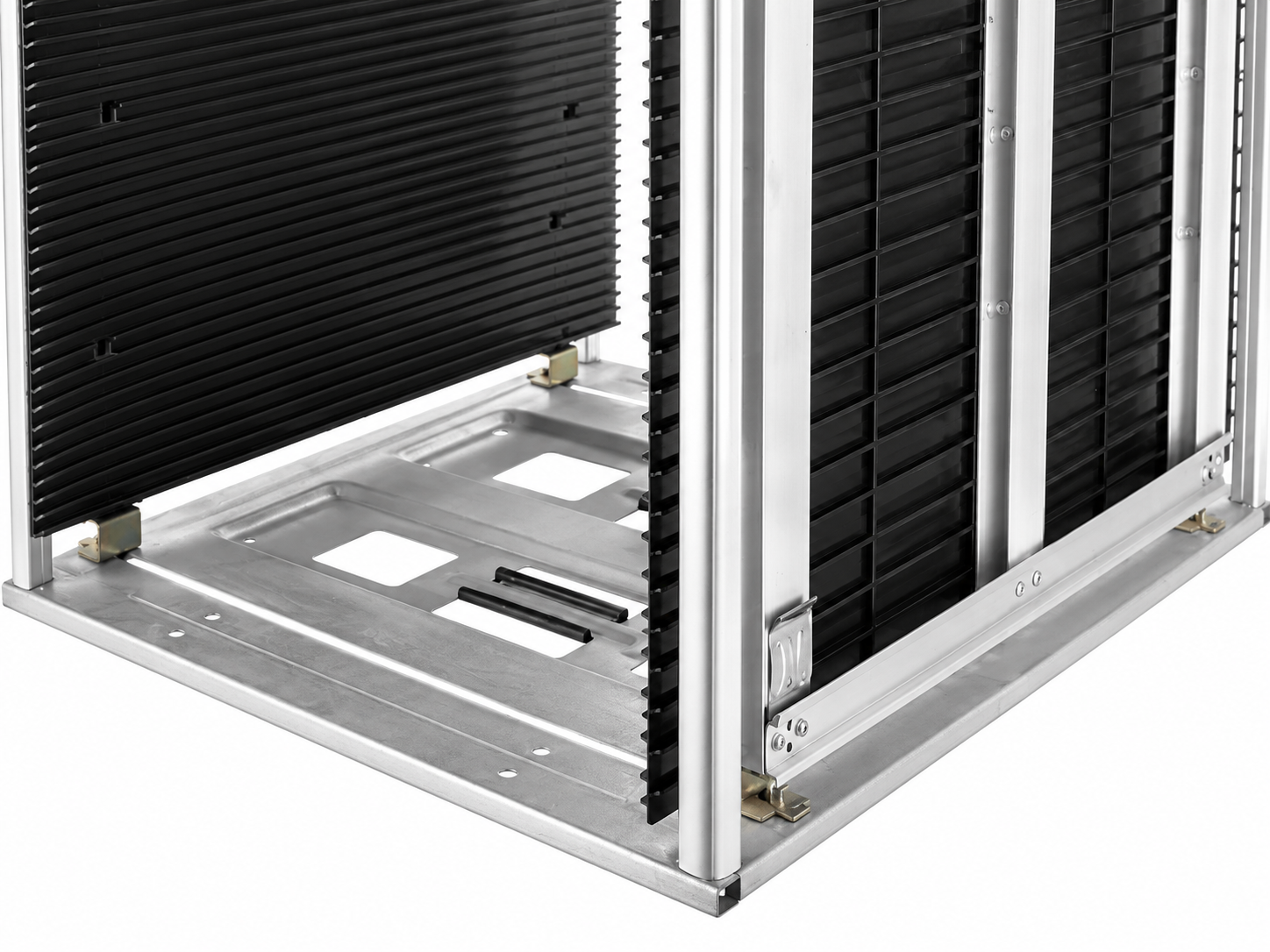
Trace the load from each board edge through the grooves, panel supports, frame joints and base to the shelf, cart or machine. A strong metal base does not make a weak slot panel acceptable. Likewise, a rigid panel may not compensate for a loose adjustment lock or damaged foot. Ask for an assembly drawing and inspection points so the test team can see which elements carry the load in the selected orientation.
Check whether the rack is pushed, lifted by hand, stacked, locked into a loader or carried on a trolley. Each state changes how forces enter the structure. OSHA’s warehousing guidance
Choose a representative test configuration
Use the approved rack revision and the intended board type. Include the maximum normal board count and the heaviest allowed board, but also a partial uneven load if that occurs in production. A full, evenly distributed rack may look stable while a partly filled one twists during transport. Test at the widest adjustment setting if it creates a less favorable support span, and at other settings needed by the product family.
Measure the rack before loading: outer width, panel separation, base level, slot alignment and any existing bow. Record the instrument and method. The NIST terminology for repeatability and reproducibility
Use a qualitative acceptance table until limits are approved
| 確認 | How to observe it | Reject or escalate when |
|---|---|---|
| Frame and base | Compare dimensions and level before and after loading | Permanent change exceeds approved limit |
| Slot alignment | Load representative thick and thin boards | Boards bind, scrape or sit unevenly |
| Adjustment lock | Repeat setup and normal movement | Setting slips or cannot be reproduced |
| Board retention | Move through the real route and stops | Board shifts toward a fall or component contact |
| Supporting equipment | Verify shelf, cart and loader interface ratings | Any supporting element is overloaded or unstable |
| ESD condition | Use the site’s approved post-trial method | Electrical performance is outside the approved plan |
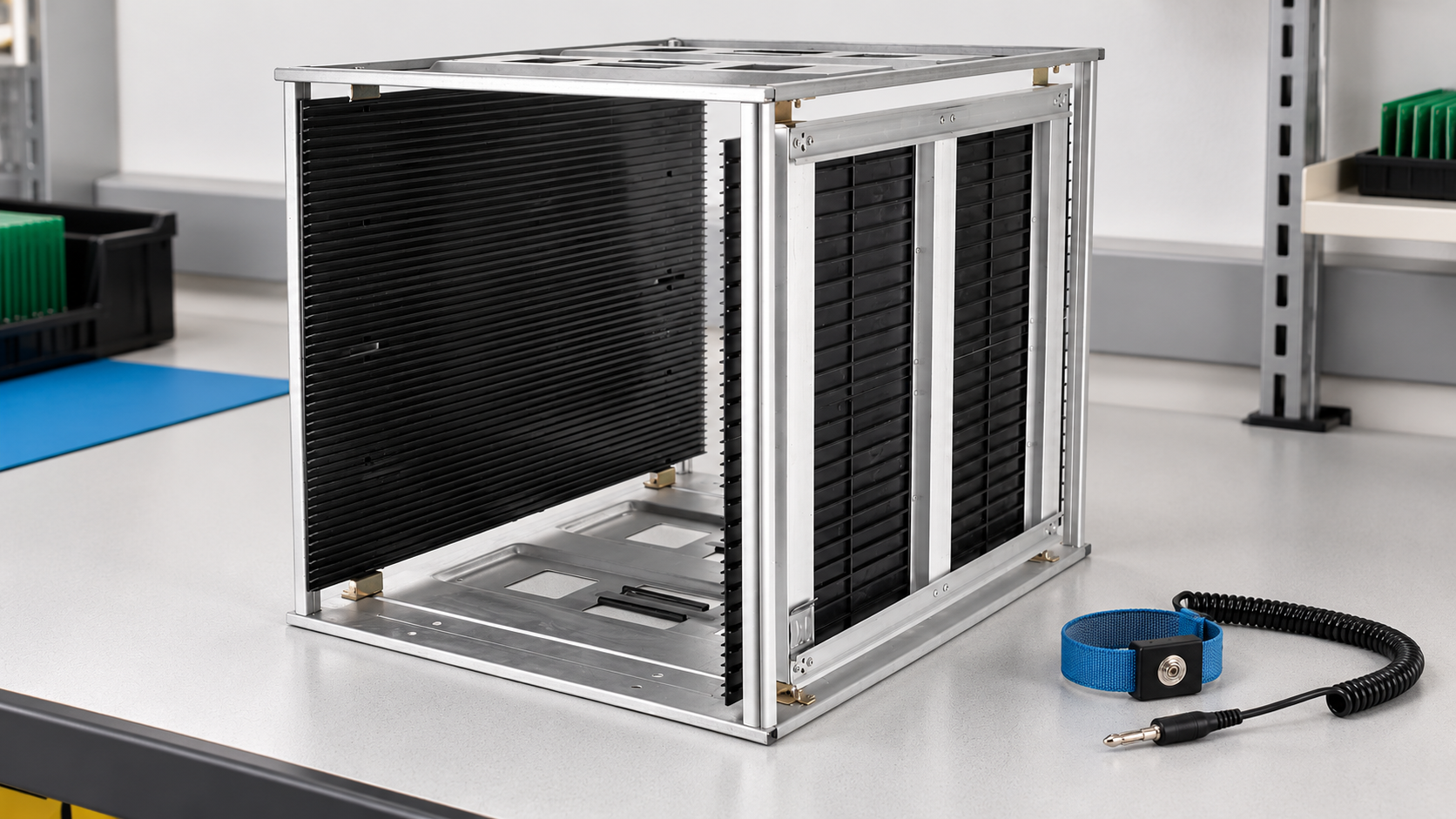
Numerical limits belong in a controlled drawing, supplier report or project test plan. Do not apply a borrowed rating from a similarly sized rack. The illustrated metal-base magazine rack
Run static and route-equivalent trials
First load the rack under controlled conditions and hold it for the period specified by engineering. Inspect for bow, cracking, fastener movement or a change in panel spacing. Then perform normal handling: lift or place it, move it on its cart, turn, stop and dock it at the receiving interface. Record where the rack is supported and who handles it. The test should reflect ordinary operations, not a theatrical overload that the process would never allow.
After unloading, repeat the dimensional and loading checks. A rack that returns visually close to its starting shape may still have a groove damaged at one position. Load a sample board into the first, middle and last occupied slots. Confirm that each enters without force and remains supported. The slot-width guide
Take measurements at fixed reference points so the before-and-after comparison is meaningful. Mark the locations on the inspection sheet rather than on a sensitive contact surface. Note whether the rack was loaded, unloaded, warm or cooled when each reading was taken. If a board assembly has a heavy transformer or heat sink near one edge, include its real center of mass in the trial instead of using a flat dummy with the same total weight. The way a load enters the grooves can matter as much as the total mass.
Differentiate strength, stiffness and stability
Strength concerns whether a part breaks or yields. Stiffness concerns how much it deflects under load. Stability concerns whether the loaded rack tips or shifts. A rack can satisfy one and fail another. The highest board may snag a loader even if the frame remains intact, or a loaded rack may be strong but unstable on a narrow cart deck. Define separate acceptance observations for each; do not summarize a trial as only “passed weight.”
Load distribution also matters. Keep heavy boards in the positions defined by the process owner. Do not advise operators to improvise a new stacking pattern when a slot is damaged. If the rack is used on a cart, check brakes, deck dimensions and route clearance under the complete loaded envelope. The storage trolley and magazine rack combination guide
Ask how the rating changes at the rack’s widest adjustment setting. Moving the side panels farther apart can change the unsupported span of a board and the leverage on the frame. Also ask whether the supplier’s rating assumes evenly distributed boards, an empty top position, or a specific machine interface. These details belong in the acceptance record so operators do not unintentionally use a valid rating under the wrong configuration.
Recheck electrical suitability after mechanical stress
The magazine is an ESD control item as well as a mechanical carrier. A bent panel, loose metal joint or replaced groove can change contact and bonding behavior. Verify the electrical requirements with the site’s approved procedure after a significant load trial, damage or repair. The EOS/ESD Association’s materials guidance
Do not claim that a strong rack is safe for unprotected transfer outside an EPA. The route may still need qualified packaging. Keep mechanical and ESD test results side by side so procurement sees both. If a supplier supplies only a load number without a test method, ask what load pattern, duration, orientation and acceptance criterion produced it.

Write the RFQ and change-control rule
State board size and mass range, maximum number of boards, component clearance, rack adjustment settings, loaded duration, route, support equipment, temperature, cleaning process, deformation limits and ESD plan requirements. Request a controlled drawing, the supplier’s rated load and test conditions, and a sample for trial. Specify who owns final approval. If a rack panel, base material or fastener changes, repeat the affected checks before accepting the new revision.
Keep an accepted reference sample and a record of the tested configuration. Routine inspection should look for cracks, bowed panels, loosened joints and irregular grooves. If a rack fails, segregate it and inspect any product it carried under the site’s quality procedure. Do not bend a frame back by hand and return it to service without an approved repair and requalification method. For recurring wear, the replacement-parts guide
For a multi-model purchase, compare the cost of a stronger rack with the cost of lower board count, more handling cycles and maintenance. The cheapest unit price may not be the least expensive line-side solution if it forces frequent repacking or jams a loader. Conversely, do not buy an oversized rack based on a hypothetical maximum load the process will never use. A clear duty cycle and accepted test configuration make those tradeoffs measurable.
Further learning: load and deflection
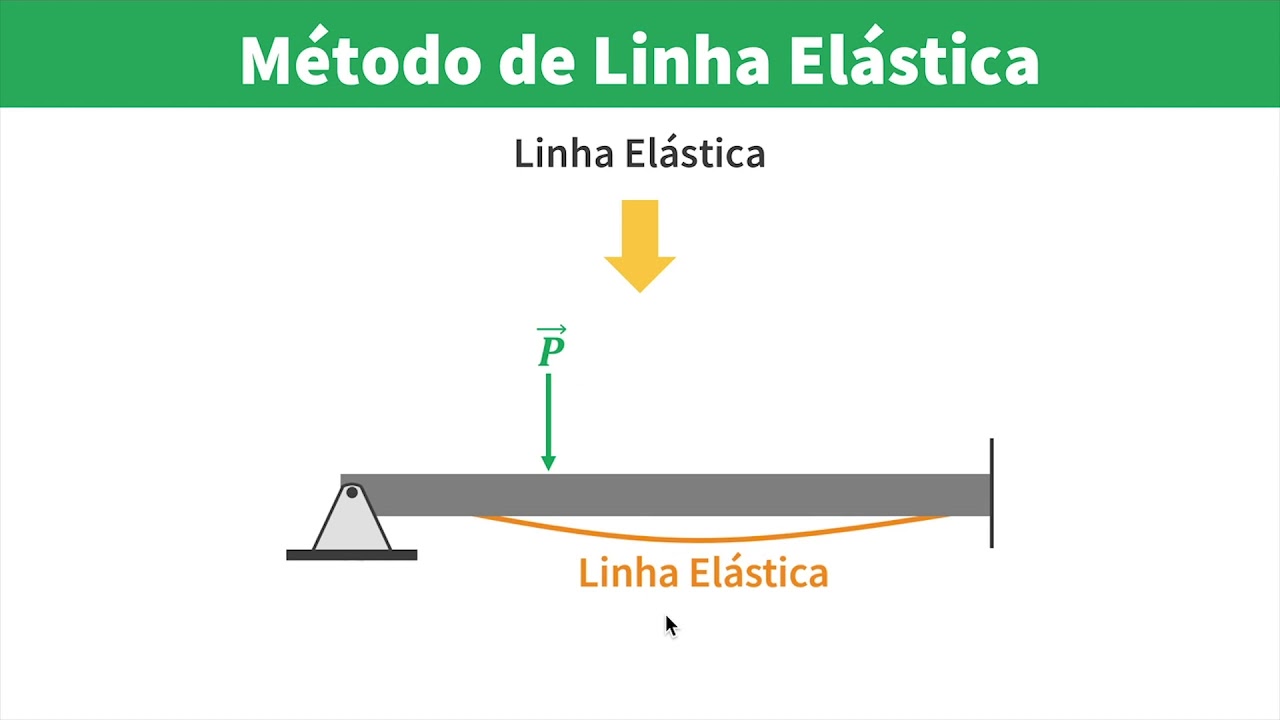
This independent strength-of-materials lesson explains why a structure can deflect under load without immediately breaking. It is background theory, not a rack rating or a substitute for the actual trial.
よくある質問
Does slot count equal rack load capacity?
No. Capacity depends on board mass, load distribution, rack design, support and the approved test conditions.
Is a metal base enough to prevent deformation?
No. Side panels, grooves, joints and adjustment locks can still change shape or alignment.
Should a trial include partial loading?
Yes, if it occurs in normal use; a partial uneven load may behave differently from a full balanced rack.
Can a rack be reused after permanent bending?
Only after the responsible owner evaluates it under an approved repair or disposition process and requalifies affected properties.
What should the supplier’s load rating include?
Ask for load pattern, orientation, duration, test method and pass criteria for the exact rack revision.


コメントを送信