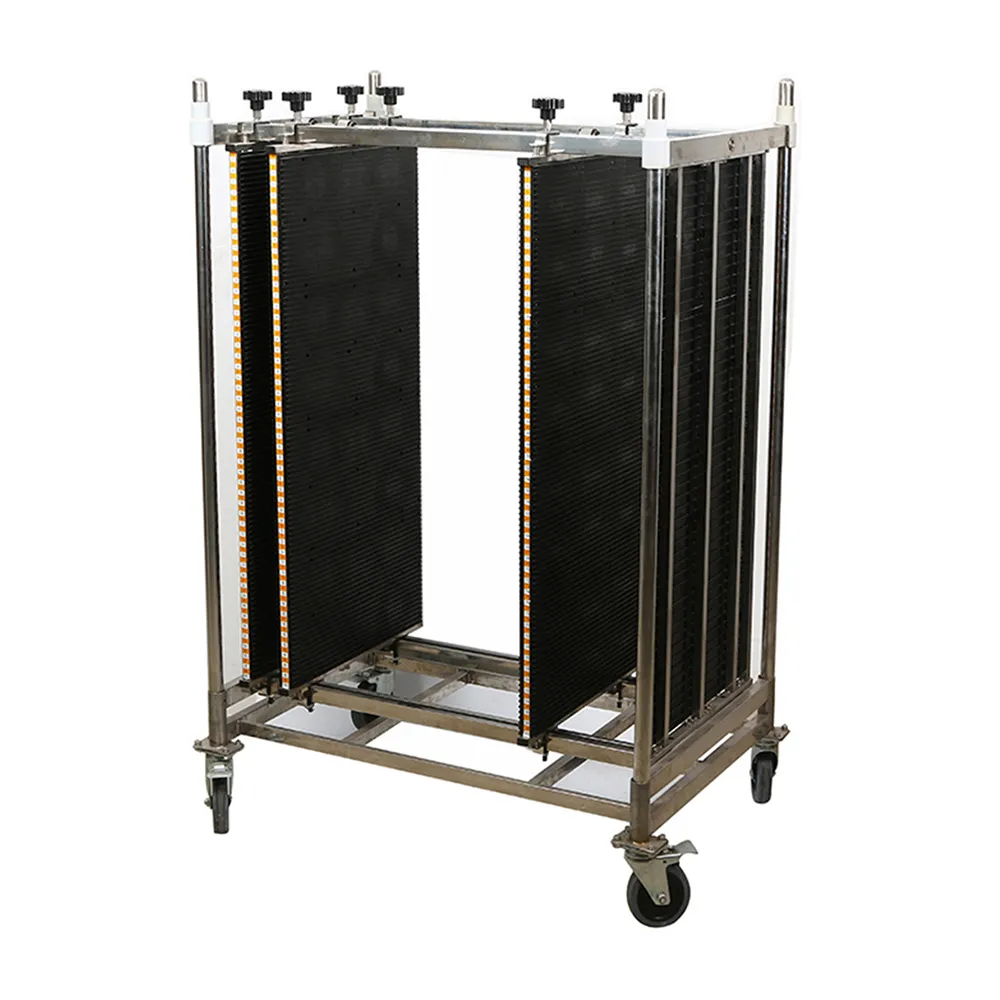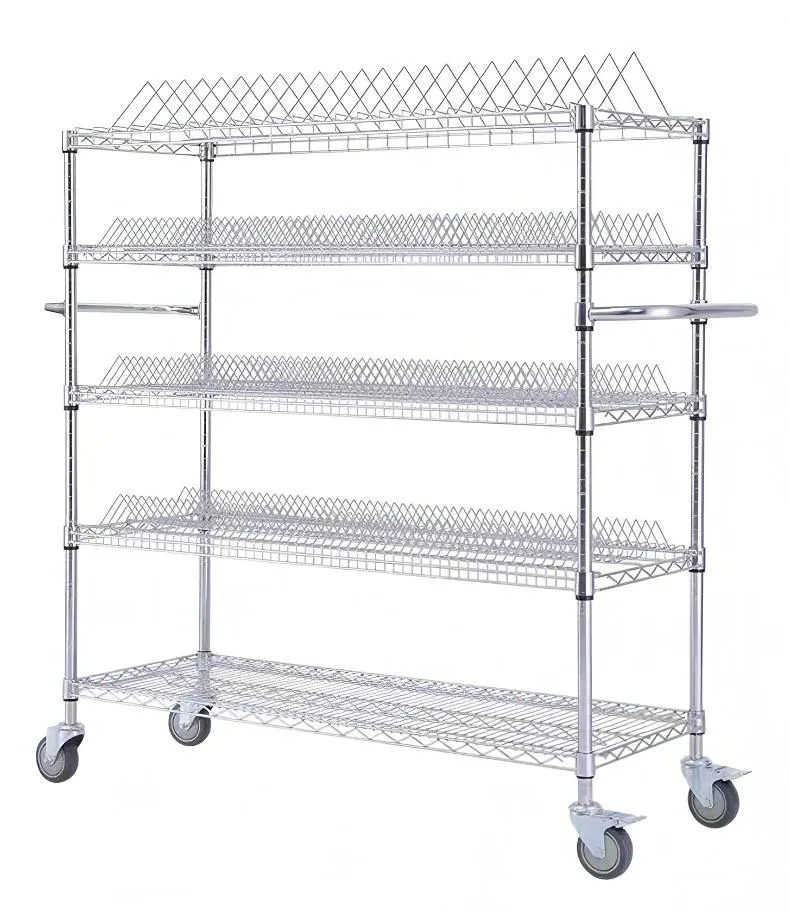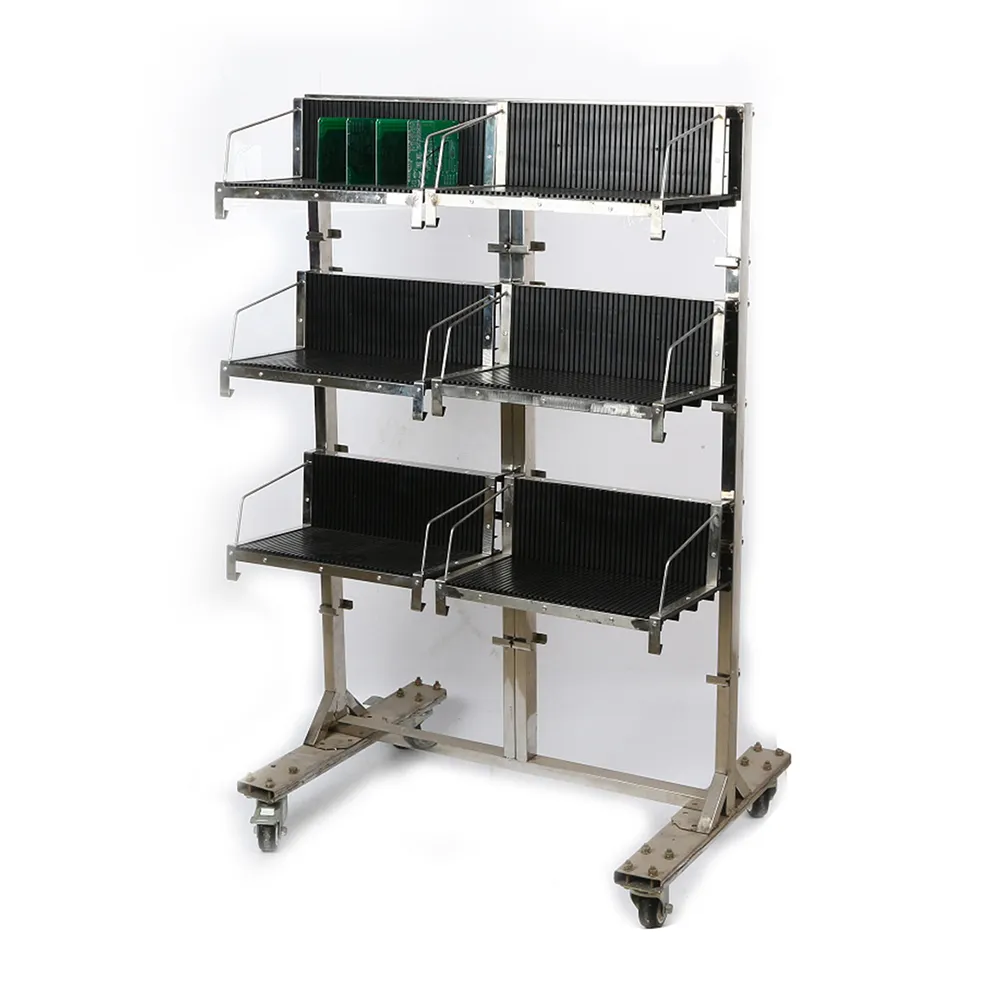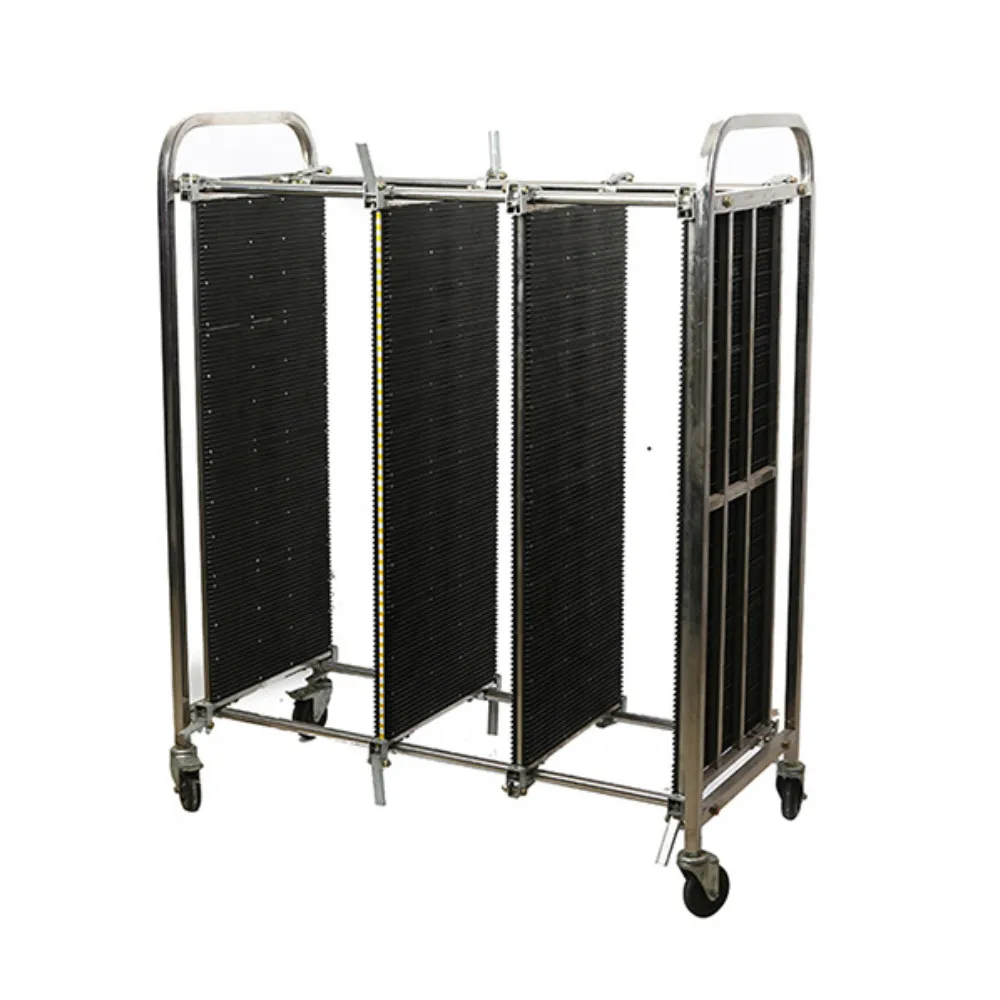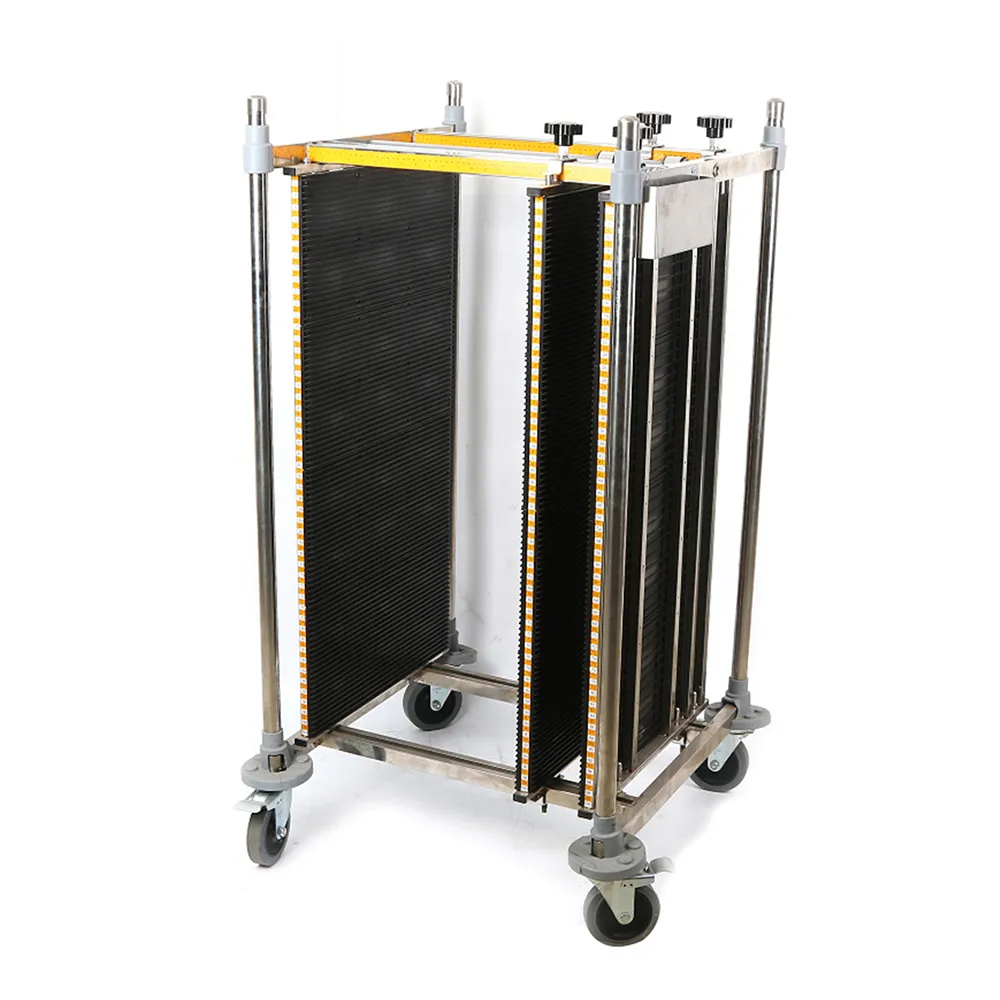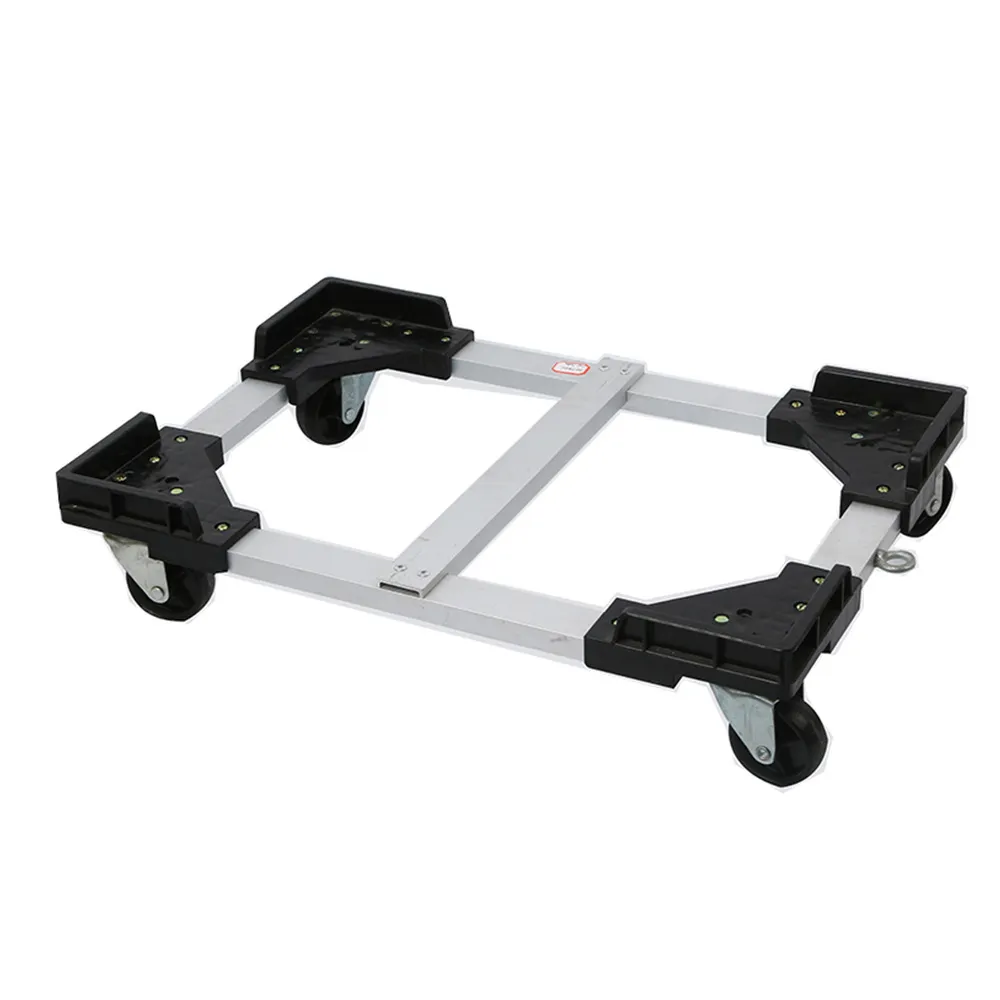
ESDカート 静音PUホイール 抗静電 ターンオーバーカート 3W-9806101
概要:
Technical advantages
Anti-static turnover carts, also known as PCB board turnover carts, transfer carts, or storage carts, are industrial equipment specifically designed to prevent the accumulation and discharge of static electricity. They are widely used in static‑sensitive working environments. By employing special materials and processes, they effectively eliminate static electricity and inhibit its re‑accumulation, ensuring safety and stability during production processes.
As a typical ESD PCB storage trolley, this cart is constructed with anti‑static materials featuring a surface resistance ranging from 10⁶ to 10⁹ ohms, which can quickly dissipate accumulated static charges and prevent damage to electronic components. A metal grounding chain installed at the bottom of the cart ensures reliable static discharge even if the wheels are affected by dust that might impair their conductivity, further guaranteeing effective static elimination.
Equipped with high‑quality anti‑static plastic wheels or conductive rubber wheels (some with brakes), the esd trolley moves flexibly and stably, facilitating the transport of goods between workshops, warehouses, and other locations. The wheel design ensures low noise during movement, minimizing disturbance to the working environment.
The frame is typically made of high‑quality stainless steel or carbon steel, offering excellent compression and wear resistance. It can withstand heavy loads and maintain a long service life even in harsh working conditions. For example, some models use 304 stainless steel frames, which are not only strong and durable but also possess good corrosion resistance, fully meeting the demands of frequent and long‑term turnover applications.
技術仕様書
| 商品名 | 静電気対策カート | |
| 製品モデル | 3W-9806101 | |
| 仕様パラメータ | ●Maximum external dimensions: | 810*470*140mm (length and width can be customized) |
| 商品説明 | ◆Anti-silent caster material: PU material | |
| ◆The trolley used for the turnover of magazine racks and turnover boxes | ||
| ◆静電気インデックス:10e4-10e8Ω | ||
| 別売品 | □Anti-static Label | |
| □Grounding chain | ||
世界最高水準のESD製造能力
三威から調達する場合、業界をリードするOEM/ODMメーカーと直接提携することになります。当社は最先端の 7万m²超の一貫生産拠点 浙江省楽清中心工業団地において、独自の材料配合から最終的な高精度製品の成形に至るまで、すべての工程を自社で管理しています。.
統合されたスケール
7万平方メートル超の最新鋭の工場基盤に、高負荷・高精度の射出成形機を備え、安定したリードタイムで大口の卸売注文に対応します。.
フルチェーン制御
独自開発の制電材料の研究開発から、構造金型の設計、自動化製造、迅速なグローバル物流まで、すべてを自社内で一貫して管理しています。.
厳格な検査
厳格な原材料検査と、生産ラインにおける多点表面抵抗値 測定を組み合わせることで、100%が国際的なESD基準ガイドラインに準拠していることが保証されます。.
帯電防止 製品とソリューション
製造および運用のライフサイクル全体にわたり、包括的な静電気保護を提供します。.
実装機
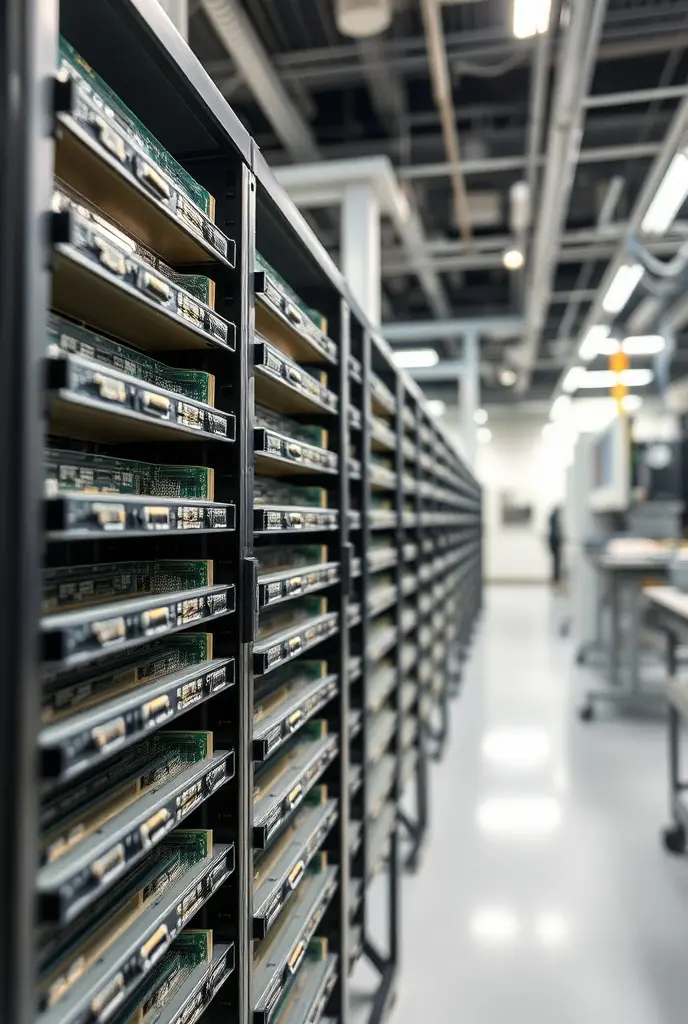
自動ライン用帯電防止コレクションボックスおよびラック.

保管と物流
台車、棚、箱、トレイ、および部品容器.

ワークステーションとPPE
制電椅子、マット、リストストラップ、および個人用保護具。.
カスタム開発
カスタム金型の開発と特殊な制電材料。.
当社のOEM/ODMの強み

先進R&D・材料イノベーション
国家発明特許を取得し、耐熱温度は200℃に達する自社開発の制電材料。私たちは成形するだけでなく、コンパウンド(配合)から手掛けます。.

本格生産能力
安定した効率的な供給を実現するため、射出成形、造粒、および関連する加工システムを完備した30,000㎡の工場。.

一貫したフルカスタム
材料の固有抵抗、色、サイズ、ロゴ、パッケージ、認証は、IEC61340-5-1、ANSI/ESD S20.20、または軍用規格に適合するようにカスタマイズ可能です。.

品質保証・グローバルコンプライアンス認証
“三維社は半導体組立ライン向けに、カスタム仕様の高耐熱クリーンナチュラルカラートレイの開発に成功しました。これにより輸入品の代替を実現し、優れたESD安全性を確保するとともに、クリーンルームの高い清浄度要件を満たしました。”
世界的なフォーチュン500の業界リーダーから信頼されています
当社独自のESDソリューションは、以下をはじめとする世界のエリート生産施設に導入されています。 インテル、モトローラ、シーメンス、IBM、パナソニック、ノキア、デル。.
カスタムサイズや大口卸売価格をお探しですか?
三維は、自社内の強力なR&Dチームを基盤とし、お客様の特定のSMT生産ラインや倉庫レイアウトに合わせた完全なOEM/ODMオプションを提供します。カスタム金型、色分け、または統合された5Sストレージコンサルティングについて、今すぐ専門家にお問い合わせください。.
よくある質問 (FAQ)
1. What is an ESD trolley?
An ESD trolley (anti‑static turnover cart) is a mobile handling device designed for static‑sensitive environments. It is made of static‑dissipative materials, equipped with grounding chains and anti‑static wheels, to safely remove or dissipate electrostatic charges and protect electronic components from ESD damage during transport.
2. How to make a cart ESD safe?
To convert a standard cart into an ESD‑safe one:
-
Use anti‑static materials (surface resistance 10⁶–10⁹ Ω) for the shelf or work surface.
-
Install a metal grounding chain or grounding wire to ensure a path to earth.
-
Replace wheels with anti‑static or conductive rubber ones (some with brakes).
-
Bond all metal parts together and connect them to ground.
-
Regularly test the surface resistance and ground continuity (e.g., weekly) to maintain compliance.
3. What is an ESD safe material?
An ESD safe material is one that controls static generation or dissipates static charge quickly. Its surface resistance typically lies between 10⁵ and 10¹¹ Ω (commonly 10⁶–10⁹ Ω in industry). Examples include anti‑static plastics (ABS, PVC), conductive rubber, static‑dissipative composites, and metal‑fibre blended fabrics. These materials prevent charge build‑up and avoid spark discharge risks.
4. How often should an ESD trolley be tested?
It is recommended to test surface resistance and ground continuity at least once a week. In high‑use or dusty environments, daily checks are advisable. If values fall outside the specified range, clean or replace the affected parts immediately.
5. Can an ordinary cart be converted into an ESD cart?
Yes, but you must replace all critical components: add an anti‑static mat/shelf, install a grounding chain, change to anti‑static wheels, and ensure proper bonding to ground. After conversion, the cart must pass electrostatic testing. However, performance is often less reliable than that of a purpose‑built ESD trolley.
6. What are the common applications of ESD trolleys?
They are widely used in electronics manufacturing (PCBs, semiconductors, chip assembly), precision instrument assembly, medical equipment production, aerospace parts processing, and laboratories. Their main role is to safely transport static‑sensitive components and assemblies between production lines, warehouses, and workstations.