- Turbo
- Blog
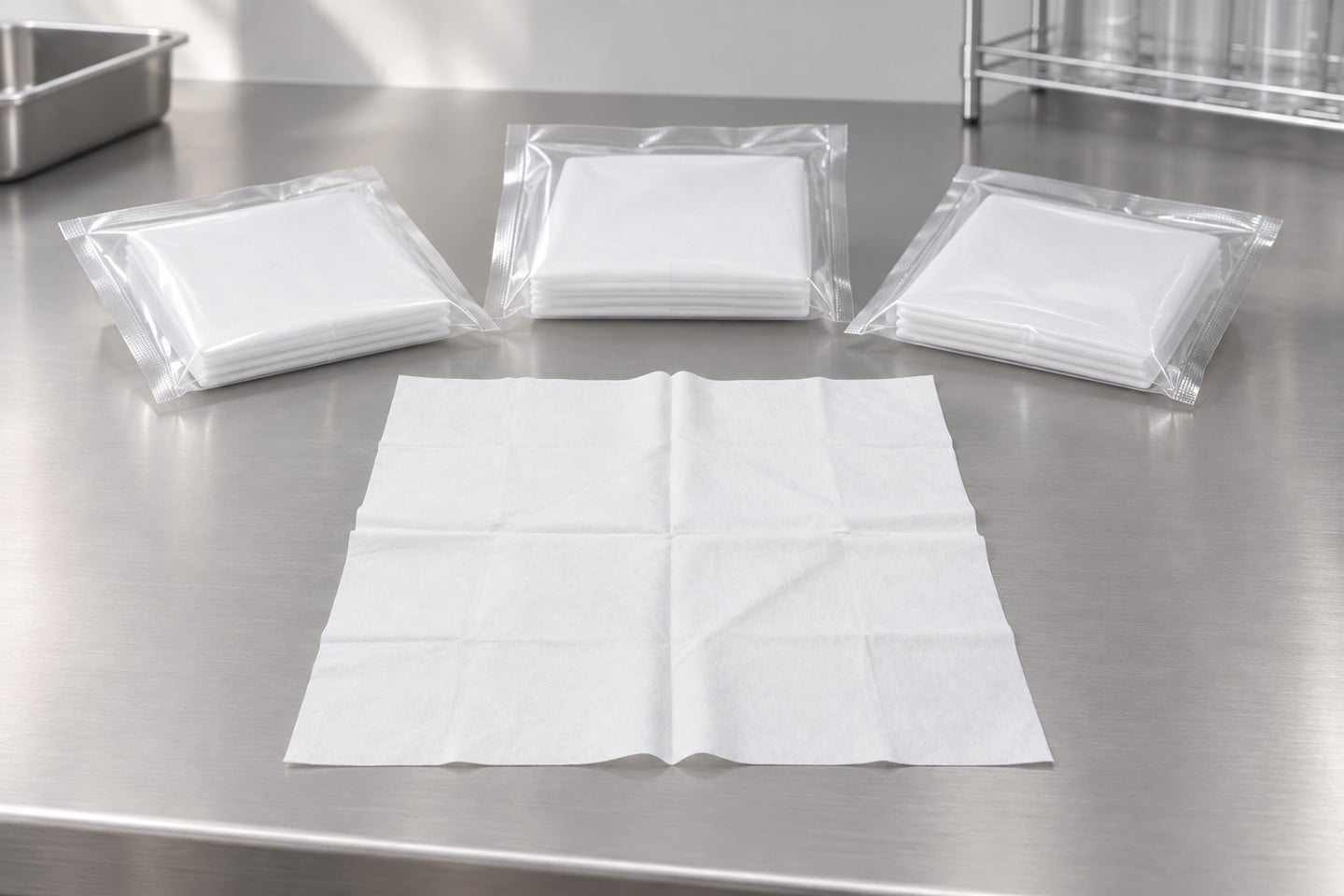
A cleanroom wipe pack quantity check should reconcile the purchase unit, the supplier’s packing hierarchy and the units actually received before stock is released. Count cartons and eligible closed inner packs at the authorized inspection stage, then apply the confirmed wipes-per-pack conversion. Do not open protected wipe packs merely to make an informal piece count. “One pack,” “one bag” and “one case” are not interchangeable quantities. Resolve ambiguous descriptions, mixed variants and damaged packages through a documented receiving decision so the stock system records usable material in the correct unit.
Start with the actual wipe variant and purchase unit
A wipe family can contain several sizes, constructions and pack quantities. Begin with the supplier item code and the approved variant rather than a generic description such as white cleanroom cloth. The halaman produk pembersih bersih SWESD lists multiple variants and packaging quantities. Confirm the current quotation and label for the item ordered; do not transfer a pack count from a neighboring row because the photographs look similar. The final purchase document should state what one ordered unit contains.
Write the commercial unit explicitly. A price per bag needs a confirmed count per bag; a price per case needs both the count per bag and the number of bags per case. If the supplier uses another level, such as several inner pouches inside one bag, include it in the conversion. Keep the distinction between a protective packaging layer and a separate quantity unit. Two layers of film do not necessarily mean two saleable packs.
Build a packing hierarchy that stores can use
A practical hierarchy runs from shipping carton to intermediate pack, closed inner pack and individual wipe. Not every order uses all these levels. Record only the levels confirmed for the actual supplied item, and give each level a clear local name. Ask the supplier to resolve repeated use of “pack” at different levels before the delivery arrives. A diagram or a labeled packing description can be more useful than a quotation line that contains only a total number.
Itu GS1 US barcode identification guidance explains the distinction between identification of trade items and logistics units. Use that distinction as a reminder that a shipping identifier and a product identifier answer different questions. A carton scan may identify the shipment without proving its internal quantity. Whether the site uses GS1 identifiers or its own stock codes, keep the conversion between the commercial unit and the issue unit visible and controlled.

Check the documents before touching the inner packaging
Compare the purchase order, supplier acknowledgement, packing list and available carton labels. The item, unit and quantity should agree, or have an authorized explanation. Read descriptions carefully when a supplier changes the name of a unit without changing the product. “Ten packs” is not adequate if the acknowledgement says ten cases and the packing list says ten bags. Record the mismatch exactly rather than editing one document by hand until the totals appear to agree.
Also distinguish a shortage from a partial shipment. A packing list may correctly show the first portion of a larger order, while the open purchase balance remains due later. Confirm the shipment reference and outstanding balance with purchasing. Otherwise stores may report a false shortage, or close an order that still has material in transit. Each delivery should retain its own received quantity and lot information, even if several shipments eventually satisfy one purchase line.
Use a staged physical count
At the receiving location, count the visible shipping units and note damage before discarding outer materials. Follow the approved cleanroom transfer procedure when opening transport cartons or removing layers. Count closed inner packs only at the stage where they are permitted to be exposed and handled. The quantity process must fit the contamination-control workflow; it should not create an exception in which an uncontrolled receiving bench becomes the place where every protected pack is opened.
| Check level | Catatan | Mismatch response |
|---|---|---|
| Purchase unit | Bag, pouch or case as explicitly agreed | Ask purchasing to confirm ambiguous terms |
| Shipping units | Cartons physically received for this shipment | Separate partial delivery from shortage |
| Closed inner packs | Eligible units visible at authorized inspection stage | Record damaged and held units separately |
| Piece conversion | Confirmed wipes per pack and packs per case | Do not borrow another variant conversion |
| Stock entry | Receipt unit and approved issue unit | Resolve conversion before posting |
This is a proposed reconciliation workflow, not a sampling standard. The inspection depth, sampling plan and authority to open a pack must come from the site or an agreed supplier quality arrangement. Where a declared pack count needs verification, use the approved sample method and disposition route. Do not declare an entire shipment fully counted if only cartons were counted. State the level actually inspected and the conversion used for the remaining quantity.
Convert the units with an explicit example
For a hypothetical order, suppose the agreed configuration is 120 wipes per closed pouch and eight pouches per case. Four complete cases represent 4 × 8 × 120 = 3,840 declared wipes. This arithmetic illustrates the conversion only; it is not a SWESD specification or a claim about a delivered lot. The inputs must be confirmed from the actual order. Record the calculation in the stock receipt so another person can reproduce the entered quantity.
If the approved issue unit is one pouch, the same hypothetical delivery contains 32 pouches, not 3,840 issue units. Entering individual pieces into a system configured for pouches would exaggerate inventory. Conversely, entering four units into a pouch-based system would understate it. Compare the receiving unit with the issue unit before posting the transaction. Any automatic conversion should reference the approved item configuration rather than a generic conversion shared by every wipe size.
Separate quantity from condition and process suitability
A full quantity does not mean all stock is eligible for use. Record intact eligible packs separately from damaged, leaking, unidentified or held packs. Avoid assigning held material to an available-stock location where it can be picked by mistake. If an outer carton is damaged, document which inner units were examined and what was observed. Neither release every inner pack automatically nor assume that the entire carton is unusable without the authorized condition review.
Itu IEST wiping-material guidance discusses suitability in relation to the intended cleaning process and environment. Counting verifies a commercial and stores requirement; it does not establish particle release, absorbency, chemical compatibility or sterility. Keep those requirements in the approved specification and qualification record. The Panduan pemilihan lap bersih ruangan addresses the wider application decision that a quantity check cannot replace.

cURL Too many subrequests by single Worker invocation. To configure this limit, refer to https://developers.cloudflare.com/workers/wrangler/configuration/#limits
cURL Too many subrequests by single Worker invocation. To configure this limit, refer to https://developers.cloudflare.com/workers/wrangler/configuration/#limits.
cURL Too many subrequests by single Worker invocation. To configure this limit, refer to https://developers.cloudflare.com/workers/wrangler/configuration/#limits.
cURL Too many subrequests by single Worker invocation. To configure this limit, refer to https://developers.cloudflare.com/workers/wrangler/configuration/#limits
cURL Too many subrequests by single Worker invocation. To configure this limit, refer to https://developers.cloudflare.com/workers/wrangler/configuration/#limits.
cURL Too many subrequests by single Worker invocation. To configure this limit, refer to https://developers.cloudflare.com/workers/wrangler/configuration/#limits cURL Too many subrequests by single Worker invocation. To configure this limit, refer to https://developers.cloudflare.com/workers/wrangler/configuration/#limits cURL Too many subrequests by single Worker invocation. To configure this limit, refer to https://developers.cloudflare.com/workers/wrangler/configuration/#limits wipe lot certificate review guide explains how to connect evidence to the supplied lot. Neither document should be used to obscure an unresolved physical quantity discrepancy.
Make price comparisons on the same basis
Once the hierarchy is confirmed, compare quotations in the same unit. In a hypothetical comparison, a case priced at 96 currency units and containing 960 wipes has a declared price of 0.10 per wipe before freight and other costs. Another case price is not comparable until its total declared wipe count is known. This example demonstrates unit arithmetic, not a market price. Keep size, construction, approval status and remaining usable stock separate from the price calculation.
An apparently inexpensive bulk pack may create more opened-stock waste if its size does not suit the task. Evaluate that issue using the approved process and observed consumption, not an assumed saving from the largest carton. Ask suppliers to quote the pack configuration explicitly and identify whether alternative pack counts involve a different item or a controlled change. That lets purchasing evaluate handling and replenishment costs without asking receiving staff to infer what the quotation intended.
Close the receiving decision and train the next picker
The final receipt should identify what was counted, which quantities were declared rather than piece-counted, the conversion used, and any held or outstanding balance. Name the person or role that released the stock. A short comment such as “four cases, eight closed pouches each, conversion confirmed against approved order” is useful when supported by the actual record. Do not label an unverified piece count as a full physical count.
The background video below introduces electrostatic discharge in electronics handling. It explains why identified, controlled consumables belong within a wider work-area program, but it does not establish wipe quantities or certify packaging. Use the site procedure for opening and transferring material into an ESD-controlled or clean area. Quantity training should show staff the actual purchase and issue units so the same conversion error does not recur at each replenishment.
Pertanyaan yang sering diajukan
Must every wipe pouch be opened to verify quantity?
Use the approved inspection and sampling procedure. Do not open protected stock for an informal count. Record the level actually counted.
Are pack and bag interchangeable terms?
Only if the order defines them that way. Confirm each level of the actual packing hierarchy before calculating the receipt.
Can a correct total hide a wrong delivery?
Yes. Several wipe sizes or variants can add up to the expected total while the required mix is wrong. Reconcile by item and variant.
Does a full count establish cleanroom suitability?
No. Quantity is separate from product qualification, package condition and required evidence for the intended cleaning process.
How should a partial shipment be recorded?
Record the actual shipment quantity and lot, and retain the unfilled order balance rather than treating it as received or automatically short.

Tinggalkan Balasan