- Turbo
- Blog
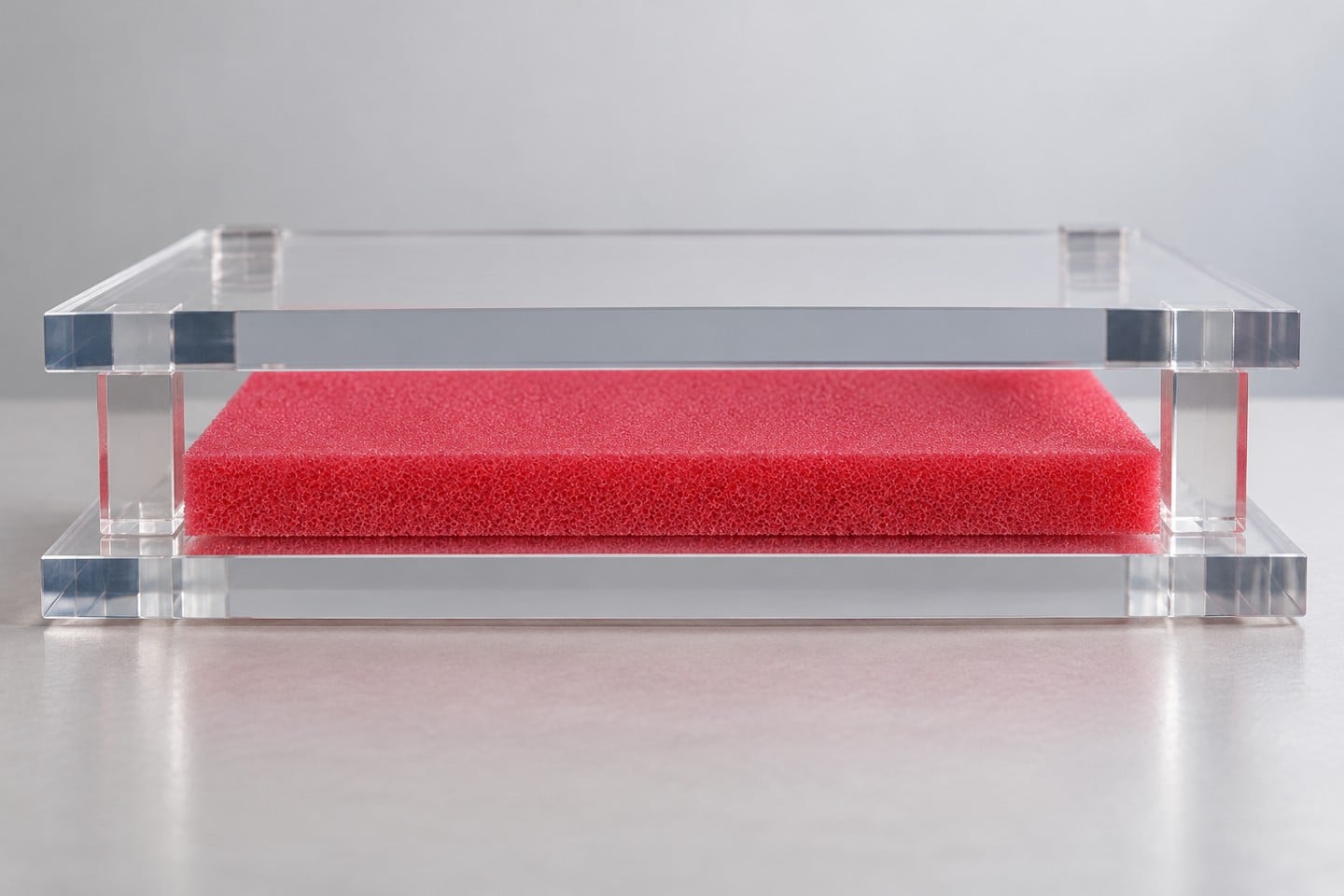
ESD foam compression set is the permanent loss of thickness remaining after a foam specimen has been compressed and allowed to recover under a specified procedure. For electronics packaging, the practical concern is whether an insert still locates and supports the intended item after storage or repeated use. A foam can retain an acceptable electrical result while its geometry no longer restrains a component. Conversely, a foam that springs back visibly may still lack the required ESD properties. Evaluate mechanical recovery and electrostatic performance separately, then qualify the complete packaging arrangement under the conditions it will actually encounter.
Separate compression set from other foam measurements
For this review, separate remaining thickness loss after a defined compression-and-recovery sequence from how firm a fresh sample feels when pressed. It is also different from the gradual deformation observed while a load remains applied. A buyer who requests only density or a hand-squeeze demonstration has not specified the long-term retention question that a tray insert must answer.
Name the property needed for the design decision. An insert holding a delicate part in a pocket may need a different review from a cushioning pad supporting a closed package. Some applications need cushioning data, others need controlled retention and contact geometry. Avoid turning one compression set figure into a complete packaging approval. Its usefulness depends on the material, specimen, procedure and the relationship between that test and the intended package.
Identify the exact foam construction
Record the material family, supplier product code, nominal thickness, construction and finishing details. SWESD’s anti-static foam sheet product includes several foam families; their listing together does not establish identical recovery behavior. Ask the supplier to identify which exact offered material and grade were tested. Do not use a report for a polyurethane specimen to approve a different EVA or polyethylene construction without a documented technical basis.
Include layers, adhesive, facing film and any machining or molding that changes how the foam is loaded. A thin sheet bonded to a rigid carrier is a different arrangement from an unsupported thick block. If a pocket is cut into the foam, record the remaining wall and base geometry that actually support the item. Preserve a drawing revision and sample identity so that later results can be linked to the production-intent insert.
Choose an applicable method with the laboratory
Itu ASTM D3574 overview identifies its scope as flexible cellular polyurethane materials and warns that test data apply to the particular test conditions. The current complete method, material specification and laboratory’s scope should determine the specimen preparation, exposure and recovery procedure. Do not copy a compression percentage, heating temperature or acceptance threshold from an unrelated internet chart and describe the result as compliance.
Ask the laboratory to confirm the suitable method for the exact foam family and application. The request should identify the test edition, specimen dimensions, initial measurement procedure, compression arrangement, exposure conditions and permitted recovery period. Require deviations to be explained before testing. An agreed exploratory engineering trial can be useful, but it must be labeled as such and must not be reported as a standard test when the prescribed procedure was not followed.
Translate the package into a realistic loading question
Determine where the closed package applies pressure. Review whether the lid presses on the insert, the component compresses a pocket wall, stacked packages deform the base or a fastener locally clamps the material. Document the closed geometry with production-intent samples. Do not assume the full foam sheet experiences the same compression as a small region directly under a component or lid feature.
Include the expected storage duration, temperature range and returnable-use sequence in the engineering review. These inputs describe the application; they are not permission to extend a laboratory result beyond its scope. If the normal route includes repeated opening and reloading, assess the relevant mechanical action separately from a constant compression test. A package that performs well after one loading may still require a repeated-use trial to evaluate tears, local damage or changed fit.
| Review input | Record before testing | Mengapa itu penting |
|---|---|---|
| Material identity | Exact polymer family, grade and construction | Methods and results are material-specific |
| Contact geometry | Lid pressure, pocket walls and support points | Local compression can differ from bulk sheet behavior |
| Test procedure | Edition, specimen preparation and exposure | A result applies to the recorded procedure |
| Recovery measurement | Time, location and measuring arrangement | Unequal recovery conditions prevent fair comparison |
| Package trial | Retention, clearance and damage observations | A material result alone cannot approve the assembly |
Measure recovery consistently and preserve raw observations
Agree how initial and recovered thickness will be measured without adding uncontrolled force to the sample. Record the measurement locations, instrument identification and specimen condition. Follow the selected method for recovery timing and calculations. A reading taken immediately after unloading should not be compared with a result measured after a different recovery interval as though the numbers represent the same property.
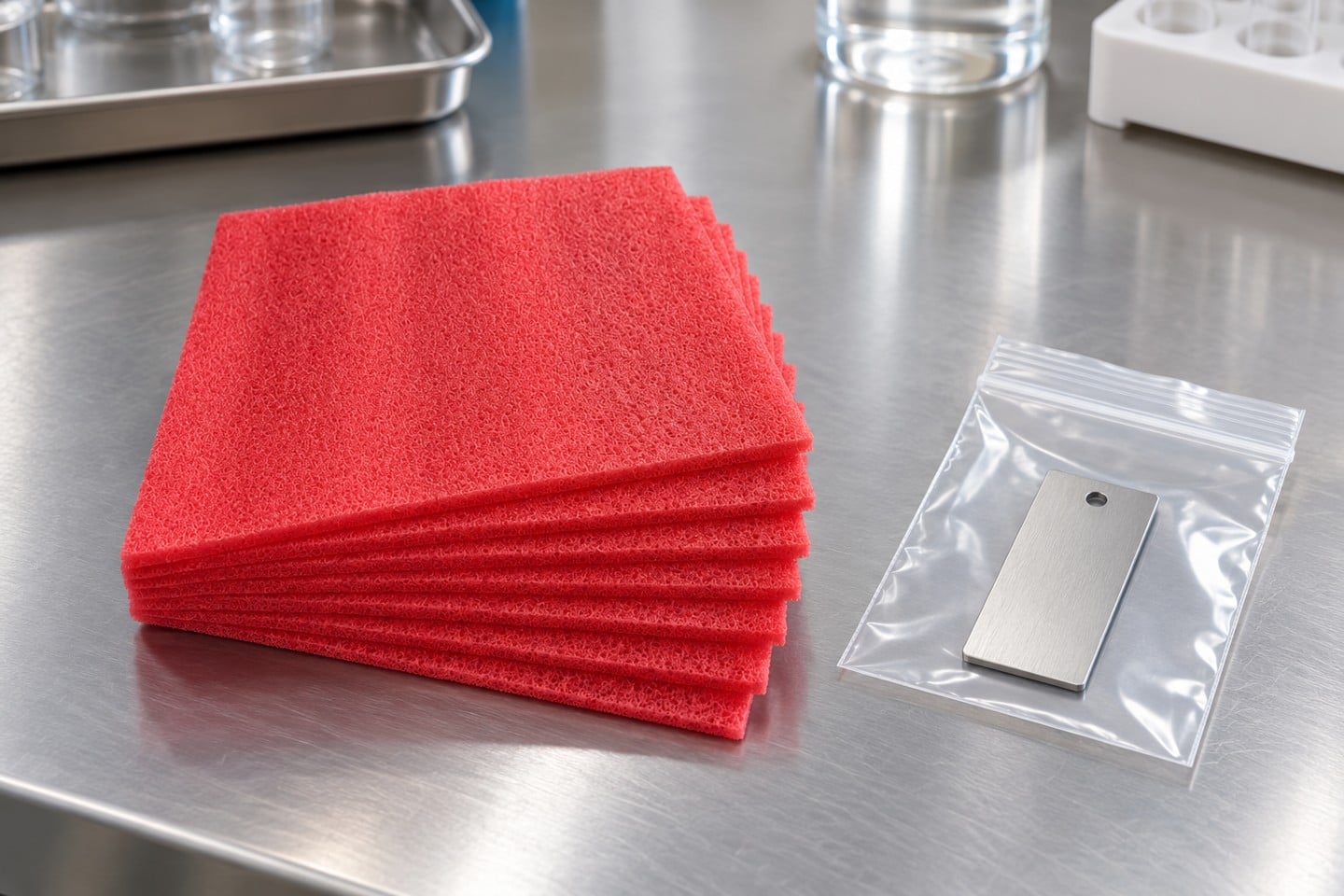
Keep the underlying observations with the reported result. Record specimen identity, initial thickness, the compressed arrangement where applicable, the recovered measurement and any unusual damage. Photographs can help locate torn corners or contact marks, but a photograph alone is not a dimensional result. If the laboratory supplies a calculated percentage, retain the stated definition and calculation basis rather than assuming every report uses the same denominator or procedure.
Connect the result to component retention
After the agreed exposure, assess the insert with an approved representative item or safe mass-and-geometry surrogate. Check whether the item moves, contacts a hard surface, bears on fragile features or becomes difficult to remove. Review lid closure and pocket alignment without forcing the package closed. A change in fit may matter even when an average sheet-thickness measurement appears small.
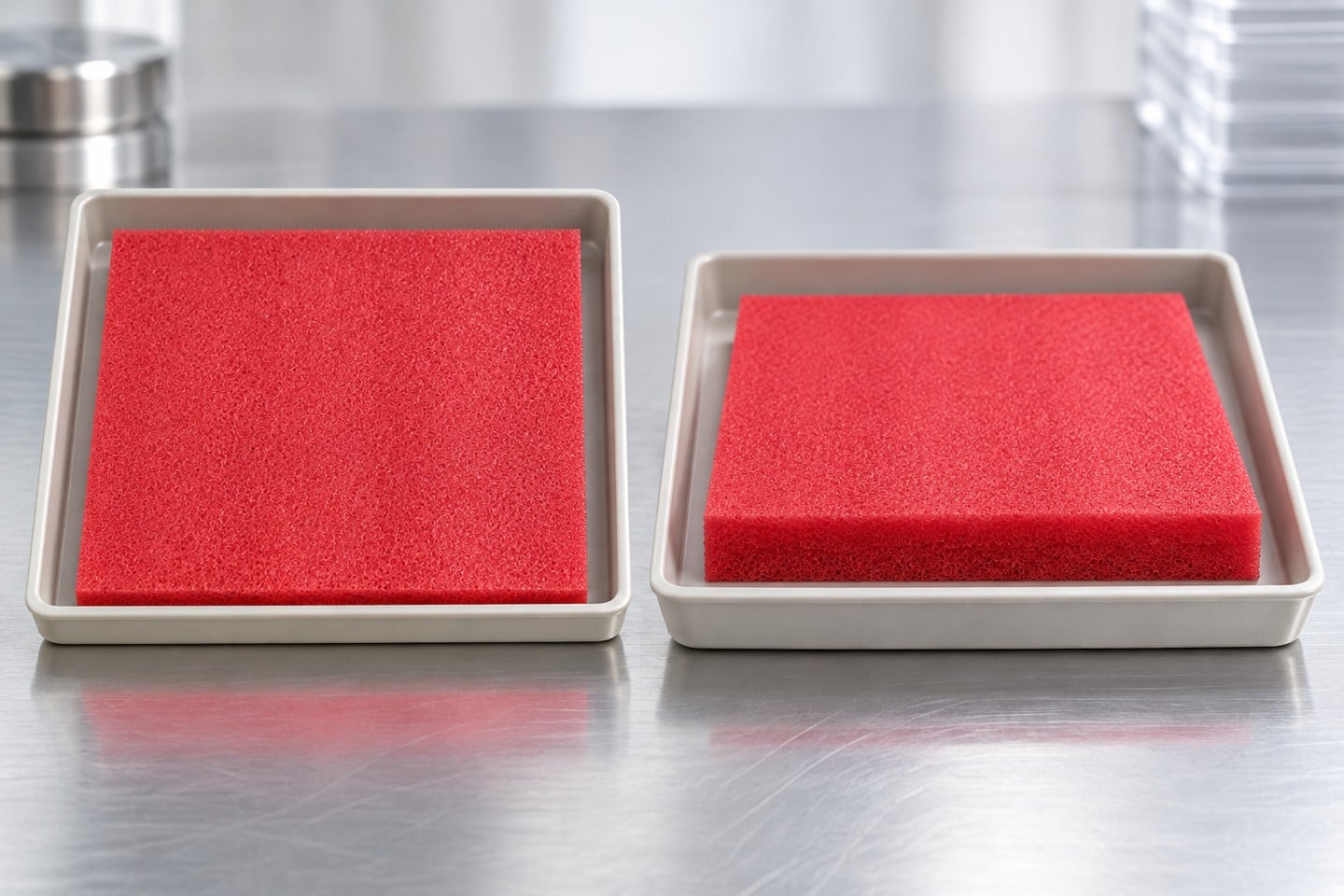
Define acceptable retention and handling behavior before seeing the test result. The design owner should decide which surfaces can contact the foam and which features need clearance. Avoid adding extra foam or adhesive during the trial to make a failing arrangement appear acceptable. Such a change creates a new package configuration. Record it separately and repeat the relevant mechanical, contamination and electrical evaluations before approving the revised design.
Keep electrical and cleanliness checks independent
Electrostatic suitability depends on the exact protective function and handling boundary. The EOS/ESD Association control guidance explains why materials and packaging belong in a wider control program. Compression recovery cannot prove low charging, resistance behavior or discharge shielding. Ask the ESD program owner which electrical evidence is required for the intended contact and route, and whether used specimens need evaluation.
Also review particles, residue and material compatibility for the application. A foam that supports an item mechanically can still shed unacceptable debris or transfer residue. Cleaning or wiping does not automatically restore its original properties. The ESD bin liner selection guide helps compare the role of foam with other liner constructions. Use the conductive foam RFQ guide for the broader evidence request rather than treating this recovery trial as a complete specification.
Set replacement rules from condition and evidence
Avoid assigning a universal reuse-cycle count to every foam insert. Link replacement to the material’s accepted evidence, the qualified package, observed damage and the site’s operating rules. Define how operators identify flattening, tears, loose fit, contamination or an untraceable insert. Specify when to stop using a package and where to place it while the responsible person decides its disposition.
For returnable packaging, keep the insert identity connected to the carrier and its service history where practical. A replacement insert should match the accepted specification, including material, thickness and geometry. An apparently thicker substitute may increase pressure on the component rather than improve protection. Review the full assembly if a change is proposed, and retain the previous accepted configuration as the reference for any comparison trial.
Write an RFQ that a supplier can answer
Provide a drawing or clear geometry description, the item being supported, contact restrictions, storage and use conditions, and the proposed evaluation plan. Request the exact foam designation, relevant method and report scope. Ask whether the supplier can provide production-intent samples with traceable material identity. State that a generic statement of ESD suitability does not replace the requested mechanical and electrical evidence.
Before placing a repeat order, confirm whether material, processing, adhesive or subcontracted supply has changed. Retain the accepted sample, report and drawing revision together. The EVA tray guide explains another carrier format, but its existence does not establish a compression set value for a particular ordered product. Release only the configuration supported by the completed review.
Educational background
The EOS/ESD Association video below explains the electrostatic-control background for packaging decisions. It does not demonstrate a foam compression test or establish a mechanical acceptance limit. Use the applicable laboratory procedure and the approved package trial for those decisions.
Pertanyaan yang sering diajukan
Is compression set the same as foam firmness?
No. Compression set concerns remaining thickness loss after specified compression and recovery. Firmness describes a different mechanical response.
Can a good electrical result prove that a foam insert can be reused?
No. Evaluate mechanical condition, fit, contamination and the applicable electrical requirements separately.
Does ASTM D3574 apply to every ESD foam family?
Its published scope concerns flexible polyurethane foam. Confirm the suitable method for the exact material with the laboratory.
What compression set limit should every electronics insert meet?
There is no universal limit in this guide. The design owner must connect the selected method and acceptance criteria to the actual package.
Should a damaged insert be replaced by a thicker sheet?
Do not substitute thickness without review. Extra material can change lid pressure and component contact, requiring a new configuration assessment.

Tinggalkan Balasan