- Turbo
- Blog
ESD box cleaning validation determines whether a defined cleaning process leaves a reusable container suitable for its next approved use. It goes beyond choosing a wipe or removing visible dirt. Define the contamination to be controlled, the material compatibility requirements, the relevant electrical checks and the release criteria before evaluating the process. Keep the box empty and segregated during cleaning and verification. A visibly clean tote is not automatically accepted for a controlled area, and a successful test on one material does not qualify every container in the warehouse.
Separate routine cleaning from validation
A routine instruction tells an operator how to perform an accepted process. Validation establishes whether that process achieves the required result under its defined conditions. Write the acceptance question first: what could contaminate the box, what could reach the product, and what evidence is needed before reuse? Examples might include visible debris, residues from a previous load or particles relevant to a controlled process. Select the criteria with quality and contamination-control personnel instead of assuming that all electronics applications need the same assessment.
Itu ESD bin cleaning guide discusses routine handling and maintenance. This article focuses on establishing and documenting the process for a specified box and contamination risk. Avoid repeating general instructions as if they were proof of validation. A record that merely says wiped and inspected cannot demonstrate removal of a residue that the inspection method cannot detect.
Identify the complete container configuration
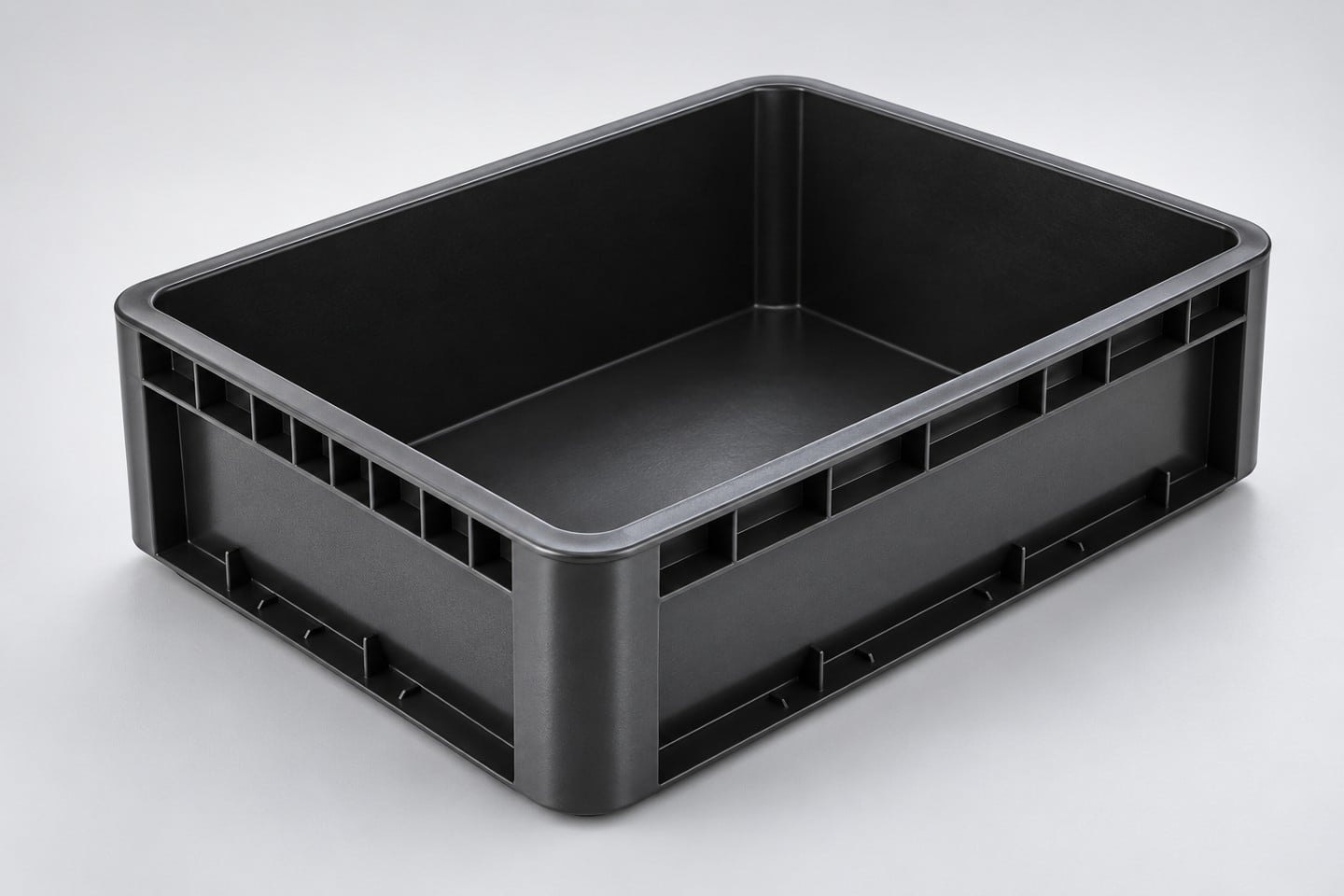
Record the box model, material, surface condition, lid, insert and labels. A molded base, a removable foam pad and an adhesive label can respond differently to the same cleaning agent. Identify which items are cleaned together, which are removed, and which are replaced. Request material-compatible cleaning recommendations from the supplier. If the supplier does not approve an agent or temperature, do not invent a suitable condition from another plastic product’s instructions.
Use a real product specification such as the SWESD shallow ESD box as the starting point for the configuration record. Confirm the exact supplied model rather than assuming every box with a similar footprint has the same material. Surface treatment, previous service and damage may also affect the evaluation. Define which conditions are represented by the samples and which require separate review.
Choose representative contamination and inspection methods
Ask what the previous route could introduce: packaging fragments, handling soil, product residues or material from an insert. Distinguish those concerns from an unexplained general demand for a sterile box. Do not claim sterilization when the actual requirement is particulate cleanliness or removal of a specific residue. Establish the inspection or analytical method with the responsible team and identify where samples or observations are taken.
Corners, ribs, label edges and handle recesses may be harder to clean than a flat base. Include relevant difficult areas instead of sampling only the most accessible surface. If a challenge condition is used during validation, document how it represents the process risk and how it is applied safely. The chosen approach should be reproducible and suitable for the facility; this guide does not prescribe a universal contaminant, analytical method or laboratory acceptance limit.
Document process variables and release evidence
The table below provides a record structure. It is not a validated cleaning recipe. Populate it using the supplier’s material restrictions and your quality team’s approved methods and limits. The EOS/ESD Association’s training and auditing guidance explains why defined requirements and repeatable verification are necessary for an effective control program.
| Record element | Define before evaluation | Rilis bukti |
|---|---|---|
| Container configuration | Model, material, lid, insert, labels and service condition | Confirm the tested samples represent the accepted configuration |
| Contamination risk | Relevant soil, residue or particles and where they occur | Use an inspection or analytical method that detects the stated concern |
| Proses pembersihan | Approved agent, consumable, sequence and material restrictions | Record the actual process and any deviations |
| Pengeringan | Compatible drying arrangement and completion criterion | Confirm corners and inserts meet the accepted dry condition |
| Electrical verification | Applicable method, environment and site limits | Retain the separate relevant electrical results |
| Return handling | Storage, identification and protection after cleaning | Keep accepted boxes distinct from used or unverified stock |
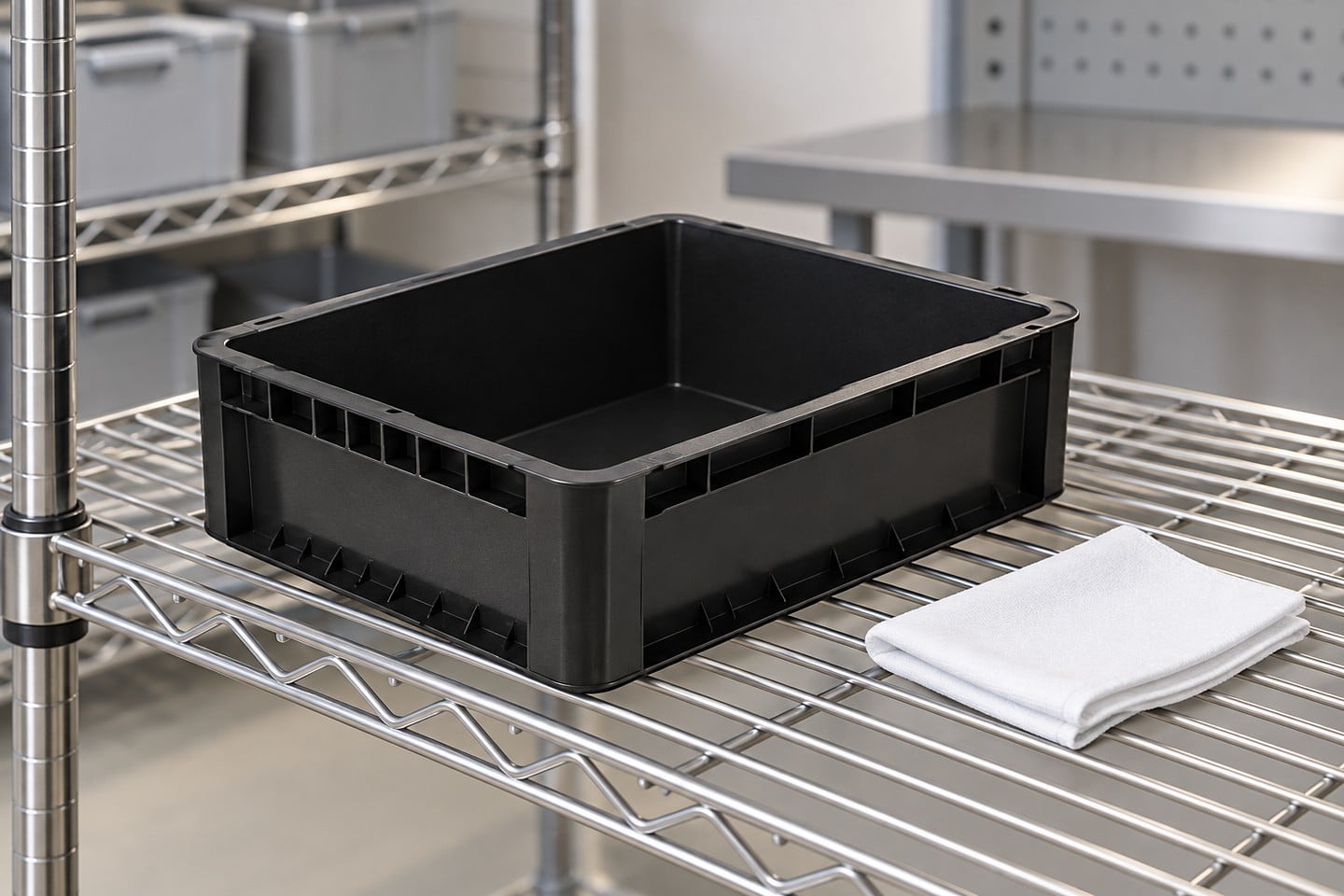
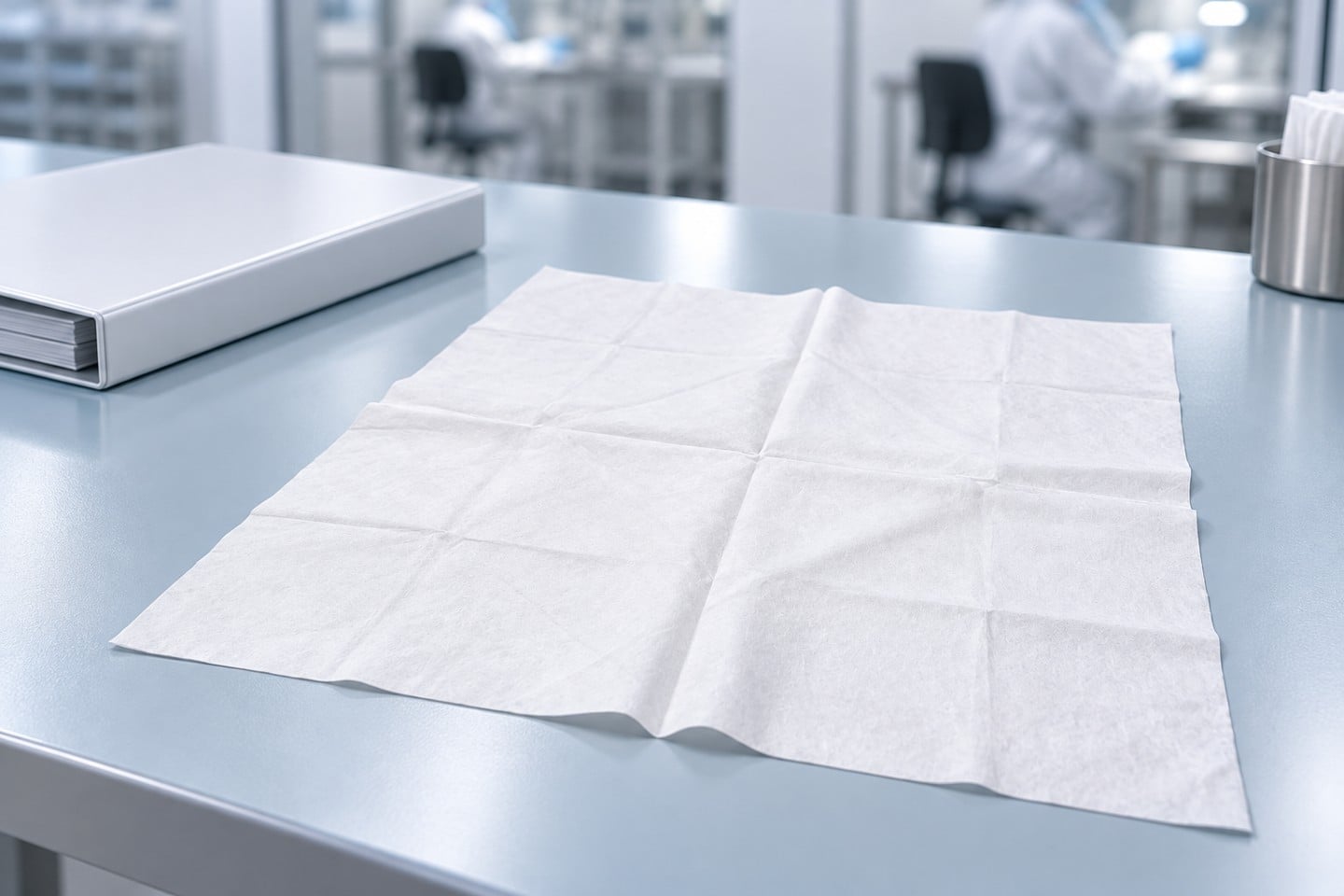
Keep the sequence precise enough that a trained operator can repeat it. Identify the approved consumable, agent preparation where applicable, surface-contact procedure, drying stage and inspection. Do not leave important choices to informal preference. A process performed with an unapproved abrasive wipe or an undocumented substitute may not be represented by the original evaluation even when the box looks similar afterward.
Evaluate material compatibility and electrical behavior
Inspect for changes relevant to continued use, such as cracking, swelling, tackiness, surface damage or loss of label adhesion. Determine which observations or measurements are required before and after the defined process. A cleaner that removes visible soil may still affect the material or an accessory. Avoid recommending alcohol, detergents, solvents or heat as universally appropriate for all ESD boxes; obtain compatibility evidence for the actual configuration.
Electrical checks should follow the site’s ESD plan and the specified measurement procedure. The EOS/ESD Association’s basic materials guidance places packaging and material handling containers within the control program. Use that context to decide which properties need assessment. A general continuity check, a color comparison or an ESD logo does not demonstrate that a cleaned container remains within the accepted requirements.
Control drying and the return-to-service boundary
Define how the box is dried and how completion is established. A wet container can transfer liquid to packaging or hide residue in a corner. Inserts may retain moisture differently from a rigid surface. Specify the accepted drying arrangement with the material and contamination-control requirements in mind, and keep unverified containers out of the ready-to-use pool. Do not guess a drying duration without testing the actual configuration under the defined conditions.
Also evaluate what happens after cleaning. A clean box can be recontaminated by an ordinary transport cart, an uncontrolled storage location or contact with used containers. Define how accepted boxes are handled, identified and stored before loading. Avoid adding an ordinary protective film merely because it looks clean; review its suitability for the ESD environment. Release requires the accepted process and subsequent handling to work together.
Run a controlled pilot and record deviations
Use samples representative of the accepted configuration and service condition. Record the initial condition, cleaning sequence, observations and verification results. Include the people who will perform the process in normal production. Their demonstration can expose unclear steps, inaccessible surfaces or practical drying problems that a laboratory-only review may miss. Retain photographs where they clarify surface locations or the accepted setup, but do not treat photographs as substitutes for required measurements.
If a sample fails, identify whether the cause is cleaning effectiveness, incompatible materials, an incorrect procedure or pre-existing damage. Correct the cause and repeat the affected evaluation. Do not keep repeating the same procedure until a convenient result appears. Record deviations and explain whether they change the approved operating window. The release decision should state which box, contamination risk, process and conditions were actually evaluated.
Define revalidation triggers and supplier controls
A change in cleaning agent, wipe, insert, box material or supplier may require review. So can a new product residue or a route that introduces different contamination. Decide how these changes are reported and who determines whether the original validation remains applicable. Do not wait for a damaged product to discover that purchasing substituted a visually similar consumable. Link the accepted process to controlled material identities and revisions where relevant.
Repeated-use monitoring should reflect actual experience and the risk assessment. Set inspection and verification intervals under the site’s plan rather than claiming one schedule fits every factory. Track failure types so the team can distinguish inadequate cleaning from damage that cleaning cannot solve. The reusable carrier guide discusses lifecycle considerations; a box-specific validation record should address the conditions of the tote being released.
Purchasing and quality handoff
Purchasing should receive the accepted box specification, material-compatible maintenance information and any restrictions on substitutions. Quality should retain the validation evidence, release criteria and deviation history. Operators need a practical instruction showing how to distinguish used, in-process, rejected and accepted containers. These records serve different tasks; combining them into an unexplained pass stamp can conceal the information needed for a later investigation.
Where no compatible and effective process can be demonstrated, consider replacement rather than increasingly aggressive cleaning. Review container material selection and the required packaging route before choosing a substitute. A different box may need a fresh evaluation. The outcome should be a reproducible release process with clearly defined limits, not a claim that every cleaned black tote is ready for every controlled area.
Further learning: ESD control principles
The EOS/ESD Association lecture below provides background for the electrical requirements that must remain separate from visual cleanliness. Use it alongside the facility’s approved cleaning and verification procedures.
Educational video: Introduction to ESD as part of University Lectures, EOS/ESD Association, Inc..
Pertanyaan yang sering diajukan
Does visible cleanliness prove validation?
No. The verification method must address the contamination risk and acceptance criteria defined for the actual process.
Can one cleaning process cover every plastic ESD box?
Only where evidence supports the relevant models and configurations. Different materials, labels and inserts may require separate review.
Should electrical properties be checked after cleaning?
Determine the applicable checks under the site ESD plan and the material compatibility assessment; do not substitute appearance for measurements.
How long should a cleaned box dry?
Use the validated condition for the actual box, insert and environment. A universal guessed duration is not a reliable release criterion.
What changes require review?
Changes to cleaning agents, wipes, materials, accessories, contamination or handling conditions should be assessed for their effect on the accepted process.

Tinggalkan Balasan