- wp_kexun
- Blog
Lorsqu'un responsable des opérations à Penang a maintenu un tapis ESD en service parce qu'il avait toujours l'air propre, l'audit suivant a révélé un bouton-pression de mise à la terre intermittent et des valeurs de résistance hors des limites du site. Le tapis n'avait pas atteint une date de péremption universelle ; il avait atteint la fin de sa durée de service vérifiée. L'apparence avait remplacé la mesure.
Résumé : Les fournitures ESD pour CMS n'ont pas de durée de vie fixe unique. Remplacez les consommables après leur utilisation définie, et remplacez les équipements réutilisables lorsque l'inspection ou la vérification échoue, que des dommages modifient les performances, que l'étalonnage expire ou que le risque lié au processus change. Les normes ANSI/ESD S20.20 et CEI 61340-5-1 soutiennent un plan de vérification de la conformité ; l'organisation doit définir les intervalles en fonction des risques, des recommandations du fabricant et des performances enregistrées.
Pourquoi l'âge chronologique ne suffit pas
Un tapis dans une cellule d'ingénierie à faible volume et un tapis sur une ligne PCBA à trois équipes sont soumis à des abrasions, des contaminations, des expositions à des produits de nettoyage et des cycles de connexion différents. Il en va de même pour les bracelets antistatiques, les chaussures, les vêtements et les conteneurs réutilisables. Une date peut déclencher une inspection, mais elle ne doit pas se substituer à un critère de réussite/d'échec.
Le dossier de durée de vie doit inclure la date d'installation, l'identifiant de l'actif, l'emplacement, le résultat de référence, l'historique des inspections, les réparations et la disposition finale. Cela transforme le remplacement d'un achat d'urgence en un achat planifié fourniture CMS décision.
Quand les tapis et le matériel de mise à la terre doivent être remplacés
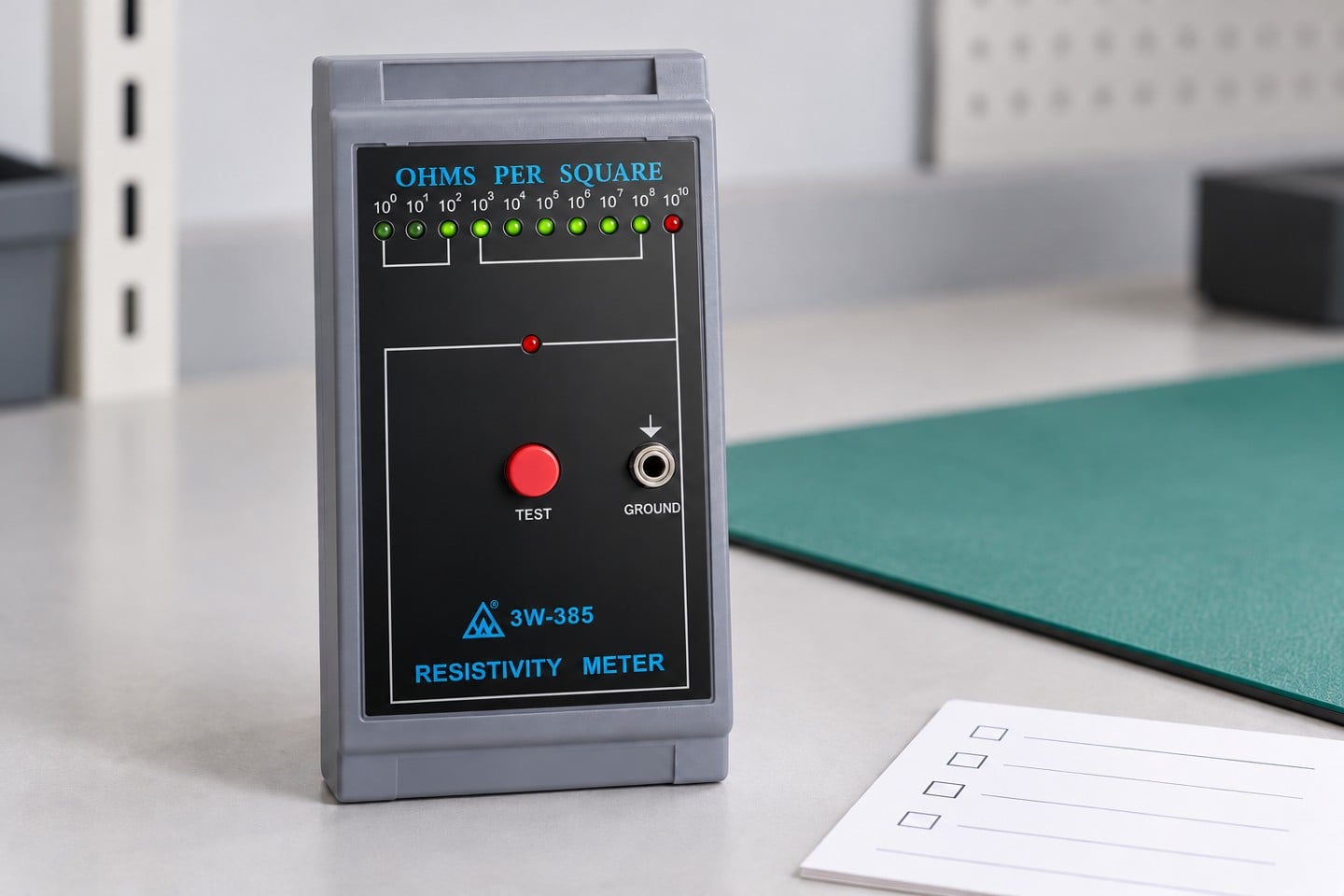
Remplacez ou mettez en quarantaine un tapis lorsque la résistance à la terre dépasse la limite approuvée, que la connexion à la terre est desserrée, que la surface est craquelée ou gonflée, ou que la contamination ne peut pas être éliminée sans endommager le matériel. Le tapis installé doit être vérifié plutôt que de se fier uniquement à un échantillon du fournisseur.
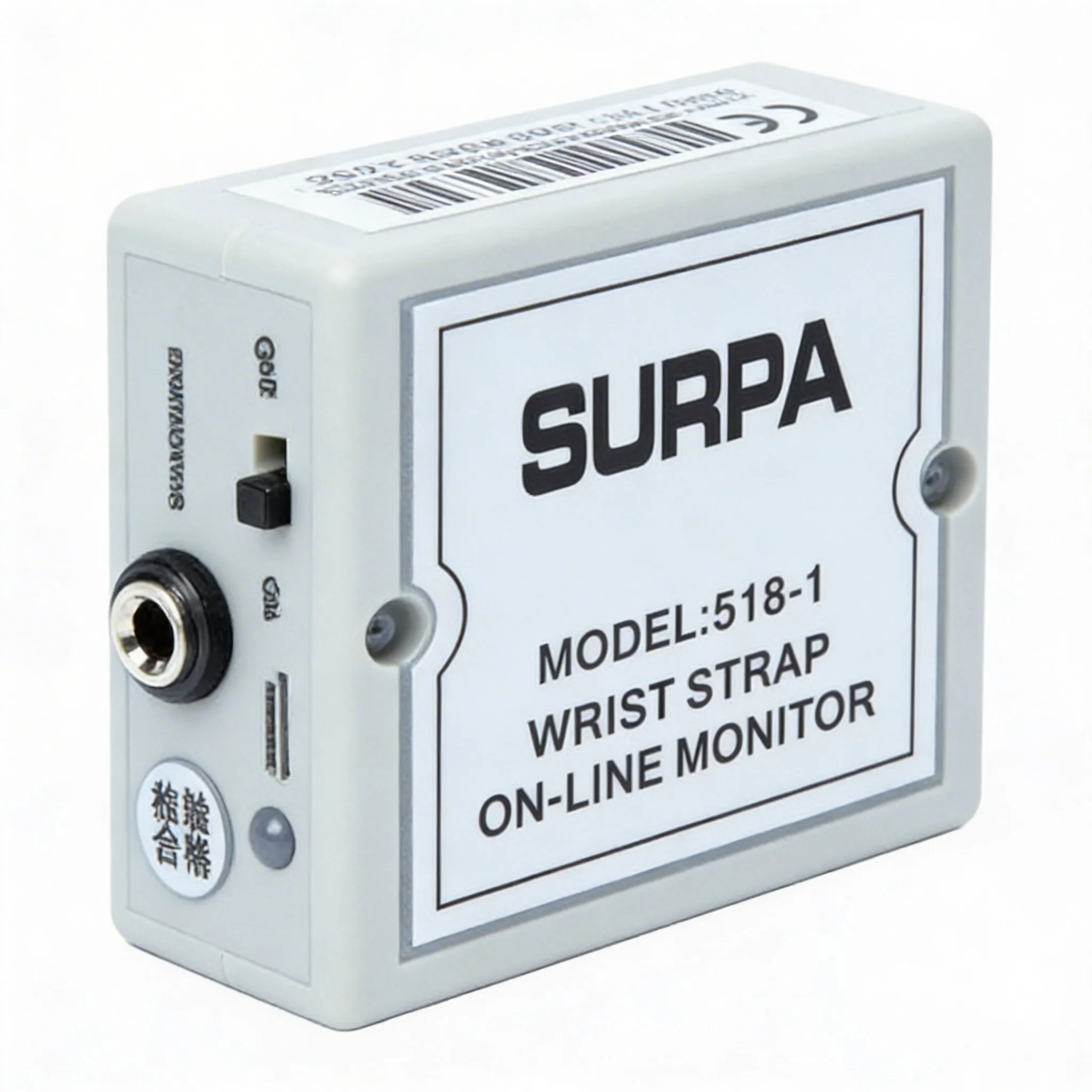
Les dragonnes nécessitent un contrôle différent. Le cordon, la résistance, le bouton-pression, la bande et le contact avec la peau influencent tous le trajet. De nombreux sites effectuent des tests à chaque prise de poste ou utilisent des moniteurs continus ; un résultat négatif implique une investigation immédiate, et non une utilisation continue jusqu'à la prochaine inspection mensuelle.
Comment les vêtements et les chaussures arrivent en fin de vie
Les vêtements se détériorent par le lavage, l'endommagement des coutures, la perte de fermetures, la contamination incrustée et l'usure des fibres conductrices. Les chaussures se modifient avec l'usure de la semelle, la contamination, les semelles intérieures et le système personne-revêtement de sol. Une inspection visuelle permet de détecter les dommages, mais seul le test de résistance spécifié confirme le chemin électrique.
Pour un usage intensif Fournitures ESD, maintenir des tailles de rechange et un processus d'échange contrôlé. Le stock de remplacement doit répondre aux mêmes spécifications, faute de quoi un vêtement défectueux risque d'introduire un substitut non évalué.
Consommables : lingettes, rubans et rouleaux
Lingettes antistatiques et lingettes pour pochoirs SMT sont généralement des consommables à usage unique ou à rouleau limité ; le déclencheur est la contamination, la fin de l'utilisation ou l'épuisement du rouleau de l'imprimante. La réutilisation d'une lingette déplace la pâte et les particules au lieu de les éliminer.
Rubans ESD et ruban caoutchouté doit être remplacé lorsque l'adhérence, les résidus, l'usure ou l'état du sol ne permettent plus d'assurer le marquage ou la protection prévu. Rouleau adhésif nécessite une règle de pelage contrôlé ou de remplacement afin qu'une couche saturée ne redépose pas de particules.
Déclencheurs de remplacement pour tapis, sangles, vêtements et consommables
| Article | Vérification de routine | Remplacer ou mettre en quarantaine quand |
|---|---|---|
| Tapis de banc / tapis de sol | Inspection visuelle plus résistance à la terre | Résultat infructueux, fissures, gonflement, terrain affaissé |
| Dragonne | Testeur quotidien ou moniteur continu | Chemin intermittent/défectueux, cordon ou bouton pression endommagé |
| Vêtement | Inspection plus test du vêtement si nécessaire | Couture déchirée, échec de fermeture, résistance défaillante |
| Chaussures | Test personne-chaussures-revêtement de sol | Semelle usée, contamination, résultat de système défectueux |
| Lingettes / ruban adhésif / rouleau | Contrôle des lots et gestion des utilisations | Consommé, saturé, résidu, perte de fonction |
Comment la fréquence de remplacement varie selon la zone de travail
| Niveau de risque | Approche de contrôle suggérée | Incidence sur la planification |
|---|---|---|
| Production en grande série | Contrôles automatisés ou par équipe fréquents | Conserver des pièces de rechange qualifiées sur le lieu d'utilisation |
| Processus en salle blanche | Contrôle du linge / des particules plus vérification électrique | Suivre les cycles et les nettoyants approuvés |
| Laboratoire à faible volume | Inspection programmée et contrôles avant utilisation | Ne prolongez pas les intervalles sans preuve |
| Manutention mobile | Vérifications avant utilisation des chariots, des sangles et des conteneurs | Attribuer la responsabilité lors des transferts |
Comment les normes S20.20 et IEC 61340 traitent le remplacement
Les normes ANSI/ESD S20.20 et CEI 61340-5-1 exigent une vérification de conformité planifiée, mais ne donnent pas de date d'expiration unique pour chaque produit. L'organisation définit les méthodes et les intervalles de test en fonction du risque et des performances. La norme ISO 9001 prend en charge les registres d'actifs, les actions correctives et le contrôle des modifications des fournisseurs.

Comment définir des intervalles de remplacement fondés sur des données probantes
- Créer un registre des actifs pour les contrôles ESD réutilisables.
- Utiliser la condition et les résultats des tests comme portes de remplacement.
- Suivre les cycles de lavage ou de nettoyage des vêtements et des tapis.
- Conserver un stock de pièces de rechange approuvé pour les tailles et composants les plus utilisés.
- Analyser les tendances des échecs trimestriellement pour raccourcir ou justifier les intervalles de test.
Sanwei fournit des matériaux antistatiques (ESD) et des produits de manutention conformes aux normes ISO 9001, ISO 14001:2015 et RoHS/SGS, avec un accompagnement pour les programmes conformes aux normes CEI 61340-5-1 et ANSI/ESD S20.20.
FAQ
Combien de temps dure un tapis ESD ?
Il n'y a pas de durée de vie universelle. Elle reste en service tant que son état physique, sa connexion à la terre et sa résistance vérifiée répondent aux spécifications du site.
À quelle fréquence faut-il remplacer les dragonnes ?
Remplacer après un test infructueux ou des dommages physiques ; les tests peuvent avoir lieu quotidiennement, par équipe ou en continu selon le plan de contrôle.
Les vêtements ESD ont-ils une date d'expiration ?
Pas selon une seule date mondiale. Les cycles de lavage, les dommages, les fermetures, la contamination et la vérification électrique déterminent l'utilisabilité.
Les lingettes pour pochoirs CMS peuvent-elles être réutilisées ?
Ils sont généralement contrôlés comme des consommables à usage unique ou en rouleau ; leur réutilisation peut transférer de la pâte à braser et des particules sur le pochoir.
Que doit contenir un dossier de remplacement ESD ?
Enregistrer l'actif ou le lot, l'emplacement, la méthode d'essai, le résultat, la limite, le défaut, la date, la disposition et l'article de remplacement.
Références
La différence ne réside pas seulement dans une étiquette de produit : elle réside dans les décisions vérifiables qui maintiennent chaque transfert dans le plan de contrôle. Sanwei fabrique des produits ESD et des solutions de manutention pour ce moment précis ; contacter l'équipe Sanwei pour examiner la demande, les preuves et les exigences personnalisées.


Laisser un commentaire