- Blog
Metal-base and plastic-base ESD magazine racks solve different rigidity, weight, and grounding problems on SMT lines—buyers should specify base plate type from loaded weight, automation, and wash exposure, not from catalogue adjectives alone.
This comparison is for EMS procurement, automation engineers, and distributors standardizing Râteliers ESD. For general buffering concepts, see the guide de mise en mémoire tampon pour magasin antistatique. For width-adjustment mechanisms, see the Guide de demande de devis pour porte-revues à poignée réglable.
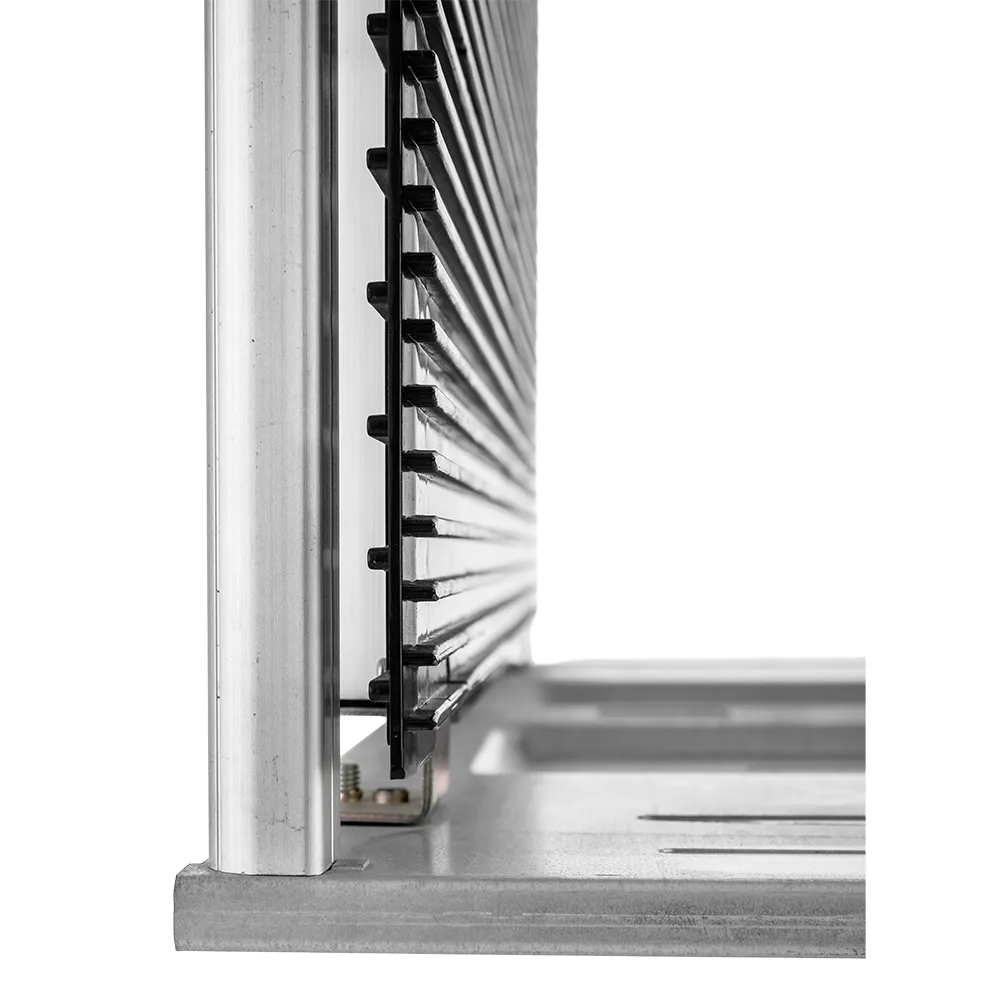
Part 1. What do metal base and plastic base mean on ESD magazine racks?
An ESD magazine rack stores PCBs vertically in dissipative side guides. The base plate is the bottom structural member that supports guide frames, feet, and sometimes grounding hardware.
| Term in catalogues | Typical construction | Buyer takeaway |
|---|---|---|
| Metal base | Steel or coated metal bottom plate; guides often polymer | Rigidity for heavy stacks and loader vibration |
| Plastic base | Molded dissipative PP/PBT alloy plate | Lighter unit weight; lower cost on manual lines |
| Metal frame + plastic guides | Hybrid builds | Confirm which surfaces are tested for Ω readings |
Sanwei Page de solution de rack à magazines ESD describes patented PBT/PET alloy guides with low warpage and heat resistance up to 160°C standard (200°C optional). Base plate material still varies by SKU and customization—confirm on the quotation, not from photos alone.
Part 2. When does a metal base plate fit automation and heavy loads?
Metal bases earn their cost when loaded magazines index in automated loaders/unloaders or when multilayer panels create high bending moments on the bottom plate.
| Signal | Why metal base helps | Risk if underspecified |
|---|---|---|
| Loader/unloader OEM interface | Reduces rack flex during indexing | Misalignment, jammed ears |
| Full 50-slot load of thick boards | Distributes weight without guide twist | Slot pitch drift |
| Vibration near pick-and-place | Dampens micro-movement | Intermittent loader faults |
| Shared fleet across sites | Consistent tare weight for logistics | Freight cost surprises on plastic-heavy fleets |
Use a simple threshold: if automation is in scope ou estimated loaded mass exceeds what your team can safely manual-handle without flex visible at the base, request metal base plate drawings and thickness.
Pair base selection with mechanism choice from the handle-adjustable RFQ guide when high-mix lines also need frequent width changes.
Part 3. When are plastic bases sufficient?
Plastic-base racks fit manual buffer points, lighter single-sided boards, and cost-sensitive distributor programs where magazines never enter warm queues or automated loaders.
| Line profile | Plastic base fit | Caveat |
|---|---|---|
| Manual staging between manual inspection stations | Good | Verify slot pitch stability when fully loaded |
| Single-SKU low-mix lines | Good | Lock width mechanism still matters |
| Warm buffer after reflow | Poor unless heat-rated guides et base confirmed | See high-temperature reflow staging guide |
| Automated loader indexing | Usually insufficient | Specify metal base or hybrid |
Plastic is not “non-ESD.” Dissipative polymers can meet program needs when resistance is verified on the actual lot—but plastic bases may deflect under load in ways metal plates resist.
Part 4. How do grounding and resistance differ on base plates?
ESD programs under CEI 61340-5-1 and practices aligned with ANSI/ESD S20.20 require verified paths from stored assemblies to ground—not assumptions from base color.
Sanwei publie 10⁶–10⁹ Ω surface resistance on its magazine rack solution page. Request readings on:
- inner and outer guide surfaces;
- base plate top surface where PCBs or feet contact;
- feet or grounding studs if racks sit on Chariots ESD.
| Base type | Grounding note | Ajuster la limite |
|---|---|---|
| Coated metal base | Confirm coating does not insulate grounding studs | Test per facility SOP |
| Dissipative plastic base | May rely on contact with grounded cart | Do not assume metal base = automatic ground without test |
| Hybrid | Document which parts are conductive vs dissipative | Mixed readings are normal if labeled |
Incoming inspection should sample bases after transit—humidity shifts readings on both metal and polymer.
Part 5. How do corrosion and cleaning affect base selection?
Wash-down EPAs, flux residues, and IPA wipe-downs interact differently with metal and plastic bases.
| Exposure | Metal base consideration | Plastic base consideration |
|---|---|---|
| IPA wipe-down | Coating integrity on steel | Check for crazing on older molds |
| Aqueous wash (rare on racks) | Galvanized/coated plate spec | Chemical compatibility of PP/PBT |
| Floor debris / metal chips | Scratches may expose rust if uncoated | Embedded chips can scratch PCBs if slots unprotected |
| Shared contractor cleaning | Document prohibited abrasives | Avoid solvents not listed on supplier datasheet |
If magazines move between cleanroom and shop floor, specify base plate coating and foot pad material in the RFQ to avoid cross-contamination of grounding paths.
Part 6. Which RFQ fields specify base architecture?
Send suppliers a base-focused addendum alongside dimensional fields from the handle-adjustable checklist:
| Champ d'appel d'offres | Example record | Propriétaire |
|---|---|---|
| Base plate material | Coated steel vs dissipative PP | Qualité |
| Plate thickness | Supplier drawing reference | Ingénierie |
| Loaded weight estimate | kg at full slot count | Production |
| Automation OEM | Loader brand/model | Automatisation |
| Méthode de mise à la terre | Cart strap vs fixed EPA floor | Coordinateur ESD |
| Wash/chemical exposure | IPA only / none | Installations |
| Heat zone proximity | Room temp vs warm queue | Traiter |
| RFQ omission | Typical result |
|---|---|
| No loaded weight | Wrong base flex; loader faults |
| “Metal base” without coating spec | Rust in humid plants |
| No grounding diagram | Failed ESD audit at receiving |
Compare quotes on test documentation and spare base/feet MOQ, not rack unit price alone.
Part 7. Which Sanwei racks should buyers shortlist?

Start from Sanwei’s live Catégorie de présentoirs de magazines ESD, then match footprint to load and automation.
- Compact manual buffers: review the 355(L)×315(W) mm listing when panels are smaller and loads stay manual.
- Wider panels with loader rigidity needs: compare the 535(L)×460(W) mm SKU before custom mold discussions.

Ajuster la limite
| Situation de l'acheteur | Voie raisonnable | Éviter |
|---|---|---|
| Automated loader indexing | Metal or hybrid base with drawings | Plastic base without flex data |
| Manual light-load buffer | Plastic base with verified Ω logs | Over-specifying metal on cost alone |
| Warm queue after reflow | Heat-rated guides + confirm base grade | Room-temp plastic in hot zones |
| Multi-site standardization | Freeze base drawing number in QA pack | Mixing base types silently |
Send drawings and quantity bands through Contactez-nous ou OEM/ODM when base plate, slot pitch, or logo engraving differs from catalog listings.
FAQ
What is the difference between metal-base and plastic-base ESD magazine racks?
Metal-base racks use a rigid bottom plate—often steel or coated metal—for heavy loads and automation; plastic-base racks use molded dissipative polymer plates for lighter manual buffering. Confirm construction on the supplier drawing.
Do ESD magazine racks need a metal base for automation?
Most loader OEM programs specify rigid outer dimensions and minimal flex at the base. Metal or reinforced bases are common when magazines index automatically—provide loader drawings in RFQ.
How much weight can an ESD magazine rack hold?
Catalogues rarely publish universal kg ratings. Calculate loaded PCB mass × slot count and ask the supplier for flex and loader compatibility data for your mix.
Can plastic magazine racks warp near reflow?
Dissipative plastic guides and bases can soften in warm queues. Match heat class to dwell zone—see the high-temperature reflow staging guide.
How do you ground a metal-base ESD magazine rack?
Use facility grounding SOP: grounded cart, wrist/foot grounding where required, and verified resistance logs on base and guides. Metal alone does not guarantee compliance without test.
Can one plant use metal bases while another uses plastic?
Only if load, automation, and ESD test results are equivalent. Standardize mold and base drawing numbers to prevent silent substitution.
Should buyers specify coated or galvanized metal bases?
Yes—note wash chemicals and humidity class. Uncoated steel may rust in some EPAs.
What belongs in a base-plate RFQ?
Material, thickness drawing, loaded weight, loader OEM, grounding method, wash exposure, and requested Ω test method.
Laisser un commentaire