- Turbo
- Blog
Cleanroom garment zipper inspection checks whether the approved closure operates normally, remains attached as intended and is free of unresolved damage or contamination before the garment is issued. Examine the zipper together with its surrounding fabric and follow the garment supplier’s instructions. Hold an item when teeth, slider movement, attachment or identity are uncertain; do not force the closure or improvise a repair at the issue point. A working zipper does not prove particle control, sterility or electrical continuity. This guide addresses mechanical closure condition and release decisions for an industrial cleanroom garment, using a real SWESD two-piece suit as the product reference.
Identify the garment and the purpose of the inspection
Check the garment’s model, size, individual identity where used and current service status. A zipper inspection belongs to a defined item, not just to a pile of blue jackets. If a label is unreadable or the garment cannot be linked to required records, resolve that issue before considering release. The garment identification label guide explains that record link. An apparently sound closure cannot replace missing identity or service evidence.
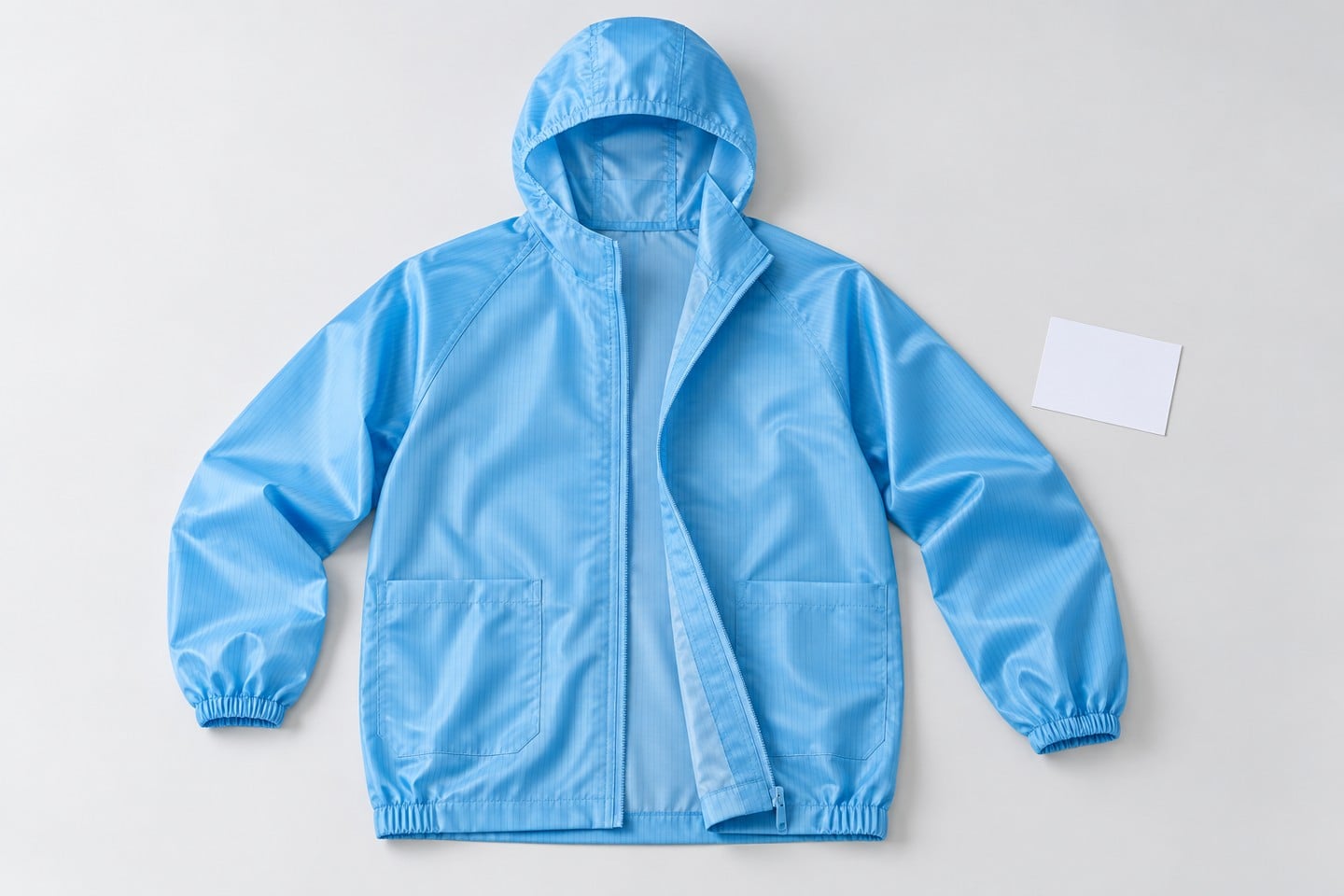
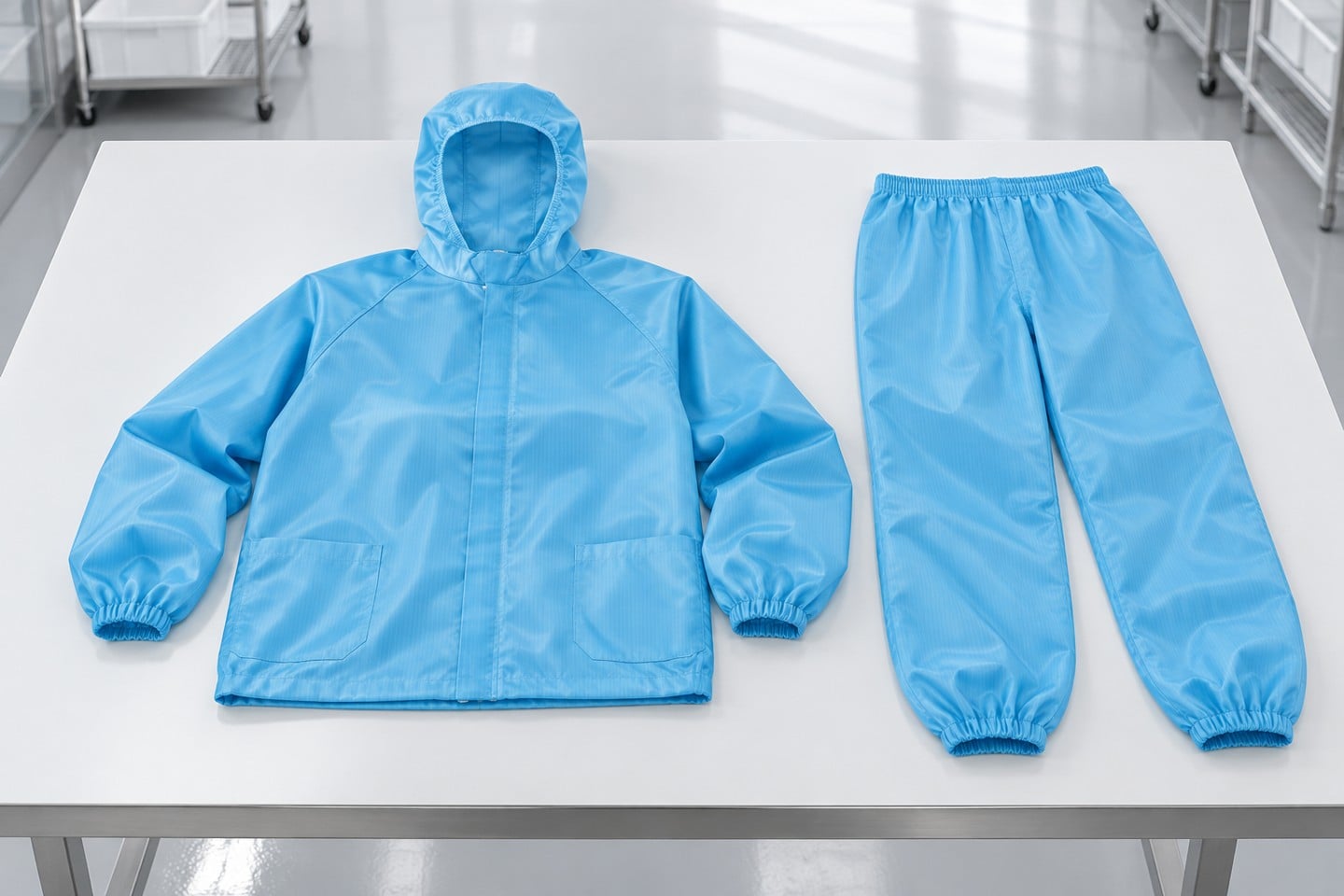
La SWESD cleanroom two-piece suit provides the actual garment reference for this article. Its appearance supports the illustration of a jacket closure, hood, sleeves and trousers. It does not establish a barrier rating, cleanroom classification or a certified zipper lifetime. Confirm the supplied version and construction with the supplier. Do not use a coverall inspection drawing for a two-piece jacket unless the applicable details have been checked.
Set up a controlled inspection point
Choose an inspection surface and handling method consistent with the garment’s current status. A serviced garment should not be placed on an uncontrolled maintenance bench simply because the zipper needs attention. Define who may open its package, how its identity remains linked to the garment and what handling is allowed after inspection. The procedure must explain whether repacking or another service step is required before issue. Keep accepted and held items visibly separate.
Lighting should allow the inspector to see the closure and surrounding attachment without pulling the fabric into an unrealistic shape. Follow the site’s approved handling precautions and avoid introducing marking pens, adhesive labels or tools onto the garment unless authorized. Inspection should preserve the item while establishing condition. A process that creates new contamination or damages the fabric during checking defeats the purpose of the release decision.
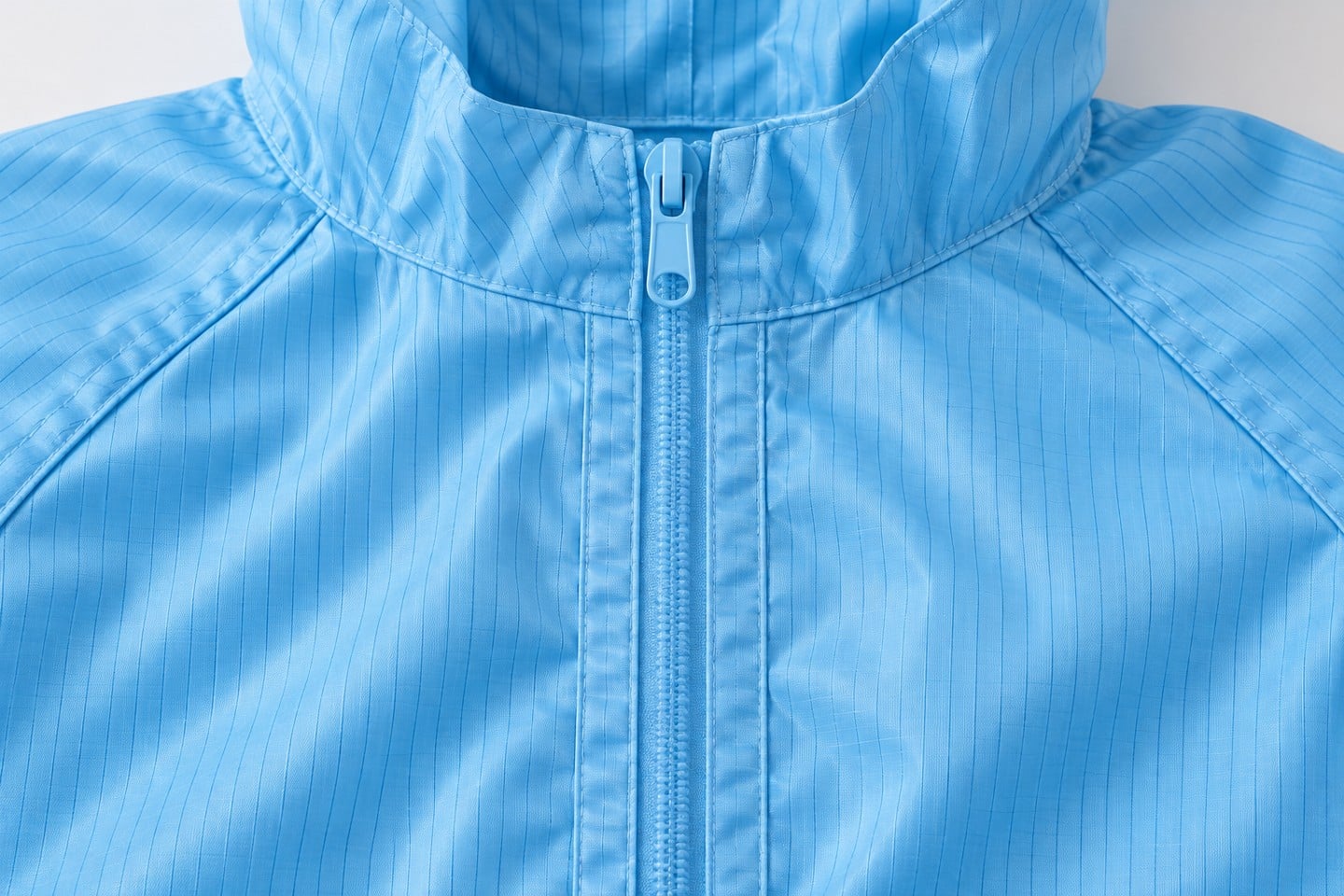
Examine the zipper path before moving the slider
Look along both sides of the closure for obvious distortion, missing or displaced elements, trapped fabric and unexpected material. Check the area where the slider begins and ends. Compare uncertain features with the approved sample or supplier drawing rather than deciding that every visible difference is a defect. Record the location and observation in plain terms. A close photograph can help the supplier review the question, but it should retain the garment identity and inspection context.
Look at attachment to the surrounding fabric without treating this as a substitute for an electrical test. Fraying, separation, holes or an altered seam may affect the release decision even if the slider moves. The garment seam continuity testing guide addresses a separate electrical-construction question. Mechanical closure condition and electrical continuity need their own criteria and evidence; neither should be inferred solely from the other.
Check normal operation without forcing it
Use the supplier’s instructed starting and movement sequence. The inspector should understand how a correctly aligned closure normally behaves on the exact garment. If the slider catches, stop and inspect the visible cause before continuing. Do not demonstrate success by repeatedly pulling harder. Force can obscure the original complaint or create damage that makes investigation more difficult. Record whether the problem occurs consistently and where along the path it appears, without adding unapproved cycles.
After an approved closing movement, observe whether the closure remains engaged in its intended configuration and whether surrounding fabric is trapped or distorted. Check normal movement only within the defined inspection scope. This article gives no universal number of operating cycles, pull force or wear limit. Such values need the actual supplier’s method or the site’s approved qualification plan. A gentle functional observation cannot be reported as a formal durability test.
| Observation | Action | Divulguer des preuves |
|---|---|---|
| Slider catches or closure separates | Stop normal issue and record location | Supplier-supported disposition and applicable acceptance |
| Fabric or attachment damaged | Hold with garment identity | Approved garment review and any required repair qualification |
| Unexpected substance present | Prevent ordinary issue | Contamination review and authorized service route |
| Complaint not reproduced | Record check limits and use conditions | Responsible owner review of fit and reported event |
| Normal operation observed | Complete remaining garment checks | Identity, service and other required acceptance records |
Decide what an unresolved finding means for issue
A hold decision should protect the garment’s identity and stop accidental reissue. Record the reason, inspection date, item identity and the person or team responsible for disposition. Do not rely on putting a defective garment on a different shelf without a status record. If the closure problem was noticed by a wearer, retain the description of the actual event as well as the inspection finding. “Difficult to close at chest level” is more useful than an unexplained rejected mark.
If no defect is reproduced, document the limits of the check. The reported problem may depend on fit, garment position or a particular movement. Ask for clarification and review representative use under the approved process. Do not return the item solely because a different person could close it once on a flat table. Equally, do not describe an uncertain observation as a confirmed product defect before the cause has been reviewed.
Keep lubricants and improvised repairs out of the release shortcut
An ordinary household zipper remedy is not automatically acceptable for an industrial cleanroom garment. Oils, waxes, adhesive patches, replacement pulls or altered stitching introduce changes that require product-specific review. Ask the garment supplier and responsible process owner whether a repair is supported and what service or requalification follows it. A slider that moves more easily after an unapproved treatment does not establish that the garment remains suitable for its intended process.
La garment repair qualification guide addresses that controlled repair decision. Use it when a replacement or attachment repair is proposed; do not turn this inspection guide into a repair instruction. Procurement should know whether the supplier supports service for the exact version and which evidence accompanies return to use. The relevant decision may be approved repair, replacement or another documented disposition, depending on the actual finding.
Review fit and the wearer interface
A closure complaint can arise during normal wear even when the flat garment appears intact. Check the accepted size and intended underlayers through the site’s approved fitting process. Do not solve excessive tension by asking the wearer to force the zipper or leave it partly open if the procedure requires closure. If a task repeatedly strains the closure, review fit and garment selection with the responsible owner. An inspection should help identify the appropriate next question rather than assigning blame to the wearer.
Record the relevant circumstances without making an unsupported diagnosis. Note whether the issue occurs before use, after service, during a particular reach or only with certain underlayers. Preserve privacy when collecting wearer information. The useful purchasing evidence concerns garment size, task and construction; unnecessary personal detail does not help the supplier assess a mechanical problem. Where a changed garment design is proposed, evaluate it through the normal approval process.
Preserve service history and contamination controls
Follow the approved laundering, packaging and storage route after any inspection that changes the garment’s handled condition. The garment laundering guide addresses service considerations but does not set a universal recipe for every garment. Check whether the inspection is part of normal release, a complaint investigation or post-repair acceptance. Those routes can require different records and different handling before the garment reaches a wearer again.
For ESD background, the EOS/ESD Association’s control procedures describe the wider control system. A garment’s functioning closure does not replace the required personnel and workstation controls. Its training and auditing guidance also provides context for teaching a repeatable inspection and escalation process. Neither source supplies a mechanical acceptance rating for this zipper, so keep those limits explicit.
Give suppliers an actionable inspection record
Send the model, size, garment identifier, service history where known, photographs and the observed operating problem. Explain the inspection method and any action already taken. If the item has been held without treatment, say so; if someone applied a product or attempted repair, record it accurately. Ask the supplier for the correct normal-operation reference, supported disposition and any return-to-use requirements. Avoid demanding a replacement on the basis of a vague complaint that cannot be traced to an item.
For repeat orders, ask how closure construction changes are communicated and how the supplied version is identified. Keep an approved reference that inspectors can actually access. Review repeated findings by model and service route before deciding whether the problem is incoming quality, handling, fit or another cause. This creates a useful connection between inspection and purchasing: the team can request specific evidence and corrective action without claiming that a simple visual check has qualified every aspect of the garment.
Educational background: garments within ESD control
The following EOS/ESD Association video provides background on electrostatic control. It does not demonstrate this zipper, establish cleanroom barrier performance or authorize a repair. Use it for the broader control-program context and use the garment supplier’s instructions and site release procedure for the mechanical inspection described here.
Foire aux questions
Does a smooth zipper prove ESD performance?
No. Mechanical function and electrical acceptance are separate questions.
Can household lubricant be used on the closure?
Do not apply an unapproved treatment. Obtain garment-specific supplier and process approval, including any return-to-use requirements.
Should a difficult zipper be pulled harder?
No. Stop and inspect within the approved procedure; force may create damage or obscure the original problem.
Can an unidentified garment pass on zipper condition alone?
No. Resolve required garment identity and service status before ordinary issue.
Is this a zipper durability test?
No. The guide describes condition and normal-operation checks; a durability claim requires a defined test and evidence.

Laisser un commentaire