- Turbo
- Blog
Visitor ESD footwear issue and return control is a documented process for assigning suitable footwear to a temporary visitor, completing the entry checks required by the site’s ESD program, and separating returned footwear from stock approved for another issue. Providing shoes does not itself authorize access to an electrostatic protected area. The visitor, footwear, floor, intended activity and applicable verification procedure must be considered together, with a named host responsible for unresolved questions.
Decide what the visitor will actually do
A visitor walking along a designated viewing route may face different controls from a visiting engineer handling an exposed assembly. Before reserving footwear, the host should describe the destination, activity and expected movement. Ask the ESD program owner which personnel grounding arrangement and entry checks apply. Do not let the reception desk infer those requirements from the length of the visit or the visitor’s job title.
La guidance de formation et d'audit de l'Association EOS/ESD explicitly includes visitors in its audit questions and connects effective controls with training and verification. It does not provide a universal visitor shoe lending policy. The issue-and-return sequence below is an original operational checklist that a site can adapt to its approved program, rather than a quoted standard or a substitute for one.
Record whether the visitor will remain standing, sit at an ESD workstation, or move between areas. Footwear is one part of a controlled arrangement. Where another grounding method or additional protection is required, provide it through the site’s established process. A visitor should know which actions are permitted before reaching an exposed product, especially when the visit changes from observation to hands-on discussion.
Reserve an identifiable pair before arrival
An issue record should connect the actual pair with its product identity, size, condition status and storage location. A stock description such as white ESD shoes is too broad when several models or sizes look alike. Use the site’s existing item identifier and an approved means of distinguishing a reusable pair. Do not add an identification label where it could interfere with fit, contact surfaces or the manufacturer’s instructions.
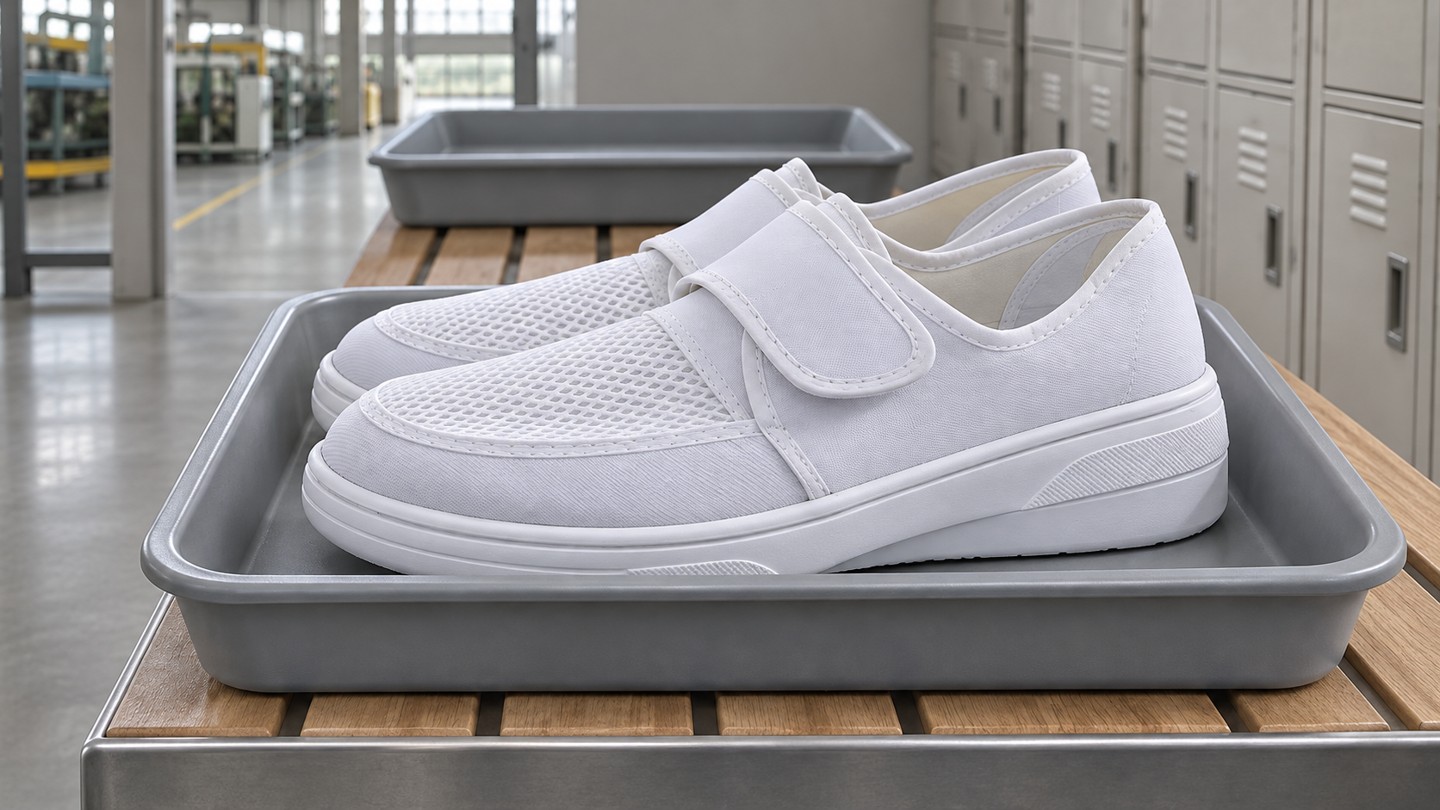
SWESD lists white mesh anti-static work shoes as a footwear option for electronics workshops. The visible product reference identifies the shoe being discussed; it does not establish approval for every floor, wearer or visitor activity. Before purchasing a visitor stock pool, request the supplied model’s documentation and confirm how the proposed footwear will be evaluated in the intended facility.
Reserve by usable size and approved status rather than total cupboard quantity. Several returned pairs awaiting review cannot fill the same need as a pair ready for issue. If the required size is unavailable, escalate before the visitor arrives. Quietly substituting another model, forcing an unsuitable fit or changing the visit route without authorization creates a different situation that the original reservation did not resolve.
Keep issue, entry and return as separate decisions
The following table helps the host and stock owner identify which evidence belongs to each stage. It proposes record fields, not electrical acceptance limits. The applicable site procedure and the actual product instructions determine how footwear is checked and released.
| Étape | Preuves à conserver | Décision |
|---|---|---|
| Reservation | Required size, approved item and host | Suitable stock available |
| Problème | Actual pair, visitor reference and time | Custody assigned |
| Entrée | Applicable check and actual result | Entry authorized or held |
| Changement | Replacement pair or changed activity | New review needed |
| Retour | Actual returned pair and exceptions | Physical receipt recorded |
| Révision | Condition and required care status | Ready, restricted or other disposition |
| Closure | Approver and final stock location | Assignment reconciled |
Issuing a pair records custody. Completing an entry check records the outcome of a particular verification activity. Returning the pair records physical receipt. Keeping these decisions separate prevents an inventory transaction from silently becoming an approval to enter the EPA or to lend the footwear again. The same person may perform several tasks, but the records should still show which decision was made.
Explain the entry procedure in usable language
Give the visitor a short explanation of how to put on and wear the assigned shoes, where to complete required verification, and who to contact if the fit or result is unacceptable. The explanation should use the actual equipment and route at that facility. A general induction video can provide context, but it cannot tell the visitor which local gate, tester or host has authority to release entry.
La Procédures de contrôle de base de l’Association EOS/ESD explain footwear and flooring as a system for personnel grounding. Keep that systems view when briefing visitors. A shoe that appears suitable in isolation does not establish the behavior of the actual person, shoe and floor combination. Apply the facility’s approved verification methods and limits rather than importing a number from an unrelated website.
If a visitor cannot complete the required check, stop the affected entry and ask the authorized person to resolve it. Do not coach someone to repeat a check until a convenient result appears. Keep the actual exception and action traceable. An alternative approved visit arrangement may be possible, but reception staff should not invent one while a group is waiting at the entrance.
For a broader explanation before the visit, use the existing guide to ESD footwear. Keep the visit checklist focused on custody, local entry decisions and return handling. It should not repeat a full footwear definition or replace the site’s training material.
Record changes during the visit
A change of destination, footwear or activity can invalidate assumptions made at reception. Tell the host how to obtain a new decision if the visitor moves to a different area or is asked to handle an assembly. A footwear issue number should not function as permission for unrestricted access throughout the building. The record needs enough scope to identify what was actually authorized.
Fit problems deserve a controlled response. If a pair is exchanged, record the first pair’s return and the replacement issue separately. Preserve which pair was worn during the relevant verification. Changes involving socks also need the applicable review; the sock-change compatibility article explains why the actual combination matters. Do not transfer a result automatically between changed combinations.
Receive returns into a review step
At departure, reconcile the assigned pair, actual returned items and any missing item. Keep returned footwear apart from ready stock until the required condition and handling decisions are complete. This separation can be managed by locations, trays or an existing status system, provided staff can identify what is waiting and who owns the next action. A visual arrangement without responsibility is easily bypassed during a busy shift.
Do not describe a returned pair as clean, disinfected or electrically acceptable merely because it looks undamaged. Use only the care methods supported by its instructions and the facility’s approved requirements. If a required cleaning or assessment process is unavailable, retain the restricted status and resolve that gap. This article makes no claim that a particular cleaning method restores footwear properties or permits reuse between people.
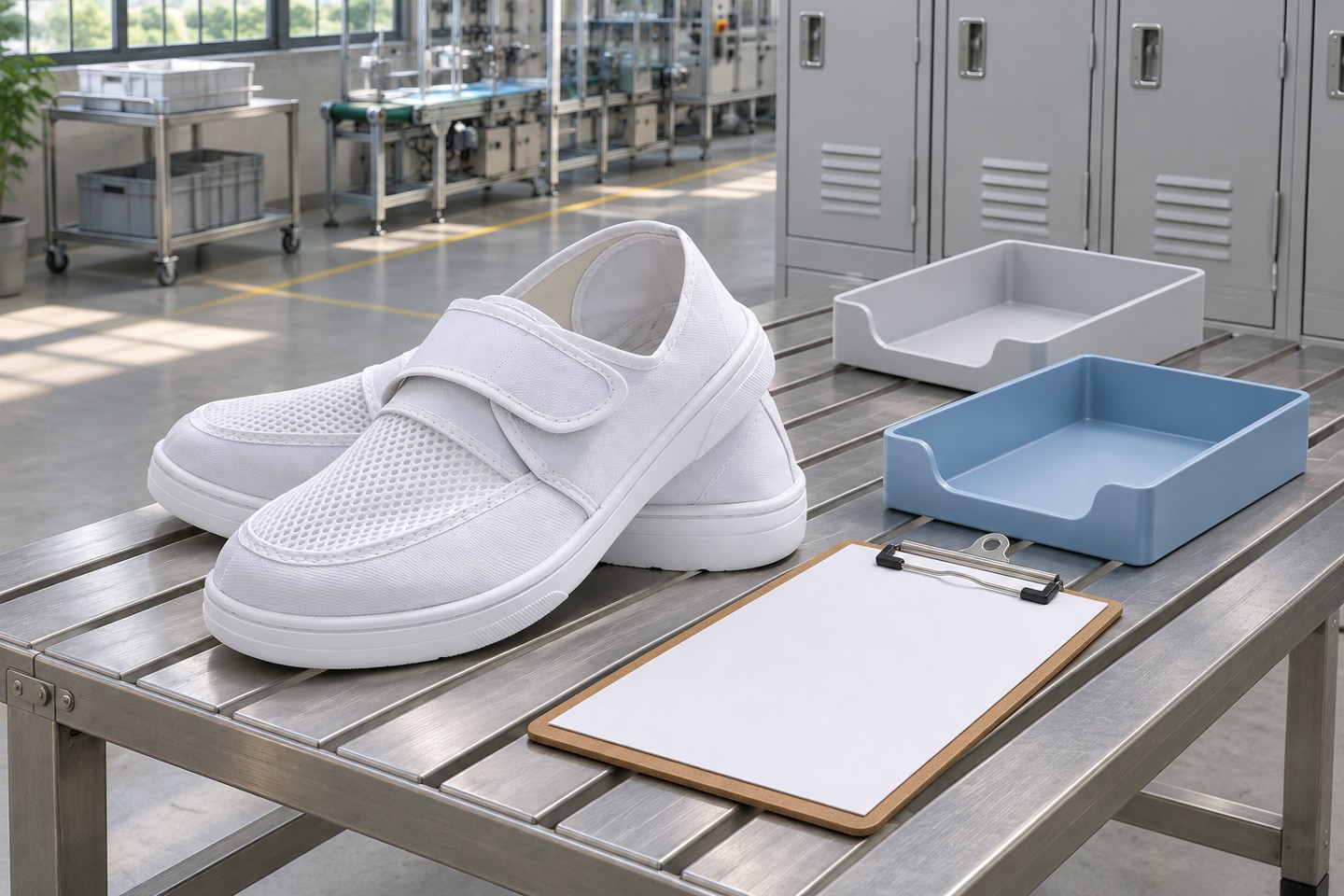
The stock owner should inspect for conditions within the approved review scope and refer defects through the appropriate route. The existing outsole condition review supports a separate physical inspection discussion. A completed inventory count cannot replace that review, and a satisfactory visual appearance cannot replace required electrical verification.
Handle missing pairs without rewriting the issue history
If only one shoe returns, record one returned item and the unresolved balance using an explicit unit. Do not book a complete pair back into ready stock. The same principle applies when a host returns shoes belonging to a different visitor allocation. Preserve the discrepancy, check the linked records and obtain an authorized correction rather than erasing the original issue to make the cupboard count agree.
For a hypothetical example, a host returns two pairs after a group visit but one recorded assignment is still open. The receiving person should identify the actual returned pairs before closing either assignment. This is a record-reconciliation example, not an account of a SWESD customer incident. The purpose is to preserve a reliable chain between the stock issued, the stock returned and the final disposition.
Review the lending pool before the next busy visit
Use recurring exceptions to improve preparation: unavailable sizes, unclear item identity, delayed return review and missing host ownership each require different remedies. Purchasing extra pairs will not solve an unclear release process. Conversely, a clear form will not create usable stock when approved sizes are absent. Review both physical readiness and the time needed for the actual preparation steps.
When requesting a quotation, state the intended visitor use, size mix, identification needs and documentation required for local evaluation. Ask how model or supply changes will be communicated. Do not assume that a visually similar replacement can inherit the previous approval. Keep procurement decisions linked to the facility’s evaluation process and the currently supplied product.
Educational context for hosts
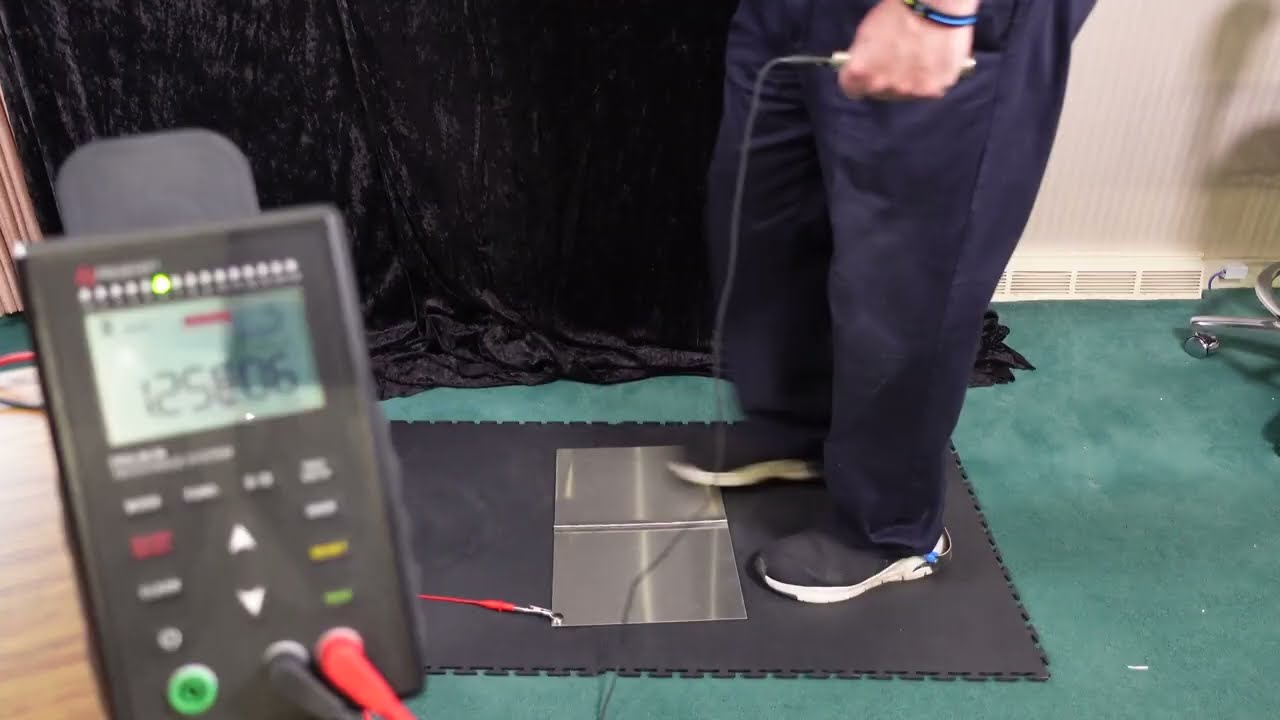
The following EOS/ESD Association educational video supports understanding of personnel grounding. It provides background for a host briefing; the local approved entry and lending procedure still governs the visit. The article remains complete without playback, and the embedded player does not start automatically.
Foire aux questions
Can an escort replace required footwear controls?
Suivez la procédure approuvée pour les visiteurs. La présence d’un accompagnateur ne dispense pas automatiquement de la mise à la terre ni des autres mesures de contrôle requises pour l’activité concernée.
Une paire de chaussures retournée peut-elle être remise directement au prochain visiteur ?
Uniquement après que les vérifications requises de l'état, de l'entretien et les décisions de remise en circulation ont été effectuées. Le simple retour physique ne constitue pas une autorisation pour une nouvelle délivrance.
Que faire si la taille réservée n’est pas disponible ?
Signalez le problème avant l’entrée et obtenez une solution de remplacement approuvée. Ne forcez pas un ajustement inadapté et ne remplacez pas discrètement le modèle par un autre.
Un résultat d'entrée peut-il être obtenu après le remplacement d'une paire ?
Ne le supposez pas. Préservez l'identité de la combinaison réellement vérifiée et suivez la procédure applicable de modification et de vérification.
Quelle quantité de données personnelles doit figurer dans le registre des stocks ?
Use the visitor reference needed by the approved process and avoid collecting unnecessary personal information in the footwear ledger.
Références
- EOS/ESD Association — Fundamentals Part 3: Basic ESD Control Procedures and Materials
- EOS/ESD Association — Fundamentals Part 4: Training and Auditing
Prepare the next issue from approved stock
Before the next visit, confirm a usable pair in the required size, a named host, the applicable entry process and a controlled return route. Send SWESD the intended use and documentation requirements when assessing footwear supply, then make the facility’s own suitability and release decisions before routine lending.
Laisser un commentaire