- Turbo
- Blog
A rouleau adhésif salle blanche Le programme utilise une surface collante pour ramasser les particules libres sur des surfaces planes approuvées, mais le rouleau n'est utile que lorsque son matériau, son pouvoir collant, sa taille, son parcours de nettoyage et sa règle de remplacement correspondent au processus. Il ne doit pas être considéré comme un outil de nettoyage universel ni comme un substitut à la procédure validée de contrôle de la contamination de l'installation. Un rouleau inadapté peut laisser des résidus, endommager des surfaces délicates, propager des matières d'une zone à une autre ou générer une charge électrostatique à proximité de composants électroniques sensibles. Ce guide aide les équipes des salles blanches, de l'électronique, de l'optique, des laboratoires et de la qualité à sélectionner un rouleau, à définir une méthode sûre, à vérifier les résultats et à préparer un cahier des charges d'achat complet.
Définissez la surface et la contamination avant de choisir un rouleau
Listez les surfaces à nettoyer : sols, murs, bancs, films, panneaux, outils, emballages ou autres éléments approuvés. Identifiez si la cible est constituée de particules sèches et libres, de fibres, de cheveux ou d'un autre contaminant. Un rouleau adhésif n'est pas conçu pour éliminer toutes les huiles, tous les films chimiques, tous les résidus biologiques ou toutes les particules fortement liées.
La sensibilité de la surface compte. Un rouleau adapté à un sol robuste peut ne pas convenir à une surface optique revêtue, à un film souple, à une zone en contact avec le produit ou à un panneau fraîchement fini. Testez une zone représentative pour détecter tout résidu, trace, force d'arrachement et altération de la surface avant d'autoriser une utilisation systématique.
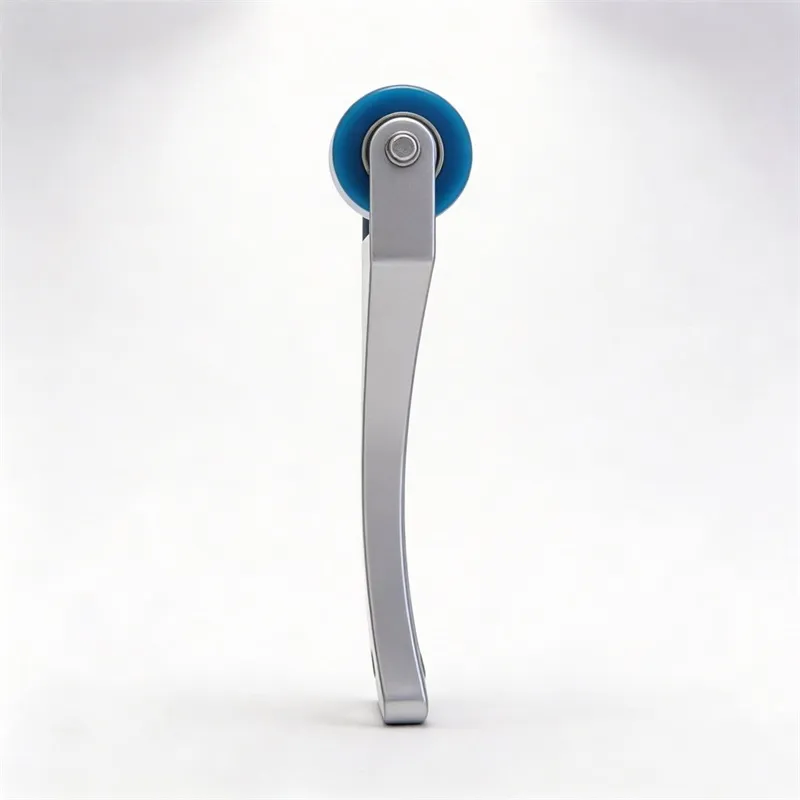
Choisissez le matériau du rouleau, l'adhérence et la géométrie comme un système
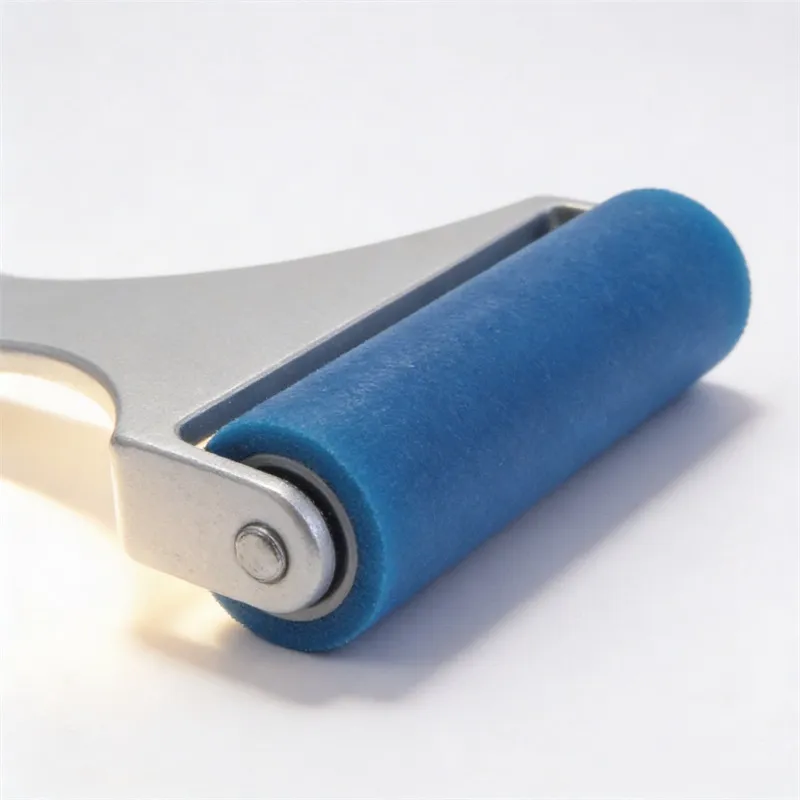
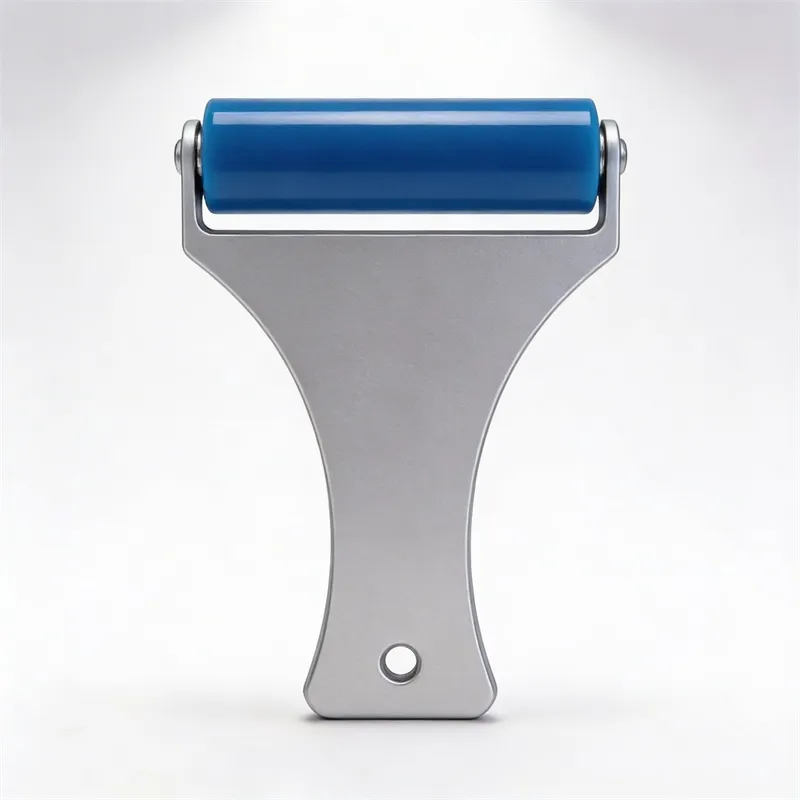
La description d'achat doit identifier le matériau du rouleau, le système d'adhésif ou de pouvoir collant, la largeur de travail, l'interface entre le mandrin et la manche, la texture de surface, l'emballage et l'environnement prévu. Un pouvoir collant plus élevé n'est pas automatiquement meilleur : il peut augmenter la traction, le risque de résidus ou les dommages sur les surfaces délicates.
Adaptez la largeur au trait contrôlé et à l'espace d'accès. Un grand rouleau peut couvrir efficacement les sols ou les murs, tandis qu'un petit rouleau à main peut atteindre les bancs et les zones localisées. Vérifiez si le rouleau peut maintenir un contact régulier sans pression excessive de l'opérateur ou passages répétés sur des débris déjà ramassés.
Séparer le contrôle de la contamination du contrôle ESD
Le ramassage de particules et le comportement électrostatique sont des fonctions différentes. Le mouvement, le pelage, le contact et la séparation peuvent générer une charge, en particulier autour des matériaux isolants. Si le rouleau doit être utilisé à proximité de matériel sensible aux décharges électrostatiques (ESD), incluez-le dans l'évaluation des risques de l'installation et vérifiez les conditions d'utilisation approuvées.
Ne qualifiez pas un rouleau de “ sûr pour les ESD ” en vous basant uniquement sur un argument marketing. Demandez quelle partie de l'assemblage est contrôlée, quelle méthode a été utilisée et dans quelles conditions environnementales. Maintenez les pièces sensibles exposées protégées ou retirez-les de l'opération de nettoyage à moins que la procédure ESD locale n'autorise explicitement cette tâche.
Rédiger une méthode de roulement contrôlée
Définissez le point de départ, la direction, le chevauchement, le nombre de passes, la pression appliquée et le point d'arrivée. Travaillez de la zone la plus propre vers la zone la plus sale lorsque la procédure de l'installation l'exige, et évitez les mouvements de va-et-vient incontrôlés qui peuvent redéposer les matériaux ramassés. Ne roulez pas sur des débris coupants qui pourraient endommager la surface.
Attribuez des rouleaux adhésifs aux zones ou aux tâches lorsque la contamination croisée est une source de préoccupation. Stockez-les couverts et identifiés. Les opérateurs ne doivent pas toucher la surface adhésive, placer le rouleaux sur un établi non contrôlé, ni le déplacer entre les pièces sans les étapes de transfert et d'emballage spécifiées.
Définir une règle de remplacement observable
La surface d'un rouleau perd sa capacité de captage utile à mesure que des particules recouvrent la zone adhésive. Le remplacement doit avoir lieu avant que l'accumulation ne provoque une redéposition, des traînées, un contact irrégulier ou une pression excessive. Définissez des exemples visuels et des limites basées sur les tâches lors de la validation plutôt que d'utiliser un nombre universel arbitraire de passes.
Certains rouleaux exposent une couche fraîche ; d'autres nécessitent une recharge ou un remplacement complet. Documenter la manière dont la surface usagée est retirée sans libérer les particules capturées. Enregistrer les informations relatives au lot ou au numéro de série si nécessaire, et examiner tout résidu inattendu, odeur, délaminage ou variation du pouvoir collant avant de poursuivre l'utilisation.
Tableau de sélection et de qualification
| Facteur de sélection | Risque si non défini | Contrôle pratique |
|---|---|---|
| Surface approuvée | Dommages ou transfert de résidus | Test sur matériel représentatif |
| Type de particule | Mauvais prélèvement ou redéposition | Observer la surface avant et après |
| Niveau d'équipement | Reprise insuffisante ou traction excessive | Essai comparatif contrôlé |
| Largeur et poignée | Contact irrégulier et fatigue de l'opérateur | Évaluation de la portée et de la course |
| Règle de remplacement | Un rouleau chargé répartit des particules | Limite visuelle et instruction de tâche |
| environnement ESD | Génération de charges à proximité d'éléments sensibles | Évaluation locale des risques ESD |
Effectuer un essai contrôlé de premier article
Utilisez un échantillon documenté qui représente la construction de production proposée. Comparez-le avec l'article approuvé actuel lorsqu'il en existe un. Enregistrez l'identification, la révision, le lot du fournisseur, les conditions environnementales, l'équipement, les opérateurs et les observations. Un essai doit couvrir la réception, le stockage, la préparation, l'utilisation normale, le nettoyage le cas échéant, ainsi que l'élimination ou le retour. Arrêtez l'essai si l'article endommage un produit, crée une contamination, interfère avec l'équipement ou entre en conflit avec la ESD ou la procédure de sécurité.
Séparez les critères de réussite des observations. Les dimensions, l'étiquetage, l'ajustement, la fabrication, les preuves matérielles et le comportement fonctionnel peuvent nécessiter des contrôles différents. Résolvez les écarts avant d'approuver les quantités de production, et conservez le dessin contrôlé, le rapport et l'échantillon d'approbation. Exigez une notification du fournisseur avant toute modification de la source de matériau, d'additif, d'adhésif, de construction, d'outillage, de processus ou de dimension critique.
Contrôle à réception et contrôle en cours de fabrication
- Vérifiez que l'article, la révision du plan, la quantité, le lot fournisseur et l'étiquette d'emballage correspondent à la commande.
- Inspecter pour détecter toute contamination, dommage, mauvaise exécution, dimensions incorrectes et absence d'identification.
- Effectuer l'échantillonnage et la vérification convenus selon une méthode documentée et à l'aide d'équipements étalonnés lorsque des mesures sont nécessaires.
- Mettez en quarantaine tout changement inexpliqué de couleur, d'odeur, de texture, de pégosité, d'ajustement, d'enroulement, de géométrie ou de performance.
- Conserver les registres de réception et lier les réclamations ou les défaillances au lot concerné.
- Révisez la spécification lorsque le produit, l'équipement, l'itinéraire, la méthode de nettoyage ou le plan de contrôle change.
Liste de contrôle RFQ pour les acheteurs
Précisez l'application, la limite de protection, l'interface de l'équipement ou de la pièce, les dimensions et tolérances, la composition des matériaux, la fonction requise, la méthode d'essai et les critères d'acceptation, les exigences de propreté et de fabrication, l'emballage, l'étiquetage, la traçabilité, la quantité d'échantillons, les attentes concernant le premier article, la documentation, la notification de modification et la quantité de livraison. Référencez le Rouleau adhésif manuel pour salle blanche SWESD pour le type de produit actuellement affiché, et utilisez le Centre de produits SWESD pour le coordonner avec les équipements de manutention associés.
Demandez au fournisseur de lister ses hypothèses et exceptions. Évitez de copier des affirmations de catalogue non vérifiées dans un cahier des charges contrôlé. Les limites techniques, les certifications et les déclarations de conformité doivent être examinées au regard de l'article effectivement fourni et de l'application de l'acheteur.
Comparez les échantillons dans les mêmes conditions
Une comparaison utile ne modifie qu'une seule décision à la fois. Utilisez les mêmes pièces représentatives, opérateurs, équipements, itinéraires, préparations de nettoyage et périodes d'observation pour chaque candidat. Étiquetez les échantillons afin que les évaluateurs ne confondent pas l'identité du fournisseur, la révision ou la séquence de test. Lorsque cela est pratique, incluez l'article actuellement approuvé comme référence. Enregistrez à la fois le comportement réussi et le travail nécessaire pour y parvenir, tel qu'un réglage supplémentaire, un nettoyage répété, une manipulation plus lente ou l'intervention de l'opérateur.
Ne combinez pas les conclusions électriques, mécaniques, de propreté et commerciales en un seul score vague. Un candidat peut convenir parfaitement mais manquer de preuves matérielles traçables, ou disposer d'une documentation solide tout en obtenant de mauvais résultats sur la machine. Maintenez des critères de réussite distincts pour la sécurité, le contrôle ESD, la protection du produit, la compatibilité des équipements, la contamination, l'ergonomie, la documentation et le coût du cycle de vie. Tout échec critique doit être résolu plutôt que masqué par une moyenne élevée.
La comparaison commerciale doit utiliser le coût d'un processus achevé et accepté, et non seulement le prix par pièce. Incluez l'effort d'inspection, le temps de changement de série, les déchets, le nettoyage, le remplacement, le risque d'indisponibilité, la logistique des retours, la documentation et l'effet de lots inconsistants. Ces facteurs ne justifient pas d'inventer une allégation de durée de vie ; ils aident l'acheteur à concevoir un essai qui mesure les conditions qui génèrent réellement des coûts.
Ressources de planification SWESD associées
- comparer les lingettes ESD avec les lingettes pour salle blanche
- planification du remplacement des fournitures ESD et SMT
- évaluation de produits de nettoyage antistatiques
Vidéo éducative : Contamination électrostatique dans les salles blanches
Cette vidéo éducative de l'IEST explique le lien entre le comportement électrostatique et la contamination, ce qui est directement pertinent lors du roulage de surfaces à proximité de composants électroniques sensibles. Le guide écrit reste complet sans la vidéo.
Ouvrez cette vidéo de l'IEST sur YouTube.
Foire aux questions
Que retire un rouleau adhésif pour salle blanche ?
Il est principalement utilisé pour ramasser les particules libres sur les surfaces approuvées. Ce n'est pas une méthode universelle pour les huiles, les films chimiques, les résidus biologiques ou la contamination fortement adhérente.
Une plus forte adhérence initiale est-elle toujours préférable ?
Non. Une pégosité excessive peut augmenter la résistance, le risque de résidus ou endommager la surface. Sélectionnez-le par le biais d'un essai sur un matériau représentatif.
À quelle fréquence la surface d'un rouleau doit-elle être remplacée ?
Remplacez-le avant qu'un chargement ne provoque un faible niveau de ramassage, une redéposition, des traînées, un contact irrégulier ou une pression excessive. Établissez cette règle lors de la validation du processus.
Le même rouleau peut-il se déplacer entre les zones de salle blanche ?
Seulement si la procédure de l'installation le permet explicitement. Des rouleaux dédiés et identifiés réduisent le risque de transporter la contamination d'une zone à une autre.
Laisser un commentaire