- Blog
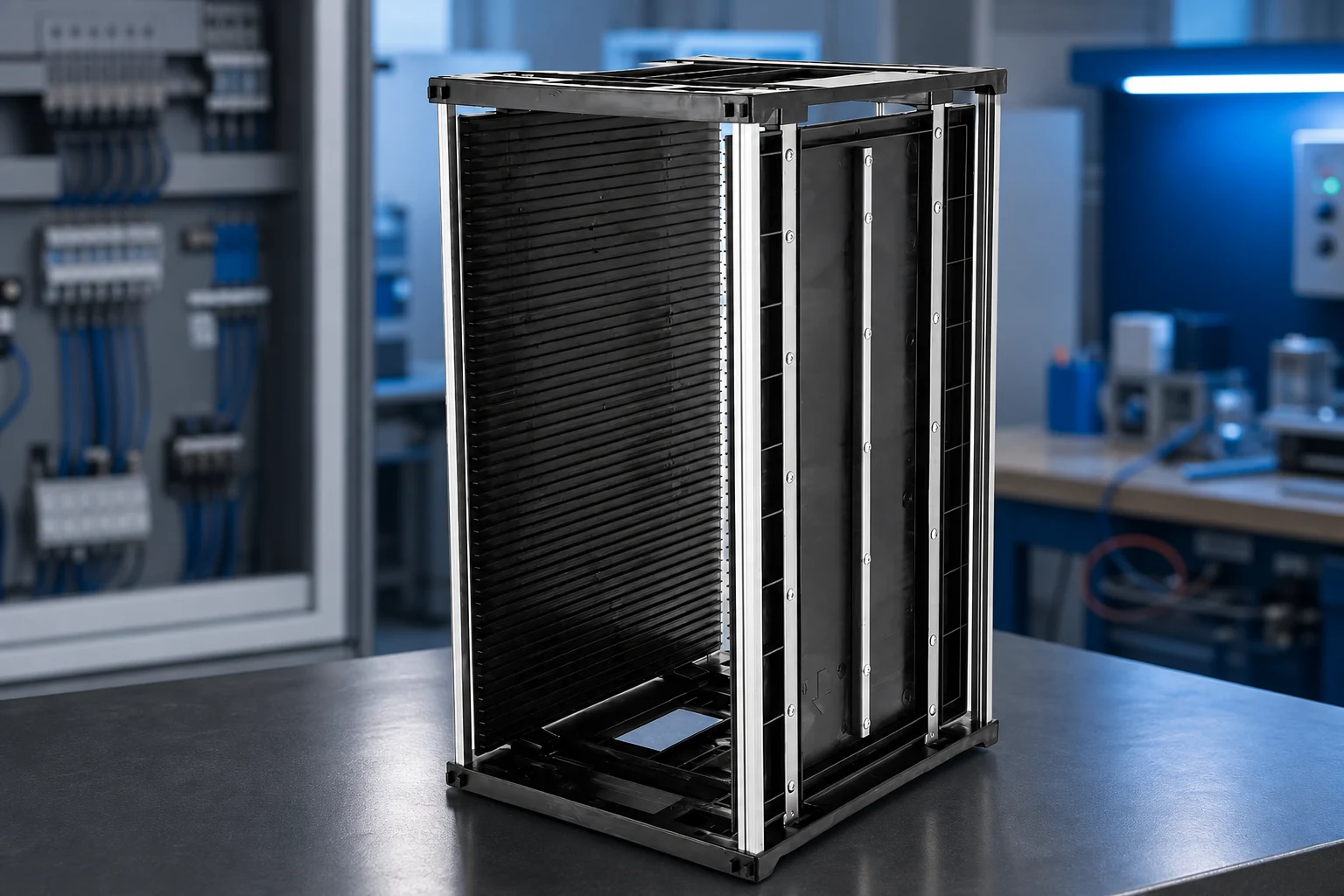
Un rack à magazines ESD à base galvanisée doit être spécifié par les conditions au sol, et non par une simple étiquette de revêtement. Décrivez où se trouve le rack, comment il se déplace, ce qui entre en contact avec la base, et quels détails de configuration actuels le fournisseur doit confirmer.
Partie 1 : Commencer par la condition de fonctionnement
Le terme “ base galvanisée ” n'est utile que lorsque la construction demandée est liée à son utilisation réelle. Un rack qui reste dans un poste propre peut nécessiter une étude différente de celui qui traverse des zones de travail, est nettoyé fréquemment ou est stationné près d'une limite de procédé.
Nous avons besoin de ce rayonnage pour le stockage de notre entrepôt. Il s'agit d'un modèle mobile. L'inspection après la livraison sera effectuée par notre responsable de la sécurité. Pourriez-vous nous faire parvenir un devis ?.
Partie 2 : Définir la limite de base
La base est un élément du bâti, et non la preuve de l'ensemble de la configuration. Dissociez la demande concernant le matériau ou la finition de la base de celle concernant le cadre, le panneau, la fente, la roulette, le pied et les exigences de manipulation des cartes.
Cette distinction évite qu'une demande générale de “ résistance à la corrosion ” ne soit confondue avec une promesse de performance vérifiée. Elle permet également à un fournisseur d'identifier plus facilement quel détail nécessite une confirmation.
Partie 3 : Enregistrer les données relatives au contact avec le sol et au nettoyage
Listez le type de sol, les points de contact prévus, la méthode de nettoyage, l'exposition aux drains ou aux déversements, et si l'unité sera déplacée. Si les roulettes, les pieds ou un emplacement de stationnement ont de l'importance, incluez-les dans la même demande.
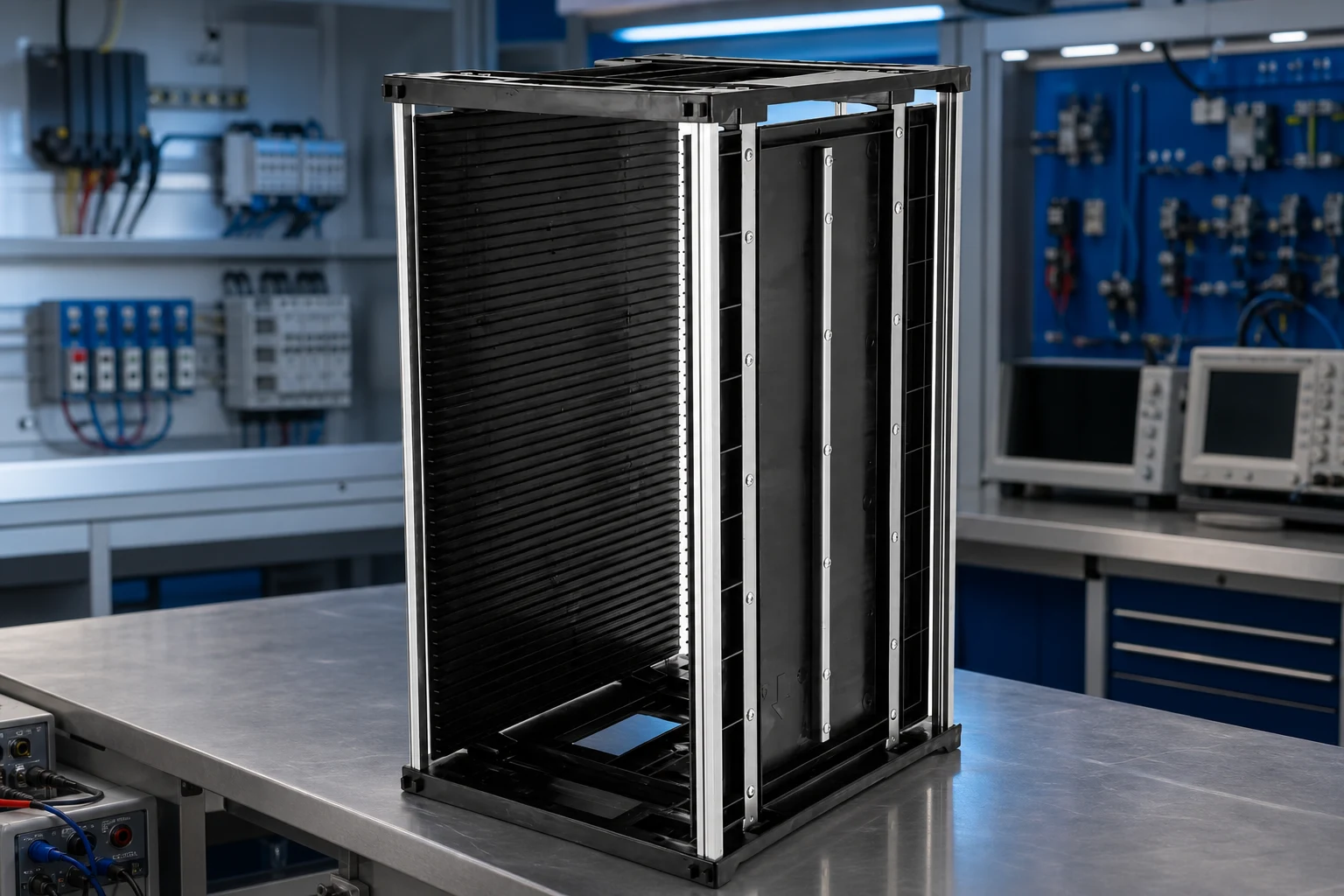
La index des publications de l'industrie de la galvanisation propose une formation générale sur la protection contre la corrosion. Il ne détermine pas la durée de vie ni les spécifications d'un support ESD particulier, ces éléments devant donc être confirmés par le fournisseur.
Partie 4 : Garder le processus ESD à l'esprit
Une évaluation de base ne doit pas remplacer l'évaluation de la manipulation des ESD par l'acheteur. Le Aperçu des normes de l'ESD Association est utile pour le contexte plus large du programme de contrôle, tandis que la configuration spécifique du rack nécessite toujours la confirmation du fournisseur actuel.
Décrivez le cheminement des cartes, la méthode de chargement et le journal d'inspection ainsi que l'état du sol. Cela donne à l'évaluation un contexte de processus sans faire d'affirmation non étayée sur la mise à la terre ou la résistance.
Important : Une description de galvanisation ne permet pas à elle seule de vérifier la durée de vie contre la corrosion, le comportement électrique ou l'adéquation sur un site particulier. Demandez les détails de la configuration actuelle et effectuez une inspection par rapport aux conditions convenues. Source : Catégorie Porte-revues ESD SWESD.
Partie 5 : Demandez des preuves vérifiables
Demandez un dessin actuel ou une image de produit marquée qui identifie la base, les points de contact et tous les composants de mobilité. Associez-le à la déclaration d'utilisation de l'acheteur et à une liste concise de questions d'acceptation.
Pour une comparaison de terminologie, voir que signifient les bases en métal et en plastique sur les racks à magazines ESD. Cet article est une référence latérale ; la construction finale doit encore être confirmée pour la configuration demandée.
Partie 6 : Mettez ces champs dans la demande de l'acheteur
| Entrée de demande de devis | Pourquoi c'est important |
|---|---|
| Description de base demandée | Précise le détail de construction à confirmer. |
| Type de sol et points de contact | Cadre la révision de l'environnement. |
| Conditions de nettoyage et de déversement | Empêche les suppositions concernant l'exposition à la maintenance. |
| Mobilité, roulettes, pieds et emplacement de stationnement | Identifie les parties qui touchent ou se déplacent sur le sol. |
| Preuve d'inspection requise | Demande un dessin, des photos ou un autre compte rendu d'examen convenu. |
Utilisez ce tableau avec une description de la manutention des planches. Il est plus concret que de demander une garantie générale contre la corrosion.
Partie 7 : Sélectionnez le prochain itinéraire de révision
Commencez par le Catégorie de présentoirs de magazines ESD et utiliser Contacter Sanwei pour envoyer les détails de l'environnement et les questions d'acceptation. Demandez une réponse qui identifie la configuration actuelle en cours de discussion.
Ne recommandez pas de configuration nommée tant que la construction de base réelle et les conditions de service ne sont pas confirmées. Si la méthode de réglage est également pertinente, Guide de demande de devis pour porte-revues à poignée réglable peut aider à garder cette question de sélection séparée documentée.
FAQ
Que signifie “ base galvanisée ” dans une demande de devis (RFQ) pour un rack de magazines ESD ?
Utilisez-le pour identifier la construction de base demandée, puis demandez au fournisseur de confirmer la configuration actuelle par rapport aux conditions de fonctionnement décrites dans la demande.
Une base galvanisée prouve-t-elle la résistance à la corrosion pour tous les sites ?
Non. L'exposition, le nettoyage, les points de contact et les conditions de maintenance varient. Ne considérez pas une étiquette de revêtement comme une garantie de performance spécifique au site.
Quelles conditions de contact avec le sol doivent être incluses dans la demande ?
Inclure le type de sol, les points de contact, la méthode de nettoyage, l'exposition aux déversements ou au drainage, la mobilité et l'emplacement de stationnement normal du rack.
Une revue de base doit-elle remplacer une revue du processus ESD ?
Non. Maintenez le lien avec le processus de manipulation des cartes et les exigences du client en matière de contrôle des ESD, puis obtenez une confirmation spécifique à la configuration.
Que doivent inspecter les acheteurs à l'arrivée du rack ?
Comparez l'unité livrée avec le dessin approuvé ou l'image marquée, les caractéristiques de base indiquées et les questions d'acceptation enregistrées dans la consultation.
Quand une revue de configuration des fournisseurs est-elle nécessaire ?
Demandez-en un chaque fois que la construction de la base, l'exposition du plancher, les composants de mobilité ou les preuves d'acceptation ne sont pas déjà confirmés pour l'utilisation prévue.

Laisser un commentaire