- Turbo
- Blog
Cleanroom wipe solvent compatibility concerns the complete combination of wipe, liquid, surface and work instruction. A wipe that absorbs a liquid is not automatically suitable for cleaning a sensitive surface with it. Qualification should check whether the combination changes the wipe, transfers residue, affects the surface or fails the required cleaning outcome. Begin with the approved liquid and the surface manufacturer’s restrictions, then obtain evidence for the exact wipe construction and intended use. This guide describes a controlled evaluation; it does not recommend a solvent, mixing ratio or substitute for a workplace chemical-safety procedure.
Define the exact combination to be approved
Record the wipe product and supplied state, the complete liquid designation, the surface or equipment and the planned wiping sequence. Identify whether the liquid is added at the station or supplied with the wipe. Include any relevant dilution, storage and dispensing conditions only as specified in the approved work instruction. A change in any constituent can create a different configuration requiring review.
Describe the residue or contamination the task must remove and the final surface condition required. A housekeeping wipe on an exterior enclosure has a different boundary from a wipe contacting a sensitive production surface. Keep those uses separate. A favorable result on an easy test panel should not silently approve another material, finish, coating or process stage that was never represented in the trial.
Start with safety and manufacturer restrictions
Use the current safety information and the site’s approved controls for the actual liquid. The responsible workplace and process owners determine ventilation, protective equipment, ignition controls, storage and disposal. Do not choose an exposure or handling arrangement merely because it makes a comparison convenient. If the proposed task conflicts with equipment or surface instructions, resolve that conflict before starting a trial.
Obtain the surface manufacturer’s cleaning restrictions and the wipe supplier’s current information. A broad compatibility chart can be a screening input, but check which material, liquid and conditions it covers. It is not a universal guarantee for every component in an assembled product. This article provides no permission to mix chemicals, heat a liquid or use an unapproved substitute.
Identify the offered wipe and its evidence
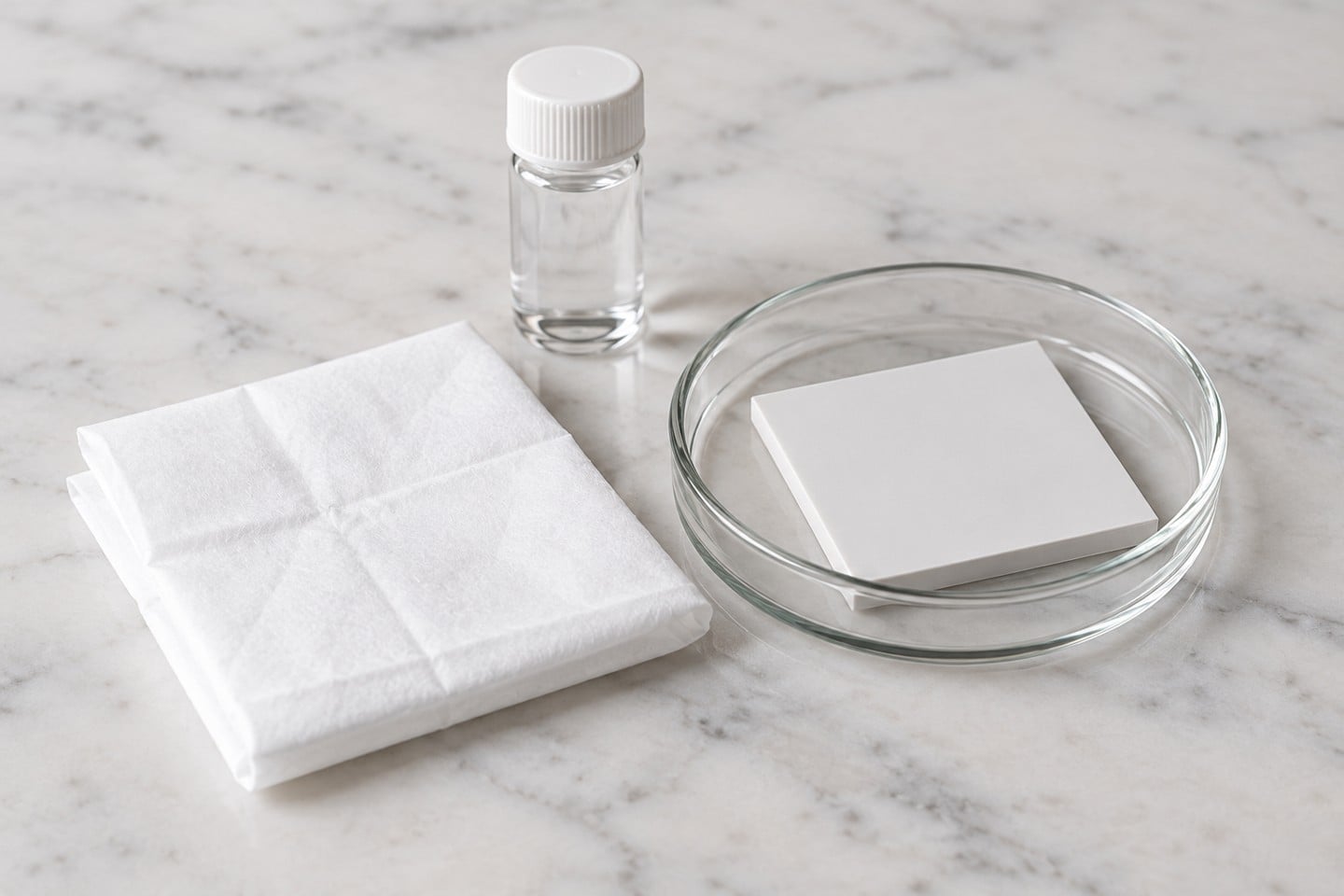
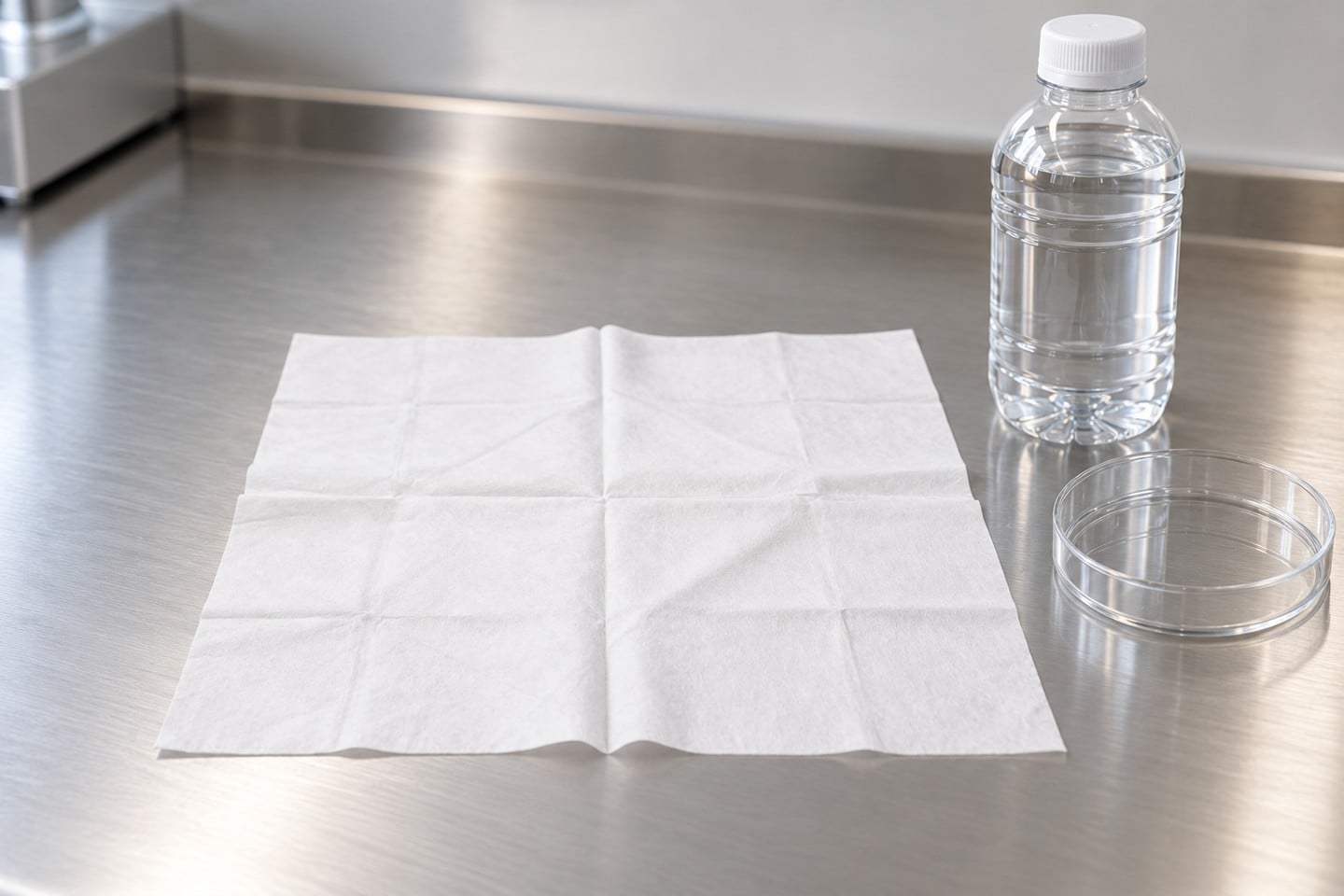
Record material, construction, size, edge treatment, processing, packaging and product identity. For a SWESD precision wiper request, describe the intended liquid and surface and ask what evidence applies to the exact offered version. A photograph of a white wipe cannot establish chemical compatibility, extractable content or a cleaning approval.
Das IEST wiping-material practice overview supports a structured discussion of wipe evaluation with a qualified laboratory. Use the applicable complete procedure and process requirements rather than inventing a universal pass limit. Ask whether supplier data concern material screening or an actual wiping task, and retain the specimen preparation and limitations with the result.
Separate uptake from material compatibility
A liquid can enter a wipe without proving that the combination remains suitable for the application. Inspect the relevant material condition under the approved assessment: changes in appearance, integrity, handling or other properties required by the process owner. Do not infer a chemical mechanism from a visual change alone. Record observations and obtain appropriate technical interpretation when a result is unexpected.
Das wipe absorbency guide addresses liquid uptake and wetting as separate measurements. Those results help describe behavior under their methods but cannot replace compatibility evidence. Conversely, an acceptable material-screening result does not prove useful liquid delivery or residue removal. Keep the distinct questions visible in the qualification matrix instead of assigning one overall solvent-proof label.
| Requirement | Evidence needed | Separate limitation |
|---|---|---|
| Identity | Exact wipe, liquid and surface | Generic names do not identify a qualified combination |
| Safety and restrictions | Current information and approved workplace controls | A material test does not authorize chemical use |
| Belichtung | Defined preparation, contact and endpoint | Immersion and wiping are different studies |
| Surface outcome | Required removal and surface-condition evidence | No visible film does not prove chemical cleanliness |
| Change control | Configuration and review triggers | A prior pass does not cover every formulation or surface |
Define the exposure and specimen preparation
Agree the procedure with the responsible laboratory or process engineer. Specify the sample identity, liquid, preparation, contact arrangement and observation endpoint required to answer the actual question. Record conditions and deviations. A prolonged immersion experiment and a normal wipe contact are different studies; do not present one as the other or derive a service lifetime from an unsupported acceleration rule.
Handle samples with appropriate tools and containers under the approved chemical procedure. Retain relevant controls and unexposed references where the plan requires them. Do not rinse, preclean or otherwise treat a specimen without recording the step. Such preparation can change what the sample represents and make an apparently favorable result irrelevant to the wipe as supplied at the workstation.
Evaluate what transfers to the surface
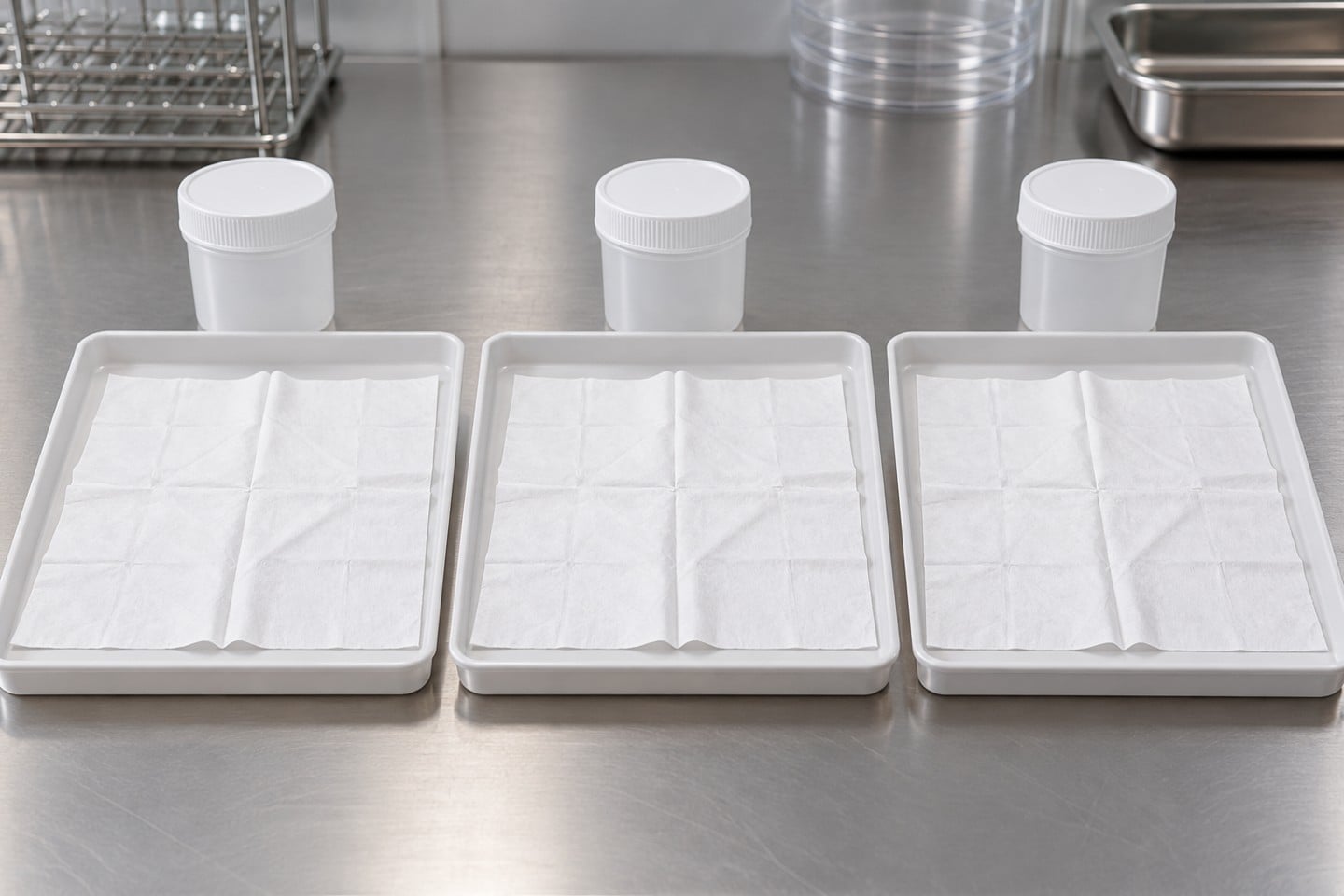
Inspect the representative approved surface after the defined task. Review residue, streaks, material transfer, appearance changes and the required cleaning outcome using the process’s chosen methods. Absence of a visible film is not proof of chemical cleanliness. If the application needs analytical evidence, define the method and acceptance basis with a competent owner rather than relying on a photograph.
Das wipe ionic contamination guide explains how specimen preparation and extraction conditions affect analytical interpretation. It does not establish compatibility with every liquid. Use suitable material and process evidence together, while preserving what each method measures. A supplier’s result for one preparation state should not be transferred to another without a supported assessment.
Review the whole assembly rather than a bare panel
If the intended surface includes a coating, adhesive, seal, printed marking or other constituent, determine whether the trial represents it. A liquid acceptable on the underlying material can still conflict with another part of the assembly. The equipment or product manufacturer and process owner should identify the relevant restrictions; a wipe supplier cannot independently approve an unidentified assembled product.
Use safe representative samples or approved nonproduction fixtures while the combination remains unqualified. Record exactly which finish, part revision and condition were tested. If the actual assembly cannot be represented, state the remaining evidence gap. Do not turn a successful test on a convenient generic coupon into an unsupported approval for all surfaces that look similar.
Make the operator trial repeatable
Keep liquid identity, amount added under the work instruction, folding, contact sequence and endpoint consistent. Give participants the same approved instructions and record the actual observations. Avoid changing wipe construction and cleaning technique together unless the trial is explicitly evaluating a new complete process. Otherwise an improved outcome may not explain which change mattered.
Record unsuccessful attempts, unusual handling and any surface effects. Do not remove a failed result because a later attempt looked better. A process release should explain the accepted configuration and operating boundary, with a route for reporting changes. Speed and cost are useful only when the required cleaning result and all applicable safety and product restrictions remain satisfied.
Keep cleanroom and ESD decisions separate
Das IEST ISO 14644-18 overview concerns suitability of cleanroom consumables in relation to requirements. A room classification or a single favorable material test is not complete approval for the wiping process. Maintain separate evidence for particles, extractables, surface condition, handling and any relevant electrical requirements.
For broader selection, use the ESD cleanroom wipe guide. A chemical-compatibility result does not establish low charging or resistance behavior, and an ESD designation does not prove liquid compatibility. The approved arrangement must meet the actual requirements of the station. State who owns each acceptance decision so that one certificate does not obscure missing evidence in another category.
Control liquid, dispensing and storage changes
Define which changes trigger review: wipe construction, liquid formulation, supplier, packaging, dispensing system, preparation or surface revision. Keep current manufacturer information linked to the work instruction. A repeat order for the same general material name should not bypass a relevant change to the actual combination used in production.
Record how opened or prewetted stock is identified, protected and disposed of according to the approved instructions. This guide assigns no storage period or reuse practice. If identity, condition or history is missing, isolate the material for the responsible owner rather than blending it into accepted stock. Traceability keeps a qualification decision attached to the configuration that was actually evaluated.
Write the release and RFQ around evidence
Provide the exact task, product identity, liquid and surface restrictions in the enquiry. Request relevant reports with their methods and specimen conditions, plus production-intent samples for the agreed application trial. Ask the supplier to distinguish supported evidence from a general marketing description. Keep accepted and rejected trials together with the resulting limitations.
A useful release states what combination was tested, what outcome was required and what remains outside its scope. It avoids a universal solvent-compatible claim that no single test can establish. This gives purchasing and production a repeatable basis for using the accepted wipe while preserving the chemical-safety, surface-protection and contamination requirements that govern the real task.
Educational background
The EOS/ESD Association video below provides electrostatic-control context. It does not demonstrate chemical compatibility or authorize a cleaning liquid. Follow the applicable manufacturer information and approved workplace and process procedures.
Häufig gestellte Fragen
Does liquid uptake prove compatibility?
No. Evaluate material integrity, transfer, surface condition and the actual cleaning outcome separately.
Can a wipe supplier approve every equipment surface?
No. Obtain the equipment or surface restrictions and assess the exact assembly with the responsible owner.
Does this guide recommend a solvent?
No. It describes qualification; current manufacturer information and approved workplace procedures govern chemical selection and handling.
Can an immersion result be called a wiping trial?
No. Record the actual exposure and preserve its limitations.
When should approval be reviewed?
Review relevant changes to wipe, liquid, dispensing, surface, preparation and work instruction before extending the accepted scope.
Schreiben Sie eine Antwort