- Turbo
- Blog
ESD shoe damage inspection should consider the shoe’s physical condition as well as its electrical verification status. A split sole, detached upper or fastening that no longer holds the foot securely needs a documented decision before continued use. A passing personnel tester result does not establish that damaged footwear remains mechanically suitable. Hold the affected pair, provide an approved alternative where available, and refer repair or replacement questions to the responsible workplace and ESD personnel. This article concerns structural damage after issue, rather than removing dirt from otherwise serviceable soles.
Give physical condition its own release decision
An electronics workplace may use footwear to support static control while also needing secure fit, suitable traction and protection against local hazards. Those functions require different evidence. An ESD entry check addresses a defined electrical path under its test conditions. It does not inspect stitching, determine remaining tread condition or approve a shoe for an impact hazard. Keep physical inspection findings visible even when another check produces an acceptable result.
The CCOHS safety footwear guidance recommends regular damage inspection and addressing worn or defective footwear. Its safety-footwear scope should not be mistaken for proof that an ordinary ESD shoe has a protective toe cap or any particular certification. Apply the applicable instructions to the actual supplied item and the workplace hazard assessment. A product described as anti-static should not be assumed to provide electric shock protection.
Identify the pair and the work it supports
Start with the issued item, size, wearer and use location. Record the model or stock code and the date issued if known. Photograph the condition before any attempted repair and distinguish the left and right shoe. A complaint about a loose strap cannot be investigated effectively if several unidentified pairs are mixed together on a bench. Use the existing issue record rather than assigning a separate informal product identity.
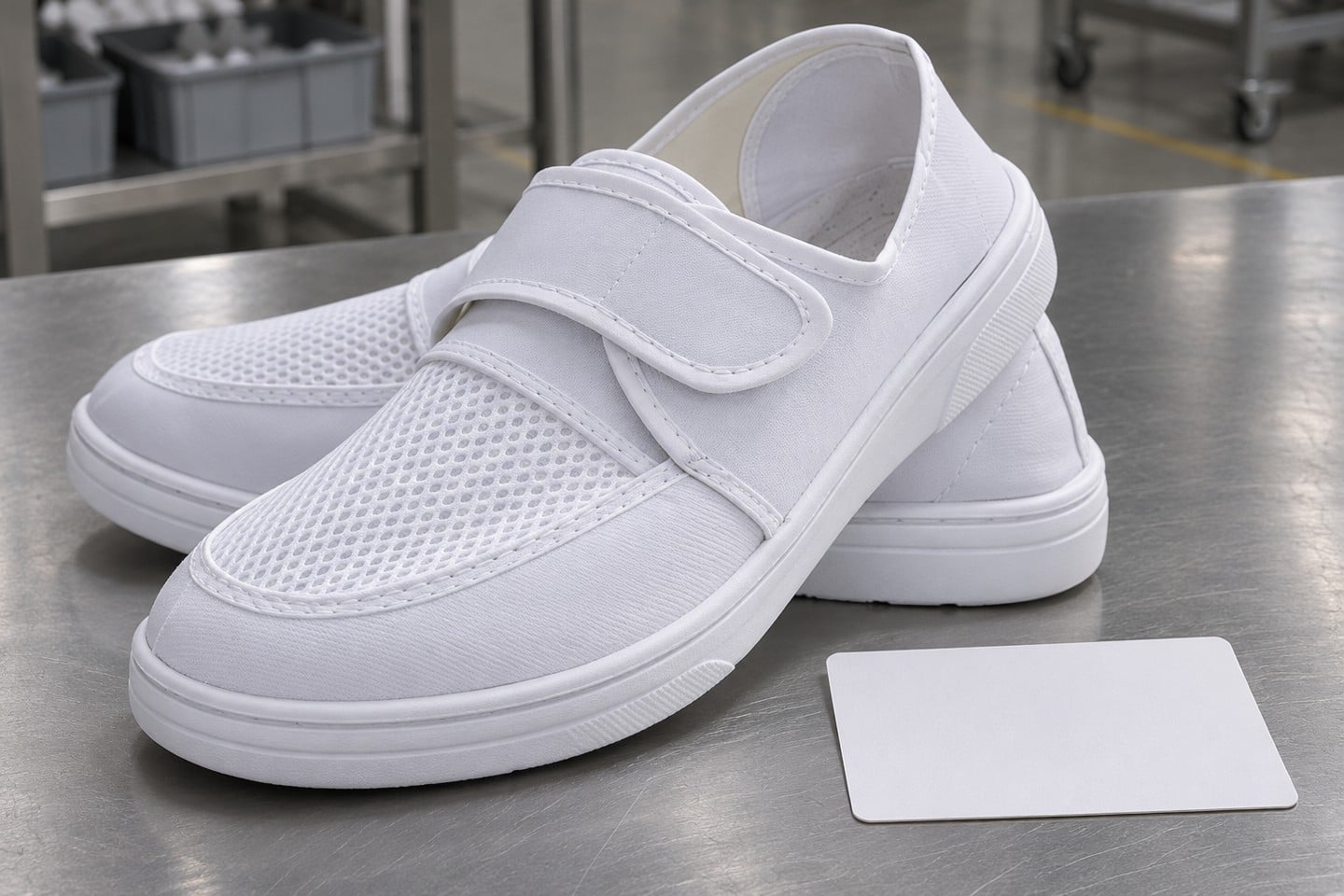
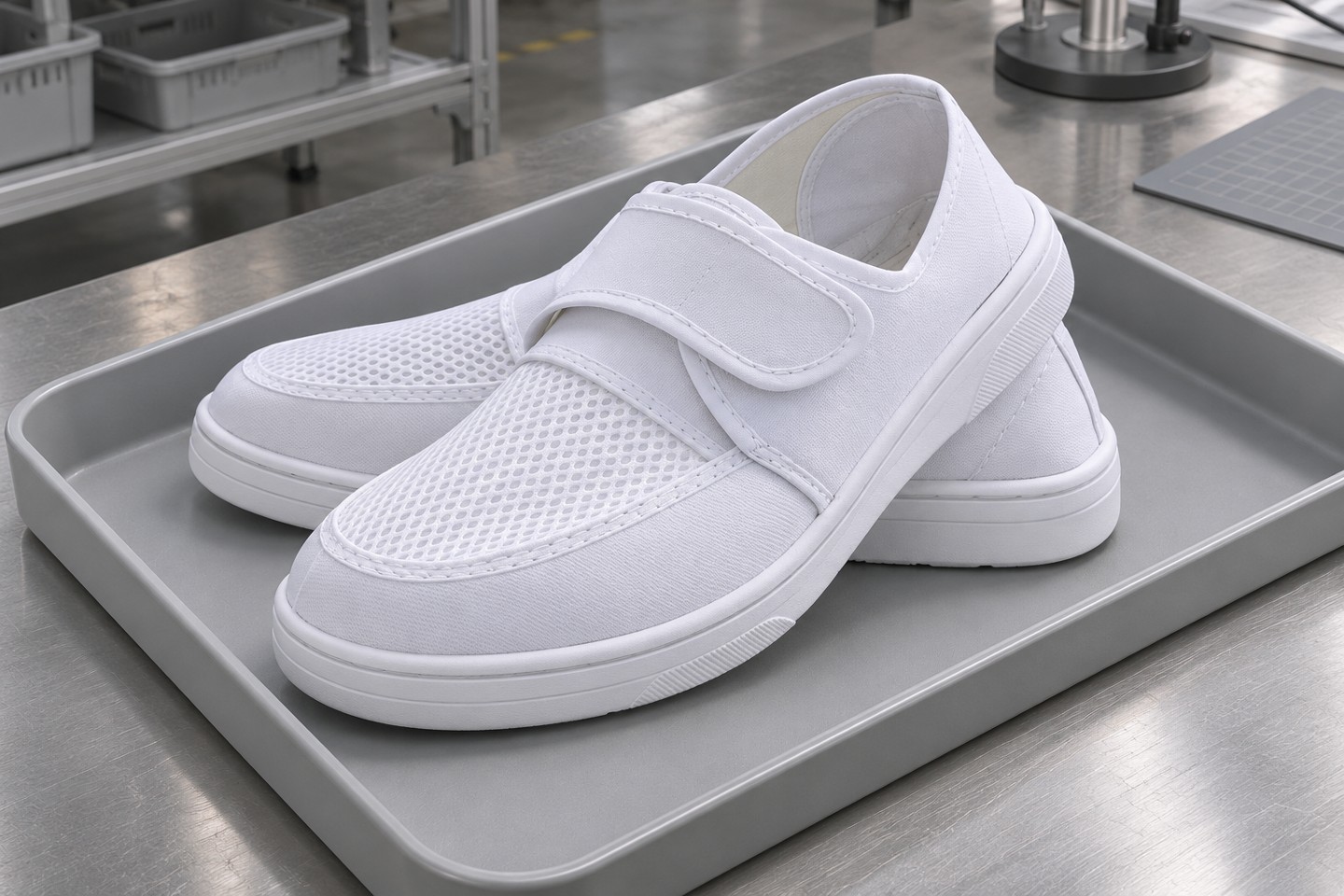
The SWESD anti-static shoe product is the visual product reference here. Its white mesh and instep fastening do not establish impact, chemical, slip or other protective ratings. For broader selection, consult the ESD footwear overview. Confirm the delivered construction and documentation before adopting any replacement, particularly if a different style is being introduced to solve a recurring fit problem.
Inspect the areas that retain the foot
Check the closure, surrounding attachment points, heel area and upper-to-sole connection using the manufacturer’s instructions. Look for openings, pulled stitching, separation and distortion that could affect secure wear. Describe the location and extent in plain language. Avoid pulling aggressively on a questionable seam merely to see whether it will fail; the inspection itself should not introduce unnecessary damage or destroy useful evidence.
A fastening problem can be missed when the shoe is inspected only while empty. Where safe and permitted, the responsible person can assess fit using the approved procedure and the wearer’s normal work arrangement. Do not ask someone to walk around in footwear already judged unsafe to demonstrate the complaint. Obtain the wearer’s account of when movement or slipping was noticed and preserve it separately from the inspector’s findings.
Distinguish damage from removable contamination
Dirt on a sole and a split in the sole are different findings. Cleaning may help assess an obscured surface, but it does not repair separation or restore a worn structure. If inspection requires cleaning, use the approved method and record the before-and-after condition. Avoid solvents, abrasion or improvised heat treatments selected only because they make the surface look better. An undocumented treatment can alter the footwear and complicate later assessment.
For records involving soiled footwear before an electrical check, use the complementary outsole condition guide. This damage response should not duplicate that process or reinterpret an earlier reading without evidence. Record any contamination that prevents a reliable inspection, then decide how the held pair will be examined. Do not release it simply because an uncertain observation has not been confirmed.
Use a condition-based response table
This table is a proposed workplace decision aid. It does not supply universal crack sizes, remaining tread depths or service intervals. Those require appropriate product instructions, workplace criteria and qualified review. The immediate purpose is to make the next action clear when a structural concern is observed.
| Observed condition | Immediate response | Release question |
|---|---|---|
| Sole or upper separation | Hold the affected pair | Is replacement or authorized repair required? |
| Fastening does not secure the foot | Arrange an approved alternative | Does the proposed pair fit securely? |
| Obscured sole surface | Use approved inspection preparation | Can condition be assessed after safe cleaning? |
| Improvised repair or modification | Preserve change history and hold | Is the changed construction approved? |
| Acceptable electrical check with physical damage | Retain both findings | Has mechanical suitability been separately resolved? |
| Recurring similar defects | Preserve samples and issue records | Is there a task, fit, care or supply pattern? |
Define who can release a held pair and who supplies a replacement. A hold label should remain attached to the record or container, without modifying the shoe in a way that obscures evidence. Store held footwear separately from serviceable spares. Include a practical route for the wearer to report discomfort or recurring movement, since those observations may not be obvious during a quick visual inspection.
Do not let a passing electrical check override damage
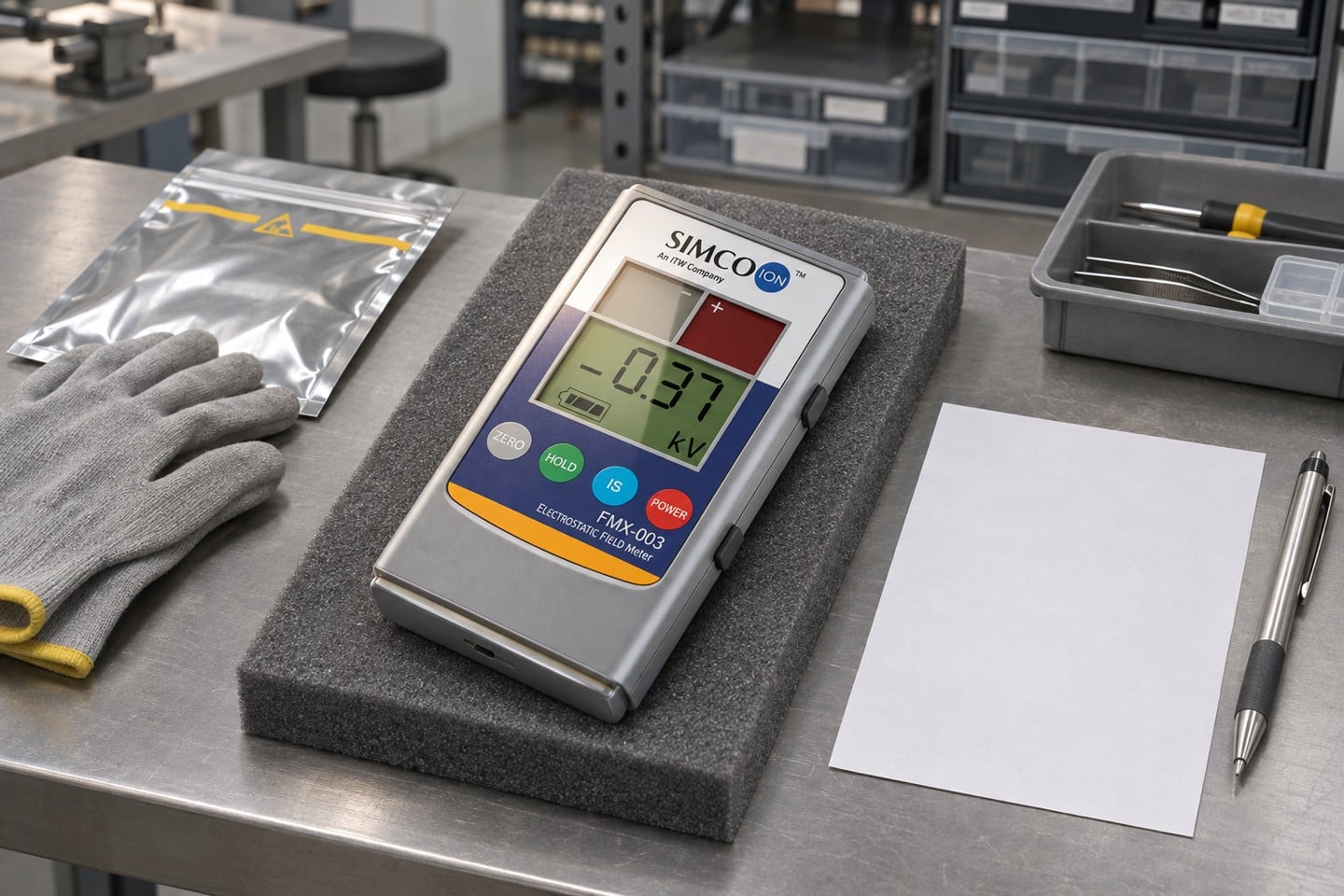
Record the actual electrical verification result, instrument identity and test conditions under the site’s procedure. Keep this result alongside the physical finding rather than substituting it for the condition assessment. The EOS/ESD Association control fundamentals discuss personnel grounding and the wider control system. That context supports treating footwear as part of an approved arrangement instead of accepting a shoe based on appearance alone.
The reverse also matters: an intact-looking replacement does not establish electrical suitability. Before issuing it into the ESD process, complete the required verification for its actual use. If the damaged pair is removed during a shift, record when the substitute became active and preserve the earlier inspection history. The change should leave a clear trail rather than a tester log containing two different pairs under one unexplained entry.
Review repair proposals before anyone applies adhesive
An improvised sole repair, new fastening or added patch can change the construction that was originally accepted. Ask the supplier whether a repair is permitted, which method is applicable and what checks are required afterward. If the information is unavailable, keep the pair on hold or replace it under the approved procedure. Do not infer approval because a general shoe-repair method is common outside electronics manufacturing.
An insole change is another separate decision. The replacement insole guide explains why changed footwear needs review rather than an assumption that every insert is equivalent. Keep repair, comfort modification and routine cleaning distinguishable in the record. Combining them under a single entry called maintenance hides what actually changed and makes later investigation more difficult.
Select a replacement that still fits the task
Check whether the replacement matches the approved item or requires a new assessment. Confirm the size, fastening arrangement, wearer fit and relevant work requirements. A spare pair is useful only if it is suitable for the person and the task. Avoid forcing an available size on a wearer simply to keep a line moving. Escalate a stock gap through the workplace process and arrange an approved alternative assignment if needed.
The CCOHS footwear assessment checklist links footwear choice to actual hazards and fit. Use it as assessment context, not as a certification of a specific SWESD model. A factory may need different footwear for different activities. A lightweight mesh shoe accepted at an assembly station does not automatically satisfy the requirements of material handling or another work area.
Investigate recurring damage with consistent records
When several pairs develop a similar fault, compare the issue history, work location, wearer fit, cleaning procedure and contact conditions. Look for a repeated location or task pattern before assigning cause to the material. A fastening damaged by a fixture, an unsuitable fit and a construction defect need different corrective actions. Record hypotheses as hypotheses and identify the observation or supplier review needed to resolve each one.
For a supplier query, provide the item and lot where available, issue dates, photographs, approximate use conditions and cleaning instructions actually followed. Preserve representative samples when requested and feasible. Do not describe all shoes from a lot as defective based on one isolated observation, but do not dismiss a repeated pattern without reviewing its scope. Quality and workplace safety personnel should agree any wider hold or replacement action.
Make training cover both the tester and the shoe
Show operators where to look, what to report and how to obtain an approved replacement. Explain that there are separate reasons a pair may be held: a physical defect, an electrical verification concern or an unresolved change. Use clear examples without encouraging people to diagnose hidden electrical properties from a photograph. Keep training materials aligned with the actual issued footwear and local procedures.
The EOS/ESD Association lecture below introduces ESD and the reasons for control measures. It supplies background for understanding why the electrical check remains necessary when shoes are replaced. It is not a shoe damage inspection demonstration, a repair instruction or proof of any product rating.
Close the hold with evidence and a stock action
The completed record should state whether the pair was replaced, returned to the supplier, discarded or released after an authorized repair and verification. Identify the approving person and date, the replacement item and the checks completed before issue. If an assessment remains unresolved, retain the hold status. Avoid entries such as fixed or okay that give the next reviewer no way to understand the decision.
Use recurring reports to improve spare-size availability and purchasing questions. For example, a pattern of worn fastenings can prompt a discussion about the actual task, approved care and service support. It should not produce an invented universal replacement interval. Review the site’s inspection instruction when experience shows that a relevant defect is being missed, then confirm the revised check can be performed consistently across shifts.
Frequently asked questions
Can damaged shoes stay in use after passing an ESD tester?
A passing electrical result does not approve physical damage. Resolve the condition concern under the site footwear procedure.
Is an anti-static shoe automatically a safety shoe?
No. Confirm the actual supplied ratings and suitability for the workplace hazards rather than inferring them from the anti-static description.
Can ordinary glue be used on a separated sole?
Do not improvise a repair. Obtain applicable supplier instructions and approval, including the required return-to-use checks.
Is every shoe replaced after a fixed number of months?
Do not invent a universal interval. Use the applicable instructions, workplace conditions, inspection findings and site replacement policy.
What information helps investigate repeated damage?
Retain the model and lot where available, issue history, affected location, photographs, wearer observations and care instructions actually followed.
Leave a Reply