- hanqi
- Blog
If electronic parts are stored, shipped, and/or handled via ESD (static), then they will suffer hidden damage from the smallest amount of ESD discharge, resulting in either product performance failure, or in some cases, a complete loss of the product. The selection of the ESD box material then becomes much more than just a packaging solution, it is a quality control solution. Manufacturers, distributors, repair centres, and electronic assembly plants will all be aided in their ability to protect fragile electronic components from (a) the effects of static electricity, (b) impact damage, and (c) environmental contamination due to the choice of ESD box material.
ESD Boxes are commonly referred to as Anti-Static, Conductive, or Electronic Static Discharge (ESD) Storage Boxes. The purpose of an ESD Box is to contain, control, and dissipate or otherwise shield an electrostatic charge from a static-sensitive device. Different types of ESD Boxes offer different levels of protection, with the level of performance being influenced by the raw material, surface resistance, durability, structure, and application. If you understand these aspects, choosing the appropriate ESD Packaging for IC Chips, Printed Circuit Boards (PCBs), Sensors, Relays, Connectors, and other static-sensitive devices will be made easier.
What Is ESD Box Material?
The base material used to create electrostatic discharge (ESD) protective storage and shipment containers is the ESD box material. ESD box materials include engineered plastics or specially treated polymers that prevent the accumulation of static charge, safely dissipate static electricity, and provide shielding against outside electrostatic fields.
Conductive polypropylene, anti-static polypropylene, conductive polyethylene, static dissipative plastic and conductive corrugated plastic are some of the more typical materials used for an ESD box. Additionally, in some instances, static dissipating foam inserts for an ESD box, conductive trays or shielding bags may be used with the box to ensure complete protection for the product being packed in the box and shipped or transported.
Material selection should be based on the characteristics and nature of the stored components (i.e., how sensitive they are), as well as their environment and handling conditions. For example: The use of conductive ESD/anti-static storage containers in a semiconductor manufacturing facility may necessitate stricter surface resistance controls than for example; ESD/anti-static storage containers in a general warehousing facility which predominantly stores common electronic spare parts.
Why ESD Box Material Matters for Electronics Protection
Although electrostatic discharge may not be visible, it can damage electronic components and create expense if any damage is found later after ESD has occurred. Sometimes a component may pass an inspection after having been subjected to ESD but doesn’t function properly in the field, thereby resulting in warranty claims, production delays, and customer complaints. Therefore, ESD control is included in the process reliability systems of many professional electronics manufacturers.
ESD boxes can be constructed from many different materials, and the material used to create an ESD box will determine if the box is capable of preventing the accumulation of static, minimizing the risk of discharging static electricity, and providing a means to protect electronic components during transportation. Standard plastic boxes tend to produce static via friction with one another, especially in dry climates. ESD safe boxes are constructed to manage the surface resistance of objects that contact them so that any charge on the surface can dissipate in a controlled manner.
Material selection is another thing that potential buyers should consider. A low-cost ESD box could look fine initially, however, if it becomes cracked, has lost its ESD properties or is not able to endure repeated use in an industrial environment, replacement costs and product risk will be higher than they would be with a reliable ESD box material that will provide stable protection, good mechanical strength and will continue to perform the same way over time.

Common Types of ESD Box Materials
Conductive Polypropylene
ESD storage or ESD packaging boxes commonly use conductive polypropylene, which is a material used in ESD packaging boxes due to its lightweight, durable, chemical resistant nature, allowing for its use in repeated handling in factory or warehouse environments. The conductive properties of conductive polypropylene result from conductive additives that are combined with the plastic to form a controlled electrical path so that static charges can be quickly discharged.
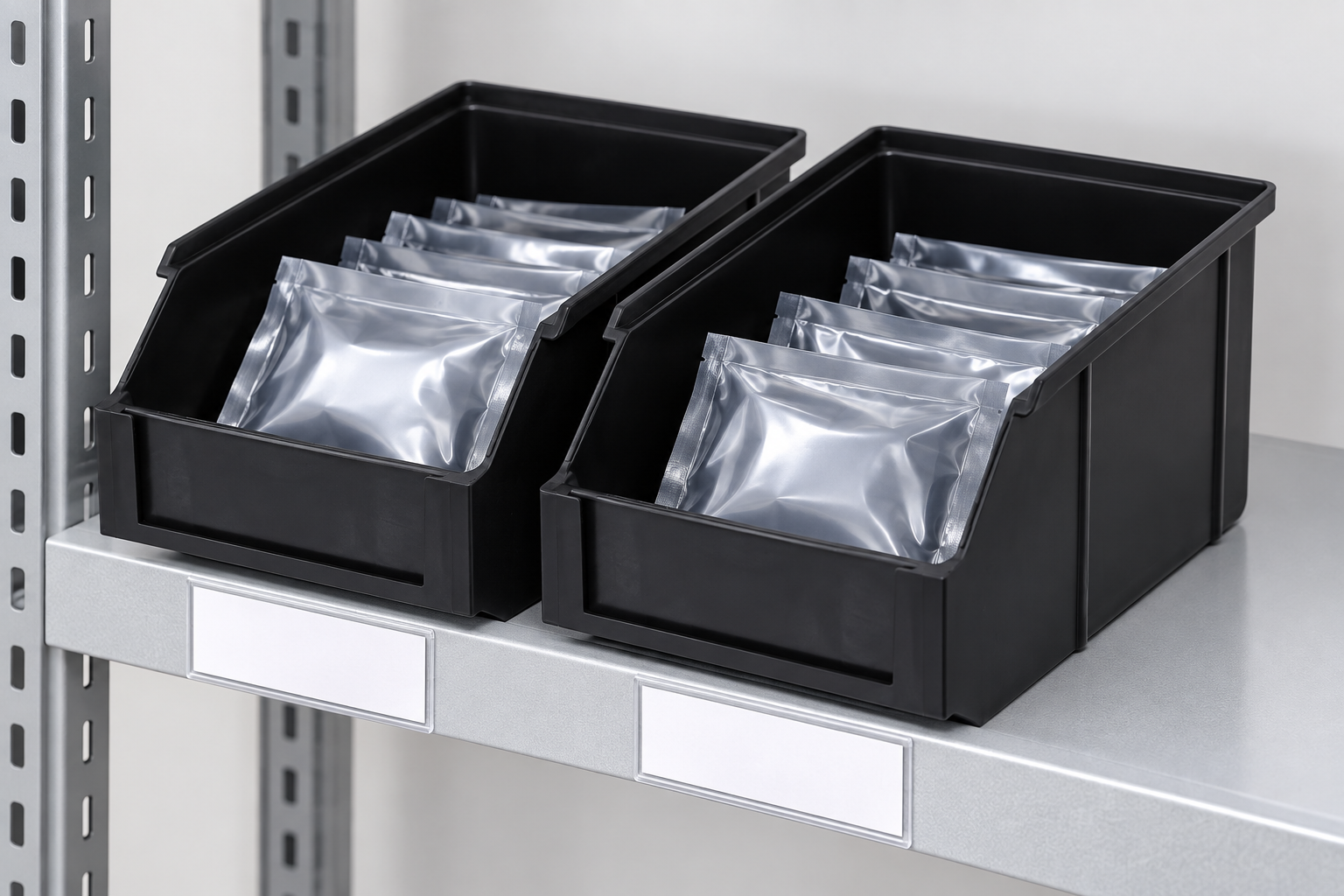
Conductive Boxes, Turnover Boxes, Stackable ESD Bins, and Storage Containers for Electronic Parts are frequently made from this material. It is also an efficient option for a factory that requires durable and reusable packaging along with dependable ESD performance.
Static Dissipative Plastic
Static dissipative plastics can discharge an electrostatic charge more slowly and safely than highly conductive materials. Controlled dissipation of charges through use of static dissipative plastics helps to prevent sudden discharges from occurring. Static dissipative plastics are frequently used in situations where components need to be protected from static electricity without the ability to discharge at high rates.
Boxes that can absorb electronic discharge have several uses such as in electronics assembly, cleanroom-compatible storage areas, and precision-assembly/component-handling. Customers select this material for when they need balance between ESD safety, cleanliness, and product protection.
Anti-Static Polypropylene
The purpose of anti-static polypropylene is to minimize the production of static charges on the material itself. It can be used in most ESD controlled applications with a moderate level of risk. Many electronic accessories, small parts, tools, or non-critical components are typically packed in anti-static boxes.
Humidity and surface treatment may impact anti-static effectiveness. Conductive or static-disipative materials are recommended instead of standard polymeric materials for high-value and highly-sensitive components.
Conductive Corrugated Plastic
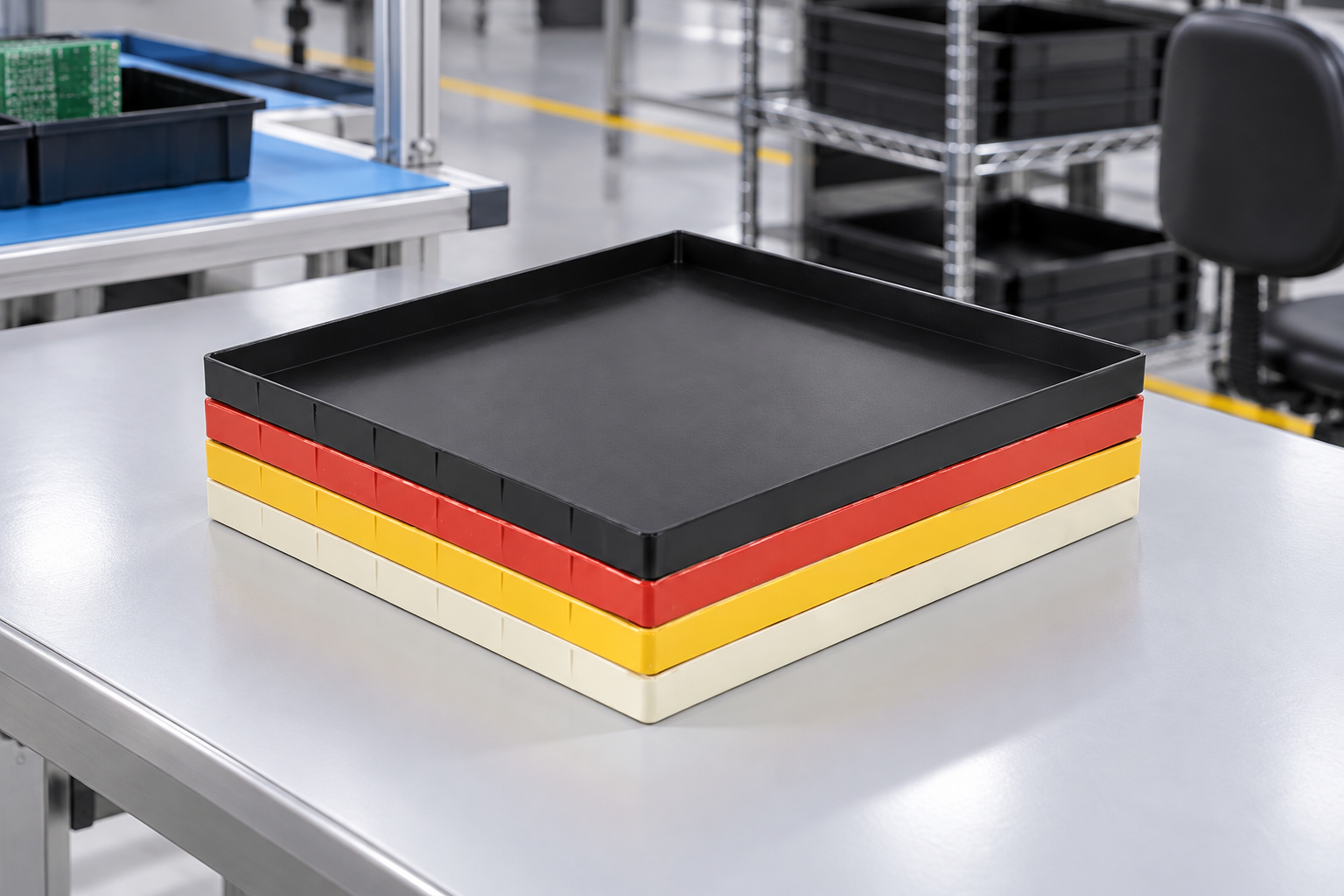
ESD packaging solutions have been created with conductive corrugated plastic as their main material choice. Many of these types of packaging are large, ESD corrugated plastic packaging boxes, partitions, or custom packaging for ESD protection purposes. The conductive corrugated plastic packaging is generally lighter than solid plastic equivalent packaging materials and offers the ability to customize the packaging for various different sizes and structures. Conductive corrugated plastics are often used to transport circuit boards, modules, and ESD components that require separation while in transit.
Conductive corrugated boxes provide a number of benefits: light weight, flexible designs, and good reuse potential. For companies that are shipping products from one workstation or factory to another, conductive corrugated boxes offer both organization as well as protection against static electricity.
ESD Foam and Inserts
People generally do not think of foam when they think about the materials used for a box, but ESD foam is often found inside an ESD box to provide many benefits. Conductive or anti-static foams can keep the components secure, provide support and protect the components from moving around inside the ESD box, and also provide additional cushioning during transit. The use of ESD foam in conjunction with an ESD box helps to minimize both mechanical and electrostatic risk to components with fragile pins (ICs) or precision connectors.
Conductive, Dissipative, and Anti-Static: What Is the Difference?
Buyers often use the terms conductive, dissipative and anti-static synonymously; however each of these terms has a very different level of ESD control. Understanding these definitions will help you avoid purchasing an incorrect product.
The electrical resistance of conductive materials is much lower than normal and therefore can move charges very fast when conducting electricity. Conductive materials are typically utilized when a rapid discharge of electricity (or transferring charge) is required. Static dissipative materials have a moderate amount of resistance and enable controlled draining of electrical charge. Anti-static materials typically inhibit the build-up of charge; however, anti-static materials do not provide the same level of protection from electric shock as either conductive materials or static dissipative materials.
Surface resistance is an essential specification in Professional ESD Control. While different industries and standards will dictate their specific requirement, when it comes to the request for surface resistance data or test methods related to ESD performance, buyers should always inquire with the supplier if (a) the ESD performance is guaranteed to last permanently, or (b) if the ESD performance depends on the coating or environmental conditions of the product.

How to Choose the Best ESD Box Material
What type of material is ideal for storage will vary based on the application of the box as well as the object being stored, along with the degree of ESD protection needed. Electronic components that are especially sensitive (examples: semiconductor devices, integrated circuit chips and printed circuit boards) are typically best protected with conductive or static dissipative boxes, while the majority of electronic accessories will generally only require anti-static storage boxes.
Durability is another critical consideration. The box should withstand daily production use, as well as potential stacking in warehouses, or being moved back and forth between departments. Therefore, the material will need to resist impact, deformation, and wear. ESD boxes made of polypropylene provide users with good durability attributes; for example, they have strength, low density, and good chemical resistance.
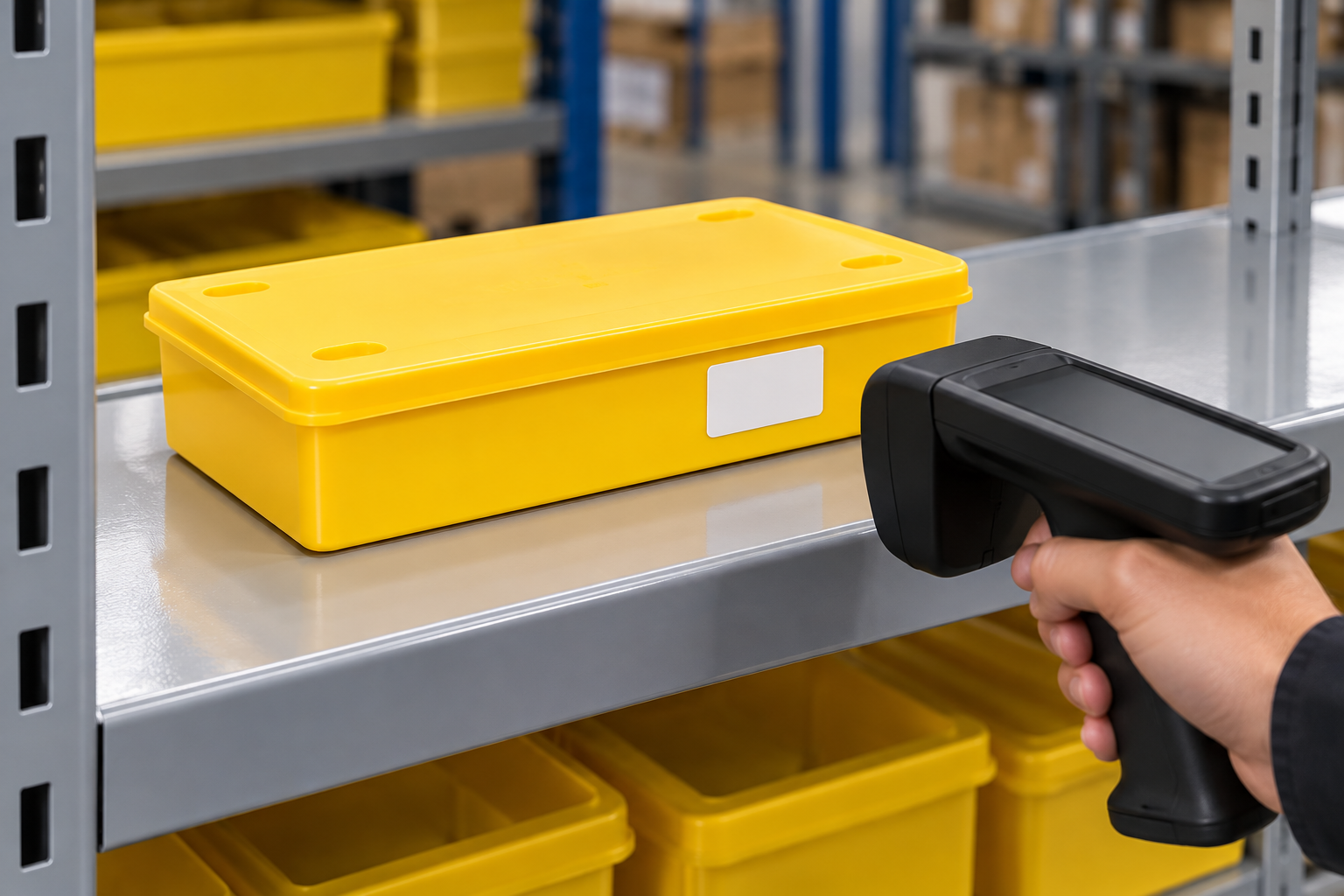
When purchasing ESD boxes, buyers will also want to take into consideration the size of the box, the lid design, whether these boxes can be stacked, if there are partition options available, and if the ESD boxes will be compatible with your automated handling systems. ESD boxes will have much more value added to your workflow if they fit naturally into your processes. For example, using stackable ESD storage boxes can reduce the amount of space you take up in your warehouse, while boxes with dividers will help keep your components from getting mixed together or damaged.
Conditions in your environment will also impact how your ESD protection works. For example, when there is low humidity, static electricity will be more likely so you may have to use a higher level of ESD protection if you are in a dry climate or in an air conditioning type of production area. If you will be using ESD protective packaging in areas that require cleanliness and/or sensitive manufacturing, you will want to use packaging materials that create low levels of particles and have consistent ESD properties.
Key Features of a High-Quality ESD Box
An ideal ESD Box should possess characteristics beyond simply being black or equipped with an anti-static marker. A true performing ESD item will be comprised of specific materials, demonstrate verified testing results, and provide consistent manufacturing quality.
- Stable surface resistance suitable for the intended ESD protection level
- Durable plastic structure for repeated industrial use
- Good impact resistance to protect components during handling
- Stackable or nestable design for efficient storage
- Optional lids, dividers, foam inserts, or labels for better organization
- Compatibility with electronics manufacturing, storage, and transport processes
Procurement Teams should request Technical Data Sheets, ESD Test Reports, and Sample Evaluations to help verify that the material meets your internal quality assurance requirements. If your company’s requirements are ANSI/ESD S20.20 or IEC 61340, then the Supplier should have an understanding of these standards and can supply the relevant documentation where applicable.
ESD Box Material for Different Applications
Various industries have varying amounts of ESD. When PCB’s are finished at the end of a process and moved to an area for assembly, ESD containers protect them from both physically damaging and damaging from ESD while moving. Many times in semiconductor packaging, ESD containers are required for the safe storage/transporting of parts that are known as high sensitivity. In the automotive, durable ESD containers will assist with transporting and packaging all automotive electronics throughout the supply chain (sensors, modules, connectors & control units).
Business ESD packing boxes create a way for businesses that repair electronics to store repaired items, including replacement parts for mobile phones, laptop boards and repair tools. Component distributors use professional ESD packing to improve the presentation of their products and potentially reduce any customer complaints due to improper handling or packaging.
All applications of ESD box material must offer protection and efficiency. A properly constructed box will help to protect the components, facilitate identification of the component, and provide ease of movement through the production or logistics processes.
ESD Box vs. Regular Plastic Box
Regular-looking plastic boxes seem like they would be an ESD safe plastic box at first glance, but their differences are great. Standard plastics generate a lot of static energy as well as hold static. Upon contact or becoming close to a charged surface, the sensitive electronics inside of an ESD safe box will experience an electrostatic discharge (ESD) if they come into contact with regular looking plastics.
An ESD enclosure is constructed from a chemically engineered substance specifically designed to regulate electrostatic charges. It may reduce electrostatic charge build-up, dissipate electrostatic charge accumulations or prevent external electrostatic fields from affecting the contents, depending on the type of material used. ESD containers are therefore ideal for storing or transporting static sensitive electronic components.
Although ordinary plastic containers will save money initially for components in an electronic environment, there is potential for higher risk than the cost. ESD safe packaging must be used for all professional electronics component packaging, not just as an optional add-on.
What to Ask Before Buying ESD Storage Boxes
Clarifying the intended use of ESD storage containers is an important consideration for purchasers before making a decision to buy ESD storage containers or ESD package boxes. What type of components will be housed? Is the component static sensitive? Will there be repeat usage of the box? Does it need a lid, handle, partiton or foam insert? Is it going to be housed in a clean room, warehouse or manufacturing floor?
It is equally important to inquire with your supplier what types of materials, surface resistances and customization capabilities exist prior to placing your order so that you have full knowledge of the potential product’s performance capabilities prior to placing your order. When using ESD coatings, it is also advised to verify if the ESD properties will become compromised due to usage over time. For long-term industrial applications, permanent ESD materials are typically preferred since they provide a more reliable means of protecting against ESD in all phases of a product’s lifespan.
Using Customized ESD Boxes Improves Usability Too! Custom ESD boxes can be configured to fit the dimensions of the components, minimize excess space, Increase stackability, and meet any branding requirements. For businesses that have a high volume of Electronic Components these factors will assist with Safety and Operational Efficiency.
FAQ About ESD Box Material
What type of material is ESD?
An ESD material is operated to take care of an electrostatic discharge. ESD Materials could be conductive, conductive discharge or static discharge depending upon the level of resistance and/or designs for the application. A very common type of ESD material used in ESD Boxes would be either conductive polypropylene, anti-static polypropylene, conductive polyethylene, static dissipative plastic or conductive corrugated plastic. ESD materials prevent static electricity from building up and protect the sensitive electronic components while stored, handled, or shipped.
What is the best material for ESD?
The proper material choice for ESD will depend on what you will be using it for. Plastic components which are exceptionally sensitive to static electricity would benefit from being packaged in either conductive or static dissipative polypropylene because it has the ability to dissipate static electricity while also being durable and having a reasonable life expectancy. When packaging general storage items that are not overly sensitive to static electricity, then using anti-static polypropylene would work; however, if you require both lightweight packaging with the ability to design it specifically for transport, you might consider using conductive corrugated plastic. You should consider which type of packaging will work best based on your component’s sensitivity, environmental conditions, surface resistance requirements, and the anticipated number of reuses.
How long does an ESD box last?
Several factors affect the longevity of an ESD container including; the quality and characteristics of the container material; the number of times used; how often the container is cleaned; and the way in which the container is used/cared for. Containers that are manufactured from static dissipative or permanent conductive materials will last much longer than those that rely only on temporary surface treatment materials. Regularly scheduled inspection and test of the ESD performance of your boxes will help you determine if they are still within appropriate performance range for ESD.
Can ESD boxes be reused?
Yes, several ESD boxes can be utilized multiple times in electrical assembly, warehousing, and transportation. ESD containers that can be reused are economical and environmentally beneficial; however, you must maintain these ESD containers correctly to accomplish this. To maximize longevity, you should avoid using extreme chemicals, excessive force, as well as improper storage conditions that could warp or otherwise harm the material.
Are black plastic boxes always ESD-safe?
Many conductive ESD Containers are colored black as a result of adding conductive carbon materials; however, the fact that the container is black means nothing when it comes to ESD protection. Just because the container is Black, it does not mean that the Black Plastic container has controlled surface resistivity or is an ESD Product. Always monitor product specifications, test results or supplier documentation before using a container for static-sensitive electronic devices.
The determination of which type of ESD box to buy depends on the protection level you need compared to the types of conditions you will be operating in. For example, if you’re dealing with expensive/sensitive/mission-critical components, it’s worth investing in high-quality ESD-safe materials because they have been shown to perform as intended. On the other hand, if your facility requires a lot of movement within a short period, then it makes sense to use durable and reusable boxes. Additionally, if the parts that you are working with vary significantly in size, you may need to have custom partitions created, use foam inserts, or develop custom packaging solutions.
It is important to have a trustworthy vendor who can discuss the differences in products/material types, recommend compatible alternatives, and provide technical assistance (rather than only say things like, “We have the cheapest price”). This type of professional support can assist B2B purchasers save time and money when establishing an ESD control system that is safe and productive before the purchase and installation process begins.
In conclusion, ESD Boxes an ESD Box’s resource content breakdown provides a comprehensive list of all the different types of ESD Protection materials. Understanding the differences between Conductive, Dissipative, and Anti-Static materials with regular or modified ESD proof packaging materials will allow you to select the best ESD Box that gives you the best level of performance for your components and gives you a sound storage and handling system for your products.
Leave a Reply