- مدونة
Round ESD bins earn their place when the parts are circular too. Washers, O-rings, grommets, ferrite rings, and coin cells wedge into rectangular corners and nest flat against straight walls; a round interior removes the corners, and an angled presentation brings the mouth to the operator’s hand and eye. Verify the retrieval benefit with real parts on a sample, then confirm the model in the RFQ.
Shape-to-shape matching sounds obvious, yet most benches default to one rectangular format for every part number. Within the صندوق ESD category, the round component bin is the published format aimed at loose, circular hardware — and the selection case deserves the same discipline as any other container decision.
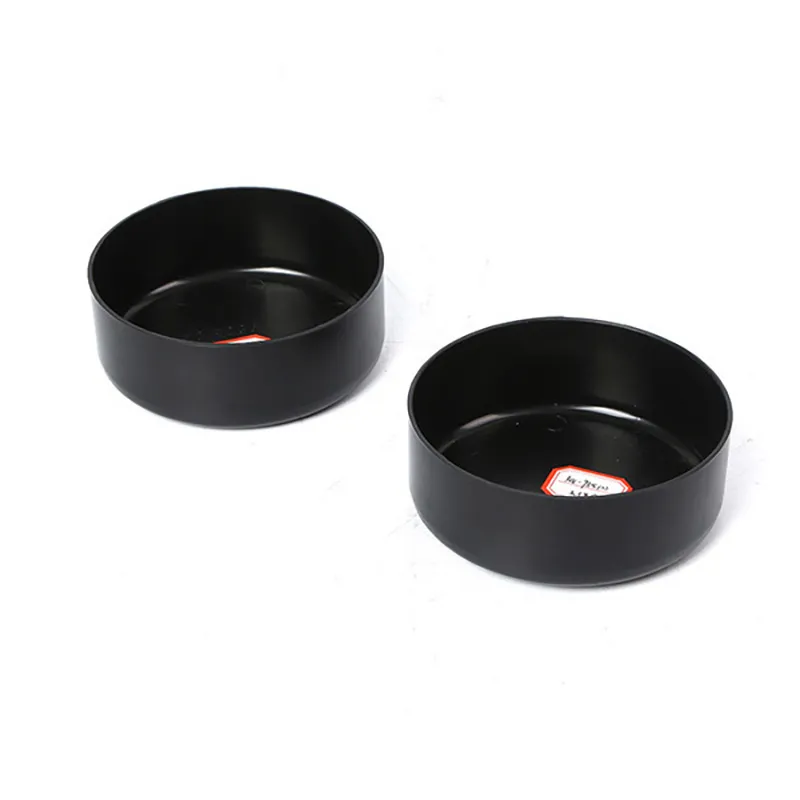
Part 1. When do circular parts justify a round bin?
Watch the last ten percent of a lot. Flat circular parts are easy to pick while the bin is full and miserable at the bottom: washers lie flush in corners, O-rings nest against straight walls, and lot changes leave residue that contaminates the next fill.
| Recurring failure | Why rectangles cause it | What the round interior changes |
|---|---|---|
| Corner-wedged washers | Flat parts seat into square corners | No corners; a scoop or fingertip follows the wall |
| Nested O-rings along walls | Straight walls hold rings flush | Curved wall breaks the flush seat |
| Lot-change residue | Corners hide the last pieces | Continuous wall empties in one wipe |
| Slow last-part picks | Two-hand digging at the bottom | Circular sweep reaches every point |
Treat each row as a hypothesis for the sample trial, not a promise. Retrieval behavior depends on the part diameter, stack height, and the operator’s tools, so the buyer verifies the benefit with the actual hardware before committing a fleet.
Where the failure is mixing rather than retrieval — two variants sharing one location — the answer is a documented layout from the partitioned-bin segregation guide, and shape alone will not fix it.
Part 2. What does an angled presentation actually change?
A round mouth flat on the bench serves the standing operator well enough. Tilt it, and two things improve: the opening faces the reach path, so a scoop motion enters at a natural wrist angle, and the interior becomes visible without leaning over the bin.
Angle is a deployment property, not a bin property. Teams create it with tilted stands, angled shelf strips, or — where the selected model supports it — a material hanging board, which is a published compatibility option on the cited Sanwei round-bin page to confirm per model.
The honest cost is density. Circles waste rack width compared with rectangles of similar capacity, so round bins usually earn selected locations — hardware points, kitting cups, repair benches — rather than whole walls. Where an entire area needs aisle-readable levels across many part numbers, that is a different job with different formats, as the container-role guide frames it.
Part 3. How does buyer language map to the published Sanwei round-bin family?

The published Sanwei ESD Round Component Bin page describes an anti-static storage container for electronic components and precision parts, with stacking and left-right connection, material-hanging-board compatibility, an optional anti-static label, and temperature-resistance customization on listed models, plus a static index range of 10e4–10e8 ohm.
The same page publishes electrical-class descriptions — anti-static, conductive, and insulating surface-resistance classes — as family-level education. Class wording never substitutes for model-level evidence: the buyer’s EPA criteria decide which class applies, and the quotation confirms what the selected model provides.
Boundaries stay explicit. The cited pages do not state a diameter for a specific part, a load rating for stacks, retrieval behavior for a given hardware mix, price, MOQ, or lead time. A photo of a cup of parts is marketing context, and the RFQ turns it into a confirmed configuration.
Part 4. Which deployment and labeling decisions define the requirement?
Round bins get deployed in clusters, so the plan decides more than the unit. Five decisions cover most cases.
| Decision | مدخلات المشتري | لماذا يهم الأمر |
|---|---|---|
| Part-to-mouth match | Part diameter, scoop or fingertip method | Sets the usable mouth and depth |
| Presentation angle | Bench, stand, shelf strip, or board intent | Controls reach path and interior visibility |
| Cluster layout | How many round positions per station | Keeps the density trade-off deliberate |
| تحديد | Label fields and position readable at the tilt | Round faces curve; the label must still read flat |
| Color assignment | Written meaning per color, if colors are used | Distance reading stays consistent plant-wide |
Labeling deserves one extra sentence. A curved face distorts long labels, so keep fields short — part number, description, location, revision or date — and place them where the installed angle leaves them flat to the reader.
Replenishment closes the loop. Small round positions empty fast, so name the refill trigger and the owner, and send emptied units back through cleaning and relabeling before the next lot.
Part 5. Which ESD evidence and fit boundaries still apply?
Shape changes nothing about electrical discipline. The bins operate inside the buyer’s EPA rules for grounding, handling, and acceptance, with program-level context from IEC 61340-5-1 and the ANSI/ESD standards route.
| طلب أدلة | Why it belongs in the file | حدود |
|---|---|---|
| Quoted model and accessory list | Ties the cluster plan to one configuration | A family page is not model confirmation |
| Material identification | States what will be supplied | Color never identifies a material |
| Electrical evidence with test method | Matches the EPA acceptance rule | Published class wording is confirmed per model |
| Mounting confirmation | Records stand, strip, or board intent against the model | Compatibility language is not a fit guarantee |
| Sample or lot traceability | Connects evidence to delivered goods | Keep it with receiving records |
ملائمة الحدود
| وضع المشتري | طريق معقول | تجنب |
|---|---|---|
| Flat or ring-shaped parts with retrieval pain | Round interior trialed with the real hardware | Assuming the benefit from a photo |
| Density-critical rack walls | Rectangular formats or selected round positions only | Filling a rack wall with circles |
| Two or more variants per location | Partition rule inside a documented layout | Loose mixed piles in one cup |
| Stock that travels between areas | Movement container with its own route rule | Letting bench cups wander with material |
Part 6. What should the RFQ and sample review include?
Send the cluster plan, not a lone item line. A supplier can confirm sizes and options only against the parts and the presentation intent.
| حقل طلب عرض سعر | مدخلات المشتري |
|---|---|
| Part data | Part types, diameters, and per-location quantities |
| Presentation plan | Bench, stand, shelf strip, or board intent with angle |
| Cluster layout | Positions per station and stacking interest |
| تحديد | Label fields, position, and color plan with written meanings |
| ESD requirement | Buyer-defined electrical criteria, test method, and acceptance rule |
| Accessories | Label or customization options to confirm on the selected model |
| Commercial request | Quantity bands, destination, and required documentation |
| Sample plan | Retrieval trial with real parts and a tilt check at the station |
توصية المنتج
Start the model review with the Sanwei ESD Round Component Bin when the stored parts are circular and the bench plan needs scoop-style access, and use the ESD Bin & ESD Rack solution page when bins and racks are specified together. This is an RFQ starting point, not a statement that a listed model fits a particular part or station.
Do not size from a photo. Ask Sanwei to confirm the selected model, sizes, mounting options, electrical evidence, and commercial terms in writing, then run the sample trial with the actual hardware at the actual angle.
Send the part list, presentation plan, label and color rules, and acceptance criteria through اتصل بسانوي for quotation review.
أسئلة متكررة
What is a round ESD bin used for?
It stores loose, ESD-sensitive small parts — typically circular hardware such as washers, O-rings, grommets, ferrite rings, and coin cells — at benches, kitting points, and maintenance stations inside an EPA.
Why choose a round bin for circular parts?
Flat circular parts wedge into rectangular corners and nest against straight walls, which slows last-part retrieval and complicates lot changes. A round interior removes the corners; the benefit is verified with real parts on a sample.
Does a round ESD bin support angled access?
Angle comes from deployment — tilted stands, angled shelf strips, or a material hanging board where the selected model supports it. Define the presentation angle in the RFQ and check it at the station during the sample trial.
Can a round ESD bin be stacked or hung?
Stacking, left-right connection, and material-hanging-board compatibility are published options on listed Sanwei models. Confirm the option set and any load question for the selected model in the quotation.
How should a round ESD bin be labeled?
Keep fields short — part number, description, location, and a revision or date — and place the label where the installed tilt leaves it flat and readable without handling the bin.
What are the drawbacks of round bins on racks?
Circular footprints reduce shelf density compared with rectangular formats, so round bins usually serve selected positions rather than full rack walls. Accept the trade-off deliberately in the cluster plan.
What ESD evidence should be requested for a round bin?
Request the quoted model, material identification, electrical evidence against the buyer’s own criteria with the test method stated, and traceability from the reviewed sample to supplied lots.
What should be confirmed on a sample?
Check retrieval with the real parts at realistic fill levels, the mouth and depth against the scoop method, label readability at the installed angle, stacking or mounting behavior, and the ESD evidence required by the buyer’s program.
المراجع
أحدث مشاركة
-
 ESD Picking Bins: Front Access, Labels and Replenishment29 سبتمبر,2026
 -
 RFID Labels for ESD Storage Bins: Placement and Validation28 سبتمبر,2026
 -
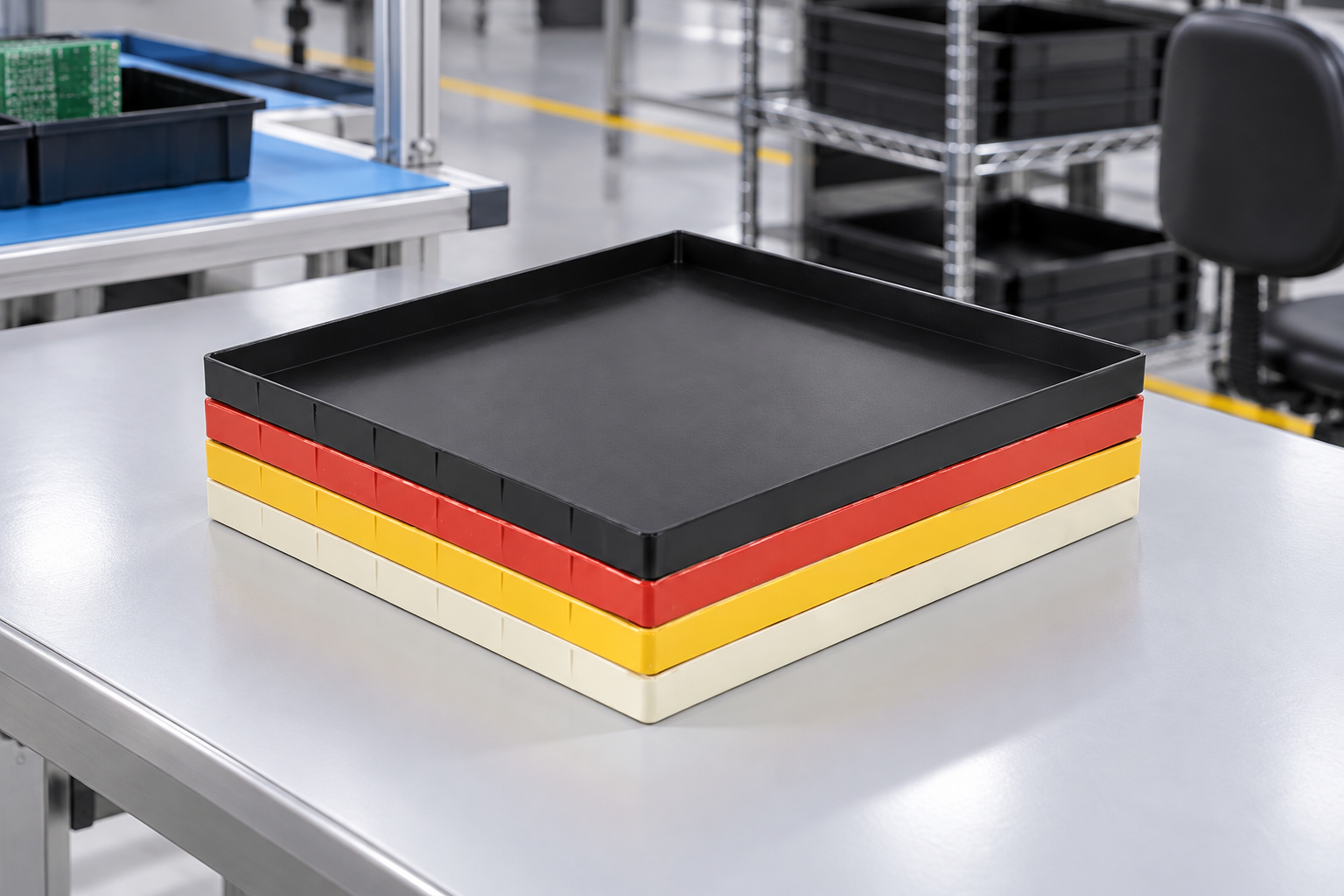 Reusable ESD Trays: Cleaning, Inspection and Lifecycle Cost28 سبتمبر,2026
اترك ردًا