- توربو
- مدونة
ESD glove sizing and dexterity should be approved through a practical fit trial with the people, tools and handling tasks that will use the glove. Choose a candidate size from the supplier’s measurement chart, then assess fingertip clearance, palm movement, cuff stability, grip and task accuracy. A glove that feels comfortable when an empty hand is held still may bunch around a small connector or pull tight when the operator reaches into a tray. Electrical suitability remains a separate requirement: good fit cannot establish ESD performance, and a satisfactory resistance report cannot establish useful dexterity. This guide explains a repeatable trial for electronics assembly and inspection buyers.
Define the task before asking for a size range
Start with the actual work rather than selecting a glove by a familiar letter size. Identify whether operators pick packaged components, move PCB carriers, inspect finished surfaces, attach connectors or handle tools. Record the smallest object that must be controlled and the surfaces that must remain clean. Include the workbench height, tray location and normal reach. These details explain why the same glove can be acceptable at one station and awkward at another.
Create separate requirements for handling performance, contamination control, electrostatic behavior and any workplace safety hazards. A knit glove described as suitable for ESD handling is not automatically protection against sharp edges, chemicals, heat or moving machinery. The employer’s hazard assessment and manufacturer information determine those requirements. Stop a proposed trial if the chosen glove conflicts with the machine’s safe operating procedure or the required protective equipment.
Measure hands using the supplier's instructions
Request the chart for the exact glove model and construction being offered. Record the supplier’s measurement method, available sizes and relevant dimensions. Do not transfer a size chart from another supplier simply because both products are described as medium. Knitted construction, cuff design and finishing can affect how a glove sits on the hand, while nominal sizes may describe different measurement ranges.
Measure representative users according to that chart and retain the results as controlled purchasing information. Include people with different hand proportions and the users who perform the most demanding tasks. Hand length and palm fit do not always vary together. Give an operator an adjacent candidate size when the first sample appears close to a boundary, and compare the options under the same trial conditions rather than forcing everyone into a single stock size.
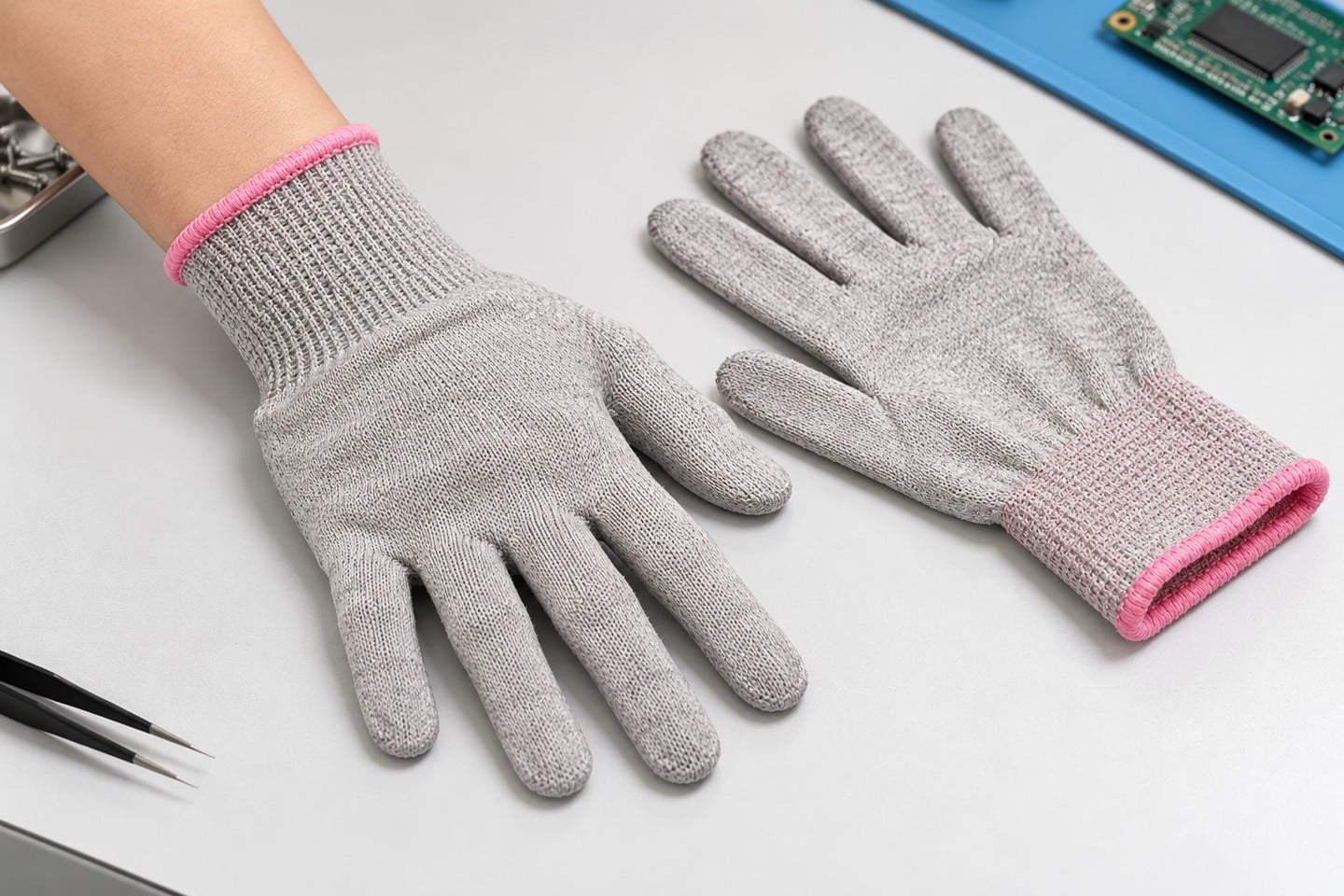
Check static fit with an observable checklist
Ask the operator to put the glove on normally and settle the cuff without excessive stretching. Inspect whether the fingertips reach the intended position without pulling the material tight. Look for loose folds that could enter a fixture or obscure a small item. Have the person open the hand, make a relaxed fist and touch the thumb to each fingertip. Record restriction, slipping or uncomfortable seams using the operator’s own description.
The cuff should remain in its intended location through the approved motions, but do not infer a grounding connection from cuff tightness. A close cuff can still lack the electrical properties or contact required by the ESD program. Avoid improvising alterations such as cutting fingers, trimming a cuff or adding adhesive. A modified glove is a different configuration and requires review before it becomes an accepted production item.
Use a controlled dexterity exercise
Build a small trial kit from safe representative samples, an approved fixture and the normal tools. Use inert samples for initial practice so that an unapproved glove does not expose valuable components. Define a short task sequence with a clear correct outcome: pick a sample, orient it, place it in a designated location and release it without disturbing an adjacent item. Include the actual grip or reach that caused concern at the station.
Give each participant the same explanation and a practice attempt before recording results. Compare candidate sizes within the same user where possible. Keep the sample, fixture position, tool and work instructions consistent. Record completed tasks, drops, placement errors, awkward compensating movements and user feedback. Timing can be useful, but a fast trial that increases damage or contamination does not establish an acceptable production method. Avoid ranking people; the trial evaluates the glove and task combination.
| Trial stage | What to observe | What the result establishes |
|---|---|---|
| Initial fit | Fingertip clearance, palm folds and cuff movement | Candidate fit for the measured user |
| Repeated placement | Drops, orientation errors and compensating grips | Handling performance for the evaluated task |
| Normal reach | Cuff movement and material restriction | Fit through the recorded working motions |
| Approved reuse condition | Changed shape, surface condition and user feedback | Suitability in the evaluated maintenance state |
| Electrical qualification | Applicable method and exact construction | Separate ESD evidence within the approved program |
Review grip without inventing a universal friction rating
A useful grip assessment reproduces the relevant contact: smooth packaging, a tray handle, a tool grip or an approved sample surface. Observe whether the operator squeezes harder, repeatedly adjusts the item or changes hand position to prevent slipping. These responses may reveal a fit or surface mismatch even when the glove looks correct in a photograph. Record the surface condition because cleaning agents, residues and wear can change handling behavior.
Do not deliberately contaminate a production glove or expose an operator to an unsafe load to create a dramatic test. Use an approved sample exercise within the station’s risk assessment. If the process needs a coated palm or fingertip, obtain the exact construction and repeat the trial. A different coating can affect dexterity, particle behavior and electrostatic properties; it cannot be approved solely because another glove in the same range performed well.
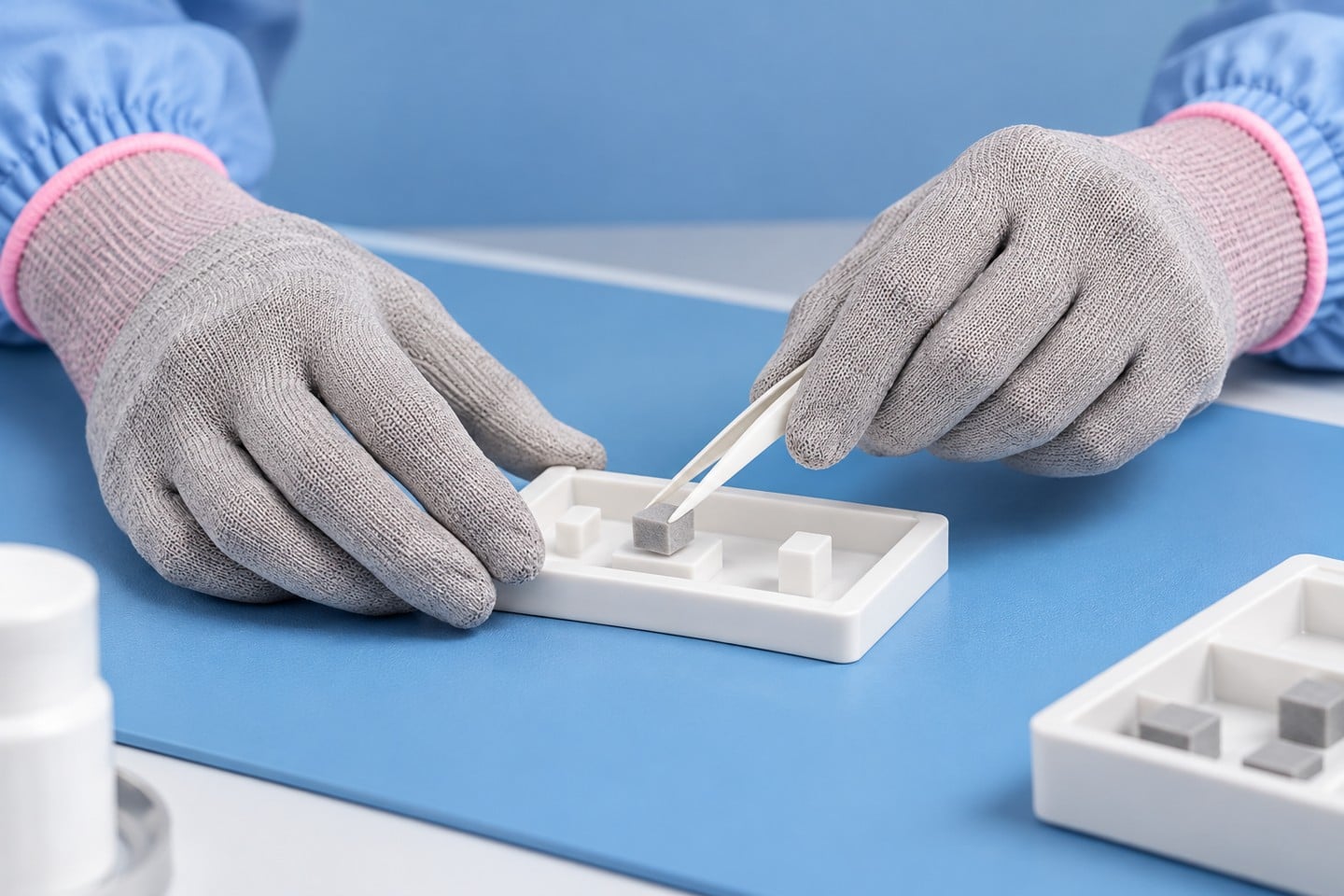
Include wear time and approved cleaning history
A first-minute fit check is only a screening step. Run a supervised production-intent trial for a duration chosen by the process owner, with planned opportunities for users to report discomfort or loss of control. Record the task, glove size, model, lot and time in use. Stop according to the agreed rules if damage, unacceptable discomfort or a handling problem appears. Do not ask an operator to continue simply to complete a data sheet.
If gloves will be cleaned or reused, obtain the manufacturer’s permitted method and the site’s acceptance rules. Evaluate samples in the intended condition rather than claiming that a new glove represents every later cycle. Record changes in shape, surface condition, cuff behavior and fit. A stretched glove may remain easy to put on while giving poorer control of small items. The accepted size range therefore needs to be tied to the actual use and maintenance arrangement.
Keep the electrical approval separate and traceable
ال EOS/ESD Association basic control guidance places personnel, materials and handling controls within an ESD program. Glove selection belongs in that complete arrangement. The ANSI/ESD STM15.1 method description concerns gloves and finger cots; the program owner should determine the applicable method and acceptance criteria. This article does not assign a resistance limit or replace the current purchased standard.
Link fit trial records to the exact construction used for electrical evaluation. If the supplier changes yarn, coating, cuff construction or cleaning instructions, ask whether existing evidence still applies. For the electrical decision and replacement process, use the separate ESD glove resistance testing guide. Keeping that assessment separate prevents a successful dexterity exercise from being mistaken for permission to handle sensitive devices under an unapproved electrical arrangement.
Translate the trial into purchasing instructions
Record the accepted model, construction, available sizes, identification method and permitted substitutions. Specify how operators receive a size and how a poor fit is reported. Avoid treating cuff color as proof of size unless the supplier explicitly defines and controls that convention. Include packaging, lot traceability and incoming checks that let the receiving team distinguish the approved construction from a visually similar alternative.
A sample request for the SWESD anti-static glove product should describe the task, hand measurement method, requested size spread and trial conditions. Request the exact current specification rather than assuming that the product photograph establishes a particular coating, resistance result or size availability. The ESD glove purchasing checklist provides a broader procurement framework.
Set release rules and review triggers
Define who can approve the handling trial and who approves ESD suitability. Record any station restrictions, such as use only with a particular fixture or exclusion from a task requiring different hazard protection. Keep rejected samples and the reason for rejection where practical. That history helps explain why a cheaper replacement or an apparently similar glove cannot be substituted without review.
Revisit the accepted size range when the tool, component presentation, task, workforce needs or glove construction changes. Also review recurring drops, damaged samples and operator complaints as process signals. A useful release decision states what was tested, which users and tasks were represented, and what remains outside its scope. It should support consistent work without claiming that a short trial predicts every person’s experience or every future production condition.
Educational background
The following EOS/ESD Association video provides background on electrostatic control. It supports the distinction between a handling trial and the overall ESD program; it is not a glove sizing demonstration or a substitute for the applicable test method. For related personnel-control context, see the wrist strap testing and recordkeeping guide.
الأسئلة الشائعة
Can a supplier size letter replace a hand measurement?
No. Use the exact model's measurement chart, then verify fit on representative users during the intended task.
Does a tight glove provide better ESD protection?
Tightness alone does not establish electrical performance. Evaluate fit and the applicable electrical requirements separately.
How should a dexterity trial be compared?
Keep the fixture, sample, tool and instructions consistent, allow practice, and record errors and handling observations alongside any timing.
Can one glove size be issued to everyone?
Only if documented fit trials support the actual users and tasks. A convenient stock size is not evidence of adequate fit.
When should an accepted glove be reviewed again?
Review it after relevant changes to construction, size specification, cleaning, tools or tasks, and when recurring handling problems appear.

اترك ردًا