- توربو
- مدونة
Cleanroom wipe surface abrasion compatibility should be evaluated on representative surfaces with the intended wipe, approved cleaning liquid and realistic wiping method. A low-particle result does not establish that a wipe cannot mark a coating, and a soft feel is not a scratch-free guarantee. Define what damage means for the product, document the starting condition and compare the surface after a controlled trial. Keep wipe construction, trapped particles, chemical effects and operator technique separate during investigation. This guide provides a purchasing and process review framework, not a universal abrasion test or permission to trial cleaning on customer hardware.
Use the broader دليل اختيار مناديل الغرفة النظيفة for the initial product shortlist; this article addresses the narrower surface compatibility trial.
Start with the surface and its acceptance criteria
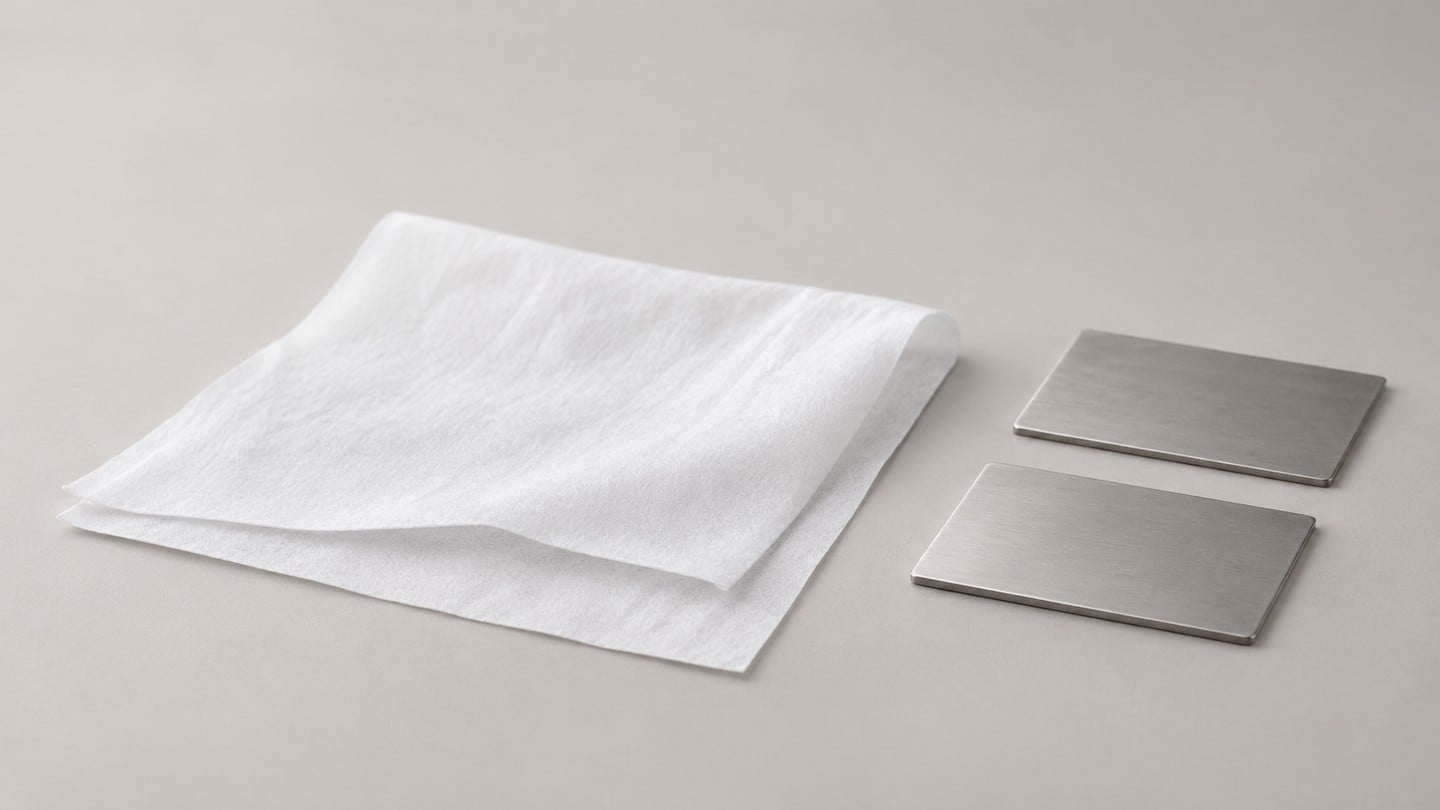
Identify the exact surface that needs cleaning: its material, finish, coating and current condition. Two parts made from the same base material can respond differently if their coatings or processing differ. Include the responsible engineer in defining representative samples. A convenient scrap plate may help develop a procedure but cannot stand in for a sensitive production coating without justification.
Define unacceptable changes before the trial. Depending on the application, the concern might be visible marking, loss of an approved finish, altered optical appearance or a functional effect. The organization should choose suitable inspection methods and criteria. Avoid borrowing a scratch limit from another industry merely because it is easy to measure or appears in a supplier brochure.
Record how the surface arrives at the cleaning step. Loose particles, machining debris, dried process material and packaging contact can influence the outcome. If the trial begins with a pristine coupon while production starts with particulate contamination, the result answers only a limited question. Clearly state whether the assessment covers a clean surface, a representative soiled surface or both.
Identify the wipe without assuming a universal capability
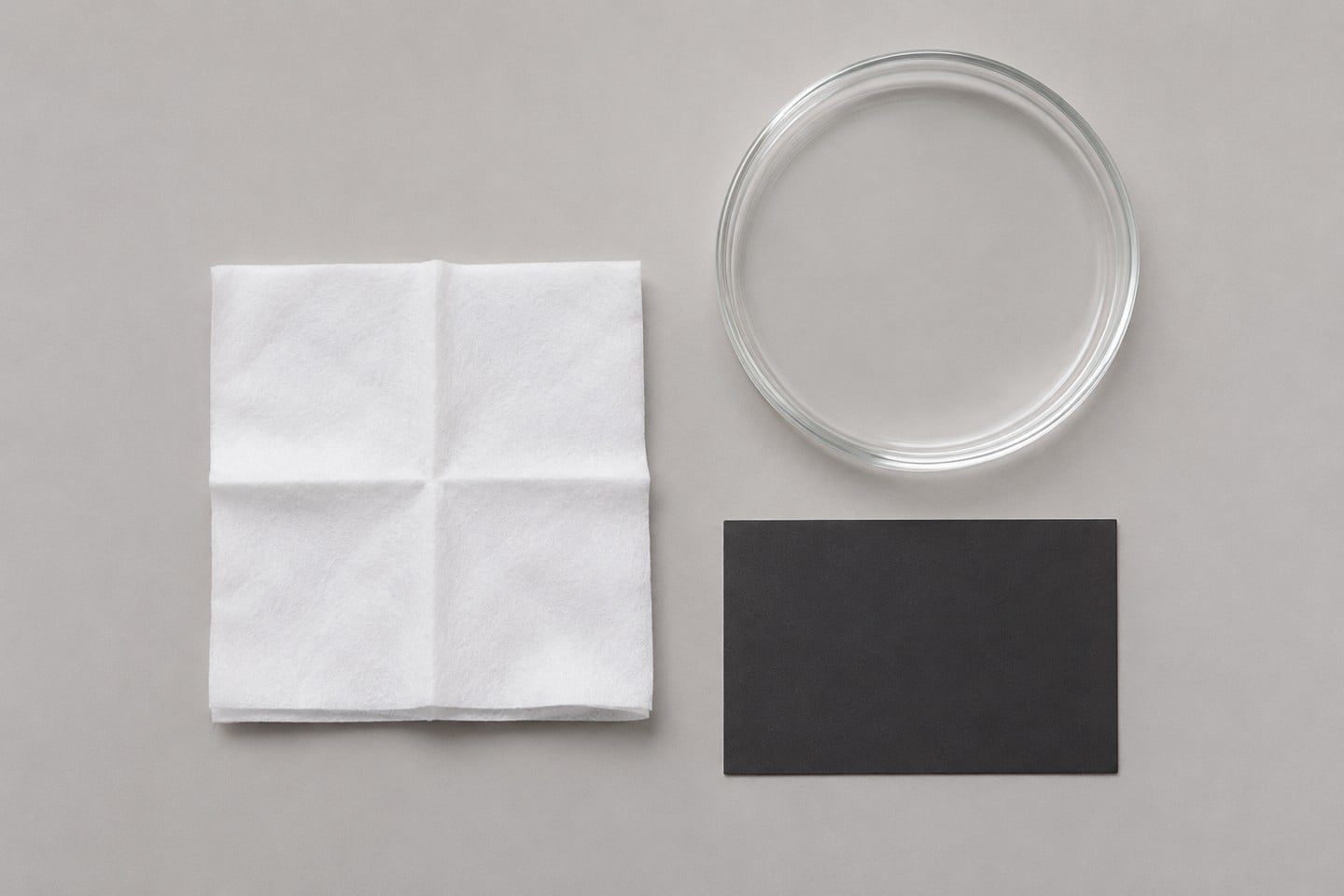
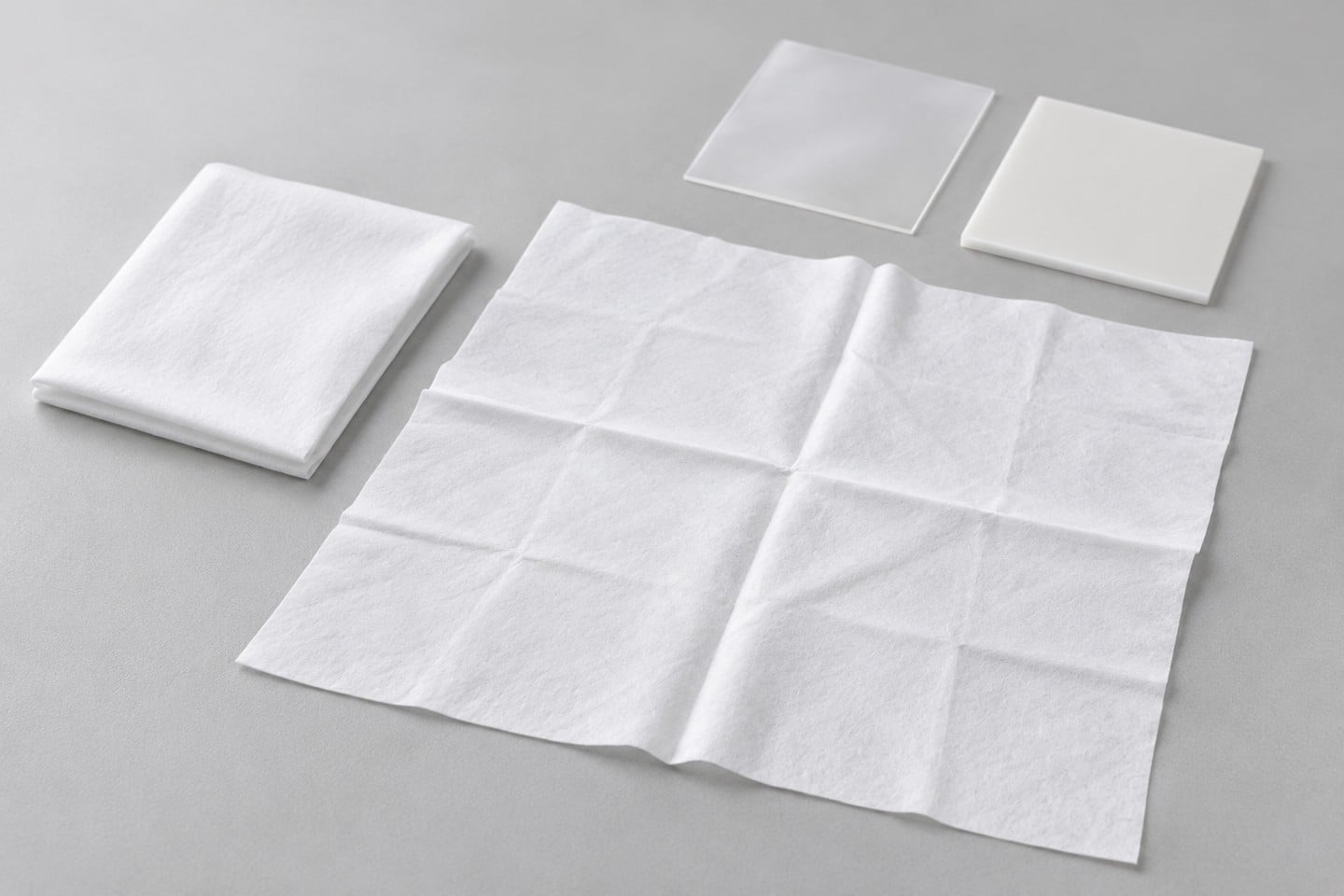
SWESD’s ESD clean wiper product is a starting point for obtaining actual samples and supplier information. Confirm the candidate construction, size, edge finish, packaging and lot. Do not infer fiber composition or a sensitive-surface approval from a photograph alone. Request current product-specific information and connect it to the sample used in the trial.
IEST-RP-CC004 covers evaluating wiping materials for cleanliness and function. Its public overview supports assessing more than a single characteristic. It does not provide a universal scratch-free designation for every wipe and surface, and this article does not claim to reproduce procedures from the full recommended practice.
احتفظ بـ wipe particle testing review as a separate evidence stream. Particle release from a wipe matters, but it does not by itself establish surface compatibility. Similarly, an acceptable result on one finish should not be extended to glass, soft coatings, plated metal and polymers without considering their different requirements.
Separate abrasion from chemical surface change
A mark after wiping is an observation, not a confirmed cause. The wipe structure, its edge, a trapped hard particle, a cleaning chemical or an existing surface defect may contribute. Before changing the supplier, retain the wipe identity and record the cleaning conditions. Preserving both the original and trial samples can make the subsequent review much more informative.
ال IEST overview of ISO 14644-13 identifies compatibility between surfaces and cleaning techniques as a consideration in surface cleaning. Its public scope is a framework, not a product-specific approval; it excludes the product produced within a cleanroom and detailed cleaning damage mechanisms. The useful principle is to select and document a method appropriate to the actual surface and its cleanliness requirements. Obtain the applicable full standard when contractual evaluation requires it.
Review the liquid through the دليل توافق مزيل التنظيف. A wipe can remain intact while the cleaning liquid affects the surface. Conversely, a suitable liquid does not eliminate the possibility of mechanical damage. Plan controls that help distinguish these questions instead of changing wipe and liquid together and then claiming to know which change caused the result.
Set up a trial with a usable baseline
Identify each coupon and photograph or inspect it before cleaning using the agreed method. Keep illumination, view direction and magnification consistent when those affect the observation. A different light angle can make a pre-existing mark appear new. Record the inspection arrangement so another reviewer can understand how the before and after comparison was made.
Choose appropriate controls with the engineer. An untouched sample establishes the initial condition; a liquid-only exposure or a current approved method may help answer specific questions. Not every project requires the same controls. Their purpose is to make the result interpretable, not to create an elaborate test that lacks a defined decision.
Define how the wipe is prepared and held. Folding, which face contacts the surface, how the edge is positioned and how often the wipe is changed can all affect the process being assessed. Link to the clean-face folding guide for that complementary handling topic. The trial record should identify the chosen method rather than assuming every operator folds identically.
Make wiping conditions representative and controlled
Use the approved cleaning liquid and describe how it is applied. Excess liquid, a dry contact or a partially evaporated preparation can represent different conditions. The wetting amount control review addresses this variable separately. No single wetting amount is recommended here because the appropriate condition depends on the wipe, surface, chemical and task.
Define the motion, contact conditions and number of passes through the site’s trial plan. If force must be measured, use an accepted method and equipment suitable for the task. Avoid presenting an unmeasured description such as gentle pressure as a repeatable numerical condition. For a preliminary operator demonstration, record that limitation rather than describing it as a standardized abrasion result.
Use a fresh approved face or wipe at the defined change point. Do not deliberately continue rubbing a contaminated area just to produce an easily visible difference. If the production task includes repeated cleaning, evaluate that duty through an agreed plan. A single successful pass does not establish indefinite reuse, and exaggerated repetition without a rationale may not represent actual service.
Inspect, classify and investigate observations
Compare the final condition with the baseline and agreed criteria. Record the location and appearance of changes, including whether they follow the wiping path. Where practical, have the reviewer assess consistently identified samples without relying only on memory. Keep the decision tied to evidence that can be revisited rather than a brief statement that the surface looked fine.
If a change appears, stop the affected trial and preserve relevant evidence. Review whether the sample had a pre-existing defect, whether particles were present, whether the liquid was approved and whether the operator followed the method. A photograph may guide investigation but cannot automatically distinguish a residue film from a scratch. Choose any further analysis according to the actual risk and available qualified methods.
The table below is a proposed trial planning aid. It does not assign standard limits or replace an engineering specification. Use it to expose missing information before the sample reaches the workbench.
| متغير | Record before trial | لماذا يهم الأمر |
|---|---|---|
| Surface | Material, finish, coating and baseline condition | Defines the approved application |
| Wipe | Model, construction, edge and lot | Connects the result to a supplied item |
| Liquid | Approved identity and application method | Separates chemical and mechanical effects |
| الطريقة | Motion, contact conditions and change point | Makes the observation interpretable |
| Inspection | Method, criteria and before-after record | Avoids unsupported scratch-free claims |
| التصرف | Observed changes, owner and approved scope | Controls production release |
Turn the result into a purchasing specification
An accepted report should identify the wipe model and lot, coupon material and finish, cleaning liquid, preparation, method, inspection and approval scope. Include exceptions explicitly. Approval for a noncritical fixture surface does not establish suitability for an exposed optical element. Purchasing needs those boundaries to avoid ordering a superficially similar wipe under an overly broad description.
Ask the supplier to identify relevant changes to construction, edge processing or packaging. If a change occurs, the responsible engineer should decide which checks need repeating. A new wipe size may alter handling; a different edge finish may change contact with the surface. Neither should be dismissed simply because the family name on the quotation remains the same.
Retain a reference to the approved process alongside product documentation. Receiving can verify identity and packaging, while process personnel verify use. These controls serve different purposes. A correct incoming label cannot compensate for an unapproved cleaning liquid or a wiping method that differs from the accepted trial.
Explain the method to operators and reviewers
Use photographs and clear instructions to show the approved contact face, change point and handling route. Include what to do when an unexpected mark appears. An operator should have a way to stop and report a concern without improvising extra pressure or switching to an unapproved cleaning product. That reporting route protects both the surface and the usefulness of the evidence.
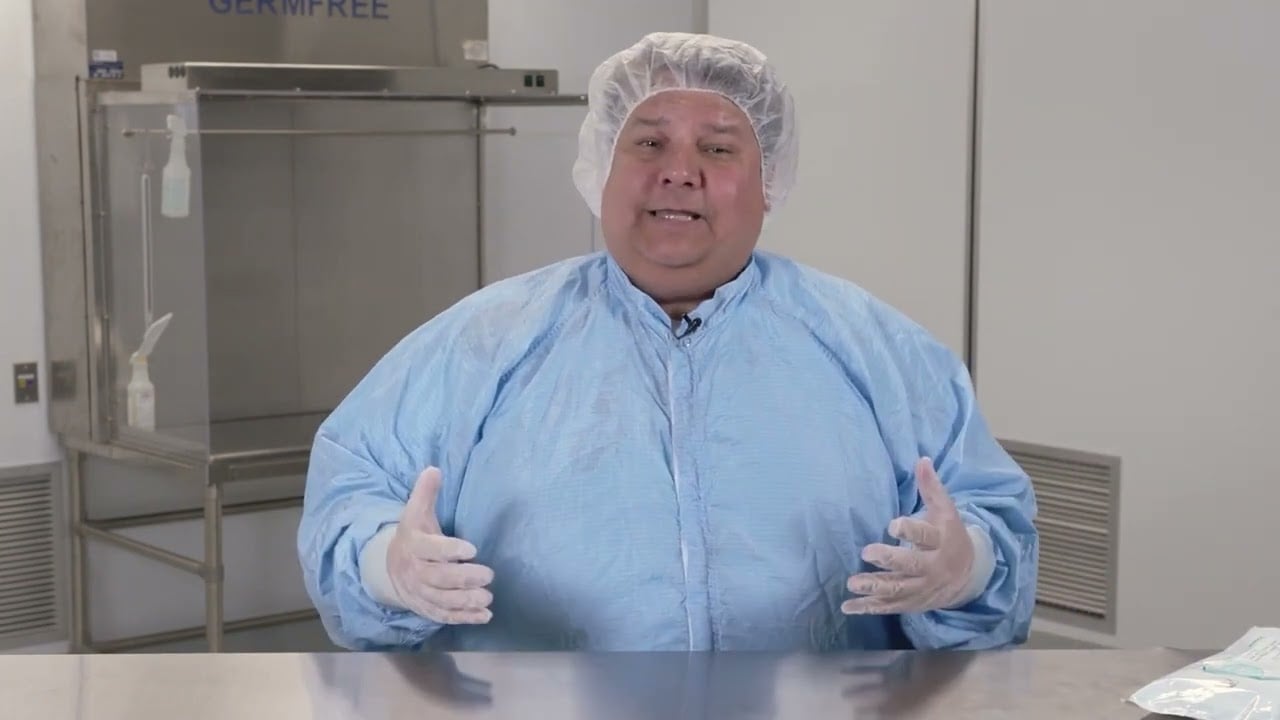
The IEST educational video below demonstrates cleanroom wiping context. It can support discussion of disciplined technique, but it does not establish that a specific wipe is compatible with your surface. Keep the trial results and accepted work instruction as the controlling evidence for the application.
الأسئلة الشائعة
هل يثبت انخفاض إطلاق الجسيمات أن المسح لا يمكن أن يخدش؟
No. Cleanliness and surface compatibility are separate evaluation questions.
هل يمكن لاختبار عينة المعدن الناجح أن يوافق على طلاء بصري؟
No. Use representative surfaces and document the scope of the result.
Is every mark after wiping an abrasion scratch?
No. Investigate residues, chemical changes, trapped particles and pre-existing defects.
Is there one safe wiping pressure?
No. Define suitable conditions and acceptance criteria for the specific surface and task.
Can changing liquid and wipe together identify the cause?
Not reliably. Use an agreed trial plan and appropriate controls to distinguish variables.
أحدث مشاركة
-
 Cleanroom Wipe Surface Abrasion: Plan a Compatibility Trial21 نوفمبر,2026
-
 قفازات غرف نظيفة وكريم يد: مراجعة التوافق21 نوفمبر,2026
-
 ESD Foam Cavity Fit: Review Loading, Support and Removal21 نوفمبر,2026
اترك ردًا