- توربو
- مدونة
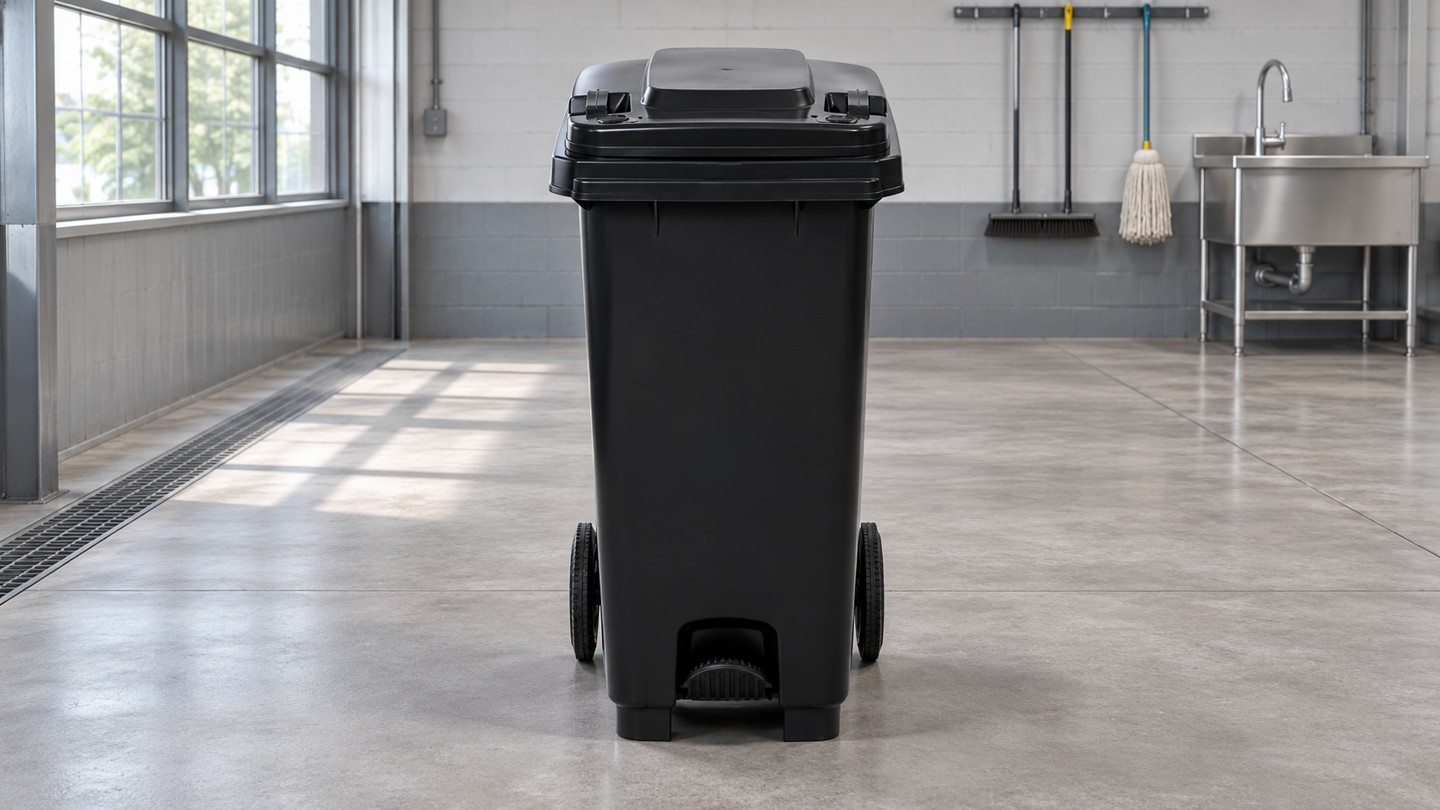
An ESD waste bin cleaning method should be approved for the exact bin, contamination and operating area before routine use. Confirm the permitted cleaner and tools, define how the bin is emptied and isolated, and specify drying and return-to-service checks. A visibly clean black surface does not establish that electrical performance has been preserved. This guide explains how a buyer or facility team can build an approval record for the سلة نفايات صناعية SWESD المعروفة without assuming that a familiar detergent, solvent or cleaning schedule is suitable for every supplied variant.
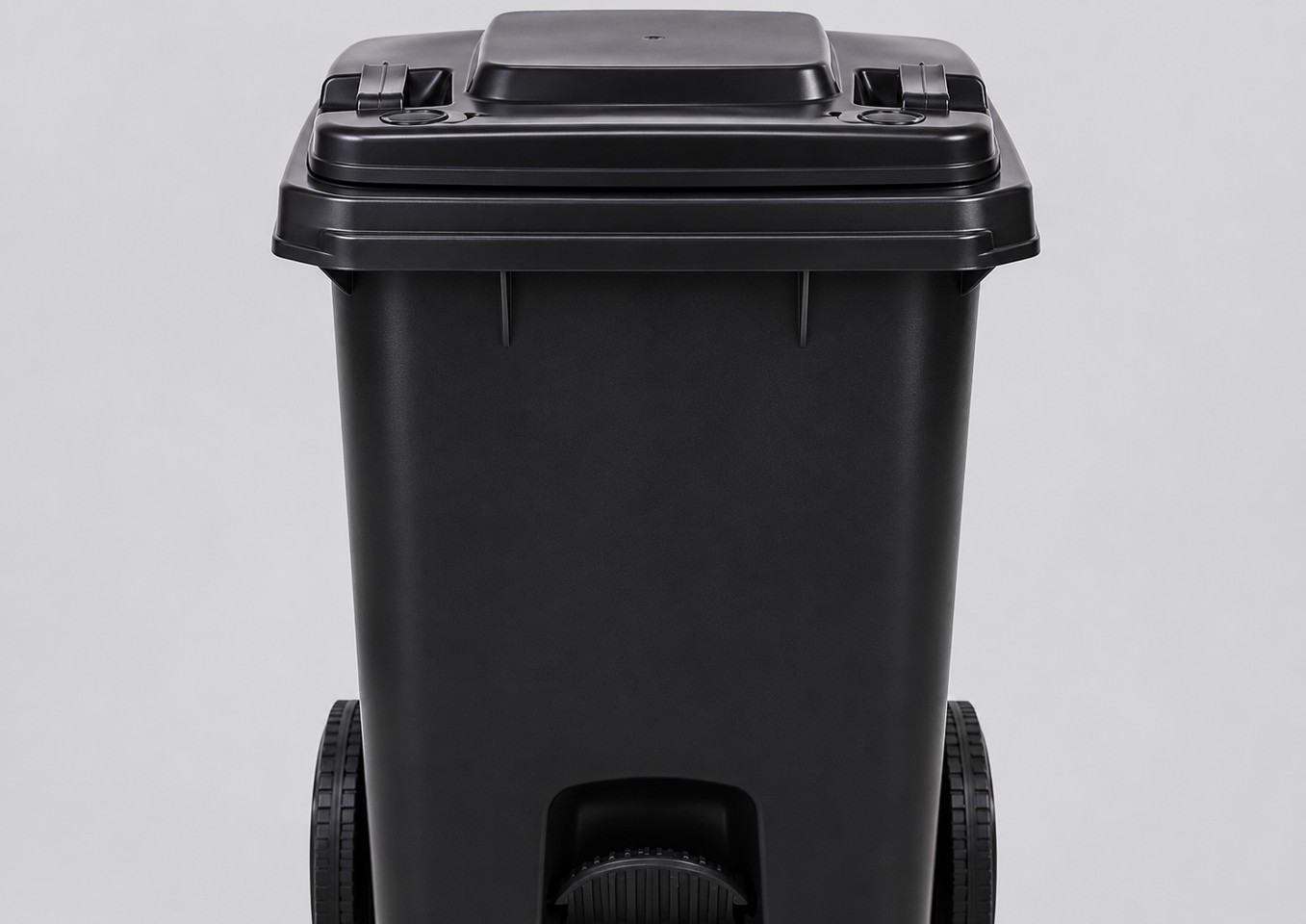
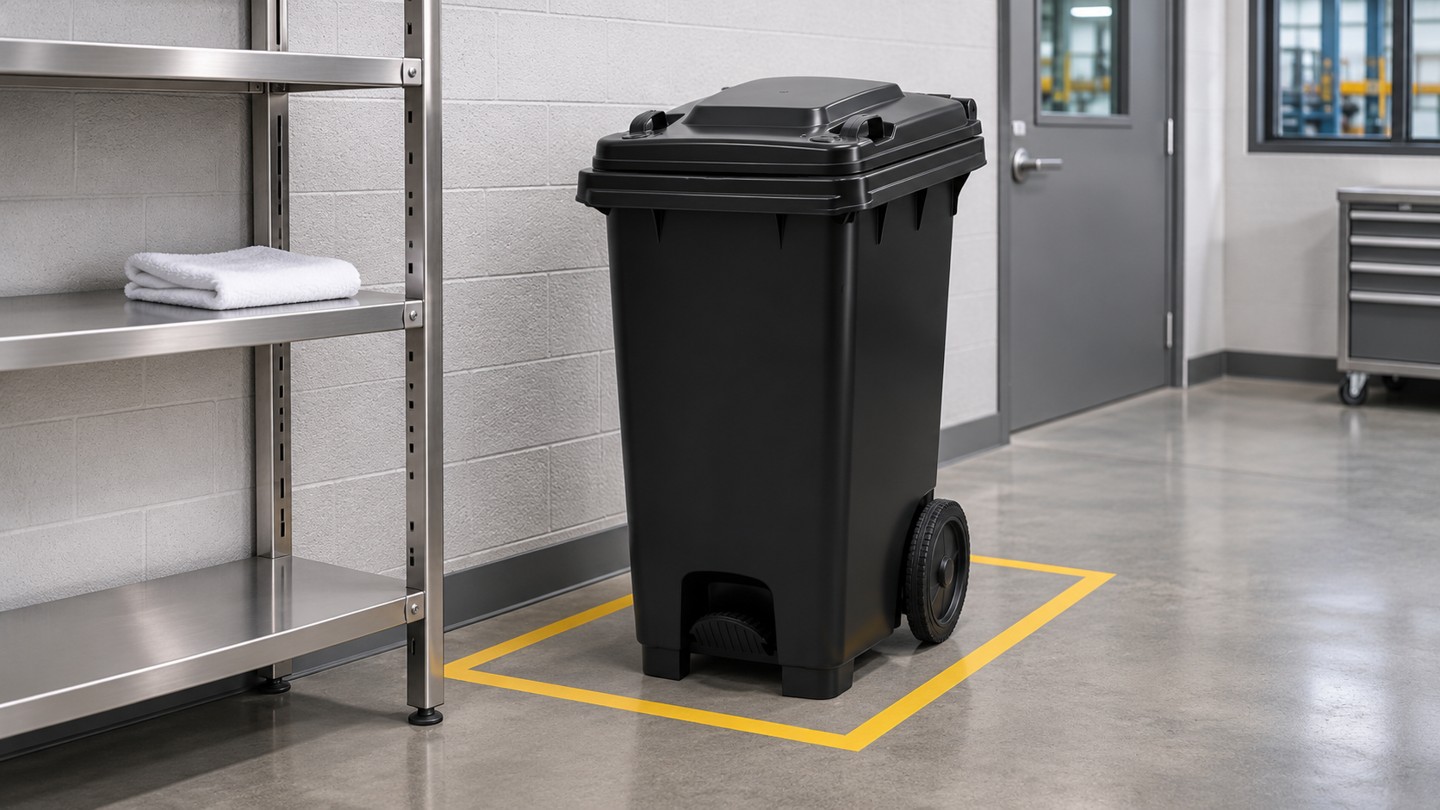
Start with the bin identity and its actual duty
Record the supplier reference, delivered configuration and location. A product family can include different capacities or constructions, so a photograph alone is insufficient to identify the material formulation. Obtain instructions for the purchased item, including any restrictions on cleaners, temperature, contact time, mechanical action and replaceable parts. Keep the approval attached to that reference rather than to an informal description such as black factory bin. Where the exact construction is unknown, ask the supplier to resolve it before choosing a chemical treatment.
Describe what the bin collects and where it operates. Dry packaging offcuts in an electronics area present a different cleaning problem from unknown liquid contamination. The waste owner must identify the contents and the approved emptying route. Do not tip out unidentified material to make an inspection easier. A routine housekeeping method cannot automatically authorize treatment of hazardous waste, spills or biologically contaminated material. Those cases need the applicable specialist procedure and a responsible person who can determine whether the bin may be cleaned at all.
For the broader purchasing context, use the electronics waste bin guide. The present approval concerns preservation of the bin during cleaning. It does not replace waste segregation, liner selection or electrical qualification of the collection arrangement. Keeping those decisions separate makes the resulting record easier to audit and prevents a successful appearance check from becoming an unsupported claim about the whole ESD control system.
Why chemical compatibility needs a separate decision
Cleaning can affect more than appearance. NASA’s ESD control handbook, section 7.15, explains that agents and methods used on ESD protective items should preserve their effectiveness and avoid leaching or insulating residue. This is general technical guidance, not a certification of a SWESD bin and not a supplied cleaning recipe. It gives the approval team a reason to ask about both the cleaner and the way it is applied.
A cleaner described as suitable for plastic does not necessarily establish suitability for this bin’s electrical role. Likewise, an antistatic marketing label does not prove that a chemical is compatible with every surface. Ask whether the supplier’s statement applies to the exact material, concentration and exposure conditions being proposed. If the statement covers only another product, preserve that limitation. Avoid extending it to a lid, wheel, pedal or hinge made from an unidentified material.
Build a method with explicit operating boundaries
The written method should identify the cleaner by a controlled product reference, not by color or odor. Include the relevant supplier instructions and safety information. If dilution is permitted, identify who prepares it, how the preparation is checked and how the container is labeled. Do not invent a universal dilution ratio. A substitution caused by a purchasing shortage is a method change requiring review, even when the substitute appears to remove dirt equally well.
Define the tools and their permitted contact areas. A cloth approved for the outer wall may be unsuitable for a hinge recess or a moving assembly. Scraping, abrasive pads, vigorous rubbing and pressure washing should not be added simply because a stain is difficult to remove. Refer persistent contamination to the responsible owner. A method that cannot remove the actual soil within its approved limits has reached its boundary; extending the exposure without review can make a material problem harder to detect.
ال CCOHS workplace housekeeping guidance places housekeeping within an organized workplace program, including waste removal and maintenance. Use that program-level approach to assign responsibility for the cleaning location, access and completion record. The proposed approval table below is a practical site checklist. It contains no claimed test result, universal electrical limit or mandated cleaning interval.
| سؤال الموافقة | Evidence to keep | Unresolved condition |
|---|---|---|
| Exact delivered material identified? | Product reference and supplier response | Hold chemical selection if identity is uncertain |
| Cleaner and application permitted? | Specific cleaner, conditions and instructions | Do not substitute an unreviewed formulation |
| Cleaning location and waste route suitable? | Assigned owner and approved procedure | Escalate unidentified waste or contamination |
| Drying and condition checks defined? | Written sequence and acceptance criteria | Hold if moisture or degradation remains |
| ESD reassessment required? | Site method and responsible release decision | Visual cleanliness alone cannot establish release |
Plan a controlled trial before routine release
A trial should follow a written plan approved by the site owner. Identify a representative bin or supplier-approved sample, the initial condition, proposed method and acceptance evidence. Record photographs before and after, but recognize their limits. Images can help show discoloration, cracks or residue visible under the chosen conditions; they cannot quantify electrical suitability or prove that invisible contamination is absent. Do not use an attractive before-and-after image as the only basis for release.
Where the ESD plan requires electrical reassessment, use its defined test method, conditioning and acceptance criteria. The operator should not invent electrode placement or substitute a convenient reading for the specified measurement. Identify the instrument, test setup and decision owner in the record. A supplier’s general product statement can support selection, while the site’s acceptance process determines whether the cleaned item may return to its actual duty. These are complementary forms of evidence with different scopes.
Consider repeated use in the approval decision. A single successful cleaning event is not proof that an unlimited number of cycles is harmless. Ask the supplier about restrictions and define a review trigger appropriate to the application. Examples include a changed surface feel, visible degradation, a revised chemical formulation or an unexplained electrical result. The frequency and extent of reassessment should come from the site’s risk evaluation and manufacturer information, rather than a schedule copied from another facility.
cURL Too many subrequests by single Worker invocation. To configure this limit, refer to https://developers.cloudflare.com/workers/wrangler/configuration/#limits
cURL Too many subrequests by single Worker invocation. To configure this limit, refer to https://developers.cloudflare.com/workers/wrangler/configuration/#limits.
cURL Too many subrequests by single Worker invocation. To configure this limit, refer to https://developers.cloudflare.com/workers/wrangler/configuration/#limits.
cURL Too many subrequests by single Worker invocation. To configure this limit, refer to https://developers.cloudflare.com/workers/wrangler/configuration/#limits cURL Too many subrequests by single Worker invocation. To configure this limit, refer to https://developers.cloudflare.com/workers/wrangler/configuration/#limits cURL Too many subrequests by single Worker invocation. To configure this limit, refer to https://developers.cloudflare.com/workers/wrangler/configuration/#limits.
cURL Too many subrequests by single Worker invocation. To configure this limit, refer to https://developers.cloudflare.com/workers/wrangler/configuration/#limits
cURL Too many subrequests by single Worker invocation. To configure this limit, refer to https://developers.cloudflare.com/workers/wrangler/configuration/#limits.
Changes to the waste stream or liner also deserve attention. A cleaning procedure approved for dry offcuts may be unsuitable after a process starts collecting solvent-contaminated wipes. Similarly, a liner can change the collection arrangement independently of the bin surface. Refer to the liner compatibility review for that separate question. Avoid treating a newly cleaned bin as approval to collect an unfamiliar waste or to introduce a different bag material.
For recurring work, capture the bin identity, method revision, date, operator, observed condition, exceptions and release decision. Keep the record concise enough to use during a shift, while retaining the supporting approval and supplier correspondence elsewhere. A checkbox reading cleaned is insufficient when several methods exist. Naming the approved method and its revision lets the next shift understand what actually occurred and gives purchasing a clear reference when ordering replacement consumables.
What to ask SWESD before specifying a cleaning method
Send the actual product reference, photographs of the delivered bin and a description of the intended waste and location. Identify the proposed cleaner by its technical documentation, intended concentration and application conditions. Ask for material-specific restrictions, approved maintenance instructions and any evidence available for the supplied variant. Request clarification where the response covers only the body while the proposed process also contacts the lid or moving parts. An unanswered question should remain open in the approval record.
The enquiry should also describe the site’s acceptance requirements. If the bin must be reassessed under an ESD control plan after cleaning, specify the required evidence without asserting that the supplier has already performed that assessment. Ask how replacement parts or material changes will be communicated. This gives the supplier a concrete technical question and gives the buyer a defensible comparison between offers, rather than a broad request for a bin that tolerates any cleaner.
ESD education for the method owner
The EOS/ESD Association university lecture below provides background on electrostatic discharge. Use it to understand why a housekeeping action must remain consistent with the area’s ESD controls. It does not demonstrate cleaning this bin, establish chemical compatibility or replace the site’s approved method. Personnel responsible for release should use the actual product documentation and acceptance process described above.
الأسئلة الشائعة
Can any plastic cleaner be used on an ESD waste bin?
No. Obtain approval for the exact supplied material and application conditions, including its ESD role.
Does a clean appearance prove electrical performance?
No. Follow the electrical reassessment required by the site ESD plan.
Is there one cleaning interval for every bin?
No. Set the interval using duty, contamination, supplier instructions and site review.
What happens if the wrong cleaner was used?
Hold the affected bin, record the actual exposure and refer it to the authorized decision owner.
Does cleaning approval cover waste stream changes?
No. A different waste stream requires review of collection, safety and cleaning requirements.
أحدث مشاركة
-
 Cleanroom Wipe Wetting Amount: Control the Preparation Step16 نوفمبر,2026
-
 ESD Waste Bin Cleaning: Approve the Method Before Use16 نوفمبر,2026
-
اترك ردًا