- مدونة
PCB-level ESD design and factory-level ESD handling solve different problems. Protection components, layout and grounding choices help a circuit tolerate electrical events. They do not stop an assembled board from being touched, stacked, parked or moved through an uncontrolled handoff. Turnover equipment closes that operational gap only when each rack, tray, box or trolley has a defined role inside the buyer’s ESD program.
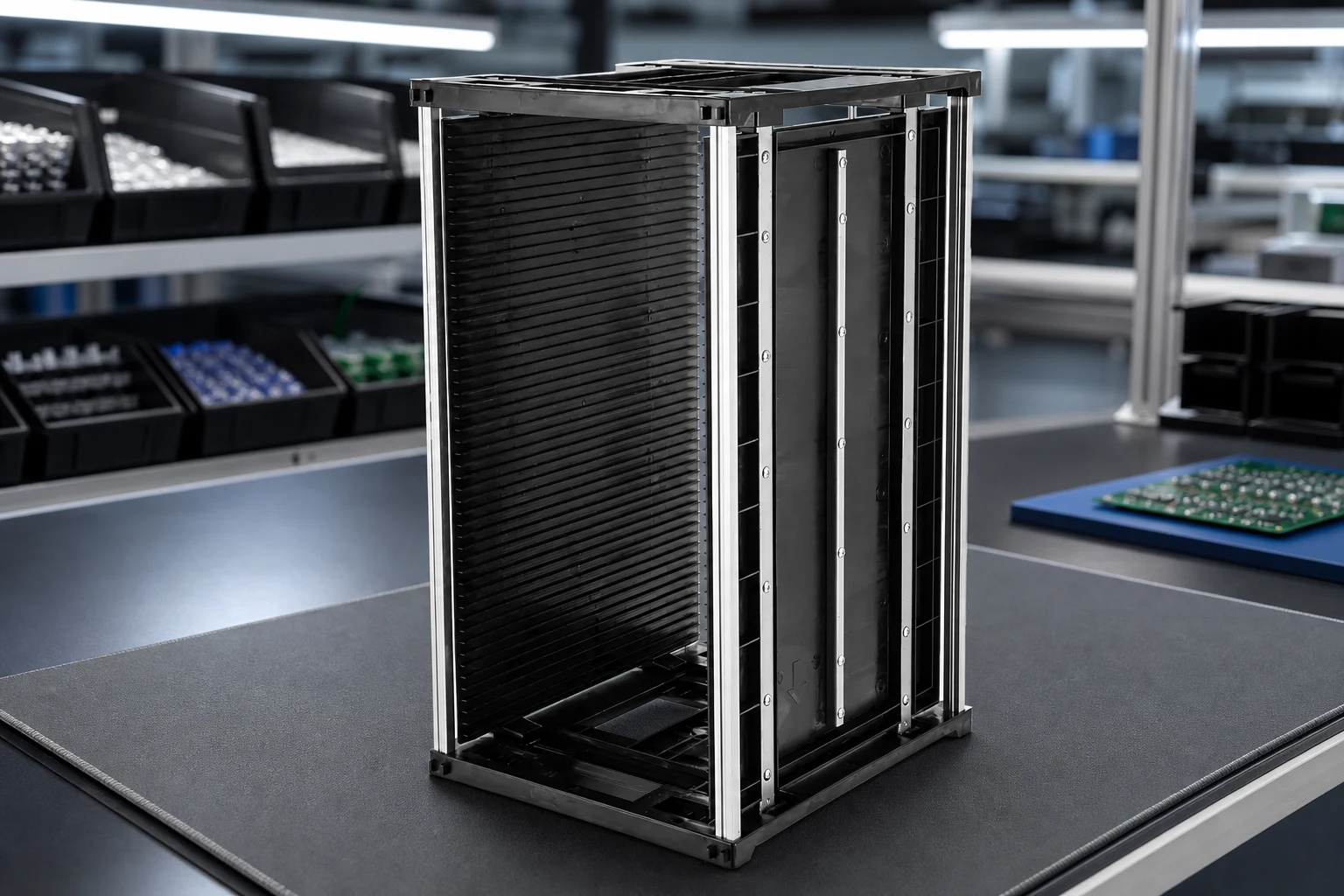
Use a two-layer ESD model
The first layer is the PCB itself: component selection, layout, return paths and protection networks. The second layer is the manufacturing process around the board. That process layer controls people, surfaces, tools, packaging, storage and movement.
ال ESD Association’s control principles describe a coordinated program: ground conductors, control charge sources and protect sensitive items when the controlled environment cannot be maintained. This is why a well-designed board can still need protected handling after assembly.
Treat these layers as complementary. A magazine rack is not a substitute for good PCB protection design, and an input clamp is not a material-flow plan.
Map the handoffs before choosing equipment
Walk one board family from receipt through assembly, inspection, rework, test and packing. Mark every place where ownership, location or status changes. These transition points are where boards are most likely to be placed on an improvised surface, mixed with another lot or moved without a defined carrier.
| Handoff | Operational question | Likely carrier role |
|---|---|---|
| Bare board receipt to line feed | How are boards separated and identified? | Tray or magazine rack |
| Process step to process step | Who owns the WIP and where may it wait? | Rack on a trolley or dedicated carrier |
| Inspection or rework hold | How is status made visible? | Labeled rack, tray or closed box |
| Finished board to packing | Does the route leave the EPA? | Closed protective package chosen by the buyer’s program |
This map prevents a common error: buying a broadly described “ESD-safe” item without stating what it must do.
Match the carrier to the board and the route
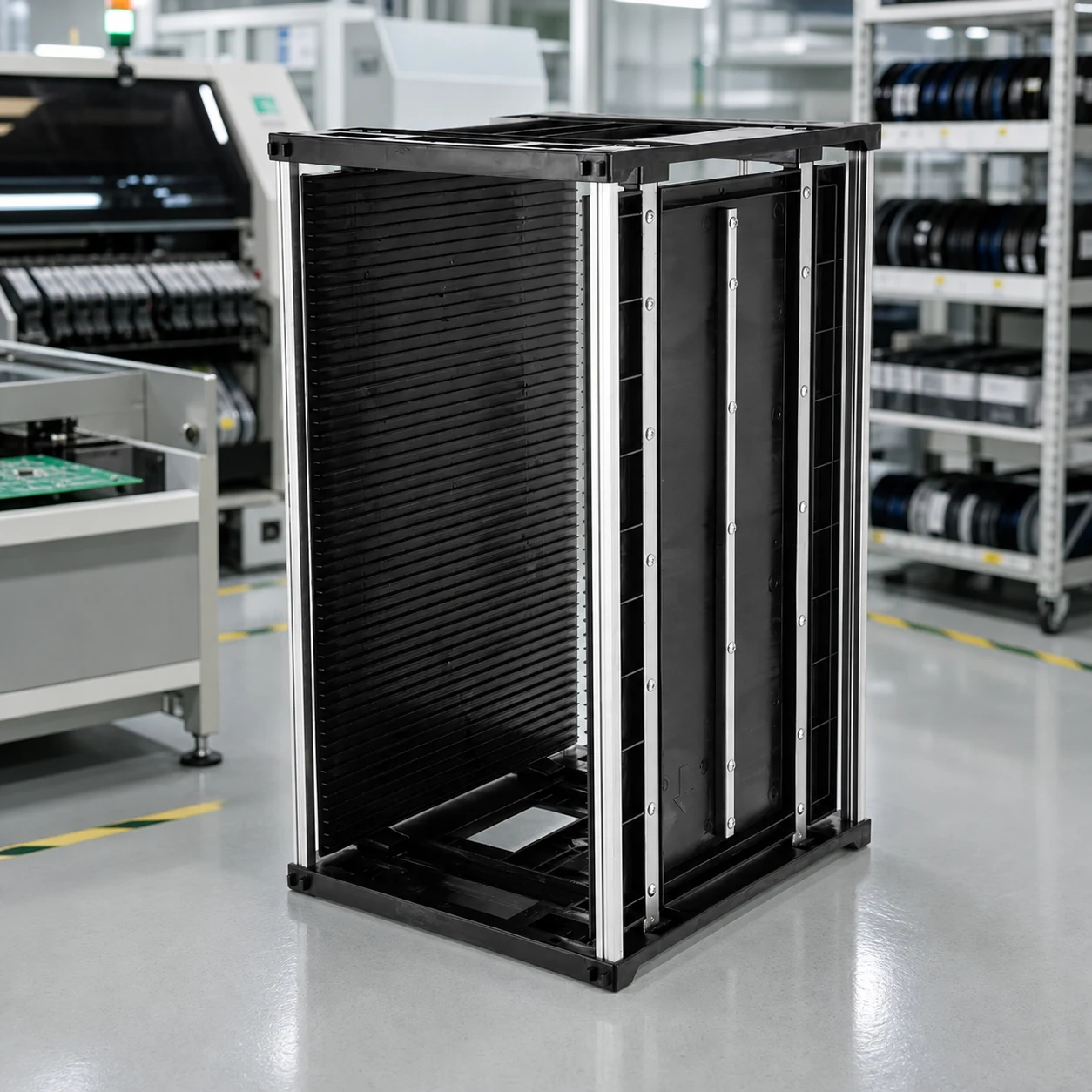
A magazine rack separates multiple boards and supports repeatable loading and unloading. A tray supports a defined orientation or a small kit. A box adds enclosure and labeling space. A trolley moves the selected carrier between named locations. None of these roles is interchangeable by default.
ال Metro electronics storage guide separates fixed storage from mobile solutions, while ALLPCB’s handling guidance emphasizes containers and disciplined board contact. Together they point to a practical rule: select the containment method and the movement method as two explicit decisions.
Check the actual board envelope, component keep-out areas, permitted contact edges, loading direction, required visibility, lot size and route. Then define how operators will confirm that the carrier is ready, full, on hold or released.
Define the fit boundary
An equipment category is a good starting point when the buyer can describe the board, the handoff and the acceptance evidence. It is a poor shortcut when a generic image or material name is expected to prove suitability.
| Suitable starting condition | Further verification needed |
|---|---|
| Board and route are defined | Confirm usable dimensions and contact points |
| ESD program requirement is named | Confirm the applicable method and acceptance rule |
| WIP and labeling method are known | Trial loading, retrieval and status visibility |
| Cleaning and environment are known | Confirm material and maintenance compatibility |
Do not infer resistance, load capacity, heat resistance, certification or lifetime from the word “ESD.” Request the exact quoted configuration and traceable evidence.
Build the turnover-equipment RFQ
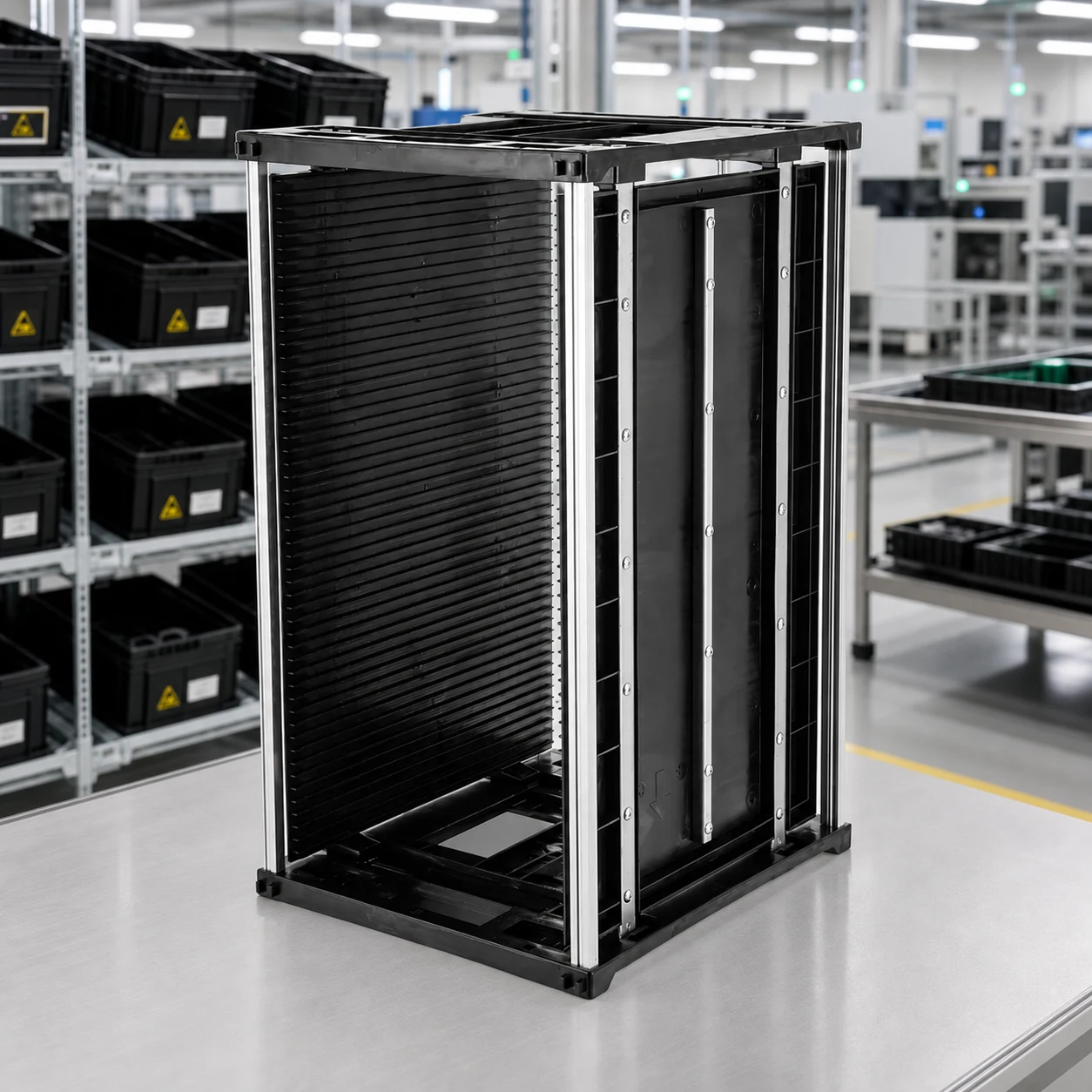
ابدأ بـ SWESD ESD Magazine Rack category when separated PCB buffering is the central job. If the carrier must move between operations, also review the عربة ESD route. These pages identify product families; the quotation must identify the configuration.
Send the supplier a short, testable brief:
- Board drawing, maximum populated envelope and permitted contact edges.
- Quantity per carrier, loading direction and WIP status method.
- Route, floor interfaces, cleaning conditions and any process temperature exposure.
- Governing ESD requirement, test method, acceptance limit and records required.
- Trial quantity, inspection plan, delivery destination and requested commercial terms.
Use اتصل بسانوي to confirm what evidence can be supplied for the quoted item. Release the purchase only after the response matches the buyer’s documented process.
المراجع
أحدث مشاركة
-
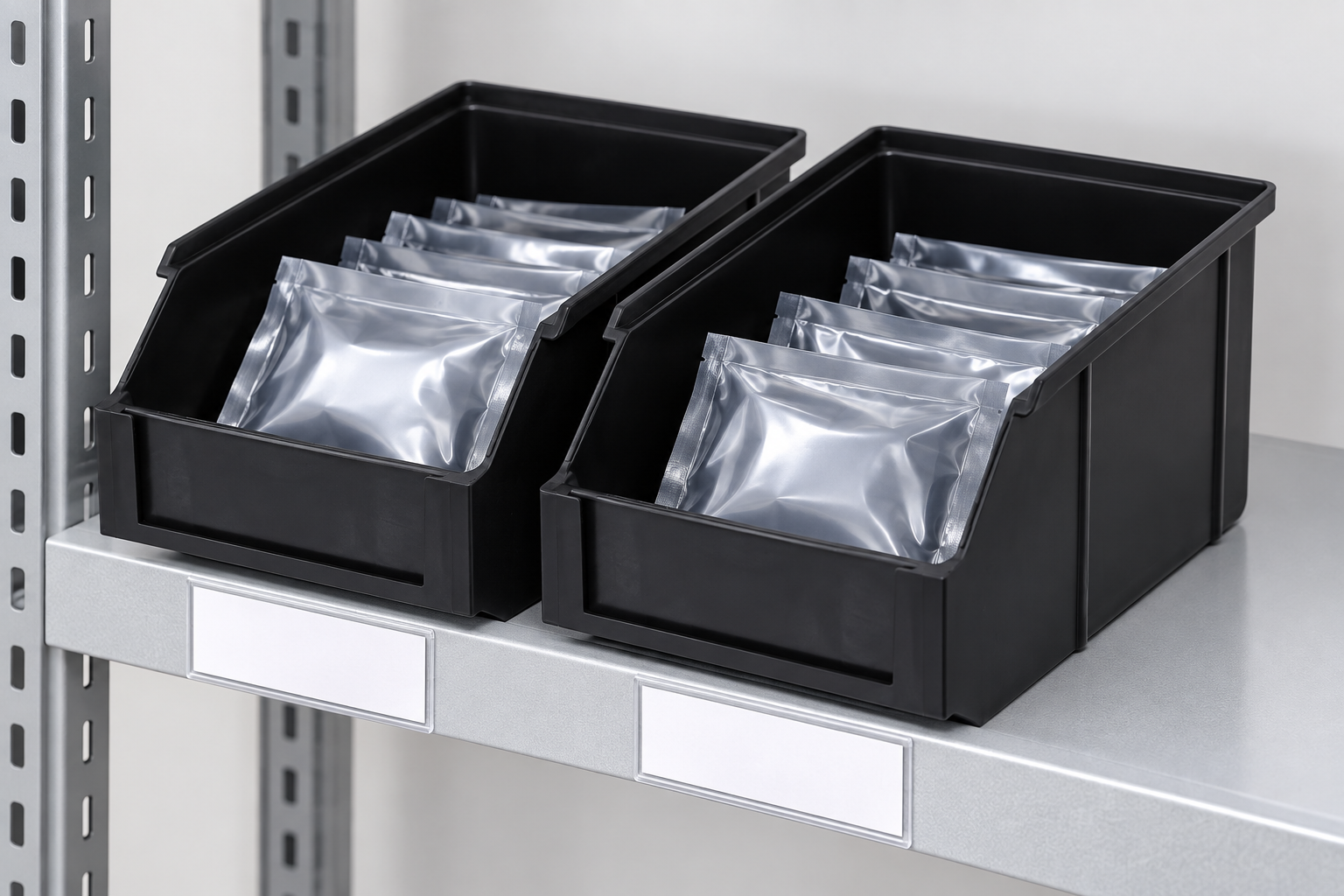 ESD Picking Bins: Front Access, Labels and Replenishment29 سبتمبر,2026
 -
 RFID Labels for ESD Storage Bins: Placement and Validation28 سبتمبر,2026
 -
 Reusable ESD Trays: Cleaning, Inspection and Lifecycle Cost28 سبتمبر,2026
اترك ردًا