- مدونة
A hanging-style ESD bin earns its place in a compact EPA when bench and floor space are already committed and the team still needs visible, reachable small-part storage. Plan the rail interface, pick height, labeling, and replenishment first; the hook is only useful once those decisions have owners.
ابدأ بـ ESD Bin category to see the published bin families. This article covers one structural style — the hang-on bin — and the layout, access, and procurement decisions that make an overhead position controlled rather than forgotten.
Part 1. When does overhead storage fit a compact EPA?
Begin with the space problem, not the product photo. Overhead or above-bench bin positions help when operators need frequent access to small parts, the bench is full of fixtures and instruments, and adding another floor rack would block a walkway.
The job stays point-of-use presentation. When material must travel between areas, that is a movement decision; the tote, carrier, and bin role comparison explains why a presentation container should not quietly become a transport route.
| EPA situation | Reasonable overhead role | لا تفترض |
|---|---|---|
| Bench crowded with fixtures and test gear | Frequently picked small parts move to rail positions above the bench | Every item is a candidate for an overhead position |
| Walkways too narrow for another floor rack | Vertical positions recover floor area at existing stations | A rail can be installed anywhere without a layout review |
| Parts scattered in unowned piles | Each hung bin maps to one assigned item and station | Hanging a bin creates ownership by itself |
| Heavy or bulky stock | Keep it low; overhead positions serve light, frequent picks | A hook location proves the load is acceptable |
Part 2. What makes a bin hanging-style?
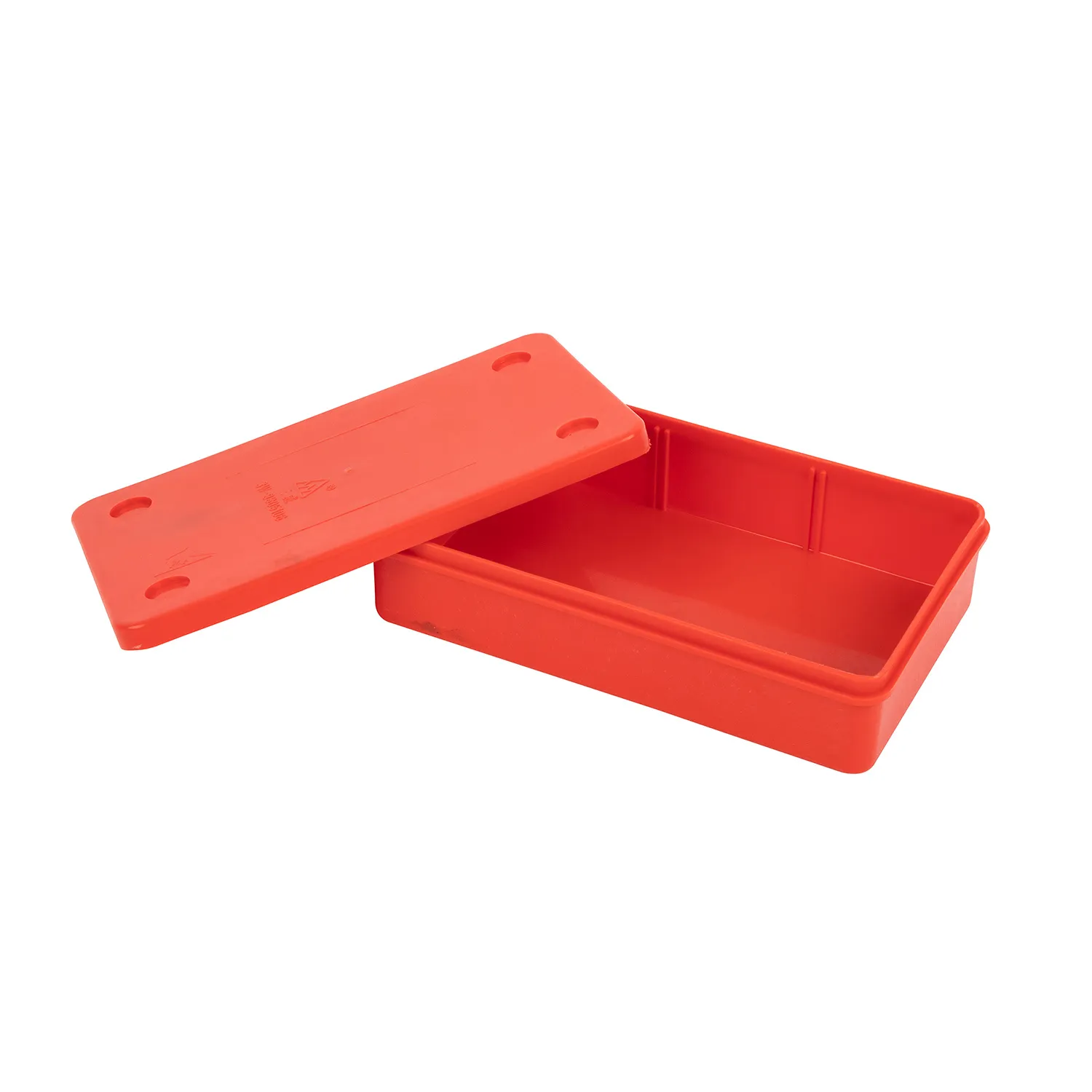
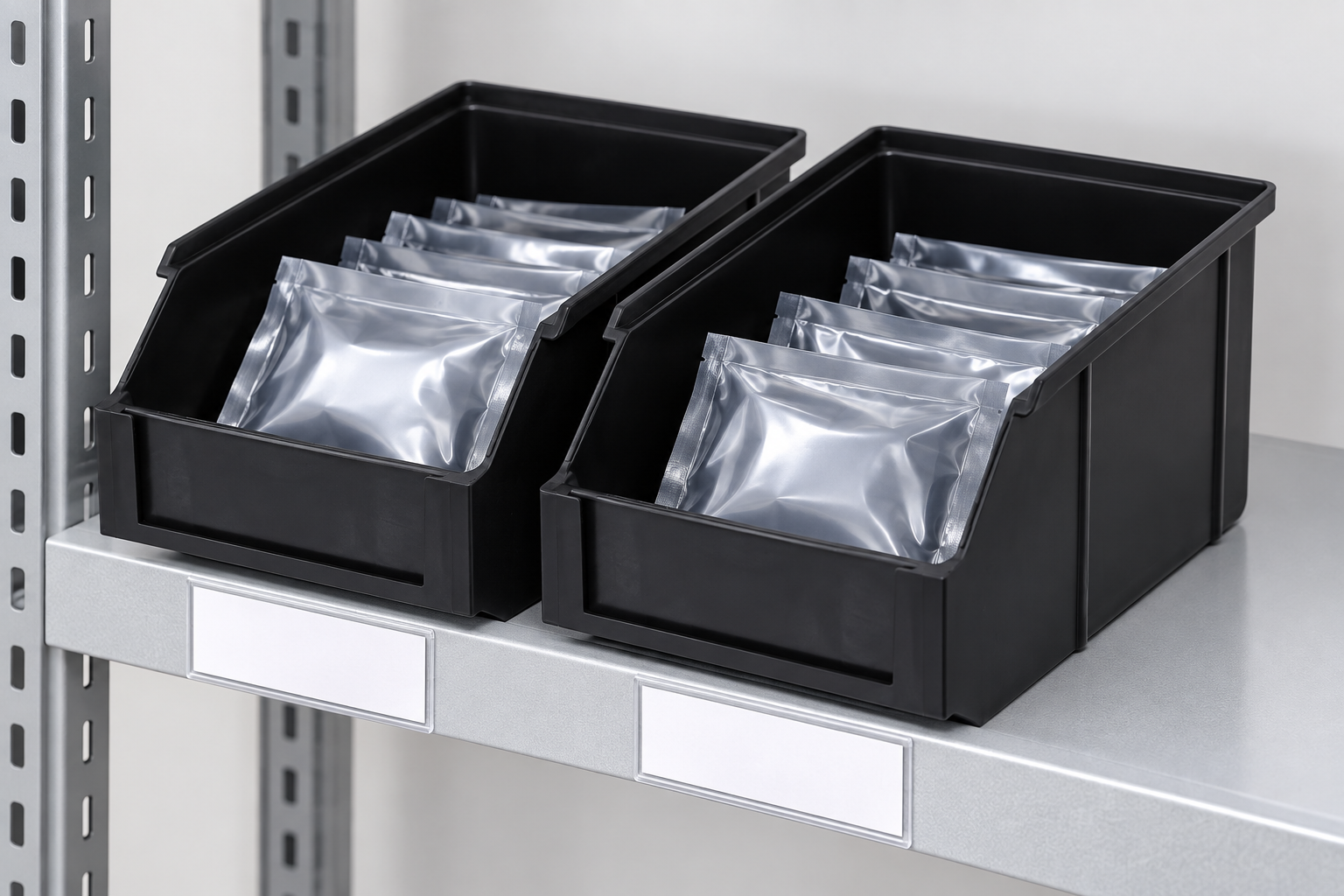
A hanging-style bin is defined by its mounting intent: it is shaped to hang on a rail, panel, or rack edge instead of resting on a shelf. The open front stays available for picking while the bin body occupies wall or upright space that a shelf bin cannot use.
Sanwei’s ESD Component Bin page lists hanging component bins among its classifications by structural performance. Treat that classification as a family-level signal, and confirm the specific model and its mounting arrangement in the quotation rather than assuming every bin in the family hangs.
Bench-top alternatives remain valid. If the station has drawer or stacking needs instead of rail needs, the stackable drawer bin planning guide covers that different structural style.
Part 3. How should rails and stations be mapped?
Map the physical interface before choosing bin quantities. Record which stations already have rails, panels, or rack edges; which need new hardware; and who approves changes to the workstation structure.
One row per position keeps the plan reviewable. The supplier needs the interface description to check compatibility, and the EPA team needs it to keep unplanned hardware off the line.
| Rail-plan input | What the buyer records | لماذا يهم الأمر |
|---|---|---|
| Station identity | Workstation or cell name and its process step | Connects each bin to a real consumption point |
| Mounting interface | Existing rail, panel, or rack edge and its condition | Compatibility is checked against something specific |
| Position | Height band and horizontal slot for each bin | Prevents ad-hoc hanging after delivery |
| Assigned item | One item or approved group per bin position | Keeps the overhead row from becoming mixed storage |
| Change owner | Who may add, move, or remove a position | Layout stays deliberate as demand shifts |
Part 4. What belongs in the pick-height and access review?
Height rules come from the buyer’s own safety and ergonomics procedure, not from the bin catalogue. Decide which height band suits frequent picks, which suits occasional picks, and what may never sit above shoulder height under the site rule.
Weight belongs in the same review. An overhead position should hold light, frequently picked items, while heavy or awkward stock stays low; the quotation cannot make that judgment for the site.
Check the sight line as well. An operator should read the label and see the fill level from the normal working position, because a bin that requires a step stool to inspect will drift out of the replenishment routine.
Part 5. How should labeling and replenishment work overhead?
Overhead positions fail quietly when refill signals depend on someone noticing an empty bin above eye level. Tie each position to an observable trigger: a defined empty state, a minimum pack count, a card, or a scan event that the materials team already uses.
Keep the label rule consistent with the rest of the EPA. Each hung bin should show the assigned item, its identification field, and the status the buyer’s procedure requires, facing the operator rather than the ceiling.
| Event | Overhead rule | Owner action |
|---|---|---|
| Bin reaches its trigger point | Signal is visible from standing position | Materials receives a defined refill request |
| Wrong item appears in a position | Position identity is preserved; content is quarantined | Supervisor corrects under the work instruction |
| Item is discontinued or moved | Position is formally released and relabeled | Change owner updates the rail map |
| Bin returns dirty or damaged | Position is refilled only after inspection | Materials decides to clean, replace, or hold |
Where one bin must present separated variants, review the in-bin partition guidance before assuming an accessory solves the segregation rule.
Part 6. Which ESD evidence and configuration details need confirmation?
An ESD program defines acceptance; a category page does not. ANSI/ESD S20.20-2021 describes requirements for an ESD control program, and it does not approve an individual bin, rail, mounting height, or storage layout.
Sanwei’s ESD Component Bin page publishes a static-index row and lists optional anti-static label, cover, and partition accessories on the family page. Request the evidence, test method, and traceability the buyer’s program requires for the selected model, and confirm accessory availability in the quotation instead of assuming options apply across the family.
Leave dimensions, load behavior, materials, and temperature limits to the quoted model row. The article-level rule is simple: nothing overhead is confirmed until the named model, its mounting arrangement, and its evidence appear in the quotation.
Part 7. What belongs in the RFQ and sample-use review?
Send the supplier a reviewable plan rather than a bin count. One controlled request should carry the station list, interfaces, items, and rules that Parts 1 through 6 defined.
| طلب تقديم عرض أسعار | يجب على المشتري توفير |
|---|---|
| Station and layout | Station list, layout constraint, and walkway consideration |
| Mounting interface | Rail, panel, or rack-edge description per station |
| Item data | Item list, envelopes, packaging condition, and weight class |
| Position rules | Pick-height bands, overhead exclusions, and position map |
| تحديد | Label fields, status marks, and facing direction |
| Replenishment | Trigger type, refill route, and return path |
| ESD request | Required method, evidence, and acceptance criteria |
| Sample-use review | Loaded pick trial, label visibility, mounting check, and refill walk-through |
For the model review, start from the Sanwei ESD Component Bin family, whose page lists hanging component bins among its structural classifications. Use the family as the entry point for a quote-confirmed configuration, not as a promise that a specific bin fits a specific rail.
ملائمة الحدود
| وضع المشتري | طريق معقول | تجنب |
|---|---|---|
| Compact EPA with crowded benches and frequent small-part picks | Hanging-style bins on mapped rail positions | Hanging bins wherever a hook fits |
| Heavy, bulky, or rarely picked stock | Low shelf, floor, or enclosed storage decision | Treating overhead rails as general storage |
| Material that must move between areas | A tote or carrier route with defined owners | Using a hung presentation bin as a transport container |
| Unknown rail or panel compatibility | Interface description plus a sample mounting check | Ordering from a photo of a hook |
Send the rail map, item list, position rules, and ESD evidence request through اتصل بسانوي for a quote-confirmed review of hanging-style bin models.
أسئلة متكررة
What is a hanging-style ESD bin?
It is a bin shaped to mount on a rail, panel, or rack edge instead of sitting on a shelf, keeping an open front available for picking. Confirm the specific model and its mounting arrangement in the quotation.
When should a compact EPA use overhead bin storage?
Use it when benches and floor space are committed and operators still need frequent, visible access to light small parts. The decision follows the layout review, not the other way around.
Which rails or panels do hanging ESD bins fit?
That depends on the interface at each station, so record the existing rail, panel, or rack-edge description and ask the supplier to confirm compatibility for the named model. No universal fit should be assumed.
How high should hanging ESD bins be mounted?
Apply the site’s own safety and ergonomics rule: frequent picks in the comfortable band, occasional picks higher, and defined exclusions above shoulder height. The bin supplier does not set that rule.
Can hanging ESD bins hold heavy parts overhead?
Keep heavy or awkward stock low. Overhead positions suit light, frequently picked items, and any load question belongs to the quoted model review and the buyer’s safety procedure.
How should hanging bins be labeled and replenished?
Give each position an operator-facing label and an observable refill trigger, such as a defined empty state, minimum pack count, card, or scan event. Route the signal to a named materials owner.
What ESD evidence should buyers request for hanging bins?
Request the test method, evidence, and traceability the buyer’s program requires for the selected model, referencing the program context of ANSI/ESD S20.20. Confirm accessory availability in the same quotation.
What should a sample review check before an overhead rollout?
Run a loaded pick trial on a real station: mounting security on the actual interface, label visibility from standing position, pick and return motion, and the refill walk-through with the materials team.
المراجع
أحدث مشاركة
-
 ESD Picking Bins: Front Access, Labels and Replenishment29 سبتمبر,2026
 -
 RFID Labels for ESD Storage Bins: Placement and Validation28 سبتمبر,2026
 -
 Reusable ESD Trays: Cleaning, Inspection and Lifecycle Cost28 سبتمبر,2026
اترك ردًا