- Turbo
- Blog
Cleanroom wipe particle testing is meaningful only when the sample, release method, particle measurement and reporting basis are defined. Two reports with different preparation or size ranges cannot be compared as though they describe the same property. There is no universal particle-count limit that makes every wipe suitable for every cleanroom task. Establish the intended contact surface and contamination risk, select a relevant controlled method, review blanks and test conditions, then define an acceptance rule for that application. This guide helps electronics buyers interpret supplier reports and plan qualification without treating a cleanroom classification, a low-lint label or a photograph as a verified particle result.
Start with the contamination question you need to answer
Write a clear objective before asking a laboratory for a number. You may need to compare candidate wipes, investigate visible fibers, assess a new manufacturing lot or determine whether a cleaning step leaves an acceptable surface. These decisions involve related but different evidence. A test that releases particles from the wipe under defined agitation is not automatically a direct measurement of what remains on a particular assembly after cleaning. Identify that distinction in the request.
Map how the wipe will be used: surface material, approved cleaning liquid, folding technique, pressure control where relevant and whether the same face is reused. Identify especially vulnerable surfaces or products through the process owner. Do not assume that the smallest reported particle category is always the decisive one. The application can require attention to fibers, residues or other contamination characteristics that a single particle count does not capture.
The IEST recommended practice for evaluating wiping materials addresses cleanliness and functional characteristics of wipers. Consult the applicable method in full when preparing a test plan. Its public description supports the need to evaluate the relevant characteristics; it does not provide a universal pass limit for your product. The ISO 14644-18 overview also frames consumable suitability around maintaining cleanliness in the intended controlled environment.
Identify the wipe, lot and state of the specimen
Record the supplier, exact part number, revision, lot, construction description, dimensions and packaging. Keep the original labeling with the sample record. A report for a material family cannot automatically qualify every converted size or edge treatment within that family. Confirm whether the tested sample matches the item you will purchase. If there is uncertainty, ask the supplier to identify the difference and provide relevant supporting evidence.
Describe how the specimens are taken from their packaging and prepared. Cutting or other preparation can change the exposed edges and the particle-release pathway. Prewetting, conditioning and handling can also affect what is measured. These details need a controlled method rather than improvised choices designed to obtain a favorable result. Do not quietly clean or precondition a candidate differently from the baseline and then call the comparison equivalent.
Include the number of specimens and how they represent the lot. A single selected sample may demonstrate one measurement but provide little information about variability. The sampling plan should reflect the purpose and risk, with its rationale documented. Do not invent a fixed sample quantity for every facility. When the plan changes, record the reason before collecting data so the selection cannot be adjusted retrospectively to hide unfavorable observations.
Read the test method before comparing the headline count
A useful report names the method and revision, the procedure used to release particles, the measurement approach, specimen quantity and reporting units. Ask what the count represents: a cumulative size range or discrete bins, a value per wipe, a value per area or another basis. The same printed number can mean very different things under different definitions. Retain the raw reporting basis when entering results into a purchasing comparison.
Check which particle sizes and fibers the method detects and reports. A result described as low does not establish that unreported ranges were measured. Similarly, a result below a reporting limit is not proof that no particles exist. Ask how detection limitations and background corrections are handled. These questions allow the technical owner to interpret the evidence without exaggerating the capability of the measuring system.
Do not convert between reporting bases unless the conversion is justified by the defined procedure and actual specimen information. Even a mathematically possible conversion does not remove differences in release conditions or instrument response. If two suppliers use different methods, request comparable data or perform a controlled comparison. Keep the original reports alongside the derived comparison, including every assumption used, so the purchasing table remains auditable.
Use blanks and controls to distinguish the specimen from the setup
The laboratory should define the appropriate blanks and controls for the selected method. Background contamination may arise from handling, equipment, liquid or the environment. The exact approach belongs in the procedure. Ask how the laboratory determines whether the background is acceptable and what happens if it is not. A result with an unexplained background problem should remain unresolved rather than being accepted because the corrected number looks small.
Request evidence that the measuring equipment and setup are suitable for the task. That includes the relevant calibration or verification information and the method’s limitations. Calibration of an instrument does not automatically validate the complete sample-preparation procedure. If a change in laboratory or equipment produces a large shift, investigate method and setup comparability before interpreting it as a change in wipe quality.
For troubleshooting, preserve both specimen results and the associated background information. An unstable blank can reveal a preparation or environmental issue that disappears in a final summary. Do not repeatedly retest without recording the initial result and the reason for repetition. A defined investigation and repeat rule protects both buyer and supplier from cherry-picking the result that supports the preferred commercial decision.
Build an acceptance record with explicit decisions
| Review item | Required definition | Action if unclear |
|---|---|---|
| Specimen identity | Exact item, revision, lot and preparation | Request identified specimens |
| Method comparability | Method revision and particle-release procedure | Obtain comparable evidence |
| Reporting basis | Units, size ranges and cumulative or discrete counts | Retain original units and definitions |
| Background control | Blank procedure and acceptance rule | Investigate unacceptable background |
| Application acceptance | Approved specification and reviewer | Keep qualification pending |
| Functional trial | Defined surface, liquid and wiping procedure | Limit approval to evaluated conditions |
Approve acceptance requirements before qualification data are reviewed. Identify the governing process specification, relevant method, sampling basis, acceptance rule and responsible reviewer. Where a numerical limit is required, it must come from an applicable requirement or a justified process assessment. A convenient number copied from another supplier’s brochure does not establish suitability for your surface or manufacturing step.
Keep test acceptance separate from product release. Particle data may satisfy one characteristic while another requirement remains open. A wipe could still need assessment of functional performance, residues, liquid compatibility or electrostatic suitability where relevant. The final decision should list all required evidence and any restricted use. Do not turn one passing particle report into an unrestricted cleanroom approval.
Compare suppliers under matched conditions
Prepare a comparison that controls the variables relevant to the chosen method. Use identified specimens, consistent preparation, equivalent reporting and a documented treatment of blanks. Where different lots are tested, report that fact. Differences may reflect lot variation as well as supplier variation. Avoid attributing every difference to material quality until the technical reviewer has assessed the comparison design.
Present individual results or an appropriate summary with the observed spread, not only the best specimen. Ask how outliers are investigated and retained. A small sample can produce an apparently strong average while masking uncertainty. The buyer should understand the limits of the evidence before using it to set a supply policy. Price and lead time can be considered after the technical comparison is interpretable.
Use the existing ESD cleanroom wipe selection guide for the broader choice of material and use conditions. This page focuses on particle evidence and acceptance. The comparison of ESD and cleanroom wipes for stencil cleaning addresses a particular cleaning task. Keep those decisions distinct from a report-reading exercise so procurement does not approve an item solely on a particle-ranking table.
Validate the cleaning task after reviewing material evidence
A laboratory report describes the tested condition. Confirm that the intended cleaning procedure works on the relevant surface under a controlled trial. Define the approved liquid, wipe folding and replacement rule, and the observations or measurements needed to establish an acceptable outcome. Use qualified personnel and avoid exposing valuable production material before the trial is approved. Record deviations rather than silently adapting the method until the candidate appears satisfactory.
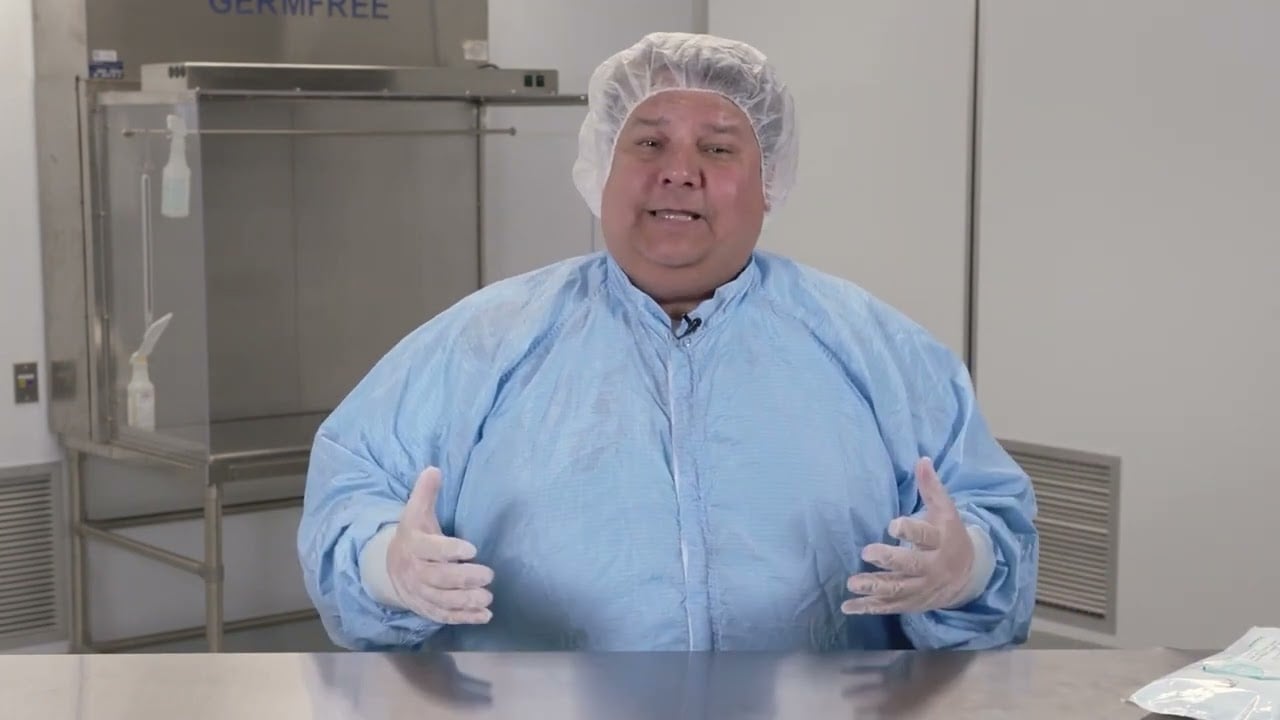
The educational video below from IEST demonstrates proper cleanroom wiping technique. It is relevant because handling technique is part of the actual cleaning task being qualified. It is not a particle-count method, a supplier report or proof that a specific SWESD wipe meets a cleanliness requirement. Use it as background for discussing a consistent procedure with the process owner; the governing site instructions remain the basis for operator work.
For control of other contamination pathways, review the cleanroom sticky roller guide. A wipe, roller and floor-entry mat have different roles. Do not assume that improving one consumable resolves all contamination sources. Investigations should examine the process as a whole while preserving a clear conclusion about what the wipe test actually demonstrated.
Preserve evidence for repeat orders and changed products
Create a qualification file containing the approved specification, supplier item identity, reports, trial results, acceptance decision and any use restrictions. Receiving checks should confirm that delivered lots correspond to that approved item. Decide when new testing or review is required, such as a relevant material or manufacturing change. The frequency should be defined by your program and evidence, not inferred from a blog article.
When a complaint occurs, retain the suspect lot, packaging and observations. Compare the current evidence with the original qualification under comparable conditions. Ask whether the problem is associated with a manufacturing change, storage, introduction into the clean area or use technique. Replacement stock can restore supply while the cause remains unresolved. Close the investigation only when the required evidence and disposition are documented.
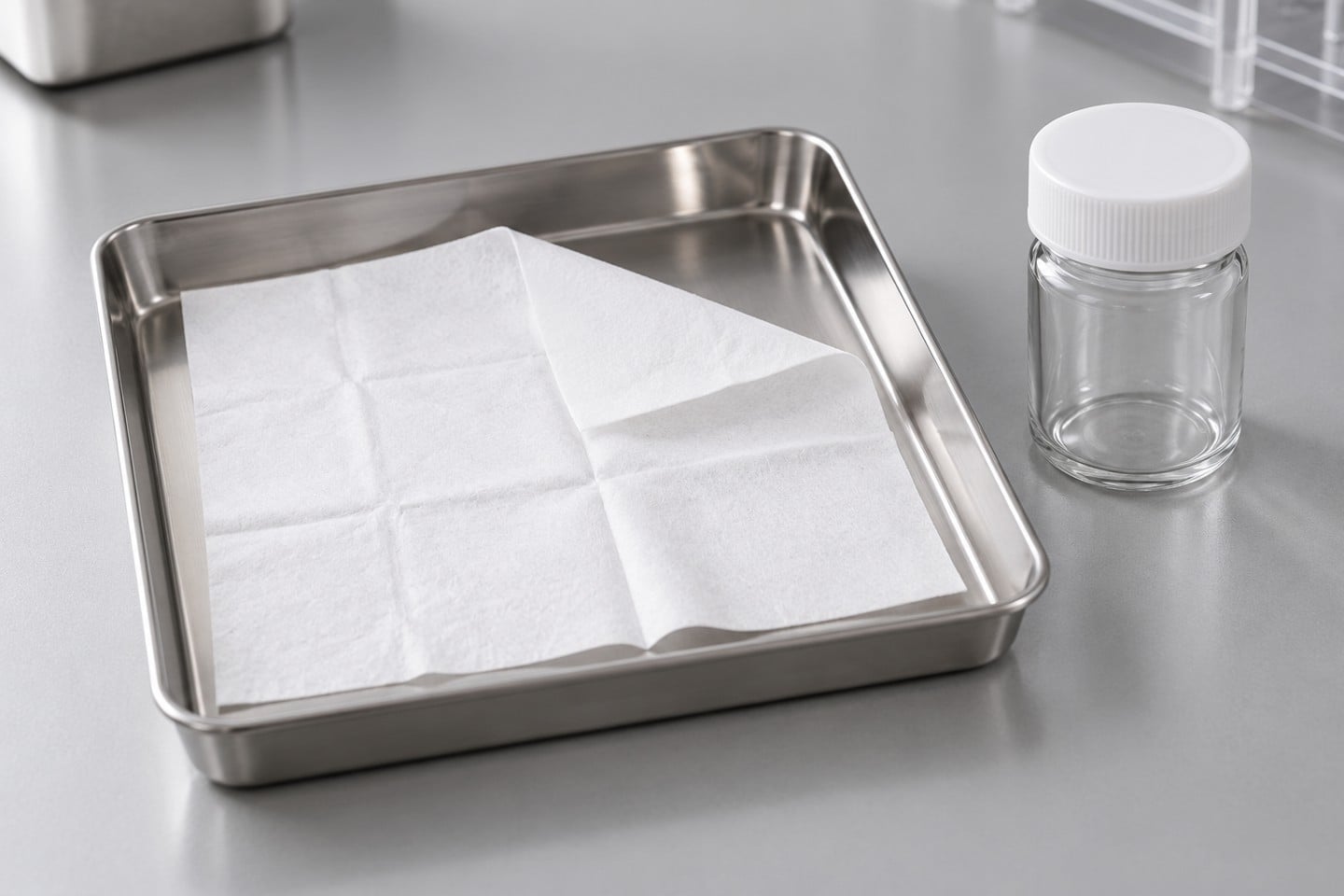
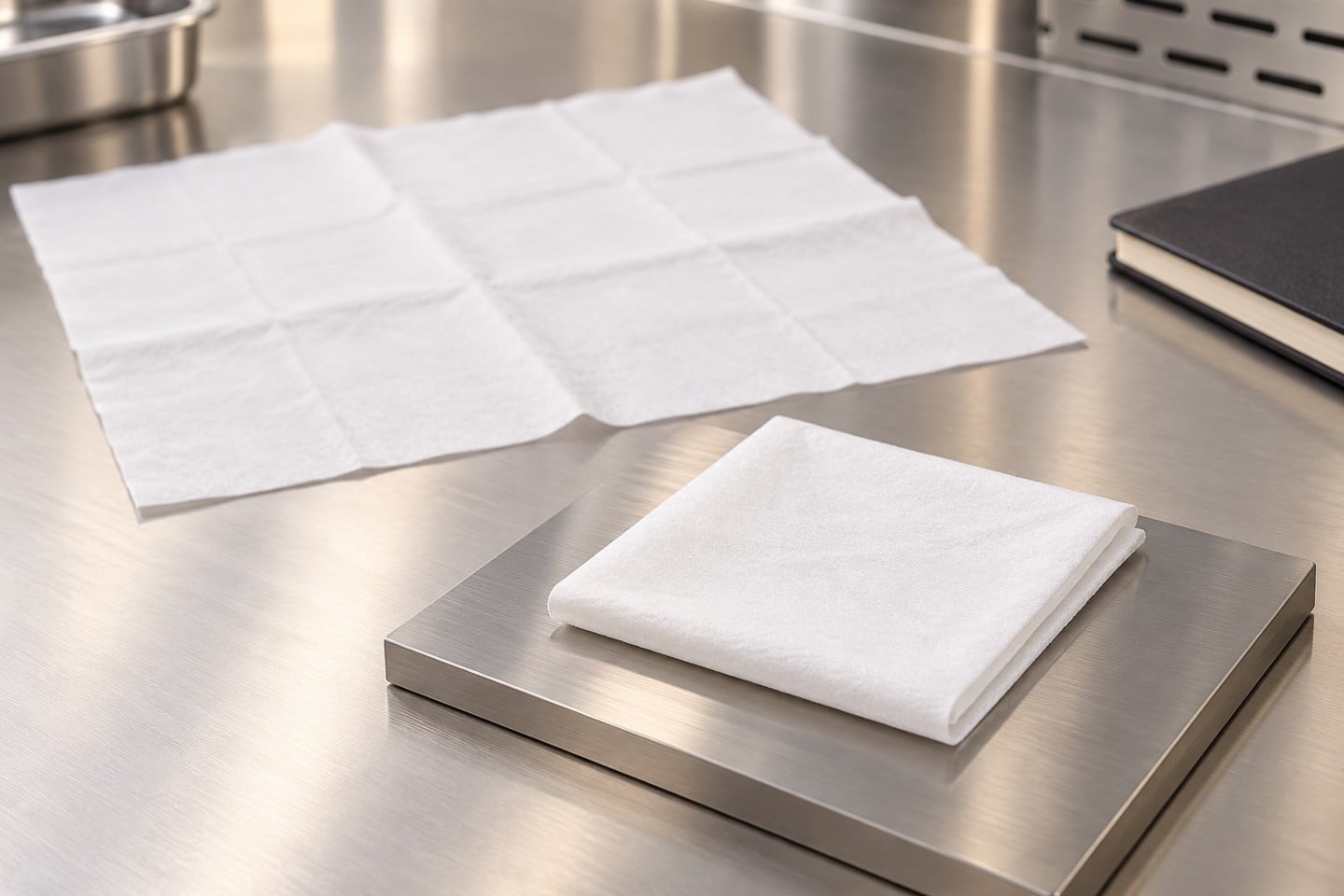
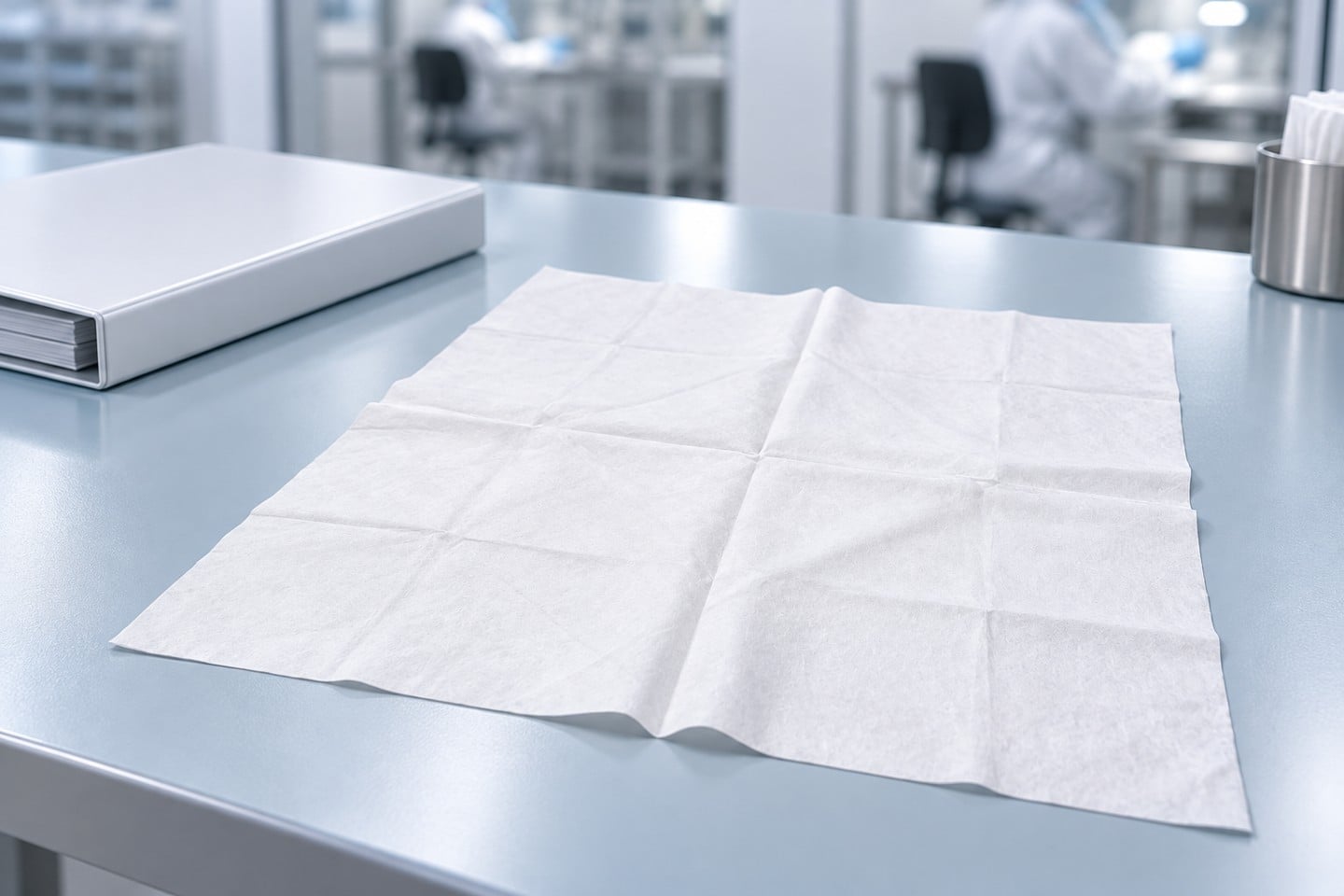
The SWESD ESD clean wiper product page provides a starting point for an item-specific discussion. Request the actual construction, test evidence and compatibility information required for your process. The accompanying images show product-reference illustrations of sample handling; they do not establish particle counts, solvent suitability or certification. A defensible purchase links the exact item to verified evidence and an approved application, then retains those links for future deliveries.
Frequently asked questions
Is there one particle limit for all cleanroom wipes?
No. Acceptance depends on the intended application, applicable requirements and a justified controlled specification.
Can reports using different methods be ranked directly?
Not reliably. Review specimen preparation, release conditions, measurement and reporting before comparing results.
Does a below-limit result mean zero particles?
No. It should be interpreted with the reporting limit, method scope and background treatment.
Does a passing particle report qualify every cleaning task?
No. Other required characteristics and the actual cleaning process still need relevant evidence.
What should be retained after a failed comparison?
Preserve specimen identity, initial results, blanks, investigation and the rationale for any approved repetition.
Leave a Reply