- Turbo
- Blog
Esd Cleanroom Wipes should be selected as part of a defined electronics handling process, not as a generic catalog item. The right specification connects component geometry, ESD function, mechanical protection, operator access, equipment interfaces, cleaning and verification. This guide shows engineers and buyers how to turn those needs into an RFQ, a sample approval plan and a repeatable receiving check. It also explains where ESD cleaning supplies fits in the wider ESD control system without assuming that color, a material name or one test result proves suitability for every device and route.
What the Product Must Do in the Real Workflow
The practical purpose is removing particles or process residue from ESD-controlled tools and packaging without introducing unacceptable lint, chemistry or charging risk. That sentence is the starting requirement. A useful specification names the item being protected, where it enters the process, every handoff, the equipment it touches, how long it remains in the package and what can go wrong. Without that map, a tray, wipe, tester or trolley can pass a desk review and still fail on the production floor.
Separate the protection problem into three layers. First, prevent mechanical contact, uncontrolled motion and mix-ups. Second, define the required electrostatic function and its connection to the facility control program. Third, make the solution usable: operators must load, identify, inspect and unload parts without creating a new risk. Buyers should therefore involve process engineering, quality and the ESD coordinator before freezing the purchase description.

Build a Requirement Sheet Before Requesting Price
A supplier can quote accurately only when the RFQ distinguishes mandatory acceptance criteria from preferences. Attach controlled drawings rather than screenshots, identify revisions, and state whether dimensions are reference or inspection characteristics. Describe the real environment, including cleaning agents, temperature exposure, humidity range, storage duration and any automated interface. Where a limit is not yet known, request a sample trial instead of inventing a number.
| Decision area | What to define | How to verify |
|---|---|---|
| Cleanliness | Particles, fibers and extractables relevant to process | Supplier data plus process trial |
| Compatibility | Substrate, solvent and residue risk | Test on real surface |
| ESD context | Handling, grounding and charging behavior | Follow EPA procedure |
| Use method | Fold, wipe direction, change frequency and disposal | Written work instruction |
The table is deliberately method-focused. Numeric acceptance limits must come from the applicable product drawing, device data, ESD control plan and referenced test method. A number copied from an unrelated supplier sheet may use different conditioning, geometry or voltage and can create false confidence.
Start with the Protected Item, Not the Container
Record the protected item’s maximum material condition, fragile features, allowed contact zones, orientation and identification needs. For electronic assemblies, connectors, solder joints, exposed leads and tall components may require keep-out zones that are not obvious from the outer length and width. If several part numbers share one solution, test the smallest, largest and most vulnerable configurations rather than a convenient average.
Physical samples are valuable, but they do not replace controlled data. A sample represents one production result and may not reveal the full tolerance. Use drawings to define the envelope, samples to understand handling, and a route trial to prove function. When the item changes revision, perform a documented compatibility review before continuing to use the old packaging or work instruction.
Define the ESD Function and Test Boundary
Terms such as antistatic, static dissipative and conductive describe different ideas and are sometimes used loosely. The RFQ should identify the contact surfaces, the intended charge-control function, the applicable method, conditioning, test voltage or setup, acceptance range and sampling plan. The correct requirement depends on device sensitivity, proximity, grounding and whether the route needs shielding as well as controlled dissipation.
Test the assembled system when interfaces matter. A material coupon cannot reveal poor contact between an insert and outer tray, an isolated shelf, a contaminated caster or a coating worn at a handling point. Environmental conditions and surface cleanliness should be recorded because they can influence measurements. Results are comparable only when method and conditions are comparable.
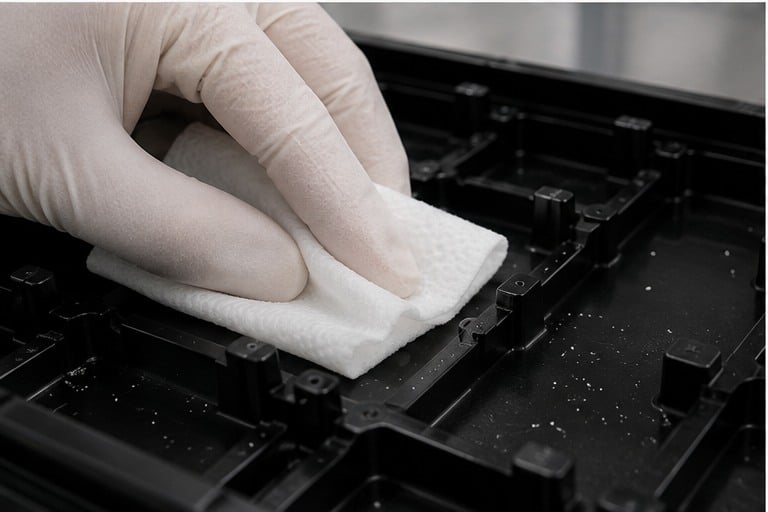
Check Mechanical Fit, Access and Process Compatibility
A fit check should reproduce loading, normal transport, stacking or parking, and unloading. Look for rocking, pinching, lead contact, board deflection, accidental release and interference with gloves, tweezers, vacuum pickup or inspection. If the solution enters equipment, test indexing, sensors, rails and clearances using the intended stack and orientation. A single hand-held demonstration is not an equipment qualification.
Process compatibility includes more than dimensions. Cleaning chemistry may attack a polymer or leave residue. Heat exposure can change flatness. Repeated handling can wear locating features. Labels can shed, obscure inspection or leave adhesive. Document these interfaces so the supplier can recommend a material and construction for review, then validate that recommendation in the actual process.
Prototype and Approval Sequence
- Desk review: confirm drawings, revisions, protected item, route, ESD function and acceptance plan.
- First article: inspect identity, workmanship and critical dimensions before introducing valuable devices.
- Fit trial: load representative items and check allowed contact, clearance, orientation and removal.
- Route trial: reproduce stacking, handling, transport, equipment interface, cleaning and storage.
- Evidence review: examine material declarations and test reports for method, conditioning, sample identity and traceability.
- Release: record the approved sample, drawing, deviations, photos and receiving checks.
This gated sequence keeps an attractive prototype from becoming an uncontrolled production standard. Any deviation should identify who accepted it, for which part and duration, and how affected inventory will be controlled. When the supplier or material changes, repeat the checks affected by that change.
Incoming Inspection and Ongoing Verification
Receiving inspection should be proportionate to risk and supplier history. Confirm the purchase identity and revision first, then check visible damage, contamination, distortion, assembly, labels and critical interfaces. Use the agreed sampling plan for dimensions and electrical checks. Quarantine suspect lots before mixing them with accepted stock, and retain enough information to trace a result back to the supplier lot and test equipment.
Ongoing checks should focus on characteristics that can drift through use: cleanliness, wear, warpage, damaged dividers, loose hardware, electrode condition or compromised grounding paths. Define cleaning and retirement criteria in observable terms. “Use until bad” is not a criterion; examples include a cracked pocket, unstable stack, unreadable identity, residue that cannot be removed by the approved process, or a failed verification.
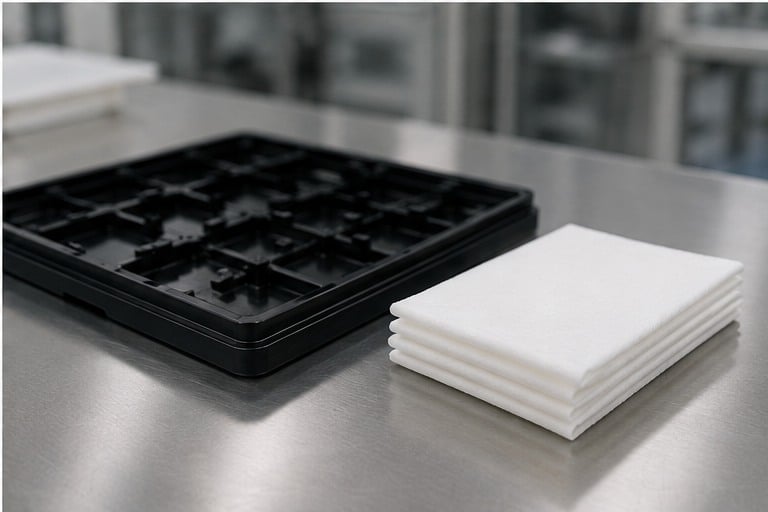
Common Specification Mistakes
- Assuming every cleanroom wipe is automatically suitable for an esd-controlled surface. Prevent this by linking the decision to a drawing, test method or route trial and retaining the approval evidence.
- Reusing a contaminated face and spreading residue. Prevent this by linking the decision to a drawing, test method or route trial and retaining the approval evidence.
- Selecting a solvent without checking tray material and process compatibility. Prevent this by linking the decision to a drawing, test method or route trial and retaining the approval evidence.
Another frequent mistake is allowing a marketing label to replace the acceptance plan. A product name can help search and communication, but quality decisions require controlled evidence. The buyer and supplier should agree what will be inspected, where the measurement is made, which revision applies and what happens when a result fails.
RFQ Checklist
- Protected item numbers, drawings, revisions, samples and allowed contact areas.
- Quantity per container or layer, orientation and traceability method.
- Full process route, operators, equipment interfaces, stacking and transport conditions.
- ESD function, referenced method, conditioning, acceptance limits and test records.
- Material restrictions, cleanliness, cleaning chemistry and environmental exposures.
- Critical dimensions, tolerances and first-article sampling plan.
- Prototype quantity, approval sequence and responsibility for changes.
- Production demand, packaging, replacement parts, lifecycle and delivery expectations.
For a supplier discussion, link these requirements to the relevant ESD cleaning supplies and use the ESD Wipes vs Cleanroom Wipes guide to place the decision in the wider handling system. This avoids treating one component as the complete ESD program.
Training Video: ESD Context
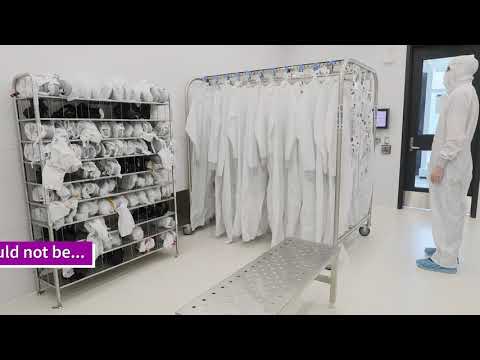
This neutral educational video supports the ESD-control context. It does not replace the product-specific validation described above.
Related Guides
Frequently Asked Questions
Are cleanroom wipes automatically ESD safe?
No. Cleanliness and electrostatic behavior are different requirements; evaluate both for the intended workstation and material. The final rule should be documented for the specific device, facility and control plan.
Can the same wipe clean every ESD product?
Not safely by assumption. Surface texture, polymer, coating, solvent compatibility and residue sensitivity differ. The final rule should be documented for the specific device, facility and control plan.
How often should the wipe be changed?
Change it when the active face is loaded, dry, damaged or could redeposit contamination; define the rule in the work instruction. The final rule should be documented for the specific device, facility and control plan.
Should wipes be pre-saturated?
Pre-saturated wipes improve consistency for some processes, while dry wipes allow controlled solvent choice. Validate residues and packaging shelf life. The final rule should be documented for the specific device, facility and control plan.
What should a buyer request?
Request material construction, cleanliness data, chemical compatibility, packaging configuration, lot traceability and samples for a process trial. The final rule should be documented for the specific device, facility and control plan.
Authoritative References
Application note: Final limits and verification intervals must follow the approved facility program, device requirements, current standards, manufacturer instructions and qualified test methods. This guide is a procurement and process-planning aid, not a substitute for those controlled documents.

Leave a Reply