- Blog
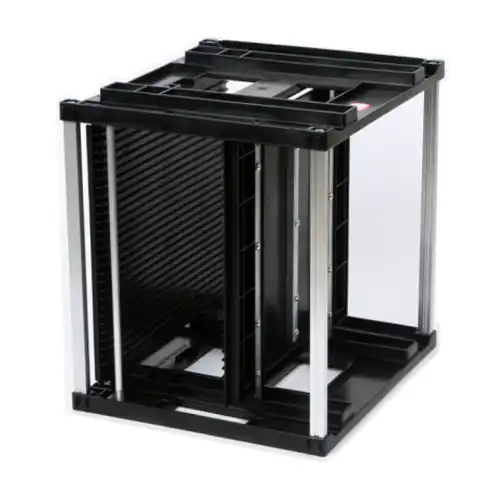
A replacement-part RFQ starts with the rack, not the spare part. Record the rack model, frame dimensions, guide interface, base type, sheet and slot arrangement, and adjustment mechanism before asking whether a belt, guide, sheet, or base can be supplied.

Part 1. When is a replacement-part request the right decision?
Part replacement makes sense when the rack identity, interfaces, and inspection history are known. A repair request becomes risky when a fleet contains mixed models, undocumented modifications, or damaged frames that no longer hold guides in the intended position.
The ESD Magazine Rack category can identify the product family, but a category page cannot confirm interchangeability. The supplier needs a model code, drawing, and photographs of the actual rack.
Part 2. Which magazine-rack parts should buyers list?
| Part group | What to record | Why it matters |
|---|---|---|
| Frame and base | outer L×W×H, base material, mounting points | Controls fit and structural match |
| Sheets and slots | sheet count, slot pitch, usable height | Controls PCB support and loading |
| Side guides | guide profile, travel, fasteners | Controls board alignment |
| Adjustment system | screw, belt, gear, handle, locks | Determines interface and spare set |
| Handles and feet | location, thread, height | Affects transport and clearance |
| Labels and traceability | asset ID, revision, line location | Prevents mixed-fleet substitutions |
Do not use a part name such as “belt” or “sheet” without the surrounding interface. The same word can describe different dimensions or mounting patterns.
Part 3. How should a buyer identify the existing rack?
Use a four-step record:
- Photograph all sides, the base, guide hardware, and any label or asset ID.
- Measure outer dimensions and the usable PCB opening.
- Count sheets and slots, then record slot pitch and guide position.
- Mark damaged parts on a copy of the drawing or a hand sketch.

Add one reference scale to photographs and identify whether the rack is used line-side, in a trolley, or through an automated loader. That context can change the required clearance even when the replacement part looks similar.
Important: Never approve a replacement from a photograph alone. A visually similar guide, base, or belt can have a different pitch, fastener pattern, or clearance. Require a model-matched drawing and fit confirmation. (ESD Association standards)
Part 4. What do base, sheets, slots, and adjustment parts change?
The metal-base versus plastic-base guide explains why base type belongs in the RFQ. The sheet and slot guide covers the counting language. These terms should be recorded, not guessed from color or age.
The screw versus belt adjustment comparison shows why adjustment hardware is a system choice. A belt, pulley, screw, lock, or side guide should not be swapped across mechanisms without a drawing review.
| Observation | Safe procurement interpretation |
|---|---|
| Base is bent or mounting holes are elongated | Request frame inspection before a part-only repair |
| Slot pitch is unknown | Send a measured drawing or sample PCB reference |
| Belt is damaged but frame is verified | Request belt and lock kit by exact model |
| Guides drift after adjustment | Review mechanism, lock, and frame together |
Part 5. When is a new rack safer than a repair?
Choose a full replacement review when the frame is distorted, the model cannot be identified, the fleet has undocumented changes, or the repair would mix parts from different adjustment systems. A new rack also simplifies traceability when the existing asset has no drawing or revision record.
Part-only repair is more defensible when the frame, base, guide geometry, and adjustment interface are intact and documented. In either case, keep the receiving inspection criteria with the purchase record.
Part 6. What belongs in the replacement RFQ?
| Buyer should provide | Supplier should confirm |
|---|---|
| Existing model, asset ID, and revision | Compatible part number and drawing |
| Outer dimensions and opening | Tolerance and fit interface |
| Base, sheet, slot, guide, and lock details | Complete replacement scope |
| Photos with scale and damage marks | Whether repair or full rack is recommended |
| Use route and loader/trolley interface | Clearance and handling constraints |
| Quantity, spares, and inspection plan | Packaging, labeling, and test documents |
Send the package through Contact Sanwei or the OEM/ODM route. Ask the supplier to mark unknowns rather than silently substitute a similar part.
Part 7. How should Sanwei buyers start the review?
Start at the ESD Magazine Rack category to identify the family, then use the ESD Magazine Rack solution for an engineering discussion. Provide the rack record, photos, dimensions, interface notes, and quantity band.
Sanwei can then confirm whether the request is a replacement part, a revised rack, or a new configuration. That decision should be based on the documented interface, not a generic “fits magazine rack” description.
FAQ
Which ESD magazine-rack parts are commonly replaced?
Buyers commonly ask about bases, sheets, slots, side guides, belts, screws, locks, handles, and feet; the exact part list depends on the rack model.
How do I identify a metal base or plastic base?
Photograph the base and record the model, mounting points, and material description. Do not infer the type from color alone.
What do sheets and slots mean?
Sheets are the internal support panels; slots describe the positions or pitch used to hold boards. Record both count and usable spacing.
Can a belt mechanism replace a screw mechanism?
Not without a compatibility review. The frame, guide travel, lock, and mounting pattern must match the proposed mechanism.
What photos should go in a replacement RFQ?
Include all sides, the base, guide hardware, labels, damage marks, and one measured reference. Add the route and loader or trolley interface.
When should I replace the whole rack?
Consider a new rack when the frame is distorted, the model is unknown, parts are mixed, or traceability cannot be restored with confidence.
Leave a Reply